

Filing Back Taxes? Get Help and See If You Quality for Tax Relief

















Trusted and loved by many.

AI-Powered

Free Expert Consultation

Find the Best Solution
Solutions for all tax problems.
- IRS Offer In Compromise
- IRS Wage Garnishments
- IRS Penalties & Interest
- IRS Tax Levies
- IRS Audit Defense
- Filing Back Taxes
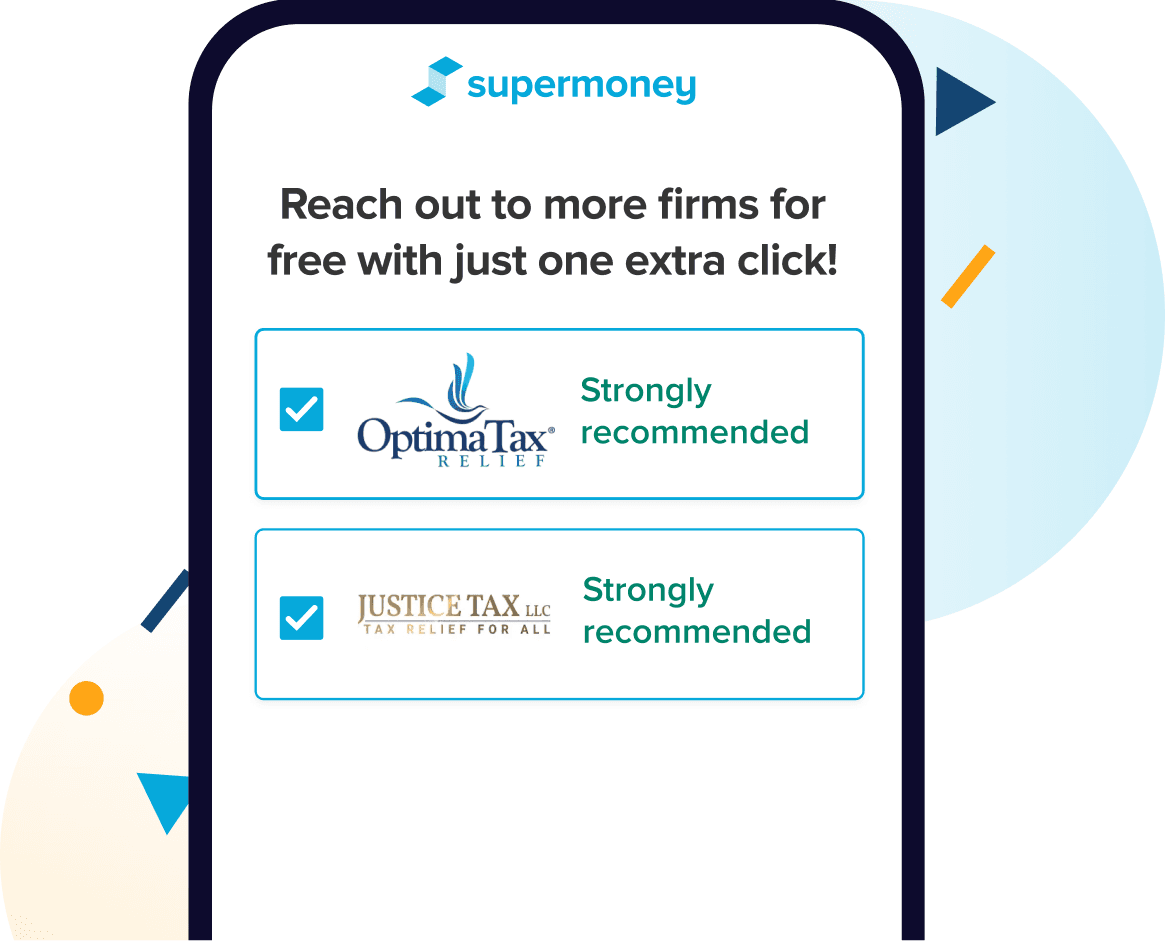
May the best tax expert win.
With great power comes great responsibility.

We take your data security seriously. Rest easy knowing SuperMoney protects your data with advanced encryption.


SuperMoney is audited against and compliant with the gold standard for data security - SOC 2 Type II.
Don't just take our word for it.
Here’s what SuperMoney community members are saying about their tax relief experience.
Melissa
"They will help you..."
Frequently Asked Questions
Your back taxes and tax relief questions answered.
Back taxes are unpaid taxes from previous years that you still owe to the IRS or a state tax agency. Penalties and interest grow until you file and resolve the balance. Filing back taxes quickly helps limit fees and opens the door to payment plans and other tax relief options.
Filing back taxes means submitting late returns for past years you missed or did not fully file. It brings you into compliance, reduces failure-to-file penalties, and is required before the IRS will approve most relief programs or payment plans.
To file back taxes, start by confirming which years you have not filed. Gather documents like W-2s, 1099s, 1095-A health forms, 1098 mortgage statements, and any business income or expense records. If you are missing forms, request wage and income transcripts from the IRS. Use the correct prior-year forms to prepare each return. Some years may be eligible for electronic filing, but older years must be printed, signed, and mailed. Once you file, you can request a payment plan or apply for other relief programs if you cannot pay in full. Always read and respond to IRS or state notices promptly to keep your case moving forward.
Yes. Many recent prior-year returns can be filed online through IRS-approved tax software. Older returns usually must be mailed in paper form. State tax agencies may have their own rules, with some allowing e-filing and others requiring paper filing.
You can file tax returns for any past year. However, to receive a refund you generally must file within three years of the original due date. If you owe taxes, there is no limit—the balance remains due until it is paid, with interest and penalties adding up over time.
Yes. You can request wage and income transcripts directly from the IRS to see the forms filed under your Social Security number. You can also contact your employer, bank, or clients for copies. Self-employed taxpayers can use bank statements and business records to recreate their income and expenses.
If the IRS filed a Substitute for Return, it likely overstated your tax bill because it did not include deductions, credits, or your correct filing status. You can file your own return for that year, which will usually replace the IRS’s estimate and lower your balance.
If you fail to file back taxes, the IRS may create an SFR on your behalf, assess penalties and interest, and begin collection actions such as tax liens, levies, or wage garnishments. You can also lose the right to claim refunds and be blocked from tax relief programs until you are compliant.
Filing immediately stops additional failure-to-file penalties from growing. You may also qualify for first-time abatement or reasonable-cause relief if you had a valid reason for missing deadlines. Interest continues until the balance is fully paid, but entering a payment plan can limit further penalties.
The IRS typically requires you to file all missing returns before it will pause enforcement. Once you are compliant, you may be able to secure a payment plan or hardship status, which can lead to the release of levies or garnishments.
Yes. The IRS allows taxpayers to request installment agreements to pay over time, Offers in Compromise to settle for less than the full balance, penalty abatements to reduce fees, and Currently Not Collectible status to temporarily pause collection if you are facing hardship. You must file your missing returns before these options are available.
The IRS Fresh Start Program is an initiative that makes it easier for taxpayers to resolve back taxes. It expands eligibility for payment plans, provides more flexible settlement options, raises the threshold for tax liens, and offers penalty relief in some cases. It is designed to help taxpayers get back on track after falling behind.
If you live or worked in a state that collects income tax, you usually need to file back state returns as well as federal ones. Each state has its own rules for penalties, interest, and tax relief programs. Filing both ensures full compliance and prevents additional collection actions at the state level.
Self-employed taxpayers must gather 1099 forms, bank deposit records, and receipts to recreate income and expenses for each unfiled year. In addition to income tax, you may owe self-employment tax. Filing ensures you get credit toward Social Security and Medicare and allows you to request a payment plan if needed.
Yes, you can often still claim eligible credits and deductions if you file within the refund claim window. Many taxpayers still qualify for credits such as the Child Tax Credit or the Earned Income Tax Credit on late returns, which can reduce the amount owed or increase a refund.
Filing back taxes means sending in a return for a year you never filed. Amending a return, which is done with Form 1040-X, means correcting an error on a return you already submitted. If a year has no original return, you must file that year’s return rather than amend it.
The timeline varies. E-filed prior-year returns are generally processed faster than mailed returns. Simple payment plans may be approved within a few weeks after you file, while Offers in Compromise and more complex cases can take several months or longer to resolve.
You can get help filing back taxes through the IRS Free File program if you qualify, by working with a Certified Public Accountant or Enrolled Agent, or by contacting a reputable tax relief company that assists with both filing and negotiating with the IRS. Low-Income Taxpayer Clinics also provide free or low-cost help for those who qualify. Professional assistance can reduce errors, uncover credits you may miss, and help you navigate IRS negotiations.