SuperMoney Team
articles from SuperMoney
2028 posts
SuperMoney App and the Rise of Personal Finance – New York Post
Published 09/09/2026 by SuperMoney Team
The New York Post covered SuperMoney this morning in a piece on how AI is reshaping personal finance. Commerce Editor Will Kenton interviewed our founder and CEO, Miron Lulic, about why traditional financial advice has priced out most Americans and what changes when a model can see your whole financial picture. The article also reports that Sense AI scored a median of 99.4% on a 1,000-question benchmark we built on the CFP Board’s published Principal Knowledge Topics. Worth a read if you want the short version of where this category is headed.

Auto Loan Delinquencies Just Hit a Record. Here’s How to Make Sure You’re Not Next
Published 09/04/2026 by SuperMoney Team
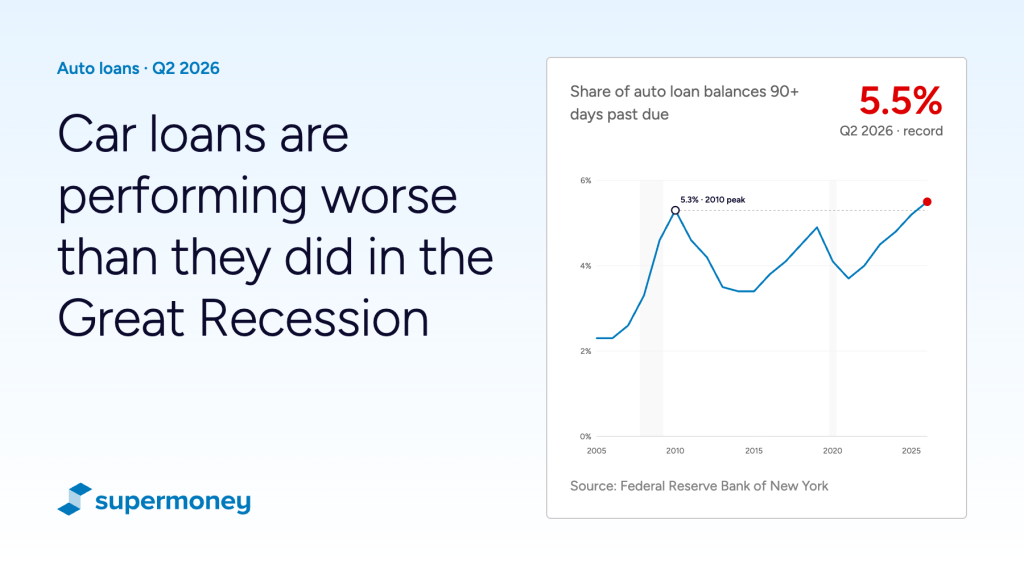
Auto loan serious delinquency hit 5.5% of outstanding balances in the second quarter of 2026, a series record that tops the Great Recession peak of 5.3%. Average new car payments are $770 a month and nearly 30% of trade-ins are underwater by an average of $6,884. Here’s the good news: most of that stress is concentrated among borrowers who financed at high rates and never revisited the loan, and that’s fixable. If your credit score has climbed since you signed, refinancing a $30,000 balance from subprime to prime pricing cuts about $103 off your payment and saves close to $4,900 over four years. That is the single highest-value hour you can spend on your car this month.
Insurers Are Dropping Homeowners at Triple the 2018 Rate. Do This 60 Days Before Your Renewal
Published 09/02/2026 by SuperMoney Team
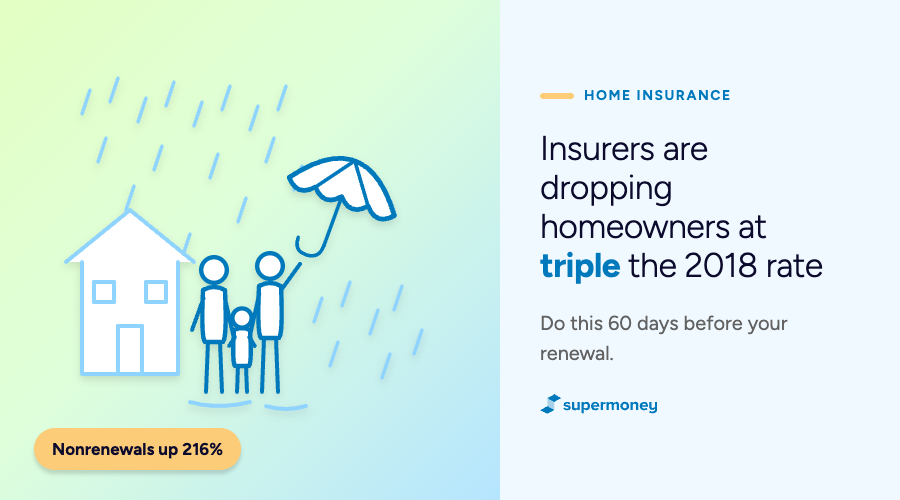
New NAIC data shows homeowners insurance nonrenewals climbed between 96% and 216% depending on the region between 2018 and 2024. Premiums rose too, up 43% in the West after adjusting for inflation. The risk now isn’t just a bigger bill, it’s losing coverage entirely and having your mortgage servicer buy a worse policy for you. Three moves matter, and the best time to make them is 60 days before your renewal date.
You Need $110K a Year to Buy a Home Now. Two-Thirds of the Problem Comes Down to One Number
Published 08/10/2026 by SuperMoney Team
It takes $109,796 a year to afford the typical American home, and that number has barely moved in three years. Roughly two-thirds of the problem is the interest rate, not the house: at 2021’s 3% rates, today’s typical home would only require about $80,000 of income. The fix is not just lowering rates (more on why below).

Trump Accounts Are Live: How to Claim the Free $1,000 for Your Kid (and What It’s Really Worth)
Published 07/30/2026 by SuperMoney Team
Trump Accounts launched July 4, 2026, and every U.S.-citizen child born between 2025 and 2028 can claim a free $1,000 government deposit into a tax-deferred investment account. You claim it with IRS Form 4547 or at trumpaccounts.gov, then invest the money in low-cost index funds. The catch: you can’t touch the money until your kid turns 18. If you add even $100 a month on top of the free grand, your child could have around $46,000 by adulthood.

Medical Debt Is Back on Credit Reports in 2026. Here’s How to Protect Your Score.
Published 07/30/2026 by SuperMoney Team
The federal rule that would have banned medical debt from credit reports was struck down in court, so in 2026 unpaid medical bills can once again drag down your score. You still have real protection: the three big credit bureaus voluntarily keep medical collections under $500 and all paid medical collections off your report. If you have a medical bill in collections, don’t panic and don’t pay it blind. Verify it, negotiate it, and dispute any errors first.
The Real Cost of Owning a Car in 2026 (and the One Lever That Saves You Thousands)
Published 07/30/2026 by SuperMoney Team
The real cost of owning a car in 2026 goes way past the sticker price. Full-coverage insurance averages $1,707 a year, a 60-month new-car loan runs about 6.92%, and drivers spend roughly $376 a month on insurance, fuel, repairs, and taxes combined. Your credit score is the biggest lever you control: super-prime borrowers pay about 4.66% on a car loan while deep-subprime borrowers pay 16.01%. Fix that gap and you save thousands.

Gen X’s $1.24 Million Retirement Gap: The Numbers, and How to Close It
Published 07/29/2026 by SuperMoney Team
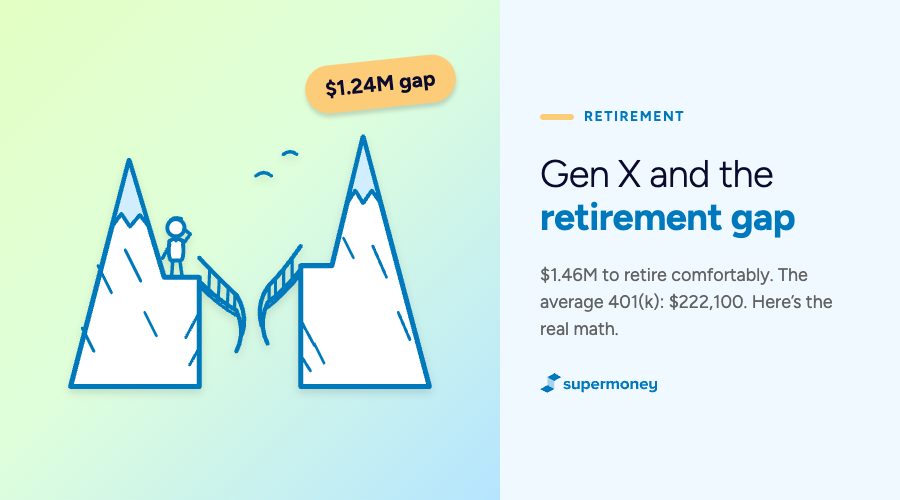
If you’re Gen X, you’ve probably had the moment. You check your 401(k), see the balance, and feel your stomach drop a little. You’re not imagining the problem. But before you accept the story these headlines tell, look at how the numbers are built. They’re shakier than they seem, and that matters for what you do next.
12 Ways To Save Money on Back-to-School Shopping (2026)
Published 07/29/2026 by SuperMoney Team
Back-to-school shopping has quietly turned into the second-biggest spending event of the year for families, behind only the winter holidays. PwC’s 2026 back-to-school poll found parents expect to spend an average of $922 this season, and 47% plan to spend more than they did last year. The National Retail Federation puts the figure at $863.86 per family with K-12 students, with electronics ($293), clothing and accessories ($250), and shoes ($174) eating the biggest share.

SuperMoney’s AI Scores 99.4% on Its CFP® Knowledge Benchmark
Published 07/21/2026 by SuperMoney Team
The bar for financial AI should be measurable. So we measured ours.