Andrew Latham
Andrew is the Content Director for SuperMoney, a Certified Financial Planner®, and a Certified Personal Finance Counselor. He loves to geek out on financial data and translate it into actionable insights everyone can understand. His work is often cited by major publications and institutions, such as Forbes, U.S. News, Fox Business, SFGate, Realtor, Deloitte, and Business Insider.
articles from Andrew
1346 posts
Loans Like ACE Cash Express: 7 Cheaper and Storefront Alternatives (2026)
Published 09/27/2026 by Andrew Latham
ACE Cash Express payday loans cost about {{ace-cash-express-payday-loans.features.interest_rate.value2}}% APR in Texas. If you need a similar loan, Possible and OppLoans cost less and spread payments out, and Advance America is the closest storefront match. Below we compare 7 loans and places like ACE Cash Express on cost, loan amounts, store networks and funding speed.

Loans Like Advance Financial 24/7 (AF247): 7 Alternatives Compared (2026)
Published 09/27/2026 by Andrew Latham
Advance Financial 24/7 (AF247) Flex Loans cost 279.50% APR in Tennessee. If you want a lower rate, OppLoans is the closest cheaper option, NetCredit is the nearest online line of credit, and Check Into Cash is the nearest Tennessee storefront. Below we compare 7 loans like Advance Financial on cost, limits, speed and credit checks, and show which ones serve Tennessee.
Loans Like My Quick Wallet: 6 Cheaper Alternatives (2026)
Published 09/27/2026 by Andrew Latham
My Quick Wallet is a tribal line of credit that charges $2.14 per $100 borrowed for each day you have the money. If you want a similar fast loan that costs less, OppLoans, NetCredit and CashNetUSA’s line of credit are the closest alternatives. Below we compare six loans like My Quick Wallet on cost, amounts, credit checks and who is actually lending.
Loans Like Enable Loans: 7 Cheaper Alternatives Compared (2026)
Published 09/27/2026 by Andrew Latham
Enable Loans is a tribal installment lender whose own calculator shows APRs of roughly 840% to 900%. If you want a similar fast online loan at a lower cost, OppLoans, NetCredit and Possible Finance are the closest alternatives. Below we compare seven loans like Enable Loans on amounts, APRs, terms and who regulates them.
Apps Like Grant: 12 Cash Advance Apps Compared (2026)
Published 09/27/2026 by Andrew Latham
Grant’s first advances are small (about $66 on average), and its standard path runs through a paid Grant Plus subscription. If you want a higher limit or no subscription, EarnIn, Klover and MoneyLion Instacash are the closest alternatives. Below we compare 12 apps like Grant on advance limits, monthly fees, instant-transfer costs and requirements.
Loans Like Moneytree: 6 Cheaper Alternatives Compared (2026)
Published 09/27/2026 by Andrew Latham
Moneytree’s payday loans cost $15 to $18.50 per $100 borrowed in most of its states, which works out to about 391% to 508% APR on a two-week loan. If you want something cheaper, a credit union payday alternative loan (PAL), Possible Finance and OppLoans are the strongest loans like Moneytree. Below we compare six alternatives on cost, amount, term and which of Moneytree’s five states they serve.
Apps Like Dave: 12 Cash Advance Apps Compared (2026)
Published 09/26/2026 by Andrew Latham
Dave’s ExtraCash advances cost at least $5 each, plus a monthly membership. If you want a bigger limit or lower fees, EarnIn, MoneyLion and Chime MyPay are the closest alternatives. Below we compare 12 apps like Dave on advance limits, monthly fees, instant-transfer costs and requirements.
How to Consolidate Credit Card Debt the Right Way (Avoid These 4 Costly Mistakes)
Published 09/18/2026 by Andrew Latham
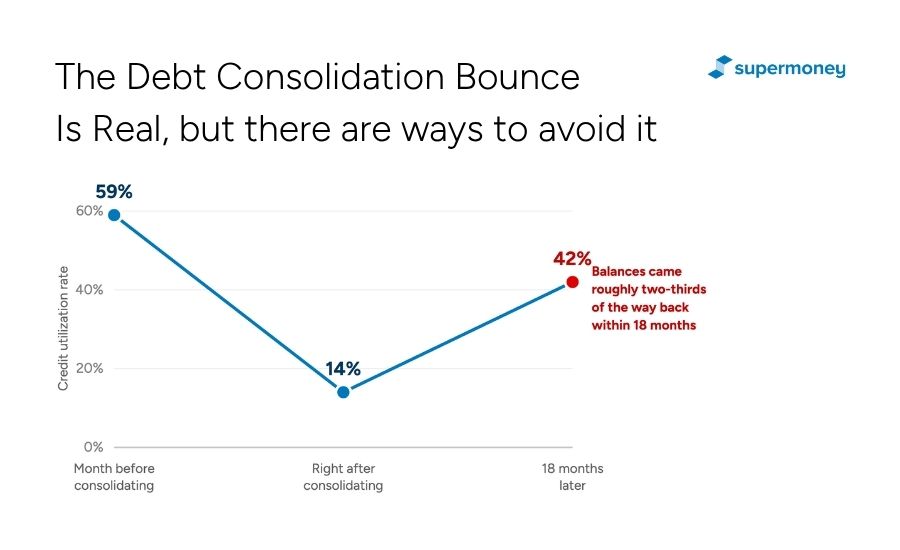
Debt consolidation moves high-interest debt to one lower-rate loan, and right now the gap is wide: credit cards that carry a balance average 22.15% APR while a two-year personal loan at a bank averages 11.86%. On $10,000, that gap is worth about $2,817 and nine months off your payoff date if you keep sending the same payment. It fails for three reasons, and none of them is the loan itself: stretching the term too long, ignoring the origination fee, and running the cards back up. Do those three things right and consolidation works. Skip them and you just rearranged the furniture.
Statute of Limitations on Debt in New Mexico (2026): The 4-Year Rule
Published 08/06/2026 by Andrew Latham
The statute of limitations on debt in New Mexico is four years for credit card debt as an open account, and six years for written contracts, measured from your last payment. Whether a signed agreement exists sets the deadline.

Statute of Limitations on Debt in Idaho (2026): The 5-Year Rule
Published 08/06/2026 by Andrew Latham
The statute of limitations on debt in Idaho is five years for credit card debt as a written contract, and four years for open accounts without a writing, measured from your last payment. How the debt is documented sets the deadline.