Andrew Latham
Andrew is the Content Director for SuperMoney, a Certified Financial Planner®, and a Certified Personal Finance Counselor. He loves to geek out on financial data and translate it into actionable insights everyone can understand. His work is often cited by major publications and institutions, such as Forbes, U.S. News, Fox Business, SFGate, Realtor, Deloitte, and Business Insider.
articles from Andrew
1346 posts
How to Consolidate Medical Debt: Best Options, Alternatives & Smart Strategies
Published 12/02/2025 by Andrew Latham
Medical debt can be overwhelming, but there are several ways to consolidate bills and lower costs. Options include personal loans, debt management plans, hospital hardship programs, 0% medical payment plans, and negotiating directly with providers. Learn which method is right for your situation and how to protect your credit along the way.

Debt Consolidation for Married Couples: How to Combine Debts the Smart Way
Published 12/02/2025 by Andrew Latham
Married couples can consolidate debt using joint personal loans, balance transfer cards, home equity products, or a Debt Management Plan (DMP). The right method depends on your combined credit, income, and financial goals. This guide explains how to merge debts safely and when keeping them separate may be the better choice.

How to Consolidate Debt Without a Loan: Best Strategies & Smart Alternatives
Published 12/02/2025 by Andrew Latham
You can consolidate debt without taking out a loan by using strategies like debt management plans, balance transfers, creditor negotiations, and budgeting methods. These options can simplify payments, reduce interest, and help you get out of debt even if you don’t qualify for traditional loans.

Debt Consolidation for Bad Credit: Best Options, Alternatives & How to Qualify
Published 12/02/2025 by Andrew Latham
You can consolidate debt even with bad credit, but your options, interest rates, and approval odds may differ. The best choices typically include secured loans, credit union loans, debt management plans, and HELOCs for homeowners. Learn how each option works and how to avoid costly mistakes.

Snowball vs. Avalanche Method: Which Debt Payoff Strategy Is Best?
Published 12/02/2025 by Andrew Latham
The debt snowball and avalanche methods are two of the most effective strategies for paying off debt. Snowball builds motivation by paying off small balances first, while avalanche saves the most money by targeting high-interest debt. Learn how each method works and which payoff strategy fits your personality and financial goals.
How to Refinance Credit Card Debt at a Lower Rate: Best Options & Smart Strategies
Published 12/02/2025 by Andrew Latham
Refinancing credit card debt can lower your interest rate, reduce monthly payments, and speed up your payoff timeline. Options include personal loans, balance transfer credit cards, HELOCs, home equity loans, and debt management plans. Learn how to refinance the smart way and avoid common pitfalls.

When Debt Consolidation Saves You Money and When It Doesn’t
Published 12/02/2025 by Andrew Latham
Debt consolidation can save you money by lowering your interest rate, reducing monthly payments, or shortening your payoff timeline. But consolidation isn’t always beneficial—sometimes it increases your total repayment cost. Learn how to tell the difference using real numbers and clear decision criteria.

Debt Consolidation Calculator Guide: How to Estimate Your Savings
Published 12/02/2025 by Andrew Latham
A debt consolidation calculator helps you estimate savings by comparing your current repayment costs with what you’d pay using a loan, balance transfer, HELOC, or DMP. Learn how to use one accurately so you know whether consolidation will lower your monthly payment, reduce interest, or shorten your payoff timeline.

How to Get the Lowest Interest Rate on a Debt Consolidation Loan
Published 12/02/2025 by Andrew Latham
Getting the lowest interest rate on a debt consolidation loan can significantly reduce your monthly payments and total repayment cost. Improving your credit score, comparing lenders, using rate-shopping windows, and choosing the right loan type are essential strategies for securing the best APR.

90-Day Delinquencies Are Surging in 2025 —Here’s What Every Borrower Should Know
Published 12/01/2025 by Andrew Latham
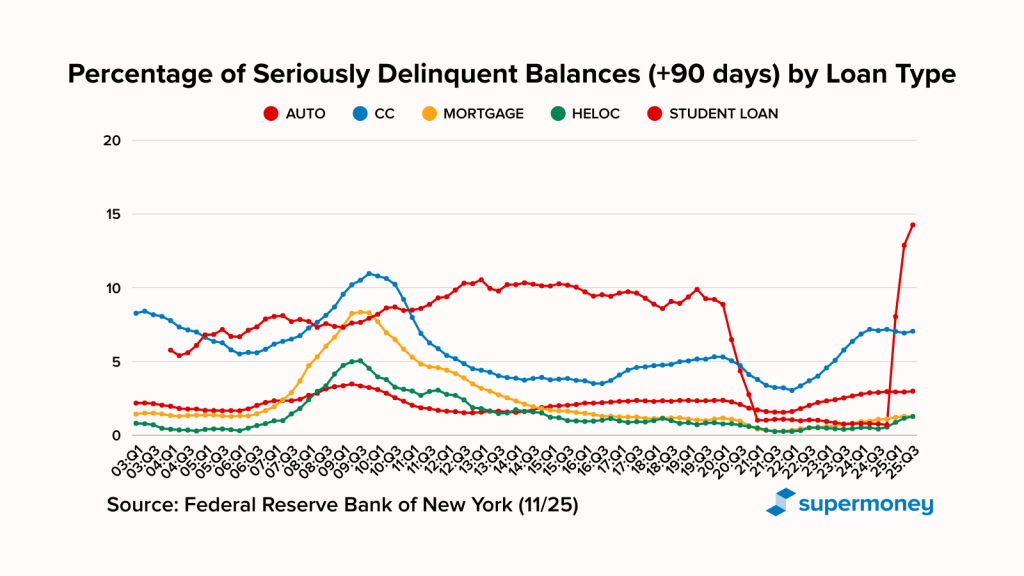
Consumer debt delinquencies are rising across key loan types with student loans showing the sharpest spike after the end of COVID protections. A 90+ day delinquency signals serious financial strain. While the trend is concerning, borrowers do have tools that can help them understand their options and take control before things get worse.