
Best Cities To Live In Louisiana (2026 Guide)

Last updated 04/01/2024 by
Benjamin Locke
Edited by
Andrew Latham
Summary:
Louisiana offers a rich and diverse living experience, blending historical heritage with modern vibrancy across its major cities. New Orleans, Baton Rouge, and Lafayette each provide unique cultural, educational, and recreational opportunities set against a backdrop of historical significance and evolving economic landscapes.
Louisiana, often hailed as the Pelican State is a mosaic of vibrant culture and natural beauty. It’s a land where the lively rhythms of jazz intermingle with the serene landscapes of the bayous. The state’s unique blend of French, Spanish, and African influences is palpable in its cuisine, music, and festivals like Mardi Gras. Louisiana’s rich history, from its colonial roots to its pivotal role in American history, is woven into the fabric of daily life. These three cities are the best places to live in Louisiana.
Get Competing Personal Loan Offers In Minutes
Compare rates from multiple vetted lenders. Discover your lowest eligible rate.
It's quick, free and won’t hurt your credit score
Best cities to live in Louisiana
New Orleans

New Orleans, founded in 1718, epitomizes a cultural crossroads with its blend of French, Spanish, and African influences. Renowned for jazz, Creole cuisine, and the iconic Mardi Gras festival, this port city along the Mississippi River combines a rich historical legacy with vibrant modernity. Despite challenges like Hurricane Katrina, New Orleans remains a resilient and dynamic metropolis, deeply rooted in its unique cultural tapestry and diverse community spirit.
New Orleans snapshot
| Aspect | Details |
|---|---|
| Average Home Price | $360,000 |
| Cost of Living | 93.635 Real Price Parity (RPP for the US is 100, lower = lower than average, higher = higher than average) |
| Crime | 54.97 incidents per 1,000 residents. (Average crime rate in US is 23.48 per 1,000 residents (FBI, US Census)) |
| Weather | New Orleans enjoys a humid subtropical climate characterized by hot, humid summers and mild, wet winters, with its proximity to the Gulf of Mexico influencing its distinct weather patterns. |
New Orleans healthcare
New Orleans boasts a robust healthcare landscape, marked by a variety of notable hospitals that play a crucial role in the city’s medical community. These institutions offer a broad spectrum of medical specialties and services, catering to the diverse healthcare needs of the population.
| Category | Details |
|---|---|
| New Orleans Hospitals | Includes renowned centers like Ochsner Baptist Medical Center and Tulane Medical Center, known for their comprehensive healthcare services. |
| Notable Hospitals | Ochsner Baptist Medical Center, LLC, and Tulane Medical Center are among the key healthcare providers in the city. |
New Orleans walkability
New Orleans offers a moderately walkable environment, with an average Walk Score of 58. This suggests that while some errands can be accomplished on foot, others may require transportation.
| Category | Details |
|---|---|
| Overall Walkability | New Orleans has an average Walk Score of 58, indicating a moderate level of walkability across the city. |
| Highly Walkable Areas | The French Quarter, Marigny, and Central Business District are among the most walkable neighborhoods in New Orleans, ideal for pedestrian activities. |
| City Ranking | New Orleans’ walkability, particularly in these neighborhoods, contributes to its charm and accessibility for residents and visitors alike. |
New Orleans education
The educational landscape in New Orleans is a blend of challenges and achievements, reflecting the city’s vibrant and complex nature.
| Category | Details |
|---|---|
| Overall District Performance | New Orleans Public Schools district received a “C” letter grade for 2023. |
| Notable Schools | Schools like New Orleans Center for Creative Arts, Edward Hynes Charter School, and Benjamin Franklin High School received “A” grades. |
| School Choices | A mix of traditional public schools, charter schools, and specialized academies. |
| Educational Growth | Some schools have shown significant growth, yet challenges remain in elevating overall performance. |
New Orleans jobs and economy
The New Orleans economy is demonstrating significant growth and recovery in 2023, with increasing employment rates and a positive economic outlook.
| Category | Details |
|---|---|
| Economic Growth | New Orleans is experiencing positive economic growth, with a forecast of adding 31,800 jobs in 2023, growing at a rate of 5.7%. |
| Average Annual Salary | The average salary in New Orleans is $61,801. |
| Labor Force Data | Employment numbers from the Bureau of Labor Statistics indicate continual growth in the New Orleans-Metairie area. |
| Overall Economic Outlook | New Orleans’ economy is demonstrating resilience and diversity, with strong potential for future development, despite a significant drop in home values by 8.9% this year. |
| Job Market Forecast | The region is expected to gain 9,500 jobs in 2024 and 11,300 jobs in 2025, moving towards recovery from a job deficit of 22,600. |
| Real GDP Growth | Louisiana’s real GDP increased by +1.4% in Q1:2023, with New Orleans contributing significantly to this growth. |
Pro Tip
“The cost of living is insanely low, as surrounding Louisiana is one of the poorest states in the US. However New Orleans is such an enclave of Louisiana, the culture here is a wonderful daily- if not hourly- experience. To say there is always something happening doesn’t begin to explain how much is going on. The city’s infrastructure isn’t the greatest, but as a nomad you’re probably less concerned about that. The tradeoffs are worth it.” – Christopher Falvey, co-founder of Unique NOLA Tours
Best areas and suburbs of New Orleans
New Orleans offers a rich tapestry of neighborhoods and suburbs, each with its unique charm and lifestyle.
| Suburb | Description |
|---|---|
| French Quarter | Known for its historic architecture, vibrant nightlife, and cultural richness. |
| Warehouse District | Modern developments and a thriving arts scene, with convenient city access. |
| Bywater | Eclectic and artsy, offering a unique blend of creativity and community spirit. |
| Garden District | Beautiful homes set in lush gardens offer a serene and picturesque environment. |
| Uptown | Bustling streets, historic homes, and a vibrant community atmosphere. |
| Lakeview | A laid-back neighborhood with a focus on family-friendly living and outdoor activities. |
Baton Rouge

Baton Rouge, Louisiana, initially known as Istrouma or Red Stick, a name that originated from the reddened poles marking the tribal boundaries of the Bayou Goula and the Houma Indian tribes, Baton Rouge has transformed over the centuries. Throughout its history, it has seen the rule of France, England, Spain, and finally, the United States, each leaving its distinct mark on the city’s culture and development.
Baton Rouge snapshot
| Aspect | Details |
|---|---|
| Average Home Price | $228,150 |
| Cost of Living | 92.454 Real Price Parity (RPP for the US is 100, lower = lower than average, higher = higher than average) |
| Crime | 43.99 incidents per 1,000 residents. (Average crime rate in US is 23.48 per 1,000 residents (FBI, US Census)) |
| Weather | Baton Rouge experiences a humid subtropical climate with hot summers and mild winters. |
Baton Rouge healthcare
Baton Rouge’s healthcare landscape is marked by a comprehensive network of hospitals and clinics, offering a wide range of medical services to the community. This city is known for its blend of advanced medical facilities, experienced healthcare professionals, and a commitment to innovative treatments and patient-centered care, making it a key player in the region’s healthcare sector.
| Category | Details |
|---|---|
| Hospital Facilities | Baton Rouge is home to reputable facilities like Baton Rouge General Medical Center and Our Lady of the Lake Regional Medical Center. |
| Healthcare Specialties | Vascular care, Obstetrics & Gynecology, Cancer care. |
Baton Rouge walkability
Baton Rouge offers a semi-walkable environment, with varying degrees of walkability across different neighborhoods.
| Category | Details |
|---|---|
| Overall Walkability | Baton Rouge has an average Walk Score of 39, indicating a general tendency towards car dependency across the city. |
| Highly Walkable Areas | Downtown Baton Rouge, the Garden District, and Spanish Town are among the more walkable neighborhoods, offering a pedestrian-friendly environment. |
| Neighborhood Variability | Walkability in Baton Rouge varies significantly, with some neighborhoods being more conducive to walking than others. |
| City Ranking | The city’s diverse walkability, especially in its downtown and certain neighborhoods, contributes to Baton Rouge’s urban appeal and accessibility. |
Baton Rouge education
Baton Rouge’s education system offers a diverse array of high-performing schools and districts, catering to the varied educational needs of its community. This city is recognized for its commitment to academic excellence, with several schools and districts standing out for their quality education and strong academic programs.
| Category | Details |
|---|---|
| Baton Rouge Area School Districts | Top districts like Ascension Parish Public Schools and East Baton Rouge Parish Public Schools are known for their high-quality education. |
| High Schools in Baton Rouge | Baton Rouge Magnet High School and Dutchtown High School are among the best high schools in the area, as recognized by U.S. News & World Report. |
| Elementary and Middle Schools | Mayfair Laboratory School and Westdale Heights Academic Magnet School are notable for their strong elementary and middle school programs. |
| Overall Education Quality | The education system in Baton Rouge is marked by a blend of distinguished school districts and high-performing schools, contributing to the city’s strong educational foundation. |
Baton Rouge jobs and economy
The Baton Rouge economy shows signs of stability and growth, with a healthy job market and an unemployment rate of 3.2%. According to the U.S. Bureau of Labor Statistics, the civilian labor force in Baton Rouge has been relatively steady, with a slight fluctuation between Q2 and Q3. Employment numbers have also shown stability in this period.
| Category | Details |
|---|---|
| Job Market Growth | Stable employment numbers and a steady civilian labor force in 2023. |
| Average Annual Salary | The average salary in Baton Rouge is $92,454. |
| Recent Trends | A positive outlook with potential recovery in the industrial construction sector. |
| Overall Economic Outlook | Optimistic economic trends with ongoing efforts to address labor shortages. |
Pro Tip
“Louisiana’s economy is fueled by diverse industries, including energy, petrochemicals, and tourism. While facing challenges in recent years due to natural disasters, the state has witnessed remarkable recovery and economic growth.” – Sam Girach, founder of Chessgammon.
Lafayette
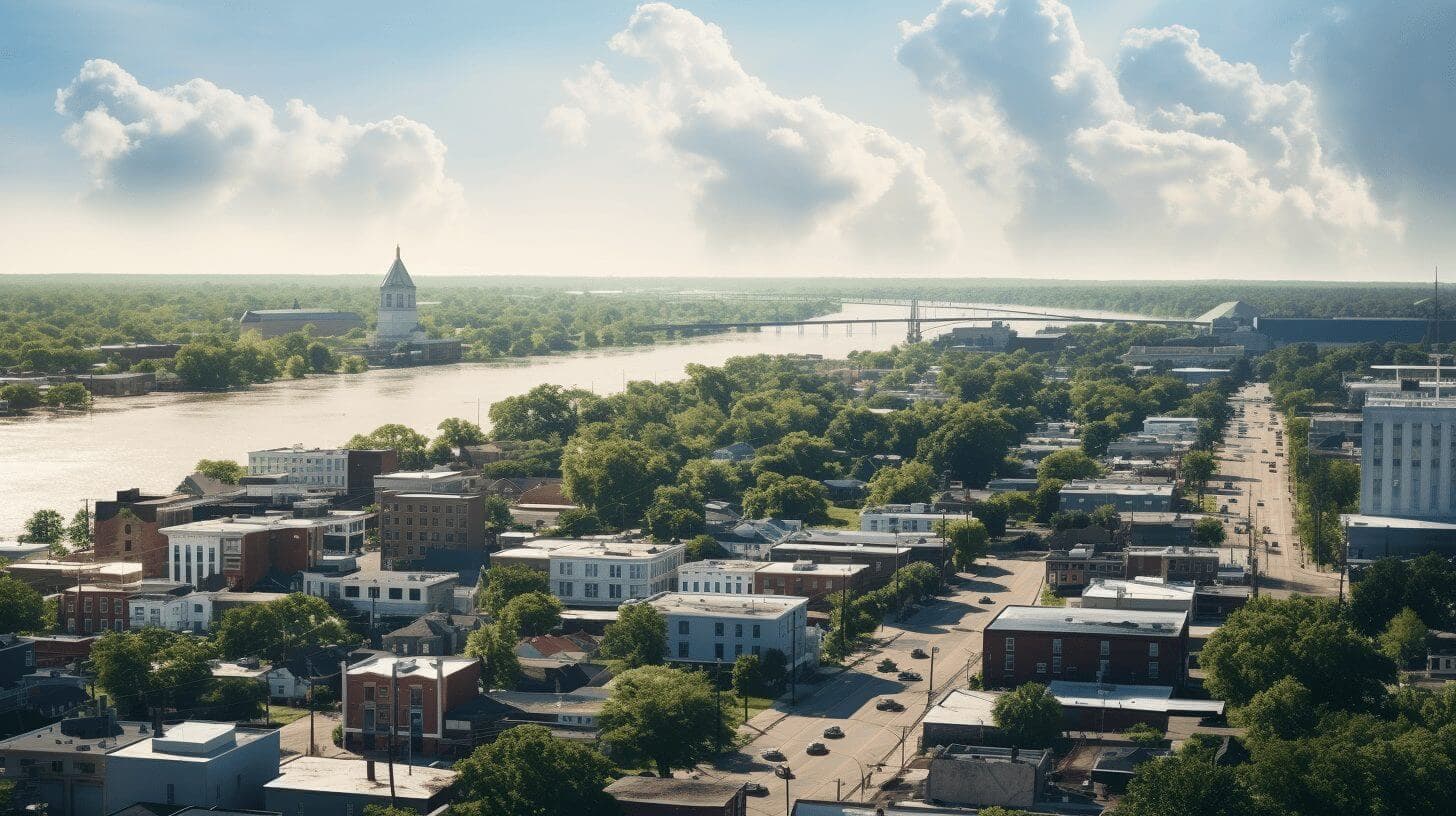
Louisiana is a city rich in history and cultural diversity. Its early settlers included indigenous tribes such as the Atakapa-Ishak, Choctaw, Chitimacha, and Opelousas, along with early European settlers from France, Spain, and Acadia. These various cultures established vibrant communities along the Vermilion River and its bayous, laying the foundation for Lafayette’s diverse cultural tapestry.
Lafayette snapshot
| Aspect | Details |
|---|---|
| Average Home Price | $275,000 |
| Cost of Living | 89.685 Real Price Parity (RPP for the US is 100, lower = lower than average, higher = higher than average) |
| Crime | 41.29 incidents per 1,000 residents (Average crime rate in US is 23.48 per 1,000 residents (FBI, US Census)) |
| Weather | Lafayette features a humid subtropical climate with long, hot summers and short, mild winters, typical of the Gulf Coast region, offering a warm and often humid weather experience year-round. |
Lafayette healthcare
Lafayette, Louisiana, hosts several prominent healthcare facilities, providing a range of medical services to the community.
| Category | Details |
|---|---|
| Lafayette Hospitals | Lafayette General Medical Center and Our Lady of Lourdes Regional Medical Center are known for their wide array of medical services and specialties. |
| Other Notable Facilities | Additional healthcare facilities in Lafayette include the Heart Hospital of Lafayette and the Women’s & Children’s Hospital, further enhancing the city’s healthcare infrastructure. |
Lafayette walkability
Lafayette, Louisiana, offers a mixed walkability experience, with an average Walk Score of 42. This score indicates a moderate level of walkability, suggesting that while some errands can be accomplished on foot, a car might be more convenient for others.
| Category | Details |
|---|---|
| Overall Walkability | Lafayette has an average Walk Score of 42, indicating a moderate level of walkability across the city. |
| Highly Walkable Areas | Neighborhoods like the Saint Street area are very walkable, with scores up to 89, making them ideal for pedestrian activities. |
| Neighborhood Variability | Walkability in Lafayette varies significantly by neighborhood, with some areas being more pedestrian-friendly than others. |
| Bikeability | Lafayette’s bike infrastructure is limited, with some areas rated as ‘Somewhat Bikeable’. |
Lafayette education
The education landscape in Lafayette is diverse, with several high-ranking schools. Acadiana Renaissance Charter Academy is noted for its dedicated teachers and safety, with a student-teacher ratio of 21:1.
| Category | Details |
|---|---|
| Top Public High Schools | Acadiana Renaissance Charter Academy and Lafayette High School are among the top public high schools in Lafayette, with A- ratings on Niche. |
| Top Private High Schools | St. Thomas More Catholic High School is recognized as one of the top private high schools in Lafayette, with an A- rating on Niche. |
| Student-Teacher Ratios | Varies by school: Acadiana Renaissance Charter Academy (21:1), St. Thomas More Catholic High School (11:1), Lafayette High School (24:1). |
| Academic Environment | These schools are noted for their diverse and challenging academic environments, with a focus on student engagement and achievement. |
Lafayette jobs and economy
Lafayette’s economy reflects a dynamic job market with significant employment sectors. As of October 2023, the unemployment rate in Lafayette Parish stands at 3.3%, indicating a stable job environment. Employment trends have seen some fluctuations, with a noticeable decline from 2020 to 2021, but showing signs of recovery in various industries.
| Category | Details |
|---|---|
| Job Market Trends | Employment declined by about 5.15% from 2020 to 2021, but various sectors indicate recovery. |
| Average Annual Salary | The average salary in Lafayette is $89,685. |
| Leading Industries | Major employment sectors include healthcare and social assistance, retail, trade, and educational services. |
| Median Earnings | Industries with the best median earnings for men include finance, insurance, and agriculture; for women, the top industries are agriculture and finance. |
Best areas and suburbs of Lafayette
Lafayette offers a diverse array of suburbs and areas, each with unique characteristics. These areas offer a mix of community, convenience, and quality living, catering to different lifestyles and preferences.
Our methodology
In our methodology for identifying the best places to live in a state, we adopt a comprehensive and data-driven approach, relying on a variety of trusted and authoritative sources to compile our rankings. This process is outlined in the following steps:
Economic Data Analysis: We gather robust economic statistics from esteemed sources such as the U.S. Bureau of Labor Statistics and the Bureau of Economic Analysis. These agencies provide us with critical data on employment rates, income levels, job growth, and other economic indicators that contribute significantly to the quality of life in an area.
Employment Opportunities: In addition to general economic data, we specifically examine employment statistics from the Bureau of Labor Statistics. This includes examining trends in job growth, the diversity of industries present, and the stability of employment in different regions, which are vital factors in determining a place's economic health and attractiveness.
Crime Rate Assessment: For understanding the safety and security of a place, we utilize data from the FBI’s Crime Data Explorer. This tool offers detailed insights into various types of crime rates, including both property and violent crimes, allowing us to assess the safety of a community comprehensively.
Housing Market Evaluation: Housing affordability and market trends are key components of our analysis. We primarily use Zillow.com for up-to-date and detailed information on house prices, trends in the housing market, and the overall affordability of living in different areas. When necessary, we also consult other reliable sources to validate and enrich our data.
Additional Quality of Life Factors: Recognizing that quality of life is influenced by a variety of factors, we also incorporate data from other official and reputable sources. This includes information on education quality, healthcare accessibility, environmental quality, transportation infrastructure, and recreational opportunities, among others.
Data Integration and Analysis: Upon gathering data from these diverse sources, we integrate and analyze it to provide a holistic view of each location. Our analysis involves not only looking at the raw numbers but also understanding the context and relative significance of each data point.
FAQ
What are the best places to live in Louisiana?
Louisiana offers a variety of living options, from the vibrant culture of New Orleans to the historic charm of Baton Rouge and the growing community of Lafayette. Each city offers unique experiences, cultures, and lifestyles.
How is the job market across different cities in Louisiana?
The job market varies across Louisiana, with New Orleans offering opportunities in tourism and hospitality, Baton Rouge in government and education, and Lafayette in healthcare and technology. Each city has its unique economic strengths.
What is the cost of living like in major cities of Louisiana?
The cost of living varies in Louisiana’s major cities. New Orleans and Baton Rouge have a higher cost of living compared to the national average, while Lafayette offers a more affordable lifestyle with a growing job market.
What are popular recreational activities in Louisiana’s major cities?
Louisiana’s cities offer diverse recreational activities. New Orleans is known for its vibrant music and festivals, Baton Rouge for its rich history and arts, and Lafayette for its outdoor activities and cultural events.
What are the educational opportunities across Louisiana?
Louisiana hosts a range of educational opportunities. New Orleans and Baton Rouge are home to renowned universities and a variety of public and private schools, while Lafayette offers strong educational programs, particularly in the public sector.
Key takeaways
- Cultural Melting Pot: Louisiana’s rich tapestry of cultural heritage, influenced by French, Spanish, African, and Native American cultures, creates a unique environment of music, cuisine, and tradition.
- Historical and Modern Balance: The state balances its deep historical roots with a lively, modern spirit, making its history a living part of everyday life.
- Diverse Living Experiences: From New Orleans’ jazz clubs to Lafayette’s serene bayous, Louisiana offers a variety of living experiences in its cities and countryside.
- Focus on Preservation and Progress: Louisiana’s dedication to preserving its past while embracing innovation and progress offers a living experience that is as multifaceted as its history.
Share this post:
Add as a preferred source on Google
Table of Contents