
Best Cities To Live In Washington (2026 Guide)

Last updated 03/19/2024 by
Benjamin Locke
Edited by
Andrew Latham
Summary:
Washington State offers a diverse living experience, from the bustling city life in Seattle and Tacoma to the serene and historical ambiance of Spokane. Each city uniquely contributes to the state’s overall charm, with Seattle’s innovative spirit, Tacoma’s industrial heritage, and Spokane’s mix of history and modernity. These cities exemplify the best of Washington, featuring top-notch healthcare, education, walkability, and robust job markets, all set against the backdrop of stunning natural beauty.
Home to towering mountains, lush rainforests, and a rugged coastline, it offers an outdoor paradise for nature enthusiasts. Washington’s history, deeply influenced by Native American heritage and a pioneering spirit, is palpable in its rich traditions and community values. From the bustling tech hub of Seattle to the serene vineyards of Walla Walla, the state boasts a diverse economy that ranges from cutting-edge technology to sustainable agriculture. These three cities are some of the best places to live in Washington and the entire country.
Get Competing Personal Loan Offers In Minutes
Compare rates from multiple vetted lenders. Discover your lowest eligible rate.
It's quick, free and won’t hurt your credit score
Best cities to live in Washington
Seattle
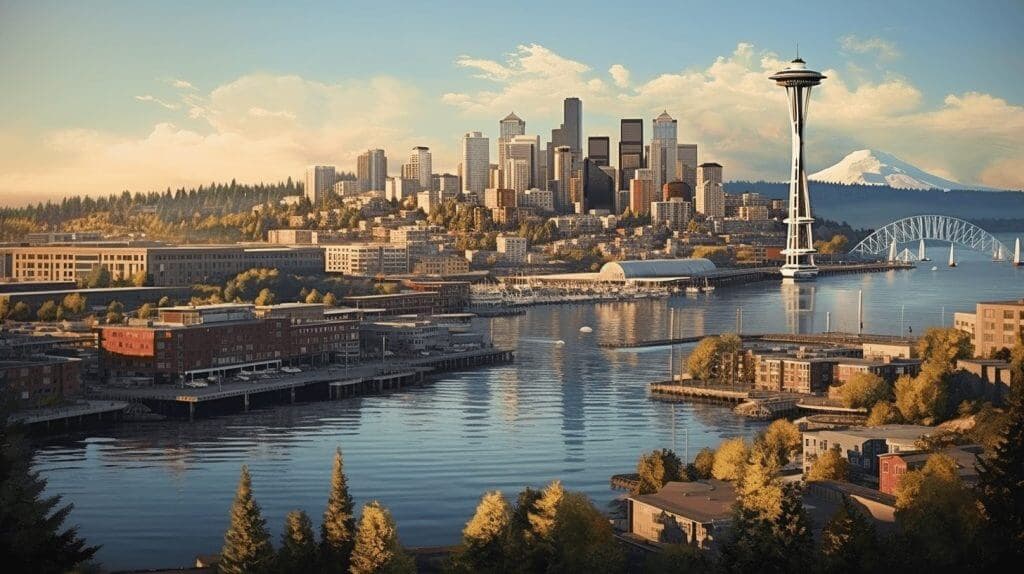
Founded in the mid-19th century, Seattle, Washington, started as a modest logging town and has since evolved into a vibrant hub of innovation and natural beauty. Nestled between the saltwater Puget Sound to the west and Lake Washington to the east, this dynamic city is defined by its stunning waterfronts and mountainous skyline. Known as the “Emerald City” for its lush evergreen forests, Seattle seamlessly combines its rich history with a progressive and forward-thinking culture.
Seattle snapshot
| Aspect | Details |
|---|---|
| Average Home Price | $824,264 |
| Cost of Living | 113.676 Regional Price Parity (RPP for the US is 100, lower = lower than average, higher = higher than average) (Part of the Seattle–Tacoma–Bellevue, WA Metropolitan statistical area, BEA) |
| Crime | 63 incidents per 1,000 residents. (Average crime rate in the US is 23.48 per 1,000 residents (FBI, US Census)) |
| Weather | Seattle experiences a temperate marine climate, with mild, wet winters and warm, dry summers. |
Seattle healthcare
Seattle stands out for its high-quality healthcare facilities, housing several top-ranked hospitals and medical centers. These institutions are known for their advanced medical practices and research contributions. The city’s healthcare system is a blend of cutting-edge technology, renowned healthcare professionals, and comprehensive care facilities, making it a leading healthcare destination in the Pacific Northwest.
| Category | Details |
|---|---|
| Seattle Hospitals | Seattle is home to some of the nation’s top hospitals, including the University of Washington Medical Center and Swedish Medical Center. |
| Other Notable Facilities | Facilities like Harborview Medical Center and Virginia Mason Medical Center also contribute to the city’s robust healthcare landscape. |
Seattle walkability
Seattle’s walkability is a highlight of the city, offering residents and visitors a blend of urban convenience and scenic beauty. The city has an average Walk Score of 74, indicating that most errands can be accomplished on foot. This is complemented by Seattle’s efficient public transportation system and bike-friendly infrastructure.
| Category | Details |
|---|---|
| Overall Walkability | Seattle has an average Walk Score of 74, making it one of the more walkable large cities in the US. |
| Highly Walkable Areas | Neighborhoods like the International District, Belltown, and First Hill have high Walk Scores, ranging from 93 to 98. |
| Neighborhood Variability | Walkability in Seattle varies significantly by neighborhood, with some areas being highly walkable, while others may require transportation. |
| City Ranking | Seattle is ranked as the 9th most walkable large city in the US, according to Walk Score. |
Seattle education
Seattle’s education system is marked by a range of high-performing public schools and school districts, reflecting the city’s commitment to educational excellence. This vibrant educational landscape is recognized in various rankings that highlight the quality of schools and districts in the Seattle area.
| Category | Details |
|---|---|
| Top High Schools in Seattle | U.S. News & World Report’s 2022 rankings list several top-performing high schools in the Seattle area, such as Tesla STEM High School in Redmond, International School in Bellevue, and Raisbeck Aviation High School in Tukwila, among others. |
| Seattle School District Rankings | Seattle Public Schools feature in various rankings, with schools evaluated based on college readiness, state assessment proficiency, and graduation rates. |
| Standout Seattle Schools | Other notable high schools include Newport Senior High School, Bellevue High School, Mercer Island High School, and Interlake Senior High School, each recognized for their educational excellence in different respects. |
| Overall Educational Environment | Seattle’s focus on education is evident in its diverse range of high-quality schools, catering to various educational needs and emphasizing college readiness and comprehensive learning. |
Seattle jobs and economy
Seattle’s economy is diverse and dynamic, characterized by significant contributions from the technology sector, robust job market growth, and a promising outlook for future job opportunities. As a major tech hub, the city attracts talent and businesses from around the world.
| Category | Details |
|---|---|
| Job Market Growth | Seattle’s job market is buoyed by its strong tech sector, with companies like Amazon and Microsoft providing substantial employment opportunities. |
| Average Annual Salary | The average annual salary in Seattle is $92,113. (Part of the Seattle–Tacoma–Bellevue, WA Metropolitan statistical area, BEA) |
| Future Job Growth | Future job growth in Seattle is expected to be robust, particularly in tech, healthcare, and green jobs sectors. |
| Recent Trends | While Seattle’s job market has been affected by global economic trends, including the COVID-19 pandemic, it has shown resilience and adaptability. |
| Attractiveness to New Residents | Seattle’s thriving job market and quality of life continue to attract new residents, despite the high cost of living. |
| Overall Economic Strength | Seattle’s economy is diverse and robust, with a strong base in technology, trade, and innovation, making it a significant economic player in the Pacific Northwest. |
Best areas and suburbs of Seattle
Seattle’s suburbs offer a range of lifestyles, from urban conveniences to serene natural settings. Each suburb is unique, boasting its own blend of amenities, from top-rated schools and tech hubs to recreational opportunities and community vibes.
| Suburb | Description |
|---|---|
| Bellevue | Offers a blend of urban and suburban living with excellent schools, parks, and a growing tech sector. |
| Kirkland | Known for its waterfront parks, vibrant downtown, and proximity to tech employers. |
| Redmond | Home to Microsoft, it offers a suburban feel with strong tech job opportunities and recreational activities. |
| Issaquah | Boasts natural beauty with access to outdoor activities and a family-friendly community. |
| Mercer Island | Known for its affluent community, top-rated schools, and scenic beauty. |
| Shoreline | Offers affordable housing options with good schools and community amenities. |
Tacoma
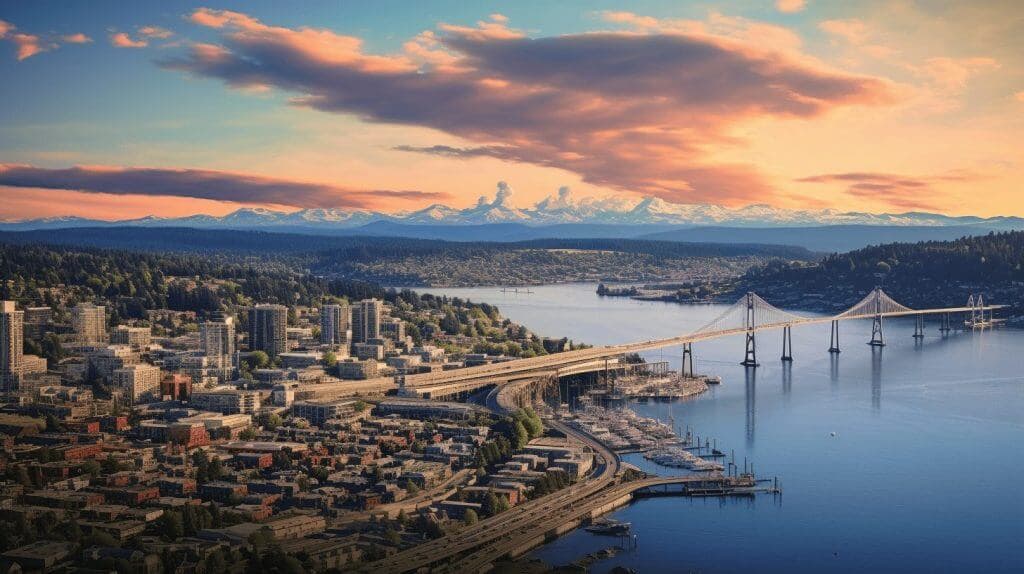
Founded in the mid-19th century, Tacoma, Washington, emerged as a pivotal industrial city on the shores of Puget Sound. Known as the “City of Destiny,” Tacoma captivated early settlers with its strategic location as a terminus of the Northern Pacific Railroad, alongside its stunning natural backdrop of Mount Rainier. Today, Tacoma blends its industrial heritage with a renewed focus on arts and culture, offering residents and visitors alike a unique blend of historical significance and contemporary urban development.
Tacoma snapshot
| Aspect | Details |
|---|---|
| Average Home Price | $347,000 |
| Cost of Living | 113.676 Regional Price Parity (RPP for the US is 100, lower = lower than average, higher = higher than average) (Part of the Seattle–Tacoma–Bellevue, WA Metropolitan statistical area, BEA) |
| Crime | 81 incidents per 1,000 residents. (Average crime rate in the US is 23.48 per 1,000 residents (FBI, US Census)) |
| Weather | Tacoma experiences a mild marine climate with cool summers and mild winters, characterized by frequent cloud cover and moderate precipitation. |
Tacoma healthcare
Tacoma’s healthcare landscape is defined by its array of reputable medical facilities. These institutions provide comprehensive healthcare services, ranging from emergency care to specialized treatments, catering to the diverse needs of the Tacoma community.
| Category | Details |
|---|---|
| Tacoma Hospitals | Tacoma is home to reputable healthcare facilities such as MultiCare Tacoma General Hospital, which is known for its comprehensive care services. |
| Other Notable Hospitals | Other significant healthcare facilities include St. Joseph Medical Center and Mary Bridge Children’s Hospital, offering a range of specialized medical services. |
Pro Tip
“Washington’s healthcare system is marked by accessibility and innovation. The state prioritizes healthcare advancements, contributing to a positive healthcare environment for residents. “ – Kevin Mercier, founder of Travel Blog Kevmrc.com
Tacoma walkability
Walkability in Tacoma varies across its neighborhoods. Some areas, particularly downtown, offer a highly walkable environment, ideal for residents who prefer to run errands on foot, highlighting the city’s commitment to accessible urban design.
| Category | Details |
|---|---|
| Overall Walkability | New Tacoma is classified as a ‘Walker’s Paradise’ with a Walk Score of 95, indicating high walkability for daily errands. |
| Highly Walkable Areas | The New Tacoma area shines as a prime example of walkability in the city. Central Tacoma and North End neighborhoods are particularly walkable, offering residents easy access to various amenities and a pedestrian-friendly environment. |
| Neighborhood Variability | Walkability in Tacoma varies by neighborhood, with New Tacoma being the most walkable. |
| City Ranking | Tacoma does not have a national ranking, but New Tacoma stands out for its walkability. |
Tacoma education
Tacoma’s education landscape is marked by a diverse array of schools, each contributing uniquely to the city’s commitment to academic excellence and holistic student development. From public to private institutions, Tacoma’s schools are dedicated to providing quality education across various educational spectrums.
| Category | Details |
|---|---|
| Tacoma Area School Districts | Home to schools like Lowell Elementary and Browns Point Elementary, Tacoma School District is known for its diverse educational offerings and strong academic programs. |
| High Schools in Tacoma | High schools such as the Science and Math Institute and Stadium High School are recognized for their academic and extracurricular excellence, as highlighted by U.S. News & World Report. |
| Public School Performance | Public schools in Tacoma, including Foss High School and Dr. Dolores Silas High School, vary in performance, with several noted for their educational excellence. |
| Top Public Schools in Tacoma | Notable schools like Lowell Elementary and Stanley Elementary stand out for their high performance and commitment to educational achievements. |
Tacoma jobs and economy
Tacoma’s economy reflects its diverse industrial base, with recent trends indicating growth and adaptability. The city’s job market is evolving, influenced by various sectors, and showcases resilience in the face of economic changes.
| Category | Details |
|---|---|
| Job Market Growth | The Tacoma-Lakewood area has seen an increase in nonfarm employment, indicating a growing job market. |
| Average Annual Salary | The average salary in Tacoma is $92,113. (Part of the Seattle–Tacoma–Bellevue, WA Metropolitan statistical area, BEA) |
| Future Job Growth | Future job growth in Tacoma, Washington, is predicted to be 39.9% over the next ten years, which is notably higher than the US average of 33.5%. This positive trend indicates a robust and expanding job market in the city. |
| Recent Trends | The employment rate in Tacoma has fluctuated, with various sectors like construction and health services experiencing changes. |
| Unemployment Rate | As of Q4, the unemployment rate in Tacoma stood at 4.4%. |
| Overall Economic Strength | Tacoma’s economy is marked by a diversity of industries including construction, manufacturing, and education and health services. |
Spokane

Founded in 1881, Spokane, Washington, began as a trading post and rapidly grew to become a key hub in the Pacific Northwest. Known for its strategic location near the Spokane River, the city played a significant role in mining and agriculture. Spokane’s rich history is intertwined with the growth of the railroad and timber industries, shaping its development. Today, Spokane combines its historical roots with modernity, showcasing a vibrant community with a diverse economy. The city is recognized for its beautiful parks, cultural institutions, and a growing economic landscape that includes healthcare, education, and technology sectors.
Spokane snapshot
| Aspect | Details |
|---|---|
| Average Home Price | $374,653 |
| Crime | 53 incidents per 1,000 residents. (Average crime rate in the US is 23.48 per 1,000 residents (FBI, US Census)) |
| Weather | Semi-arid climate with hot, dry summers and cold, snowy winters. |
| Cost of Living | 102.671 Regional Price Parity (RPP for the US is 100, lower = lower than average, higher = higher than average) |
Spokane healthcare
Spokane boasts a strong healthcare landscape, highlighted by several institutions. These institutions are recognized for their exceptional care and comprehensive range of medical services, contributing significantly to the city’s medical community.
| Category | Details |
|---|---|
| Spokane Hospitals | Spokane boasts notable healthcare institutions. Providence Sacred Heart Medical Center is recognized for various types of care, including heart bypass surgery, hip replacement, and stroke. Providence Holy Family Hospital offers comprehensive services like cancer care, cardiovascular services, and emergency care. |
| Other Notable Hospitals | MultiCare Deaconess Hospital, known for its wide range of medical and surgical services, and the Shriners Hospitals for Children, specializes in pediatric care. Additionally, the Veterans Affairs Medical Center provides dedicated services to veterans. |
Spokane walkability
Spokane’s walkability varies across its neighborhoods, offering different experiences depending on the area. While some neighborhoods may be more walkable, others might require the use of a car for most errands.
| Category | Details |
|---|---|
| Overall Walkability | Spokane has an average Walk Score of 49, suggesting that it is a car-dependent city. |
| Highly Walkable Areas | Neighborhoods like Riverside, Emerson Garfield, and Cliff Cannon are more walkable. |
| Neighborhood Variability | Walkability in Spokane varies significantly by neighborhood. |
| City Ranking | Spokane is a car-dependent city |
Spokane education
Spokane’s education system boasts a mix of high-quality schools and districts, providing a strong educational foundation. The city’s commitment to educational excellence is reflected in its schools, which are recognized for their academic achievements and nurturing environments.
| Category | Details |
|---|---|
| Spokane Area School Districts | Spokane School District is noted for its quality education, with various schools ranked on Niche.com. |
| High Schools in Spokane | North Central High School and Mt. Spokane High School are among the top 100 in the state, according to U.S. News & World Report. |
| Public School Performance | Specific public school performance rankings for Spokane are not available, but the city has several schools noted for their quality education. |
| Top Public Schools in Spokane | Notable schools include Lewis and Clark High School and Davenport High School, which are recognized for their educational excellence. |
Spokane jobs and economy
Spokane’s economy is dynamic, characterized by a diverse job market and steady growth. The city’s resilience is evident in various economic sectors, adapting to modern demands and offering a range of job opportunities, making it an attractive place for new residents and businesses.
| Category | Details |
|---|---|
| Job Market Growth | Little to no job growth is expected the next year due to inflationary pressures, but unemployment rates remain stable below 4%. |
| Average Annual Salary | The average income of a Spokane resident is $53,620 |
| Future Job Growth | Future job growth over the next ten years is predicted to be 33.4%, slightly lower than the US average of 33.5%. |
| Recent Trends | Spokane’s labor market shows resilience, with recent economic forecasts suggesting continued strength in various sectors. |
| Attractiveness to New Residents | Spokane’s diverse economy and stable job market make it an appealing destination for new residents. |
| Overall Economic Strength | The economy is diversified, with key sectors including education, health services, and leisure and hospitality. |
Our methodology
In our methodology for identifying the best places to live in a state, we adopt a comprehensive and data-driven approach, relying on a variety of trusted and authoritative sources to compile our rankings. This process is outlined in the following steps:
Economic Data Analysis: We gather robust economic statistics from esteemed sources such as the U.S. Bureau of Labor Statistics and the Bureau of Economic Analysis. These agencies provide us with critical data on employment rates, income levels, job growth, and other economic indicators that contribute significantly to the quality of life in an area.
Employment Opportunities: In addition to general economic data, we specifically examine employment statistics from the Bureau of Labor Statistics. This includes examining trends in job growth, the diversity of industries present, and the stability of employment in different regions, which are vital factors in determining a place's economic health and attractiveness.
Crime Rate Assessment: For understanding the safety and security of a place, we utilize data from the FBI’s Crime Data Explorer. This tool offers detailed insights into various types of crime rates, including both property and violent crimes, allowing us to assess the safety of a community comprehensively.
Housing Market Evaluation: Housing affordability and market trends are key components of our analysis. We primarily use Zillow.com for up-to-date and detailed information on house prices, trends in the housing market, and the overall affordability of living in different areas. When necessary, we also consult other reliable sources to validate and enrich our data.
Additional Quality of Life Factors: Recognizing that quality of life is influenced by a variety of factors, we also incorporate data from other official and reputable sources. This includes information on education quality, healthcare accessibility, environmental quality, transportation infrastructure, and recreational opportunities, among others.
Data Integration and Analysis: Upon gathering data from these diverse sources, we integrate and analyze it to provide a holistic view of each location. Our analysis involves not only looking at the raw numbers but also understanding the context and relative significance of each data point.
FAQ
What is the overall cost of living like in Washington State?
The cost of living in Washington varies significantly between urban and rural areas. Cities like Seattle and Bellevue have a higher cost of living, largely due to housing costs. However, there are more affordable areas in the state, particularly in smaller towns and rural areas.
How is the weather in Washington State?
Washington State’s weather varies by region. The western part, including Seattle, experiences mild, wet winters and dry summers, while the eastern part has a more continental climate with colder winters and hot summers. The state’s diverse climate supports various outdoor activities year-round.
What are the educational opportunities like in Seattle?
Seattle offers a wealth of educational opportunities, with a strong network of public and private schools, and renowned universities like the University of Washington. The city is known for its emphasis on technology and innovation, which is reflected in its educational institutions.
How does the natural environment in Washington contribute to quality of life?
Washington’s rich natural environment, from the Pacific coastline to the Cascade Mountains, greatly enhances the quality of life. Residents enjoy outdoor activities like hiking, skiing, and boating, and the state’s commitment to environmental sustainability is evident in its parks and green spaces.
What job opportunities are available in the Washington job market?
Washington’s job market is robust, particularly in the technology sector, with major companies like Microsoft and Amazon headquartered in the state. Other significant sectors include aerospace, with Boeing, and agriculture. The state’s economy is diverse, providing opportunities in various fields.
Key takeaways
- Washington State’s blend of natural beauty, cultural diversity, and innovative spirit makes it a unique place to live, offering something for everyone, from outdoor enthusiasts to tech professionals.
- Cities like Seattle and Tacoma offer a balance of urban development and natural splendor, with vibrant cultural scenes and historical significance.
- Seattle stands out for its high-quality healthcare, robust job market, diverse education system, and being one of the most walkable cities in the US.
- Tacoma, with its rich industrial heritage and scenic waterfront setting, offers a diverse lifestyle, including quality healthcare, walkability, and a range of educational opportunities.
- Spokane, known for its historical roots and diverse economy, provides a mix of high-quality education, dynamic job market, and varied living environments in its suburbs and neighborhoods.
Share this post:
Add as a preferred source on Google
Table of Contents