
What are NFTs? A Beginner’s Guide to Non-Fungible Tokens and Digital Art

Last updated 03/21/2025 by
SuperMoney Team
Edited by
Andrew Latham
Summary:
NFTs, or non-fungible tokens, are unique digital assets stored on the blockchain. While they started with digital art and collectibles, NFTs have expanded into music, gaming, and even tweets. This guide breaks down what NFTs are, how they work, and why they’ve sparked a digital art revolution—along with some of the weirdest examples ever sold.
NFT stands for non-fungible token. Unlike cryptocurrencies such as Bitcoin or Ethereum—which are fungible, meaning each unit is the same as another—NFTs are completely unique. You can’t exchange one NFT for another expecting the same value.
NFTs are stored on a blockchain, typically Ethereum, which certifies the digital asset’s authenticity and ownership. Because of this, they’re often compared to digital certificates of ownership—especially for art, music, videos, and even digital real estate.
How NFTs work
At the core of NFTs is blockchain technology. When someone creates an NFT (called “minting”), they generate a digital token that is recorded on the blockchain. This record includes:
- Who owns the NFT
- The NFT’s transaction history
- Metadata such as creator info, time of creation, and links to the digital file
NFTs can be bought, sold, or traded on NFT marketplaces like OpenSea, Rarible, and Foundation. Some NFTs include additional features such as royalties, which automatically pay the original artist a percentage of future sales.
NFT art: A digital revolution
NFTs have taken the art world by storm. Digital artists can now sell their work online without relying on galleries or agents, and they can receive royalties every time their piece is resold. That’s a big shift in power.
Notable moments in NFT art include:
- Beeple’s “Everydays: The First 5000 Days” – Sold at Christie’s auction house for $69 million
- Pak’s “The Merge” – Sold for $91.8 million on Nifty Gateway
- XCOPY and Fewocious – Artists known for their futuristic, edgy, and emotion-heavy NFT collections
While some view NFT art as a genuine breakthrough, others see it as a speculative trend. Still, it has opened new doors for artists worldwide and sparked a conversation about the future of creativity and ownership.
Off-the-wall NFTs: From tweets to memes
NFTs aren’t limited to just digital art. Some of the most eyebrow-raising NFT sales include:
- Jack Dorsey’s first tweet – Sold for nearly $3 million in 2021. It read: “just setting up my twttr.”
- “Disaster Girl” meme – Sold by the original subject, Zoe Roth, for nearly $500,000
- A virtual home – “Mars House” by Krista Kim, a 3D digital property, sold for over $500,000
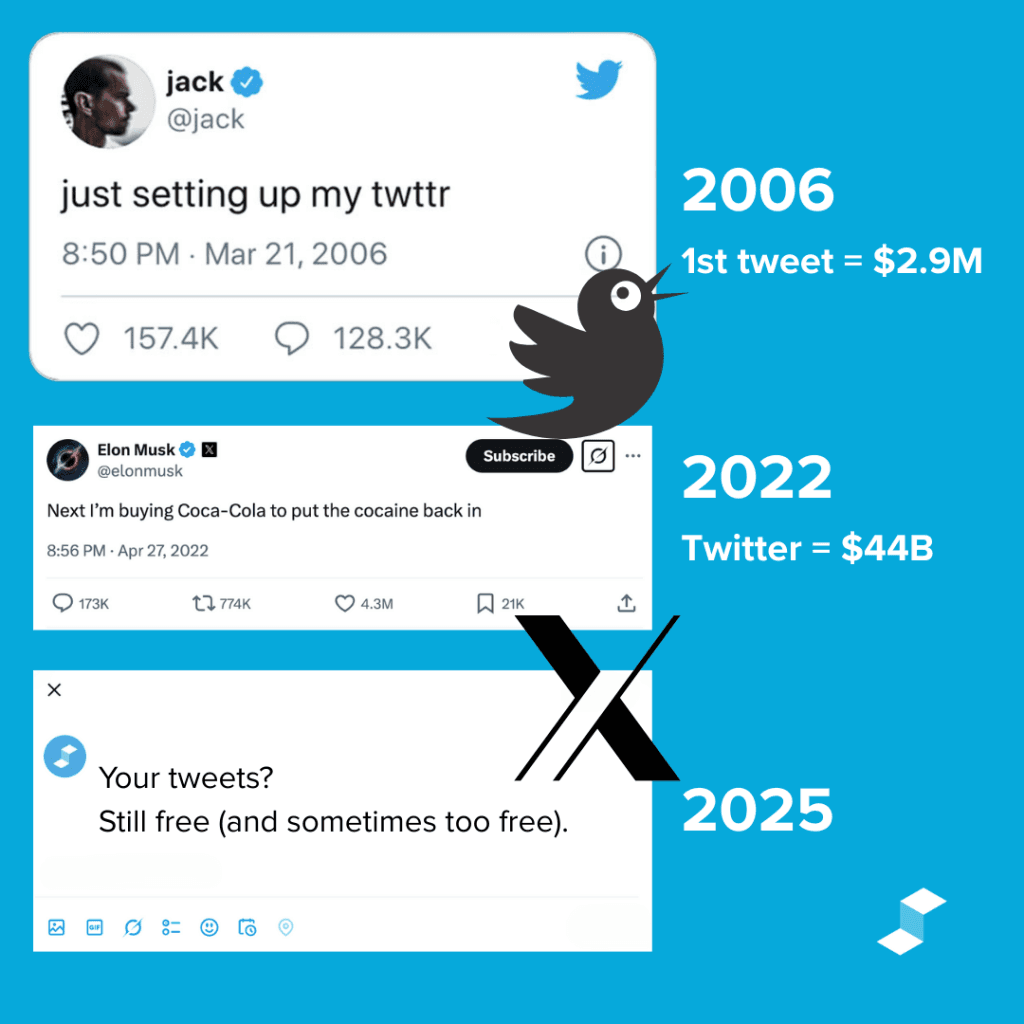
These examples show the sheer variety of digital content that can be tokenized—and how value in the NFT space can come from culture, novelty, or internet history.
NFTs vs. SFTs: What’s the difference?
NFTs aren’t the only digital assets on the blockchain. Semi-fungible tokens (SFTs) are another kind. They start as fungible but become non-fungible once used.
Here’s how they compare:
| Feature | NFT | SFT |
|---|---|---|
| Uniqueness | Always unique | Only unique after use |
| Use case | Art, collectibles, digital goods | Gaming, event tickets, coupons |
| Tradability | Traded as individual items | Traded in bulk before use |
SFTs are often used in gaming, where players can own items like weapons or armor that start as identical but become unique with in-game use or customization.
Frequenly asked questions
Can anyone create an NFT?
Yes, anyone can mint an NFT using platforms like OpenSea or Rarible. However, there may be gas (transaction) fees depending on the blockchain used.
Are NFTs environmentally harmful?
NFTs on blockchains like Ethereum can be energy-intensive. But newer networks (like Solana or Ethereum 2.0) are moving toward more sustainable models.
Is buying an NFT the same as owning the copyright?
Not necessarily. Buying an NFT gives you ownership of the token, not always the intellectual property rights unless stated in the sale.
Can NFTs lose value?
Absolutely. NFT prices are driven by demand, and like collectibles or stocks, they can rise or fall dramatically.
What wallets can store NFTs?
Digital wallets like MetaMask, Coinbase Wallet, and Trust Wallet can store and manage NFTs safely.
Key takeaways
- NFTs are unique digital assets that prove ownership using blockchain technology
- NFT art has enabled a new economy for digital creators
- High-profile NFT sales include tweets, memes, and virtual houses
- While promising, NFTs carry risks like speculation, volatility, and unclear regulations
- SFTs are a hybrid token type used mainly in gaming and e-commerce
Table of Contents