
How To Get Out Of Credit Acceptance Car Loan

Last updated 12/05/2024 by
Benjamin Locke
Edited by
Andrew Latham
Summary:
Credit Acceptance car loans often come with high-interest rates and strict terms that can be challenging for borrowers. This guide explores detailed strategies, including refinancing, negotiating with lenders, and selling the vehicle, to help borrowers manage or exit these loans effectively.
Credit Acceptance provides auto loans to individuals with low or no credit, allowing them access to financing. However, these loans are often associated with unfavorable terms, including high-interest rates and rigid repayment schedules. If you’re struggling to manage a Credit Acceptance car loan, you’re not alone. Borrowers often face negative equity or ballooning costs that make their loans unmanageable. This comprehensive guide outlines proven strategies to alleviate the burden and potentially exit your loan.
Get Competing Auto Loan Offers In Minutes
Compare rates from multiple vetted lenders. Discover your lowest eligible rate.
It's quick, free and won’t hurt your credit score
How Credit Acceptance car loans work
Credit Acceptance specializes in subprime loans targeted at borrowers with poor credit scores. While these loans can help individuals obtain vehicles when traditional lenders turn them away, they often come with serious drawbacks:
- High-interest rates: Subprime loans typically carry higher rates, ranging from 12% to over 20% APR.
- Negative equity risk: Vehicles depreciate faster than the loan balance, leaving borrowers owing more than the car’s worth.
- Limited flexibility: Loan agreements often lack provisions for financial hardships, making adjustments difficult.
- Strict repossession policies: Missing even a few payments can lead to repossession.
Signs your Credit Acceptance loan is unmanageable
Understanding when your Credit Acceptance car loan has become unmanageable is critical to taking control of your financial situation. Borrowers often struggle with the weight of their loan but may not fully recognize the severity of their challenges until it’s too late. Here are detailed signs that your loan may be unmanageable and what they mean for your finances:
1. Struggling to make monthly payments consistently
If you’re frequently late on payments or can barely scrape together the amount due each month, it’s a sign your loan is exceeding your budget. This issue often arises when monthly payments are disproportionate to your income, leaving little room for essential expenses like housing, utilities, or groceries.
| Issue | What This Means | What to Look For |
|---|---|---|
| Struggling to make monthly payments | Missing payments or paying late can lead to additional fees, damage to your credit score, and even repossession of your vehicle. | Are you relying on credit cards or loans to make ends meet? Are essential bills being delayed or skipped altogether? |
2. Owing more on the loan than the car is worth (negative equity)
Negative equity occurs when the remaining loan balance exceeds the current market value of your car. For example, if you owe $15,000 on your loan but the car is worth only $12,000, you have $3,000 in negative equity. This is common in subprime loans, where high-interest rates and rapid vehicle depreciation can make it nearly impossible to build equity.
| Issue | What This Means | What to Look For |
|---|---|---|
| Owing more on the loan than the car is worth (negative equity) | If you need to sell or trade in your car, you may have to cover the difference out of pocket, adding to your financial burden. | Use tools like Kelley Blue Book or NADA Guides to assess your car’s current value compared to your loan balance. |
3. Facing late fees or penalties for missed payments
Loan agreements often include steep penalties for late or missed payments, which can compound your financial difficulties. A single late payment can trigger fees, and repeated delays can lead to collections or repossession.
| Issue | What This Means | What to Look For |
|---|---|---|
| Facing late fees or penalties for missed payments | Late fees increase your overall loan cost, and missed payments damage your credit score. This can make it harder to refinance or secure future loans. | Review your loan agreement to understand the penalties for late payments and calculate how much you’re losing to fees. |
4. High-interest costs causing the total repayment amount to skyrocket
Subprime loans from Credit Acceptance often come with high-interest rates, sometimes exceeding 20% APR. Over time, the interest can make the total cost of the loan significantly higher than the vehicle’s value.
| Issue | What This Means | What to Look For |
|---|---|---|
| High-interest costs causing the total repayment amount to skyrocket | You’re paying a premium for the car, and a large portion of your monthly payment is going toward interest rather than reducing the principal balance. | Review your loan statement to see how much of your payment is applied to the principal versus interest. If interest consumes most of the payment, the loan is likely becoming unmanageable. |
How to evaluate your situation
If one or more of these signs apply to you, it’s time to assess your financial health and explore solutions. Here’s what to consider:
- Budget Analysis: Are your car payments leaving you without enough funds for other necessities? A budget review can highlight whether the loan fits into your current financial reality.
- Loan Terms: Are you aware of your loan’s interest rate, penalties, and payoff schedule? Understanding these details can help you make informed decisions about next steps.
- Credit Report: Check your credit score and report to see how your loan is affecting your overall financial profile. Improving your credit may open doors to refinancing or better loan options.
What to do if your loan feels unmanageable
If these signs resonate with your situation, don’t wait for the problem to escalate. Taking proactive steps can help you regain control and potentially save your vehicle and your finances. Solutions such as refinancing, negotiating with the lender, or selling the vehicle can provide relief. Understanding the root of the problem and acting swiftly can prevent further damage to your financial well-being.
Steps to get out of a Credit Acceptance car loan
1. Refinance the loan
Refinancing replaces your current loan with a new one that offers better terms. It’s an effective way to lower monthly payments, reduce interest rates, or extend the repayment period.
When to refinance:
– Your credit score has improved since you took out the loan.
– Current interest rates are lower than when you signed your original agreement.
– Your credit score has improved since you took out the loan.
– Current interest rates are lower than when you signed your original agreement.
Steps to refinance:
Refinancing a car loan can be a smart move to reduce your monthly payments and save money on interest. By replacing your current loan with one that has better terms, you can ease your financial burden and make your loan more manageable. Below are the essential steps to successfully refinance your car loan.
- Check your credit score to evaluate your eligibility for refinancing.
- Research lenders that offer competitive refinancing options, such as credit unions, online lenders, or traditional banks.
- Use a refinancing calculator to estimate savings and determine the break-even point.
- Apply for refinancing and review the terms carefully before finalizing.
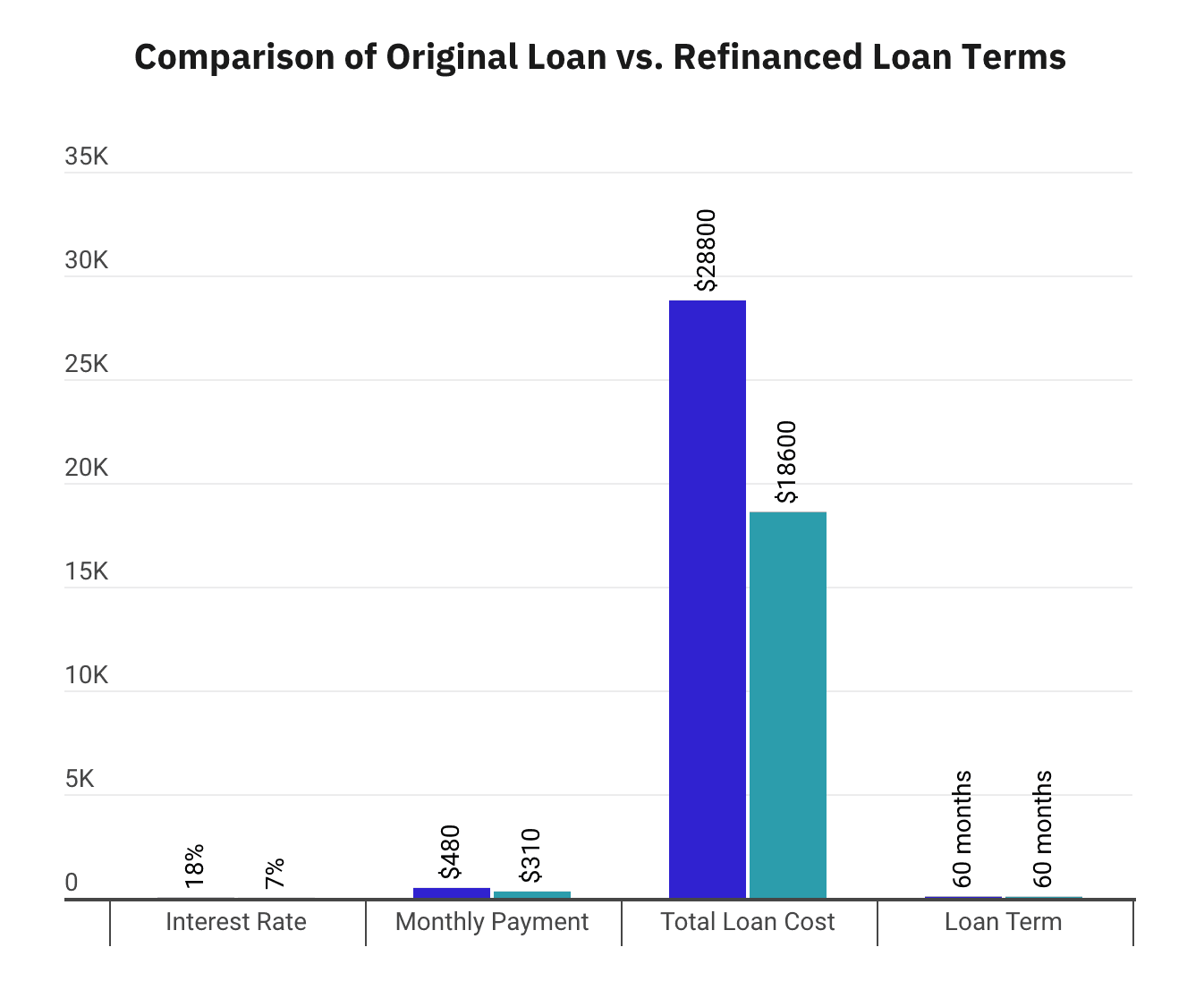
Comparison of Original Loan vs. Refinanced Loan Terms
Refinancing a high-interest car loan can significantly reduce monthly payments and the overall cost of the loan. In the example below, a borrower initially took out a loan with an 18% interest rate, resulting in a monthly payment of $480 and a total loan cost of $28,800 over 60 months. After refinancing at a much lower 7% interest rate, the borrower’s monthly payment dropped to $310, and the total cost of the loan decreased to $18,600, while maintaining the same loan term. This example illustrates the potential savings refinancing can provide.
2. Sell the car privately
Selling your car privately typically results in a higher sale price than trading it in at a dealership. Use the proceeds to pay off the loan balance.
Steps for a private sale:
1. Determine your car’s market value using tools like Kelley Blue Book or NADA Guides.
2. Advertise the vehicle on platforms like Craigslist, Facebook Marketplace, or local classifieds.
3. Negotiate with potential buyers to achieve the highest possible price.
4. Use the sale proceeds to pay off the loan and resolve any remaining balance.
2. Advertise the vehicle on platforms like Craigslist, Facebook Marketplace, or local classifieds.
3. Negotiate with potential buyers to achieve the highest possible price.
4. Use the sale proceeds to pay off the loan and resolve any remaining balance.
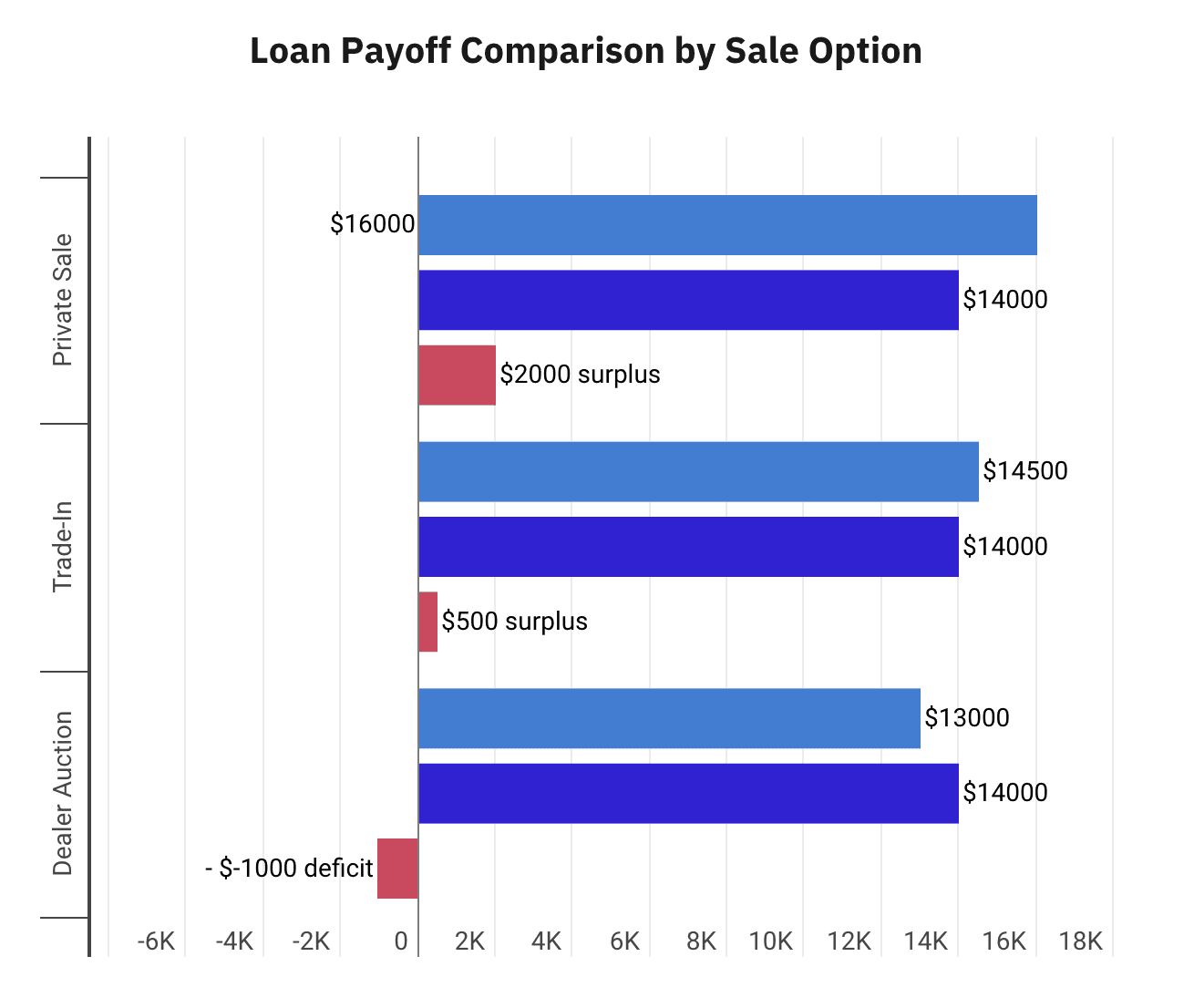
Comparison of sale options for paying off your loan
Selling your car can be a practical way to pay off your loan, especially if the vehicle’s value exceeds the remaining balance. The chart below compares different sale options—private sale, trade-in, and dealer auction—highlighting how each can impact your ability to cover the loan.
3. Trade in the vehicle
If a private sale is not feasible, trading in your vehicle at a dealership can help offset the loan balance. This option is more convenient than a private sale, though it typically offers a lower value. Here are the steps to follow:
- Visit multiple dealerships to get appraisals for your car.
- Negotiate the trade-in value, ensuring it aligns with your car’s market worth.
- Use the trade-in value to cover as much of your loan as possible.
- Finance the remaining balance into a new loan, if necessary.
4. Negotiate with Credit Acceptance
Many lenders, including Credit Acceptance, are willing to negotiate loan terms to prevent repossession, which can be costly for them. Proactively reaching out to your lender can yield favorable results. Some negotiation options include:
| Negotiation Option | Outcome |
|---|---|
| Lower monthly payments | Extending the loan term reduces your monthly financial burden but may increase total interest paid. |
| Reduce interest rate | Lower rates decrease monthly payments and the overall cost of the loan. |
| Waive late fees | Removes additional financial stress caused by missed payment penalties. |
Pro Tip: Prepare documentation showing your financial hardship, such as proof of income loss or unexpected expenses, to increase the likelihood of approval.
5. Pay off the loan early
Paying off your loan early is one of the most effective ways to eliminate interest and free up your budget for other financial priorities. Consider these strategies:
- Allocate extra funds: Use bonuses, tax refunds, or other windfalls to reduce the principal balance faster.
- Set up bi-weekly payments: Paying every two weeks instead of monthly reduces the loan term by applying extra payments annually.
- Use debt snowball or avalanche methods: Focus extra payments on your car loan, targeting either the smallest balance (snowball) or the highest interest rate (avalanche).
6. Consider voluntary surrender
Voluntary surrender is a final option for borrowers who cannot manage their car loan and have exhausted all other alternatives. By voluntarily returning your vehicle to Credit Acceptance, you can avoid repossession fees and further legal complications. However, this choice will still negatively impact your credit score, and you may be responsible for any deficiency balance if the vehicle’s sale does not cover the remaining loan amount.
To initiate the process, you must notify Credit Acceptance of your decision to surrender the vehicle. Once arrangements are made, you will need to return the car to a designated location. After the sale of the vehicle, work with the lender to negotiate repayment terms for any outstanding balance.
Although voluntary surrender is not an ideal solution, it allows you to close the chapter on a challenging loan and focus on rebuilding your financial health. Taking proactive steps after a voluntary surrender—such as improving your credit score and managing future loans wisely—can set you on a path toward a more stable financial future.
FAQ
What are the consequences of defaulting on a Credit Acceptance car loan?
Defaulting on a Credit Acceptance car loan can lead to vehicle repossession, negatively impacting your credit score and making it more challenging to secure future loans. Additionally, you may be responsible for any deficiency balance if the sale of the repossessed vehicle doesn’t cover the remaining loan amount.
Can I trade in my vehicle if I have negative equity on my Credit Acceptance loan?
Yes, you can trade in a vehicle with negative equity; however, the remaining loan balance will typically be rolled into your new loan, increasing its amount. This can result in higher monthly payments and more interest paid over time.
How does voluntary surrender differ from repossession?
Voluntary surrender involves proactively returning the vehicle to the lender when you can no longer make payments, while repossession occurs when the lender takes back the vehicle due to missed payments. Both actions negatively affect your credit score, but voluntary surrender may allow for more control over the process and potentially lower fees.
Are there any government programs to assist with high-interest auto loans?
Currently, there are no specific government programs aimed at assisting with high-interest auto loans. However, exploring options like refinancing through credit unions or banks, seeking financial counseling, or discussing hardship programs with your lender can provide potential relief.
How can I improve my credit score to qualify for better auto loan terms in the future?
Improving your credit score involves consistently making on-time payments, reducing outstanding debt, keeping credit card balances low, and avoiding new credit inquiries. Regularly reviewing your credit report for errors and disputing any inaccuracies can also help boost your score over time.
Key Takeaways
- Credit Acceptance car loans often come with high-interest rates and strict terms, making them challenging for borrowers.
- Recognizing signs of an unmanageable loan, such as consistent payment struggles and negative equity, is crucial for timely intervention.
- Strategies like refinancing, negotiating with lenders, selling the vehicle, or, as a last resort, voluntary surrender, can help manage or exit burdensome loans.
- Proactively assessing your financial situation and exploring available options can lead to more favorable loan terms and improved financial health.
Share this post:
Add as a preferred source on Google
Table of Contents