
Can You Sell a Car With a Loan

Last updated 12/05/2024 by
Benjamin Locke
Edited by
Andrew Latham
Summary:
Selling a car with a loan is possible, but it requires careful planning and coordination. This article guides you through understanding your loan payoff, determining your car’s value, and deciding between a private sale or trade-in. By following these steps, you can ensure a smooth and transparent transaction while managing your personal finances effectively.
Get Competing Auto Loan Offers In Minutes
Compare rates from multiple vetted lenders. Discover your lowest eligible rate.
It's quick, free and won’t hurt your credit score
Can you sell a car with a loan?
Yes, you can sell a car with an outstanding loan, but it involves additional steps compared to selling a fully paid-off vehicle. The main challenge lies in ensuring the loan is fully paid off so the title can be transferred to the buyer. Lenders typically hold the title until the loan is settled, so coordinating with the lender and the buyer is essential.
For example, in a private sale, the buyer may need to pay the lender directly to settle the loan before the title is released. In a trade-in scenario, the dealer often handles the loan payoff. While these steps add complexity, they are manageable with proper preparation and communication.
How to sell a car with a loan
Selling a car with an outstanding loan may seem complicated, but it’s a manageable process when broken down into clear steps. The key is to coordinate with your lender, understand your car’s financial details, and decide on the best selling method. Whether you choose a private sale or a trade-in, the following steps will guide you through the process:
- Understand your loan payoff amount: Find out exactly how much you owe on the car to ensure the loan is fully paid off during the sale.
- Assess your car’s value: Determine its market value to set a competitive price and identify whether you have positive or negative equity.
- Coordinate with your lender: Inform your lender about the sale and understand the procedures for transferring the title.
- Choose a selling method: Decide between a private sale for a potentially higher price or a trade-in for convenience.
- Complete the transaction: Finalize the sale by paying off the loan, transferring the title, and handing over the car to the new owner.
How to determine your loan payoff amount
The loan payoff amount is the exact sum required to fully repay your car loan, including any remaining principal, interest, and fees. Knowing this amount is crucial for structuring the sale. Here’s how to determine it:
- Access your lender’s portal: Most lenders provide a detailed breakdown of your loan balance and payoff amount through their online platforms. Log in to your account and navigate to the payoff section.
- Contact customer service: If you’re unsure or need additional clarification, call your lender’s customer service line. Ask for a written payoff statement, which includes the exact amount needed to settle the loan.
- Account for interest: Payoff amounts can change daily due to accrued interest. Make sure you pay the exact amount specified on the date of the transaction to avoid delays.
Assess your car’s market value
Understanding your car’s market value is another critical step. This helps you set a competitive selling price and determine whether you have equity. Several factors influence your car’s value, including its make, model, year, condition, mileage, and market demand. Here’s how to assess it:
| Method | Details |
|---|---|
| Use online valuation tools | Websites like Kelley Blue Book, Edmunds, and CARFAX offer free tools to estimate your car’s value based on its make, model, year, mileage, and condition. Enter these details to get a personalized valuation. |
| Check local listings | Browse similar cars for sale in your area to compare prices. This provides insight into market trends and demand for your specific vehicle. |
| Consider condition adjustments | Adjust the price based on your car’s condition. Damaged vehicles may require a lower price, while a well-maintained car can command a higher price. |
Understanding equity
Equity is the difference between your car’s market value and the amount you owe on your auto loan. It plays a key role in determining how you approach selling a car with a loan. Let’s break this down further with real-life scenarios.
Positive equity
Positive equity occurs when your car’s market value is higher than the remaining balance on your auto loan. This situation is ideal for sellers because it allows you to sell the car without needing to pay extra money out of pocket. Here’s an example:
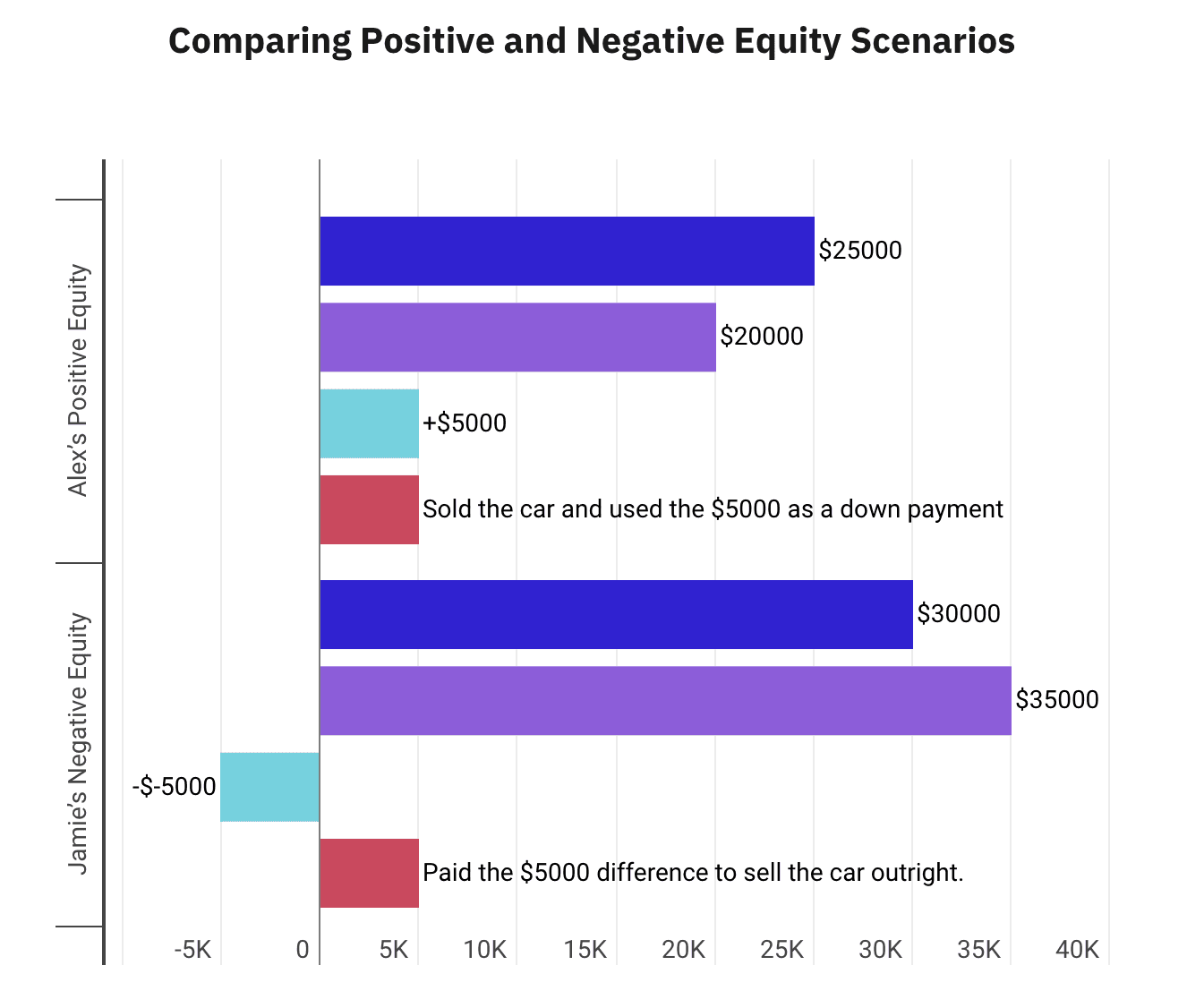
Alex owns a 2019 Honda CR-V that has been well-maintained and is currently valued at $25,000 in the market. Alex’s remaining loan balance is $20,000. This means Alex has $5,000 in positive equity, which can be used as a down payment on a new car, saved for future expenses, or applied to other financial goals.
This example highlights how positive equity provides flexibility, simplifies the selling process, and can even help with other financial plans.
Negative Equity
Negative equity, often referred to as being “upside-down” on your loan, occurs when your car’s market value is less than the loan payoff amount. This situation can be challenging but is not impossible to navigate. Consider this example:
Jamie owns a 2020 Ford Explorer that is currently valued at $30,000 in the market. However, the remaining loan balance is $35,000, leaving Jamie with $5,000 in negative equity. This means Jamie owes more on the car than it is worth, complicating the sale process.
What Jamie can do:
- Pay the $5,000 out of pocket to cover the difference and complete the sale.
- Trade the car in at a dealership, rolling the $5,000 negative equity into a new car loan. While this increases the loan balance on the new vehicle, it allows Jamie to proceed with the transaction.
- Delay the sale and continue making loan payments until the loan balance is reduced or the car’s market value increases, creating positive equity.
Negative equity requires thoughtful planning, but by exploring these options, sellers like Jamie can make informed decisions and find a solution that best fits their financial situation.
Coordinate with your lender
Working closely with your lender is a crucial step when selling a car with an outstanding loan. Your lender holds the title to the vehicle and will provide the exact payoff amount, guide you through the payoff process, and release the title to the buyer once the loan is settled. Proper coordination ensures a smooth and efficient transaction.
1. Consult your lender
Start by notifying your lender about your intention to sell. Lenders are accustomed to handling such transactions and can provide guidance. Questions to ask include:
- What is the exact payoff amount, including any fees?
- How will the title be transferred to the buyer?
- Are there specific forms or procedures required for this process?
The lender may require payment directly from the buyer or from you before releasing the title. Clear communication ensures a smooth process.
2. Choose a selling method
You can sell your car either through a private sale or a trade-in. Each option has its advantages and challenges:
| Method | Details |
|---|---|
| Private Sale | Selling to an individual often fetches a higher price. However, it requires coordination between you, the buyer, and the lender. The buyer might need reassurance that the loan will be paid off promptly to secure the title. |
| Trade-In | Trading your car at a dealership simplifies the process since the dealer pays off the loan and handles the paperwork. This option may result in a lower sale price but eliminates the hassle of managing the payoff and title transfer yourself. |
3. Finalize the sale
The final step involves completing the transaction and transferring ownership:
- For private sales, arrange for the buyer to pay the lender directly or provide you with the funds to settle the loan. Once the lender receives payment, they release the title, allowing you to transfer ownership to the buyer.
- For trade-ins, the dealer pays off the loan and manages the title transfer. If you have positive equity, it can be applied to your next purchase; if not, you’ll need to cover the negative equity upfront.
Choose your selling method and complete the transaction
The final stages of selling a car with a loan involve selecting the best method and finalizing the sale. Whether you choose a private sale or a trade-in, both require attention to the loan payoff and title transfer to ensure a smooth process.
In a private sale, after agreeing on a price, the buyer may pay the lender directly or provide funds for you to settle the loan. Once the loan is paid off, the lender will release the title for ownership transfer. This process might take extra steps but often secures a higher price.
If you choose a trade-in, the dealership manages most of the transaction. The dealer pays off the loan and handles the title transfer. Positive equity can go toward a new vehicle, while negative equity may be rolled into a new loan or paid upfront. Trade-ins are more convenient but usually yield a lower price.
Regardless of the method, finalize all financial and legal documents before handing over the keys. Completing the paperwork ensures peace of mind and simplifies the process for both you and the buyer.
Key considerations when selling a car with a loan
Timing the sale
Timing can significantly impact the success of your sale. Consider selling during periods of high demand for your vehicle type, such as spring and summer for convertibles or fall for trucks and SUVs. A strong market may help you secure a higher sale price.
Being transparent with buyers
Honesty is crucial when selling a car with a loan. Inform buyers about the outstanding loan early in the process. This builds trust and prevents potential disputes. Providing documents like the payoff statement from your lender can reassure buyers that the transaction is legitimate.
Handling negative equity
Negative equity can complicate the sale, but there are ways to address it:
- Pay the difference out of pocket to settle the loan.
- Roll the negative equity into a new loan if purchasing another vehicle.
- Refinance the loan to lower monthly payments, making the car more attractive to buyers.
FAQs
Can I sell my car with a loan to someone out of state?
Yes, you can sell your car to an out-of-state buyer while you still have a loan. However, ensure you coordinate with your lender to understand how they will handle the title transfer, as different states may have specific requirements. Clear communication between all parties is crucial.
What happens if I sell my car but don’t pay off the loan?
If you sell your car without settling the loan, the lender will still hold the title, making the transaction incomplete. This can lead to legal issues and disputes with the buyer. Always ensure the loan is fully paid off before transferring ownership.
Is it better to pay off my car loan before selling it?
Paying off the loan before selling simplifies the transaction and can make the car more appealing to buyers. However, it’s not always necessary if you handle the sale properly and involve the lender in the process. Evaluate your financial situation to decide the best option.
How long does it take to transfer the title after paying off the loan?
The title transfer process depends on your lender and state regulations. Typically, lenders release the title within a few days to a few weeks after the loan is fully paid. Make sure to ask your lender for a timeline and plan the transaction accordingly.
Can I negotiate my car loan payoff amount with the lender?
In some cases, lenders may negotiate the payoff amount, especially if you’re facing financial difficulties or are considering an early payoff. Contact your lender to discuss options and see if a reduced payoff is possible.
Key takeaways
- Selling a car with an outstanding loan is possible but requires careful coordination with your lender to ensure the title is transferred correctly.
- Understanding your loan payoff amount and car’s market value is critical to determine your equity and plan the sale effectively.
- Choosing between a private sale and a trade-in depends on your priorities—private sales often fetch higher prices, while trade-ins simplify the process.
- Handling negative equity may require out-of-pocket payments, rolling the balance into a new loan, or waiting to build positive equity before selling.
Share this post:
Add as a preferred source on Google
Table of Contents