
Holiday Financial Stress Is Back at Peak Levels: Here’s How to Stay in Control

Last updated 11/22/2025 by
SuperMoney Team
Edited by
Andrew Latham
Summary:
Summary:
What should be the happiest time of the year is becoming one of the most stressful. According to the latest data from the American Psychiatric Association, 41% of Americans say they’re more anxious about the 2025 holidays than they were last year — a sharp increase from just 28% in 2024. The reason? The cost of gifts, inflation, and financial uncertainty are making it harder to enjoy the season without worry.
For many, this financial stress isn’t theoretical. Nearly half of holiday shoppers expect to borrow money this year, and a growing number are still carrying debt from last year’s celebrations. Together, these pressures are creating a cycle of emotional overspending, regret, and long-term financial strain.
Get Competing Debt Consolidation Loan Offers
Consolidate your debt into one manageable loan with better rates and terms.
It's quick, easy and won’t hurt your credit score.
Holiday stress is back to pandemic-era levels
This sharp rebound in holiday stress mirrors what Americans felt during the height of the pandemic. The U-shaped trend — from 41% in 2021, down to 28% in 2024, and back up to 41% in 2025 — reflects how external events continue to shape our emotional and financial well-being.
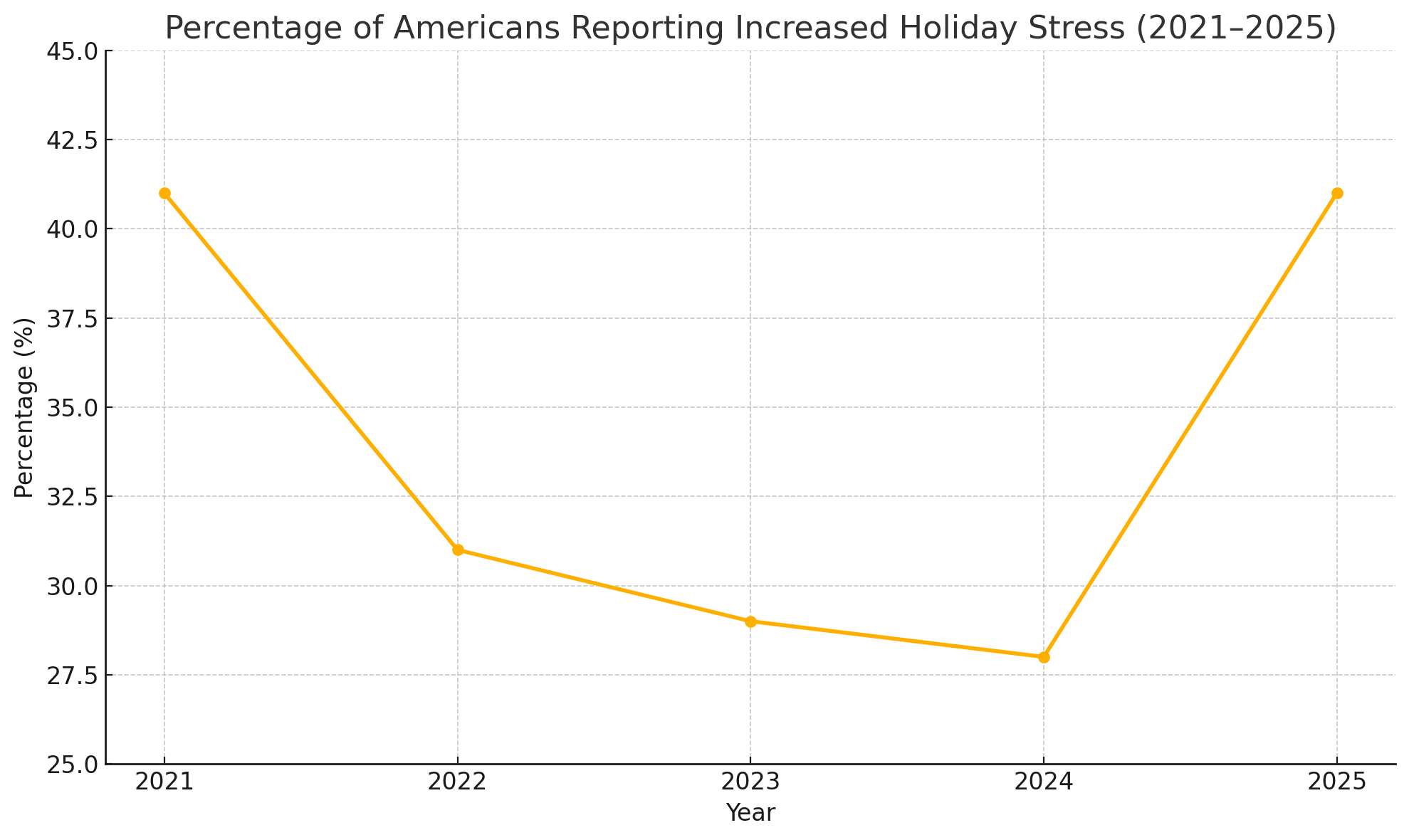
Source: American Psychiatric Association
| Year | % of Americans anticipating more holiday stress | Top stressors |
|---|---|---|
| 2021 | 41% | COVID fears, isolation, disrupted traditions |
| 2022 | 31% | Rising costs, gift affordability |
| 2023 | 29% | Securing gifts, keeping up with expectations |
| 2024 | 28% | Grief, financial concerns |
| 2025 | 41% | Economic anxiety, inflation, cost of celebrations |
Young adults are feeling the brunt of this pressure. Nearly half (49%) of those aged 18 to 34 say they’re significantly more anxious this season, with finances cited as the main driver. This stress often leads to impulsive, emotionally driven spending — and long-term financial consequences.
Holiday debt is rising — and it’s starting earlier than ever
Money stress isn’t just a feeling — it’s backed by real numbers. According to a 2025 survey from the American Institute of CPAs (AICPA):
- 47% of holiday shoppers expect to go into debt
- 79% will use credit cards to pay for gifts and expenses
- 52% don’t plan to pay the balance in full
- 17% say it will take more than 6 months to pay off the debt
This is the highest rate of expected holiday debt in over five years. And thanks to earlier sales and endless promotions, many people start spending — and borrowing — weeks before Thanksgiving.
Many still haven’t paid off last year’s holiday bills
Debt doesn’t disappear with the New Year. A recent survey from Consolidated Credit found that:
- 36% of Americans are still paying off their 2024 holiday expenses
- 69% used credit cards last year
- 20% used Buy Now, Pay Later (BNPL)
- 19% say they’re “very or extremely” stressed about holiday debt
This reveals a troubling trend: holiday debt is no longer temporary. It’s becoming year-round debt that creates a constant undercurrent of financial stress.
How social media intensifies overspending
Social platforms are playing a bigger role in driving financial stress than most people realize. A growing number of Americans use Instagram, TikTok, and YouTube to research gift ideas — and influencers now account for a large share of holiday sales.
- 80% use social media to guide gift buying
- ~20% of Cyber Monday ecommerce revenue is now influencer-driven
This trend accelerates the pressure to spend more, start earlier, and buy bigger — often beyond what families can reasonably afford. The result? More debt, more stress, and less joy.
The hidden cost of holiday borrowing
Holiday debt often starts small — $50 here, $100 there — but the long-term cost is anything but minor.
- Borrowing $600 on a credit card at 20% APR can easily cost $1,450+ when you include interest
- Investing that same $600 at 6% annual growth would be worth $1,060 in 10 years
The difference? More than $2,500 in missed value — just from one season’s overspending.
Celebrate smarter — without giving up what matters
This isn’t about skipping gifts or being a Scrooge. It’s about finding ways to celebrate that don’t come with regret.
- Set a spending limit: Choose a budget you can stick to — based on your actual financial situation, not expectations.
- Start a sinking fund: Put away a little each month to prepare for next year’s holiday costs without debt.
- Track spending: Use a budgeting app or spreadsheet to avoid emotional overspending in the moment.
- Choose meaning over money: Gifts don’t need to be expensive to be meaningful. Handmade cards, shared experiences, and thoughtful notes can mean more than store-bought goods.
- Make a gift-giving policy: Buy traditional gifts for immediate family and very close friends. For everyone else, give affordable “thought that counts” gifts — and let them know you’re choosing connection over consumerism.
Being upfront about your intentions not only sets healthy boundaries — it may inspire others to do the same.
How SuperMoney helps you reduce financial stress
SuperMoney’s free budgeting app is built to help you manage money with clarity — especially during high-stress seasons like the holidays. By linking your income, credit cards, checking accounts, loans, and credit report, you get a full view of your financial picture in one place.
With SuperMoney, you can:
- Create a realistic holiday budget
- Track spending across all accounts
- Get alerts when balances or purchases spike
- See how spending impacts your cash flow in real time
- Stay within your safe debt-to-income ratio
- Plan ahead with automated savings for next year
Take control of your financial future
SuperMoney's AI-powered budgeting and personalized financial insights help you reduce financial stress and achieve your goals faster.
When you understand your finances, you reduce stress. And when you reduce stress, you make better choices — for yourself and your loved ones. Here’s an example of someone who asked SuperMoney how much they could afford.
A healthier holiday starts with awareness
The pressure to spend won’t go away on its own. But with the right tools and a plan you can stick to, you can break the cycle of emotional spending and long-term debt.
- Track your stress and your spending
- Focus on connection, not comparison
- Use SuperMoney to stay in control
This season, give yourself the gift of peace of mind — and let SuperMoney help you make that happen. There’s a two-week free trial, so there’s no downside to giving it a try.
Frequently asked questions
What’s the average holiday debt in 2025?
Most Americans expect to take on between $600 and $1,000 in holiday-related debt, according to multiple financial surveys.
How long does it typically take to pay off holiday debt?
Based on AICPA data, 17% of holiday borrowers expect to need more than six months to pay off what they spend during the season.
What’s causing the spike in financial stress this year?
According to the APA, economic anxiety — including inflation, affordability of gifts, and broader uncertainty — is the top driver of holiday stress in 2025.
How does SuperMoney help with financial stress?
SuperMoney gives you a clear view of your finances so you can make smarter spending decisions, avoid debt, and reduce stress — especially during high-pressure times like the holidays.
Key takeaways
- Holiday-related stress has returned to pandemic-era levels at 41%
- 47% of Americans plan to go into debt for the holidays
- 36% are still carrying last year’s holiday debt
- Social media drives earlier and more expensive purchases
- SuperMoney helps reduce financial stress through personalized budgeting tools
Share this post:
Add as a preferred source on Google
Table of Contents