
Don’t Fall For These Fake IRS Emails & Scams: Protect Your Personal Data This Holiday Season

Last updated 12/06/2024 by
SuperMoney Team
Edited by
Andrew Latham
Summary:
The holidays are here, and so are the scammers. As gift lists grow and inboxes fill with deals, cybercriminals are lying in wait, ready to pounce on the unwary. The IRS, teaming up with its Security Summit partners, is urging taxpayers to stay alert this season to avoid becoming the next victim. From phishing emails that mimic delivery notifications to fake IRS messages, scams are becoming more cunning. Protect your personal and financial information with these crucial tips and keep identity thieves at bay.
The holidays are a time of cheer—but also a prime season for scams. Imagine this: You receive an email claiming to be from the IRS (see examples below), notifying you of a “pending refund” and asking you to verify your banking details to ensure prompt payment. The message looks official, complete with the IRS logo and a link to a convincing website. Eager to claim your refund, you provide the requested information—only to realize later that you’ve handed over your sensitive data to a cybercriminal.
This is exactly the kind of threat the IRS and its Security Summit partners are warning about during the 9th annual National Tax Security Awareness Week. As the holiday season converges with the lead-up to tax time, scammers are getting more sophisticated, exploiting taxpayer urgency and trust to steal identities and money.
Compare Tax Preparation Services
Compare multiple vetted providers. Discover your best option.
How scammers are targeting taxpayers
From phishing scams disguised as refund notifications to cloned emails that look legitimate, scammers are pulling out all the stops. The IRS is urging taxpayers to take simple, proactive steps to secure their data, stay alert to common tricks, and avoid clicking on anything suspicious.
Scammers are using increasingly deceptive tactics to steal sensitive data. Here are some common scams taxpayers should be aware of:
“The holiday season and tax season combined create a perfect storm for scammers,” said IRS Commissioner Danny Werfel. “Identity thieves are relentless, preying on distracted shoppers and busy professionals alike. Protecting your sensitive information takes just a little extra vigilance, and it can save you a world of trouble down the road.”
Phishing emails and fake delivery messages
Phishing emails and fraudulent text messages, in which criminals impersonate delivery services and send fake messages about failed deliveries with links to reschedule, are among the most prevalent scams. These links may download malware or steal personal information. Similarly, scammers pose as the IRS or tax professionals, claiming taxpayers have refunds or bills to settle. These messages aim to trick victims into providing Social Security numbers, bank account details, or passwords.
Advanced phishing techniques
Taxpayers should also be wary of advanced phishing techniques, including:
- Spear phishing: These personalized attacks target individuals with realistic-looking emails that appear trustworthy.
- Clone phishing: Scammers duplicate legitimate emails, altering them to include malicious attachments or links.
- Whaling: This targets high-level executives or personnel with access to sensitive financial data.
Six examples of tax-related scams to watch out for
Taxpayers should be especially vigilant about these common tax-related scams:
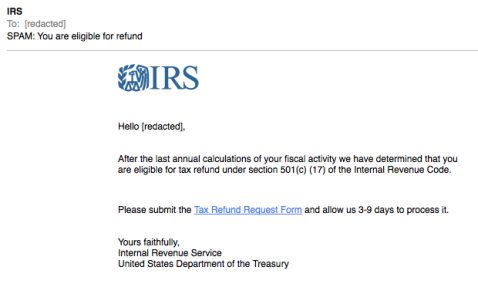
1. “We recalculated your tax refund, and you must fill out this form.”
Scammers often send official-looking emails claiming the IRS has recalculated your tax refund. These emails, sometimes featuring the IRS logo, direct recipients to click a link and fill out forms with sensitive details like Social Security numbers, addresses, and dates of birth. Some scammers even use “.edu” email addresses to target college students.
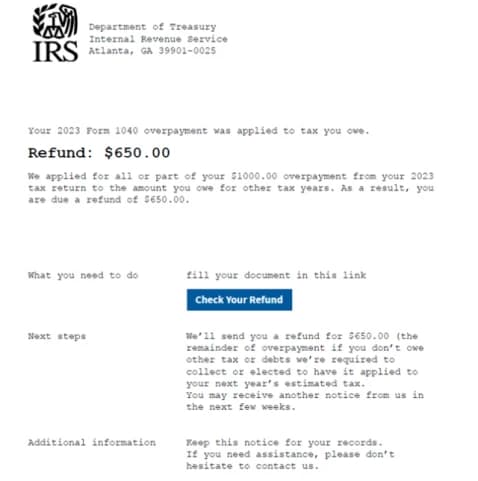
2. “Overpayment was applied to the tax you owe — Check your refund”
This is a similar version of the “we recalculated your tax refund” scam that shows the exact amount you are owed in your tax refund because you overpaid on your taxes the previous year.
3. “We’re calling from the IRS/FDIC and need your bank information.”
Scammers will pretend to be IRS or FDIC agents who need you to confirm your bank information to process a refund, to protect your funds, or for some other bogus reason. Sharing this information could lead to fraud or identity theft. Neither the FDIC, which insures deposits in banks, or the IRS will ever send unsolicited messages requesting bank account details or sensitive personal information.
4. “We’re calling to tell you your identity was stolen; you need to buy some gift cards to fix it”
In this scam, fraudsters claim to be IRS agents who say your identity has been stolen. They insist the only solution is to purchase specific gift cards and provide the card details. The IRS never asks for payments in gift cards.
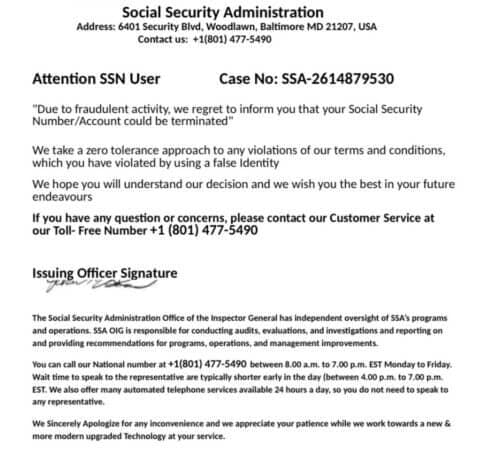
5. “We’ll cancel your Social Security number”
Scammers sometimes threaten to suspend or cancel your Social Security number if you don’t comply with their demands. This is a scare tactic. The IRS does not have the authority to cancel Social Security numbers.
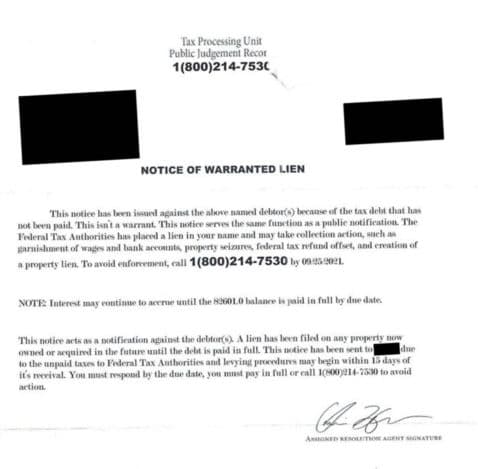
6. “This is the Tax Processing Unit, and we’re putting a lien or levy on your assets.”
Be cautious if you receive a letter or call from the “Tax Processing Unit”, the “Bureau of Tax Enforcement” or another fictional agency. Fraudsters use these fake names to pressure victims into paying non-existent tax liens or levies.
Protecting yourself during the holidays
The IRS and Security Summit partners urge taxpayers to follow these essential safety tips during the holiday season and beyond:
- Shop only on secure websites that start with “https:” and display a padlock icon.
- Avoid shopping on public Wi-Fi networks, such as those at malls or restaurants.
- Update security software on all devices, including computers, tablets, and smartphones.
- Use strong, unique passwords for online accounts and enable multi-factor authentication whenever possible.
- Be cautious with less tech-savvy family members, including children and older adults, who may be more vulnerable to scams.
Recognizing and avoiding email scams
The IRS emphasizes staying vigilant against common email scams, including:
- Phishing/Smishing: General phishing emails and SMS texts attempt to deceive recipients into clicking malicious links or sharing personal information.
- Spear phishing and whaling: Targeted attacks that appear more credible and aim at specific individuals or organizations.
- Clone phishing: Fraudulent emails that replicate legitimate messages but include harmful links or malware.
Steps to take if you’re a victim of identity theft
- File IRS Form 14039 (Identity Theft Affidavit) online or by mailing/faxing a printed form.
- Visit the IRS Identity Theft Central page for detailed guidance.
- Follow up with the IRS and monitor your financial accounts closely.
Key takeaways
- Taxpayers face heightened identity theft risks during the holiday shopping and tax season.
- Common scams include phishing emails, fake delivery notifications, and fraudulent IRS messages.
- Protect yourself by using secure websites, strong passwords, and updated security software.
- File Form 14039 if you suspect tax-related identity theft.
- Access IRS resources and attend webinars to stay informed and vigilant.
Article sources
Share this post:
Add as a preferred source on Google
Table of Contents