Savings Account Withdrawal Limits Explained: What the Rules Actually Say

Last updated 03/18/2026 by
Andrew Latham
Edited by
Andrew Latham
Summary:
Savings account withdrawal limits are restrictions on how many times per month you can transfer or withdraw money from a savings account — and while the federal six-transaction rule was eliminated in 2020, most banks still enforce their own limits.
Here’s what to know:
- Federal Regulation D: The six-transaction monthly limit was suspended by the Federal Reserve in April 2020 and has not been reinstated
- Bank-imposed limits: Most banks still cap convenient withdrawals at six per month and may charge fees or convert your account if you exceed them
- Unlimited transactions: In-person withdrawals at a branch or ATM typically do not count toward any limit
- Penalty risk: Exceeding your bank’s limit can trigger excess transaction fees of $10–$15 per transaction, or account conversion to checking
Most people don’t think about withdrawal limits until they get hit with a fee or a warning letter from their bank.
Understanding what limits still apply — and which ones don’t — helps you use a savings account without unexpected penalties or forced account changes.
Compare Savings Accounts
Compare savings accounts. Discover your best option.
What is the savings account withdrawal limit?
A savings account withdrawal limit is a cap on the number of certain types of transfers or withdrawals you can make from a savings account within a single statement cycle, typically one month.
Historically, this limit was set at six transactions per month under federal Regulation D. The Federal Reserve suspended that rule in April 2020, meaning banks are no longer required by law to enforce it.
However, most banks and credit unions still apply their own six-transaction limit as a matter of internal policy. Exceeding it can result in fees, account conversion to a checking account, or account closure in repeat cases.
Pro tip: Before opening a savings account, search the bank’s deposit account agreement for the phrase “excess transaction fee” or “excess withdrawal fee.” That one line tells you exactly what the bank charges when you go over their limit — and whether they convert your account or just assess a fee.
Online banks vary widely here; some have dropped limits entirely since the 2020 rule change.
What did Regulation D require?
Regulation D was a Federal Reserve rule that required banks to limit “convenient” withdrawals and transfers from savings and money market accounts to six per monthly statement cycle.
The rule existed to help banks maintain reserve requirements — the amount of cash they had to keep on hand relative to deposits. Savings accounts counted differently than checking accounts under those reserve calculations.
In April 2020, the Federal Reserve eliminated reserve requirements for all depository institutions and simultaneously made the six-transaction limit in Regulation D optional rather than mandatory. Banks can now allow unlimited withdrawals from savings accounts if they choose to.
Most have not changed their policies. The practical effect of the 2020 rule change is that banks are no longer legally required to charge fees or close accounts for excess transactions — but most still do so by choice.
Which transactions count toward the limit?
Not all savings account transactions count equally. Banks typically apply limits only to “convenient” or remote transactions — those you can initiate without visiting a branch.
Transactions that typically count toward the monthly limit:
- Online transfers to another account at the same bank
- External transfers to accounts at other banks
- Automatic transfers (scheduled savings contributions, bill pay)
- Overdraft protection transfers to a linked checking account
- Telephone transfers initiated by calling the bank
- Debit card purchases (if your savings account has a debit card)
Transactions that typically do not count:
- ATM cash withdrawals
- In-person withdrawals at a bank branch
- Withdrawals by mail (check request sent to the bank)
The specific rules vary by institution. Always confirm with your bank which transaction types fall under their limit — the distinction between “counted” and “uncounted” is defined in your deposit account agreement, not by federal law.
What happens if you exceed the withdrawal limit?
When you go over your bank’s monthly limit, the consequences depend on the institution’s policy. There are three common outcomes. Using savings as a checking account triggers fees fast — most banks charge $10–$15 per excess transaction, and repeated violations can lead to forced account conversion.
| Outcome | What It Means | Typical Threshold |
|---|---|---|
| Excess transaction fee | A per-transaction charge for each withdrawal over the limit | First violation, $10–$15 per transaction |
| Warning letter | Bank notifies you in writing; no fee on first occurrence | First or second violation |
| Account conversion | Savings account converted to a checking account | Repeated violations (typically 3+) |
| Account closure | Bank closes the account entirely | Persistent pattern of excess transactions |
Account conversion is the most disruptive outcome because a checking account typically earns no interest or significantly less than a savings account. You’d lose the APY benefit without necessarily choosing to do so.
Pro tip: If you rely on overdraft protection transfers from savings to checking, those count toward your monthly limit at most banks. A single month with several small overdraft transfers can push you over the threshold before you realize it.
Either maintain a larger buffer in your checking account to reduce transfer frequency, or ask your bank whether they exclude overdraft transfers from the limit — some do.
How to stay within your savings account withdrawal limit
These steps reduce the likelihood of triggering fees or account conversion through excess transactions.
- Consolidate transfers into one per month. Instead of moving money to checking whenever you need it, calculate your monthly spending needs and transfer the full amount once at the start of each month. One transfer uses one of your six transactions.
- Keep a larger buffer in checking. Maintaining 2–4 weeks of expenses in your checking account eliminates the need for frequent savings-to-checking transfers and reduces overdraft protection triggers.
- Use a high-yield checking account for day-to-day spending. Some online banks offer interest-bearing checking accounts with no transaction limits — pairing one with your savings account removes the friction entirely.
- Track your transaction count during the month. Log into your account midmonth and review how many withdrawals you’ve made. Most banks display this in the transaction history. If you’re at five, use an ATM or branch for any remaining cash needs.
- Switch to a bank with no limit. Several online banks — including Ally, Marcus, and others — eliminated their excess transaction policies entirely after the 2020 Regulation D change. If you regularly need more than six withdrawals per month, this is the cleanest solution.
Do high-yield savings accounts have stricter limits?
High-yield savings accounts follow the same transaction limit rules as traditional savings accounts — the higher interest rate does not come with additional restrictions on withdrawals.
In practice, online high-yield savings accounts are more likely to have relaxed or eliminated their withdrawal limits since 2020. Online banks don’t maintain physical branches, so they have less incentive to distinguish between account types based on transaction behavior.
Traditional bank high-yield savings accounts — offered by large institutions like Chase, Bank of America, or Wells Fargo — typically still enforce the six-transaction limit and charge excess transaction fees. Always check the specific account terms rather than assuming based on account type.
Pro tip: When comparing high-yield savings accounts, withdrawal limits are worth checking alongside APY. An account earning 4.8% APY with a six-transaction limit and a $15 excess fee can become more expensive than a 4.5% APY account with no limit if you’re a frequent transferrer.
Factor in your typical monthly transaction count before deciding on an account.
Savings account vs. checking account: transaction limits compared
Checking accounts have no federal transaction limits and typically no bank-imposed limits on transfers or withdrawals. Savings accounts may still have bank-imposed limits even though the federal requirement was lifted in 2020.
| Feature | Savings Account | Checking Account |
|---|---|---|
| Federal withdrawal limit | None (rule eliminated 2020) | Never had one |
| Bank-imposed limit | Often 6/month (varies by bank) | None |
| Excess transaction fee | $10–$15 per transaction (varies) | None |
| Interest earned | Yes — typically 0.01% to 5%+ APY | Rarely, or very low |
| Best use | Storing money not needed daily | Day-to-day spending and bill pay |
The practical takeaway: savings accounts are designed for money you don’t need to touch frequently. If you find yourself constantly moving money out, a checking account or a combination of both may better fit your actual spending pattern. The liquidity differences between HYSAs and CDs are even more pronounced — CDs impose an early withdrawal penalty rather than just a fee, making them far less accessible than any savings account.
Key takeaways
- The federal six-transaction limit under Regulation D was suspended in April 2020 and is no longer legally required.
- Most banks still enforce a six-transaction monthly limit as their own policy and charge $10–$15 per excess transaction.
- ATM and in-person branch withdrawals typically do not count toward the limit — only remote and electronic transactions do.
- Exceeding the limit repeatedly can trigger account conversion to a checking account, which typically earns less or no interest.
- Several online banks have eliminated withdrawal limits entirely since 2020 — if frequent transfers are a concern, switching is often the easiest fix.
- Consolidating transfers into one per month and maintaining a checking account buffer are the most effective ways to stay within any limit.
Frequently asked questions
How many times can you withdraw from a savings account per month?
The federal limit of six withdrawals per month was eliminated in 2020. However, most banks still cap convenient withdrawals at six per statement cycle by their own policy.
ATM withdrawals and in-person branch transactions are typically unlimited. Check your account’s deposit agreement to confirm your specific bank’s rules.
Does Regulation D still apply to savings accounts?
Regulation D still exists as a rule but the Federal Reserve made the six-transaction limit optional for banks in April 2020. Banks are no longer required to limit savings account withdrawals, but many still choose to enforce the limit and charge fees for exceeding it.
The regulation itself was not repealed — the transaction limit provision was simply made voluntary.
What is an excess transaction fee on a savings account?
An excess transaction fee is a charge assessed by your bank when you make more withdrawals or transfers from your savings account than their monthly policy allows.
The fee is typically $10–$15 per transaction over the limit. Some banks waive it on the first occurrence and send a warning letter instead; others apply it immediately.
Can a bank close your savings account for too many withdrawals?
Yes — repeated violations of a bank’s transaction limit policy can result in the bank converting your savings account to a checking account or closing it entirely. Most banks first assess fees and send warning letters before taking these steps. Account closure is typically reserved for customers who repeatedly exceed limits after being notified.
Do online savings accounts have withdrawal limits?
It depends on the bank. Many online banks — including Ally and Marcus — eliminated their excess transaction limits after the 2020 Regulation D change. Others still enforce a six-transaction cap. Online high-yield savings accounts are more likely to have no limit than traditional bank savings accounts, but you should always confirm before opening an account.
Do ATM withdrawals count toward the savings account limit?
No — ATM cash withdrawals are excluded from transaction limits at virtually all banks. The limits apply specifically to electronic and telephone transfers, not to cash withdrawals made at an ATM or in person at a branch.
This distinction comes from the original Regulation D language, which most banks carried over into their own policies even after the rule became optional.
Put your money on autopilot
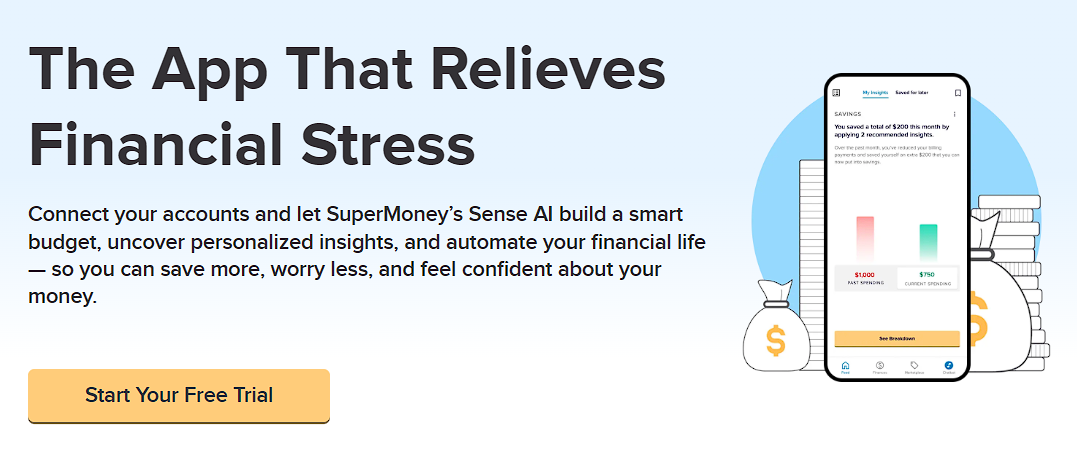
The SuperMoney app tracks all your savings and checking account activity in one place — so you always know how many transfers you’ve made this month before you hit a limit.
Andrew is the Content Director for SuperMoney, a Certified Financial Planner®, and a Certified Personal Finance Counselor. He loves to geek out on financial data and translate it into actionable insights everyone can understand. His work is often cited by major publications and institutions, such as Forbes, U.S. News, Fox Business, SFGate, Realtor, Deloitte, and Business Insider.
Share this post:
Add as a preferred source on Google
Table of Contents