
HYSA vs. CD: Which Is Better for Your Savings Goal?

Last updated 05/14/2026 by
Andrew Latham
Edited by
Andrew Latham
Summary:
A high-yield savings account (HYSA) and a certificate of deposit (CD) are both federally insured savings vehicles that earn significantly more interest than a standard savings account, but they differ fundamentally in how you access your money and how your rate is set.
The better choice depends on whether you need flexibility or are willing to lock in a rate for a fixed term.
- HYSA: Best for money you may need to access — emergency funds, short-term goals, or ongoing savings — because there is no penalty for withdrawals and the account stays open indefinitely.
- CD: Best for money you won’t need for a defined period — the rate is locked for the full term, protecting you if rates fall, but withdrawing early triggers a penalty.
- Rate environment matters: When rates are falling, a CD locks in today’s higher rate; when rates are rising, a HYSA benefits from future increases automatically.
- Both are FDIC-insured up to the standard limit at banks, making either option equally safe for deposits within that threshold.
Both accounts are legitimate ways to put idle cash to work, and the right answer almost always comes down to one question: when do you need the money back? Knowing that drives every other decision.
Compare Savings Accounts
Compare savings accounts. Discover your best option.
HYSA vs. CD: the core difference
A high-yield savings account is an interest-bearing deposit account with a variable rate — meaning the bank can raise or lower your APY at any time based on the federal funds rate and competitive conditions.
A certificate of deposit is a time deposit: you agree to leave a fixed amount of money with the bank for a set term (typically three months to five years), and in exchange the bank guarantees a fixed rate for that entire period.
Withdrawing before the term ends triggers an early withdrawal penalty, usually equivalent to several months of interest.
| Feature | High-yield savings account | Certificate of deposit |
|---|---|---|
| Access to funds | Anytime, no penalty | Locked until maturity; penalty for early withdrawal |
| Interest rate type | Variable — changes with market rates | Fixed — guaranteed for the full term |
| Rate movement | Rises when rates rise; falls when rates fall | Unaffected by rate changes during the term |
| Typical terms | No set term — stays open indefinitely | 3 months to 5 years |
| Early withdrawal penalty | None | Typically 3–12 months of interest |
| Best for | Emergency funds, ongoing savings, short-term goals | Money you won’t need for a defined period |
| FDIC insured | Yes, up to $250,000 per depositor per bank | Yes, up to $250,000 per depositor per bank |
| Minimum deposit | Often $0–$1 | Often $500–$1,000 (varies by institution) |
Pro tip: Both accounts pay interest that is taxed as ordinary income in the year it is earned — not at the lower capital gains rate. If you’re comparing after-tax returns between a HYSA and a CD, the tax treatment is identical for both products.
When a HYSA makes more sense
A high-yield savings account is the better choice when flexibility is more important than locking in a rate. The cases where it wins clearly are:
- Emergency fund. Your emergency fund needs to be accessible without penalty the day you need it. A HYSA keeps that money liquid while still earning a competitive rate — a CD would penalize you for touching it at the worst possible moment.
- Uncertain timeline. If you’re saving for a goal but don’t know exactly when you’ll need the money — a home down payment, a career change, a move — a HYSA keeps you flexible without sacrificing much in yield.
- Rising rate environment. When the Federal Reserve is raising rates, a HYSA automatically adjusts upward. You don’t need to do anything to capture higher rates, whereas a CD holder is stuck at the rate they locked in.
- Ongoing contributions. HYSAs accept new deposits at any time. CDs are funded once at opening — you can’t add to them after the fact (with the exception of add-on CDs, a less common variant that permits additional deposits during the term).
The one trade-off is rate risk: HYSA rates can drop whenever the Fed cuts or a bank reprices its offerings, and they often do so with little notice.
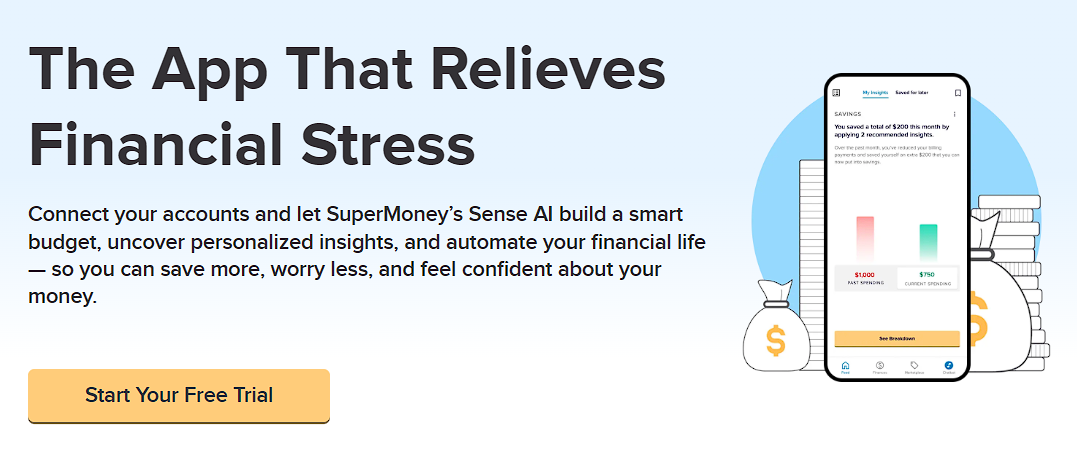 The SuperMoney app tracks your savings balances and interest earnings in one place — so you can see exactly how much your HYSA or CD is earning without logging into multiple banks.
When a CD makes more sense
A certificate of deposit wins when rate certainty matters more than access. The cases where it outperforms a HYSA are:
- Falling rate environment. If rates are expected to decline, locking in today’s rate for 12, 24, or 36 months guarantees you keep earning that rate while HYSA holders watch their APY fall.
- Defined savings goal with a fixed date. Saving for a wedding in 18 months, a tax bill due in April, or a vacation next year? A CD with a matching term pays a guaranteed amount and removes the temptation to spend the funds early.
- Commitment device. The early withdrawal penalty is genuinely useful for savers who struggle to leave money alone. The friction of a penalty can be the guardrail that protects savings from impulse spending.
- Slightly higher rates on longer terms. For terms of 12 months or more, CDs from competitive online banks often pay a modest rate premium over comparable HYSAs — though the gap has narrowed significantly in recent years.
The main downside of CDs is inflexibility: if rates rise sharply after you open a CD, you’re locked into the lower rate and face a penalty to exit. Life changes — job loss, medical expenses, an unexpected opportunity — also become more costly when your savings are locked.
Pro tip: Check the exact early withdrawal penalty before opening any CD — it varies significantly by bank and term length. A penalty of 12 months’ interest on a 2-year CD can eliminate most of your earnings if you exit halfway through. Shorter terms (3–6 months) carry smaller penalties and are safer if your timeline is uncertain.
What about a CD ladder vs. a HYSA?
A CD ladder is a strategy where you split your savings across multiple CDs with staggered maturity dates — for example, one CD maturing in 3 months, one in 6, one in 12, and one in 24 months. As each CD matures, you either spend the funds or reinvest at the current rate.
Laddering partially solves the liquidity problem with CDs by ensuring a portion of your savings is always close to maturity. It also reduces rate risk by spreading across terms rather than locking everything into one rate at one moment in time. The CD laddering strategy works best when you have a substantial amount to save and the discipline to manage multiple accounts and renewal dates.
For most people saving $10,000 to $50,000, a HYSA at a competitive online bank is simpler, equally liquid, and within a few basis points of what a short-term CD ladder would return — without the administrative overhead. A CD ladder earns its complexity at larger balances or in environments where short- and long-term rates differ significantly.
If you’re also considering a money market account, note that it sits between a HYSA and a checking account — higher liquidity than a CD but similar variable-rate structure to a HYSA. The rate difference between the best money market accounts and the best HYSAs is typically minimal and not worth prioritizing over other account features.
HYSA vs. CD for an emergency fund
For emergency fund savings specifically, a HYSA is almost always the right vehicle. An emergency fund’s entire purpose is to be accessible without friction the moment something goes wrong — a job loss, a medical bill, a car repair.
Parking emergency savings in a CD introduces exactly the friction you can’t afford in a real emergency.
The withdrawal rules on savings accounts are worth understanding even with a HYSA: federal Regulation D historically limited savings account withdrawals to six per month, though that limit was suspended in 2020 and many banks no longer enforce it.
Confirm your bank’s current policy if you anticipate needing frequent access.
A reasonable approach for larger emergency funds is to keep three months of expenses in a HYSA (fully liquid) and consider a short-term CD (3–6 months) for the portion that represents months four through six of your target.
That structure captures a modest rate premium on the less-urgent portion while keeping the first tier instantly accessible.
How to choose between a HYSA and a CD
Run through these four questions in order — your answers will point clearly to one option.
- Do you know exactly when you’ll need the money? If yes, a CD with a matching term is worth considering. If no, or if “maybe,” choose a HYSA.
- Is this your emergency fund or a portion of it? If yes, always use a HYSA — the liquidity is non-negotiable.
- What is the current rate direction? If rates are falling or have peaked, a CD locks in today’s rate. If rates are rising, a HYSA will automatically capture the increases.
- What is the CD’s early withdrawal penalty? Compare the penalty to the rate premium the CD offers over a HYSA. If the premium is 0.25% and the penalty is 6 months of interest, the CD needs to run for more than two years before the premium offsets the penalty risk. If you’re not confident in your timeline, the HYSA is safer.
Key takeaways
- HYSAs have variable rates and no withdrawal penalty; CDs have fixed rates and charge a penalty for early withdrawal.
- Both are FDIC-insured up to $250,000 per depositor per bank — neither is safer than the other from a deposit protection standpoint.
- HYSAs are the right choice for emergency funds, uncertain timelines, or rising rate environments.
- CDs are the right choice when you have a fixed savings goal with a defined date and want to lock in a guaranteed rate.
- Interest earned in both accounts is taxed identically — as ordinary income at your marginal federal rate.
- A CD ladder splits savings across multiple terms, partially solving the liquidity problem while capturing rate diversity.
- For most savers, the rate gap between a competitive HYSA and a short-term CD is small enough that flexibility wins unless you have a compelling reason to lock in.
Frequently asked questions
Is a HYSA or a CD better right now?
It depends on the rate environment and your timeline. When rates are falling or have recently peaked, a CD locks in today’s higher rate before it drops. When rates are still rising, a HYSA automatically captures each increase.
Check the current federal funds rate trajectory and compare live rates at competitive online banks before deciding — the gap between a HYSA and a short-term CD is often less than 0.5%.
Can I lose money in a HYSA or a CD?
Not in normal circumstances. Both are FDIC-insured at banks (and NCUA-insured at credit unions) up to $250,000 per depositor per institution, so your principal is protected.
The only way to “lose” money in a CD is by withdrawing early and paying an early withdrawal penalty that exceeds your earned interest — in that case, you get back slightly less than your original deposit.
Is HYSA interest taxed differently than CD interest?
No. Both are taxed as ordinary income at your marginal federal tax rate in the year the interest is credited to your account. Your bank will send a Form 1099-INT for each account where you earned $10 or more during the year.
There is no tax advantage to choosing one over the other.
What is the difference between a HYSA and a money market account?
High-yield savings accounts and money market accounts work very similarly — both offer variable rates, FDIC insurance, and easy access to funds. Money market accounts sometimes offer slightly higher rates and may come with check-writing privileges or a debit card. HYSAs at online banks are often more competitive on rate.
The practical difference between the best versions of each is small; rate and account features matter more than the label.
What happens to my CD rate if interest rates rise after I open it?
Nothing — your rate is fixed for the full term regardless of what happens to market rates. That is both the benefit and the drawback. If rates rise significantly, you’re locked in at the lower rate until your CD matures.
You can then reinvest at the new higher rate, but you’ll have missed the gains during the CD term. This is why many savers use short-term CDs (3–12 months) to limit rate-lock risk.
Should I split my savings between a HYSA and a CD?
Yes, this is a common and sensible approach. Keep your emergency fund and any savings with an uncertain timeline in a HYSA. For money you’re confident you won’t need for 6–24 months, a CD can add a modest rate premium and act as a commitment device that protects those savings from being spent.
The combination gives you both liquidity and rate certainty across different portions of your savings.
Compare today’s top high-yield savings account rates and CD rates side by side on SuperMoney — filter by term, minimum deposit, and institution type to find the right fit for your goal.Andrew is the Content Director for SuperMoney, a Certified Financial Planner®, and a Certified Personal Finance Counselor. He loves to geek out on financial data and translate it into actionable insights everyone can understand. His work is often cited by major publications and institutions, such as Forbes, U.S. News, Fox Business, SFGate, Realtor, Deloitte, and Business Insider.
Share this post:
Add as a preferred source on Google
Table of Contents