Can You Use a Savings Account Like a Checking Account?

Last updated 03/13/2026 by
Andrew Latham
Edited by
Andrew Latham
Summary:
Using a savings account like a checking account is technically possible but comes with practical limitations that make it a poor substitute for day-to-day spending. Here’s what you need to know:
- Transaction limits: Most banks cap savings account withdrawals at six per month and charge $10–$15 per excess transaction
- No debit card: Savings accounts rarely include a debit card, making point-of-sale purchases impractical
- Account conversion risk: Repeatedly exceeding transaction limits can cause your bank to convert the account to a non-interest-bearing checking account
- Better approach: Use a checking account for daily spending and a savings account for money you don’t need to access frequently
It’s a tempting idea — especially when your savings account is earning 4% or 5% APY and your checking account earns nothing.
But the two account types are designed for different jobs, and pushing a savings account into a checking account role creates friction, fees, and risk you can easily avoid.
Compare Savings Accounts
Compare savings accounts. Discover your best option.
What’s the difference between a savings and checking account?
A checking account is designed for frequent transactions — bill pay, debit card purchases, ATM withdrawals, and direct deposit. It typically has no transaction limits and comes with a debit card and check-writing ability.
A savings account is designed to hold money you don’t need right away, earn interest on that balance, and limit how often you move money out.
| Feature | Checking Account | Savings Account |
|---|---|---|
| Transaction limit | None | Often 6/month (bank policy) |
| Debit card | Standard | Rarely included |
| Check writing | Yes | No |
| Interest earned | Rarely, or very low | Yes — up to 5%+ APY |
| Overdraft protection | Standard option | Can be linked source, not primary |
| Best use | Daily spending and bills | Emergency fund, goal savings |
The gap that matters most for daily use: no debit card and transaction limits. A full comparison of checking vs. savings accounts shows just how differently the two products are structured under the hood.
Pro tip: If your goal is to earn interest on money you spend regularly, look at high-yield checking accounts instead — several online banks offer 3%–5% APY on checking balances with no transaction limits.
Can you pay bills directly from a savings account?
Yes — most savings accounts support ACH transfers, which means you can set up bill payments that pull directly from your savings account balance.
The problem is that each bill payment counts as one of your monthly transactions under most banks’ policies. If you have six bills set to auto-pay from your savings account, you’ve used your entire monthly limit before making a single discretionary transfer.
A single overdraft transfer, a scheduled savings contribution, or one manual transfer will push you over the limit and trigger an excess transaction fee — the full mechanics of which are covered in our breakdown of savings account withdrawal limits.
Can you use a savings account debit card?
Most savings accounts do not come with a debit card. The few that do — typically money market accounts marketed as hybrid products — still carry transaction limits that make them unsuitable for daily card use.
Without a debit card, point-of-sale purchases aren’t possible directly from a savings account. You’d need to first transfer funds to a linked checking account, which itself uses one of your monthly transactions and introduces a transfer delay of one to three business days at some banks.
What happens if you use a savings account for daily spending?
Using a savings account as your primary spending account creates a predictable sequence of problems.
- Transaction fees pile up. Each withdrawal beyond your bank’s monthly limit costs $10–$15. Six extra transactions in a single month equals $60–$90 in fees — easily wiping out a month’s worth of interest earned.
- Your account gets converted. Repeatedly exceeding the limit signals to your bank that the account is being used as a checking account. Most banks will convert it to a non-interest-bearing checking account, ending your APY advantage entirely.
- Transfers cause timing gaps. Moving money from savings to checking before you can spend it introduces delays. A purchase you need to make today may not clear until the transfer settles tomorrow or the next day.
- You lose the savings discipline benefit. Keeping spending money separate from savings money creates a psychological barrier against impulse spending — the same principle behind building a dedicated emergency fund. Merging the two removes that barrier.
Pro tip: At $15 per excess transaction, just two overage fees wipe out an entire month of interest on a $5,000 balance at 5% APY.
When does it actually make sense to use a savings account for transactions?
There are limited scenarios where routing some transactions through a savings account is reasonable — as long as you stay within the monthly limit.
- One large recurring transfer: Setting up a single monthly transfer to cover a fixed expense (like rent) uses one transaction and keeps the account otherwise clean.
- Overdraft backup: Linking your savings account as overdraft protection for your checking account is a legitimate use — just be aware that each transfer counts toward your limit at most banks.
- Irregular, infrequent withdrawals: If you only access the account once or twice a month, a savings account works fine as a secondary source for larger planned withdrawals.
In every case, the savings account works best in a supporting role. Automating a single monthly savings transfer from checking to savings — rather than the reverse — is the pattern that keeps you within limits while still building your balance.
Better alternatives for earning interest on spending money
If the goal is to keep money earning interest until you need it, there are purpose-built options that don’t carry savings account restrictions.
| Account Type | Interest Potential | Transaction Limit | Debit Card |
|---|---|---|---|
| High-yield savings account | Up to 5%+ APY | Often 6/month | Rarely |
| High-yield checking account | 3%–5% APY (some accounts) | None | Yes |
| Money market account | Comparable to HYSA | Often 6/month | Sometimes |
| Cash management account | Varies | None | Yes |
A high-yield checking account from an online bank is the closest product to what most people are trying to create when they use a savings account for daily spending. Online high-yield savings accounts paired with a separate high-yield checking account give you the best of both: maximum interest on stored money and unrestricted access on spending money.
Pro tip: The most efficient setup is two accounts at the same online bank — transfers between them are typically instant, so you get full liquidity without touching your savings account transaction count.
Key takeaways
- Savings accounts can technically process bill payments and transfers, but most banks cap these at six per month and charge $10–$15 per excess transaction.
- Most savings accounts don’t include a debit card, making point-of-sale purchases impossible without a separate transfer step.
- Repeatedly exceeding your bank’s transaction limit can trigger account conversion to a non-interest-bearing checking account.
- Two excess transaction fees can erase an entire month of interest on a $5,000 balance at 5% APY.
- High-yield checking accounts serve the “earn interest on spending money” goal without transaction limits or debit card restrictions.
- The most effective setup pairs a high-yield savings account (for stored money) with a high-yield checking account (for daily spending) at the same institution for instant transfers.
Frequently asked questions
Can I use my savings account to pay bills?
Yes, most savings accounts support ACH bill payments. The risk is that each payment counts toward your monthly transaction limit. If you have multiple bills set to auto-pay from savings, you can hit the limit before the month ends and trigger excess transaction fees.
Can I use a savings account as my main account?
Technically yes, but it’s not practical for most people. Without a debit card, no check-writing ability, and a monthly transaction cap, a savings account handles daily spending poorly. You’d accumulate fees quickly and risk having the account converted to a checking account by your bank.
Is there a savings account with no withdrawal limit?
Yes — several online banks eliminated their withdrawal limits after the Federal Reserve made Regulation D’s six-transaction rule optional in 2020. Ally, Marcus, and others have removed excess transaction fees. Comparing savings accounts by transaction policy alongside APY will show which options have no limits.
What is the penalty for using a savings account too often?
Banks typically charge $10–$15 per transaction over their monthly limit. After repeated violations, most banks will send a warning letter and eventually convert the account to a checking account, which ends the interest benefit. Some banks close the account entirely for persistent overuse.
Can I get a debit card for my savings account?
Standard savings accounts don’t come with debit cards. Money market accounts sometimes do, but they carry the same transaction limits. If you need a debit card that earns interest, a high-yield checking account is the right product — it functions like a normal checking account while paying a competitive APY on your balance.
Put your money on autopilot
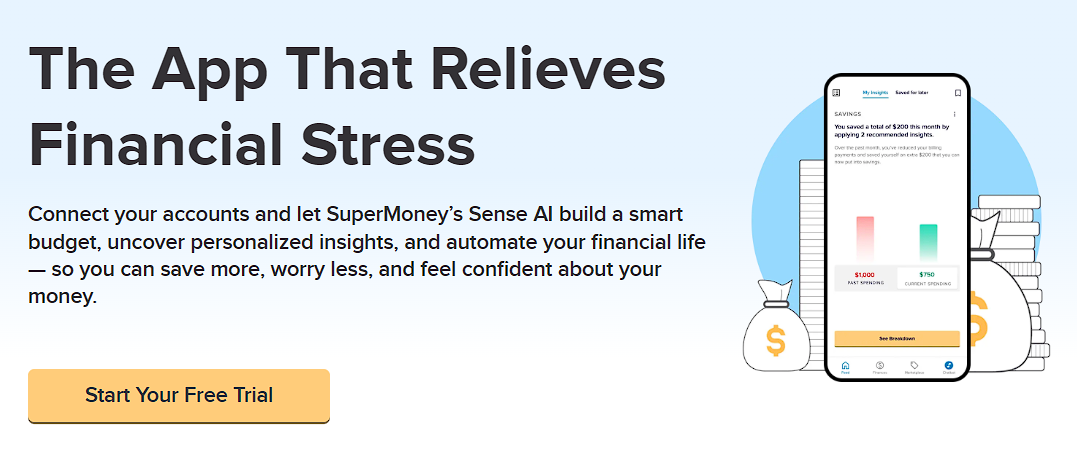
The SuperMoney app connects all your accounts in one view — so you can track spending from checking and interest from savings without mixing the two.
Andrew is the Content Director for SuperMoney, a Certified Financial Planner®, and a Certified Personal Finance Counselor. He loves to geek out on financial data and translate it into actionable insights everyone can understand. His work is often cited by major publications and institutions, such as Forbes, U.S. News, Fox Business, SFGate, Realtor, Deloitte, and Business Insider.
Share this post:
Add as a preferred source on Google
Table of Contents