
ATM Access and Withdrawal Limits Explained

Last updated 03/18/2026 by
Andrew Latham
Edited by
Andrew Latham
Summary:
An ATM withdrawal limit is the maximum amount of cash a bank allows you to withdraw from an automated teller machine in a single day. Most banks set these limits between $300 and $1,000 for standard checking accounts, though several factors affect your specific cap.
- Standard checking accounts: Typically allow $300 to $1,000 in daily ATM withdrawals.
- Premium and business accounts: Often provide limits of $2,000 to $5,000 per day.
- Out-of-network ATM fees: Average $4.86 per transaction when using another bank’s machine.
- Debit purchase limits: Separate from ATM limits and usually set significantly higher.
Hitting your ATM limit at the worst possible moment — moving day, a cash-only vendor, an emergency — is one of those banking friction points that feels disproportionately stressful.
The limits exist for legitimate security reasons, but they vary widely from bank to bank. Knowing where yours falls can save you from scrambling for a workaround when you need cash fast.
Get Competing Personal Loan Offers In Minutes
Compare rates from multiple vetted lenders. Discover your lowest eligible rate.
It's quick, free and won’t hurt your credit score
How ATM Withdrawal Limits Work
Every bank sets a daily ceiling on how much cash you can pull from an ATM using your debit card. This limit resets every 24 hours, typically at midnight Eastern Time, though some banks use a rolling 24-hour window instead.
The cap applies to all ATM withdrawals combined — not per transaction. If your limit is $500 and you withdraw $300 in the morning, you have $200 left for the rest of the day regardless of which ATM you use.
Banks set these limits primarily to reduce fraud exposure. If someone steals your debit card, the daily cap limits how much cash they can drain before you notice and report it.
The limits also help banks manage cash reserves across their ATM networks.
Your specific limit depends on several factors: account type, banking history, and sometimes your geographic location. New accounts often start with lower limits that increase over time as the bank establishes your transaction patterns.
ATM Withdrawal Limits by Bank
Daily withdrawal limits vary significantly across major banks. Standard checking accounts at national banks typically fall in the $300 to $1,000 range, while premium accounts can reach $5,000 or more.
| Bank | Standard Account Limit | Premium Account Limit |
|---|---|---|
| Chase | $500–$1,000 | $2,000–$3,000 |
| Wells Fargo | $300 | $1,000–$1,500 |
| Bank of America | $1,000 | $1,500+ |
| Citi | $1,500 | $2,000–$5,000 |
| Capital One | $1,000 | $5,000 |
| U.S. Bank | $500 | $1,000+ |
| Navy Federal CU | $600 | $3,000 |
These figures reflect standard published limits as of early 2026 and can change based on account history and individual bank discretion. Comparing checking accounts side by side is the fastest way to find an account with a limit that matches your cash needs.
Pro tip: Chase and Bank of America set your initial limit based on your financial profile at account opening — not just the account type. Customers with established deposit histories often receive higher limits automatically.
ATM Withdrawal Limits vs. Debit Card Purchase Limits
Your ATM withdrawal limit and your daily debit card purchase limit are two separate caps. Most people assume they’re the same number, but purchase limits are almost always higher.
A bank might set your ATM withdrawal limit at $500 per day while allowing up to $5,000 in point-of-sale debit purchases. The difference exists because debit purchases carry lower fraud risk — they require a PIN or signature and create a digital trail that’s easier to reverse than a cash withdrawal.
Cash back at a retail checkout is a useful middle ground. The cash you receive counts toward your debit purchase limit, not your ATM withdrawal limit. That means you can often access additional cash even after you’ve hit your ATM ceiling for the day.
If you regularly need more cash than your ATM limit allows, a teller withdrawal at your bank branch bypasses the ATM cap entirely — though amounts over $10,000 trigger a Currency Transaction Report under the Bank Secrecy Act.
How Much Do ATM Fees Cost?
Using an out-of-network ATM costs an average of $4.86 per transaction, according to Bankrate’s 2025 checking account survey. That total breaks down into two charges: a $1.64 fee from your own bank plus a $3.22 surcharge from the ATM operator.
At one out-of-network withdrawal per week, that adds up to roughly $253 per year in ATM fees alone.
| Fee Type | Average Cost | Who Charges It |
|---|---|---|
| ATM operator surcharge | $3.22 | The bank that owns the ATM |
| Out-of-network fee | $1.64 | Your own bank |
| Total per transaction | $4.86 | Both |
| Annual cost (1x/week) | ~$253 | Both |
These fees have more than doubled since Bankrate first began tracking them in 1998, when the average total was $1.97. National banks charge the most — averaging $2.96 per transaction — while online banks average just $0.53 because most waive or reimburse out-of-network fees entirely.
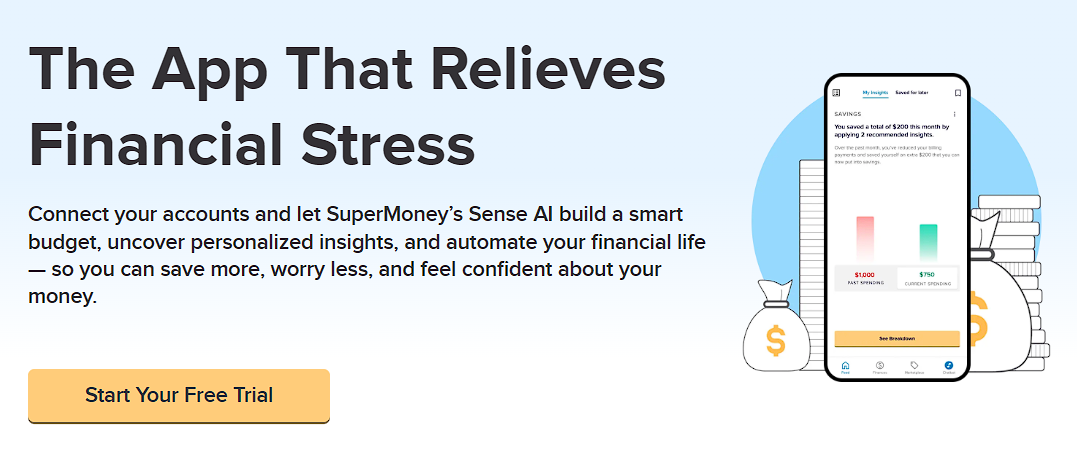 The SuperMoney app connects all your savings and checking accounts in one view — so you can spot unusual activity early, track balances across banks, and stay on top of any account that might be approaching inactivity thresholds.
6 Ways to Avoid ATM Fees
ATM fees are entirely avoidable with a little planning. These strategies can save you $250 or more per year.
- Use your bank’s ATM network. Stick to in-network ATMs, which most banks and credit unions offer fee-free. Chase has 15,000+ ATMs nationwide; Bank of America has 16,000+.
- Choose a bank that reimburses ATM fees. Online banks like Alliant Credit Union and Axos Bank reimburse out-of-network ATM fees up to a monthly cap — typically $25 to unlimited.
- Get cash back at checkout. Most grocery stores and retailers offer cash back on debit purchases with no surcharge. This avoids both ATM fees and ATM withdrawal limits.
- Use a shared ATM network. Credit unions often participate in the CO-OP or Allpoint network, giving members free access to 30,000+ ATMs nationwide.
- Switch to an account with no fees. Many no-minimum-balance accounts also come with ATM fee reimbursement or free access to large networks.
- Plan withdrawals in advance. Withdraw larger amounts less frequently from in-network ATMs rather than making multiple small out-of-network withdrawals throughout the week.
How to Increase Your ATM Withdrawal Limit
Most banks will raise your daily ATM withdrawal limit if you ask — the process is usually a phone call or a visit to a branch.
Some banks offer temporary limit increases for specific situations like travel or large purchases. Chase and Wells Fargo both allow temporary adjustments through their mobile apps or customer service lines.
Permanent increases typically require a track record of responsible account usage. Banks look at your average balance, account tenure, and transaction history before approving a higher limit.
Upgrading your account is the most reliable path to a higher limit. Premium checking accounts come with withdrawal limits two to five times higher than basic accounts, though they often require a minimum balance of $10,000 or more.
Pro tip: If you need a one-time large cash withdrawal, skip the ATM entirely. A teller withdrawal at your bank branch has no daily cap — just bring valid ID and allow extra time for amounts over $10,000.
What Regulation E Means for ATM Users
The Electronic Fund Transfer Act — implemented through the Federal Reserve’s Regulation E — establishes baseline consumer protections for every ATM transaction you make.
Under Regulation E, ATM operators must clearly disclose any fee before you complete a transaction. The disclosure must appear on the ATM screen and give you the option to cancel without being charged.
Fraud protection is the most important piece. Your liability for unauthorized ATM withdrawals depends on how quickly you report them: $0 before any unauthorized transactions occur, up to $50 within two business days, and up to $500 within 60 days.
After 60 days, you could be liable for the full amount.
Banks must also investigate disputed ATM transactions within 10 business days and provide provisional credit if the investigation takes longer. This applies to all checking accounts covered by Regulation E’s overdraft opt-in requirements as well — banks cannot charge overdraft fees on ATM transactions unless you’ve explicitly opted in.
When Your ATM Limit Becomes a Problem
ATM limits create real friction in a handful of common situations: paying a contractor who only takes cash, covering an emergency expense over a weekend when your branch is closed, or traveling internationally where card acceptance is unreliable.
If you hit your ATM limit regularly, that’s a signal your account type doesn’t match your cash usage pattern. People who frequently need $1,000 or more in cash per day should consider account types with higher built-in limits rather than repeatedly requesting temporary increases.
For international travel specifically, withdrawal limits at foreign ATMs may be lower than your bank’s stated limit due to network restrictions. Contact your bank before traveling to confirm your limit abroad and request a temporary increase.
Pro tip: When traveling abroad, always choose to be charged in the local currency at the ATM — selecting your home currency triggers dynamic currency conversion, which adds a 3% to 7% markup on top of any ATM fees.
Key takeaways
- Most banks set ATM withdrawal limits between $300 and $1,000 for standard checking accounts, with premium accounts reaching $2,000 to $5,000.
- Your ATM withdrawal limit and debit purchase limit are separate caps — purchase limits are almost always higher.
- Out-of-network ATM fees average $4.86 per transaction and cost roughly $253 per year at one withdrawal per week.
- You can request a temporary or permanent limit increase by calling your bank, or upgrade to a premium account for built-in higher limits.
- Online banks and credit unions offer the best ATM fee deals — most reimburse out-of-network fees or provide free access to 30,000+ ATMs through shared networks.
- Regulation E protects you from unauthorized ATM withdrawals and requires banks to disclose all fees before you complete a transaction.
How much cash can I withdraw from an ATM per day?
Most banks allow $300 to $1,000 per day from standard checking accounts. Premium accounts at banks like Citi and Capital One can go as high as $5,000. Your specific limit depends on your account type, banking history, and the bank’s policies.
Can I withdraw more than my ATM limit?
Not from an ATM in a single day. You can request a temporary limit increase from your bank, get cash back at a retail checkout (which counts against your purchase limit instead), or make a teller withdrawal at a branch, which has no daily cap.
Why is my ATM withdrawal limit so low?
New accounts, basic account types, and accounts with limited deposit history often start with lower limits. Banks set initial limits based on your financial profile and may increase them automatically over time or upon request.
Do ATM withdrawal limits apply to deposits?
No. ATM deposit limits are separate and typically much higher — many banks allow deposits of $5,000 to $10,000 or more per day. However, deposited funds may be subject to hold periods before they become available for withdrawal.
Are ATM fees tax deductible?
ATM fees are generally not tax deductible for personal use. However, if you use an ATM for business purposes and the fees are documented as a business expense, they may qualify as a deductible banking fee on your business tax return.
What happens if I use an ATM abroad?
Foreign ATM withdrawals typically incur a 1% to 3% foreign transaction fee on top of any out-of-network surcharges. Your daily withdrawal limit may also be lower due to international network restrictions. Some banks, including Capital One and Charles Schwab, waive foreign ATM fees entirely.
The SuperMoney app connects all your savings and checking accounts in one view — so you can spot unusual activity early, track balances across banks, and stay on top of any account that might be approaching inactivity thresholds.Andrew is the Content Director for SuperMoney, a Certified Financial Planner®, and a Certified Personal Finance Counselor. He loves to geek out on financial data and translate it into actionable insights everyone can understand. His work is often cited by major publications and institutions, such as Forbes, U.S. News, Fox Business, SFGate, Realtor, Deloitte, and Business Insider.
Share this post:
Add as a preferred source on Google
Table of Contents