
Checking Account Minimum Balance Requirements by Bank

Last updated 04/15/2026 by
Andrew Latham
Edited by
Andrew Latham
Summary:
A checking account minimum balance is the lowest amount of money a bank requires you to keep in your account to avoid monthly maintenance fees, and it typically ranges from $500 to $1,500 at major banks.
The three most common account tiers each set different thresholds:
- Traditional checking: Usually requires $1,500 in daily balance or $500+ in qualifying direct deposits to waive fees.
- Online checking: Typically has no minimum balance requirement and no monthly fee.
- Premium checking: Often requires $10,000–$25,000 in combined balances across linked accounts.
Monthly maintenance fees are the most predictable cost of owning a checking account — and the minimum balance requirement is what determines whether you pay them.
The gap between a $500 minimum and a $1,500 minimum is the difference between a manageable buffer and a locked-up chunk of your paycheck.
What Is a Minimum Balance Requirement?
A minimum balance requirement is the dollar amount a bank or credit union requires you to maintain in your checking account — either as a daily minimum or a monthly average — to avoid being charged a maintenance fee.
If your balance drops below that threshold on any given day (for daily minimums) or across the statement cycle (for average balances), the bank charges the fee automatically. There’s no grace period at most institutions.
Some banks use a combined balance approach, where they add up your checking, savings, and investment accounts to determine whether you meet the minimum. Chase, Wells Fargo, and Bank of America all offer this option on their mid-tier and premium accounts.
Minimum Balance Requirements at Major Banks
The most common minimum balance threshold at large national banks is $1,500 — a number that’s risen steadily over the past decade.
| Bank | Account | Monthly Fee | Minimum Balance to Waive | Alternative Waiver |
|---|---|---|---|---|
| Chase | Total Checking | $12 | $1,500 daily balance | $500+/month in direct deposits |
| Wells Fargo | Everyday Checking | $15 | $1,500 daily balance | $5,000 across linked accounts |
| Chase | Premier Plus Checking | $25 | $15,000 across linked accounts | $500+ qualifying direct deposit |
| Wells Fargo | Prime Checking | $25 | $20,000 across linked accounts | None |
| Wells Fargo | Premier Checking | $35 | $250,000 across linked accounts | None |
| Capital One | 360 Checking | $0 | None | N/A — no fee |
Wells Fargo increased its Everyday Checking monthly fee from $10 to $15 in late 2025, and raised the minimum daily balance for a waiver from $500 to $1,500 — tripling the requirement overnight.
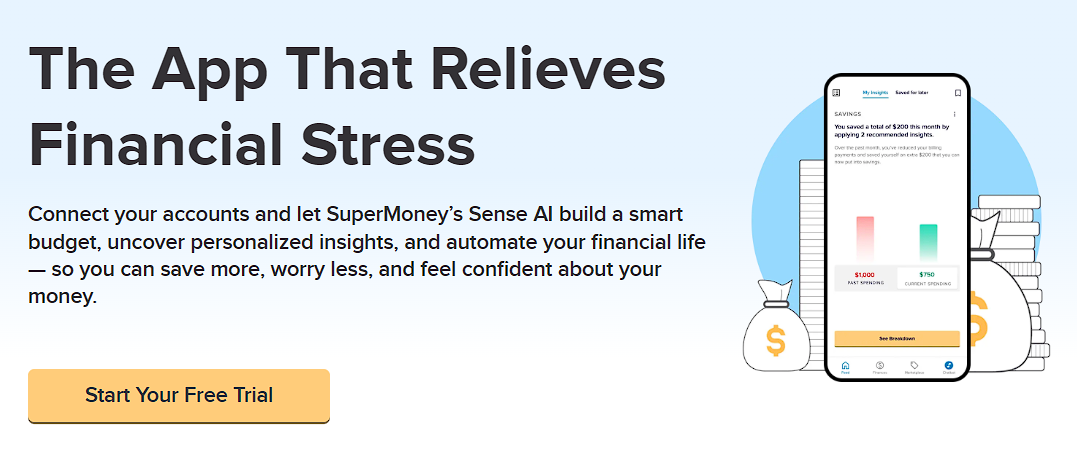 The SuperMoney app connects all your savings and checking accounts in one view — so you can spot unusual activity early, track balances across banks, and stay on top of any account that might be approaching inactivity thresholds.
How Minimum Balance Is Calculated
Banks use one of three methods to determine whether you’ve met the minimum, and the method matters more than most people realize.
- Minimum daily balance: Your account must stay at or above the threshold every single day of the statement cycle. One dip below — even for a day — triggers the fee.
- Average daily balance: The bank adds up your end-of-day balances for the entire cycle and divides by the number of days. You can dip below the minimum on some days as long as higher balances on other days bring the average up.
- Combined/linked balance: The bank totals your balances across multiple accounts (checking, savings, CDs, investments) to reach the minimum. This method gives you the most flexibility.
Chase Total Checking uses the daily minimum method — $1,500 every day, no exceptions. Wells Fargo’s linked balance option uses the combined method across qualifying accounts.
Pro tip: If your bank uses the average daily balance method, time large deposits for early in the statement cycle — a higher balance for more days pulls the average up faster.
What Happens If You Fall Below the Minimum
If your balance drops below the required minimum, the bank charges a monthly maintenance fee — typically between $5 and $15 for standard accounts and $25 to $35 for premium accounts.
The fee is deducted directly from your account, which pushes your balance even lower. That deduction can trigger overdraft territory or make it harder to meet the minimum the following month.
A $15 monthly fee on a checking account with a $500 average balance works out to a 36% annual cost on your money. At that point, the account is costing you more than most checking account fees combined.
Pro tip: Set a balance alert $200 above your bank’s minimum requirement.
This gives you a buffer for pending transactions that haven’t posted yet — debit card holds, automatic bill payments, and subscription charges can temporarily reduce your available balance below what your account screen shows.
How to Avoid Minimum Balance Requirements
The simplest path is choosing an account that doesn’t have one. No-minimum-balance checking accounts are widely available at online banks and credit unions, and many charge no monthly fee at all.
If you want to stay at a bank that imposes a minimum, most offer at least one alternative waiver.
- Set up direct deposit. Most banks waive the fee if you receive $500 or more per month through qualifying electronic deposits. This is the most common waiver method and the one that requires the least attention once it’s in place.
- Link accounts. If you have a savings account, CD, or investment account at the same bank, linking them may push your combined balance above the threshold.
- Qualify by age or status. Student accounts and senior accounts typically waive minimums entirely. Military accounts at many banks also have no minimum balance requirement.
- Switch to an online account.Online checking accounts almost universally have no minimum balance — Capital One 360, Discover, Ally, and SoFi all charge $0 in monthly fees with no balance threshold.
The top checking accounts from online banks skip minimum balance requirements entirely while offering strong mobile features and competitive rates.
Minimum Balance vs. Minimum Opening Deposit
These are two different requirements, and confusing them is common.
A minimum opening deposit is a one-time amount required when you first open the account. It’s often $25 to $100 and only applies at account creation.
A minimum balance requirement is ongoing — it applies every day or every statement cycle for the life of the account. Failing to maintain it results in fees every month you fall short.
Some accounts have a high opening deposit but no ongoing minimum (and vice versa). Always check both numbers before signing up.
When a Higher Minimum Balance Makes Sense
Premium checking accounts at Chase, Wells Fargo, and similar banks require $15,000 to $250,000 in combined balances. That sounds extreme — but these accounts bundle benefits that can offset the opportunity cost if you actually use them.
Unlimited ATM fee reimbursements, free wire transfers, relationship pricing on mortgages, and dedicated banking support are common perks. If you’re already keeping that much in checking and savings at one institution, a premium account may save you more than a high-interest checking account would earn.
For everyone else, a no-minimum-balance account with a separate high-yield savings account is the better math.
Key takeaways
- The most common minimum balance to waive fees at major banks is $1,500 — a threshold that’s increased significantly in recent years.
- Monthly maintenance fees average $13.95 at major banks. A $15 monthly fee on a $500 balance is equivalent to a 36% annual cost.
- Banks calculate minimums using daily balance, average daily balance, or combined linked-account balances — and the method affects how easy it is to stay above the line.
- Direct deposit is the most common alternative to meeting a minimum balance, with most banks requiring $500 or more per month in qualifying deposits.
- Online banks and credit unions widely offer no-minimum-balance checking accounts with no monthly fees.
FAQ
What is the average minimum balance for a checking account?
The most common minimum balance at large national banks is $1,500 to avoid monthly maintenance fees. Premium accounts require significantly more — $15,000 to $250,000 depending on the bank and account tier.
Can I open a checking account with no minimum balance?
Yes. Many online banks — including Capital One, Discover, Ally, and SoFi — offer checking accounts with no minimum balance and no monthly fees. Most credit unions also offer low- or no-minimum options.
What happens if my checking account goes below the minimum?
The bank charges a monthly maintenance fee, typically $5 to $15 for standard accounts. The fee is deducted automatically from your balance, which can create a cycle where the fee itself keeps you below the minimum the next month.
Is minimum balance the same as minimum opening deposit?
No. A minimum opening deposit is a one-time requirement when you first open the account (usually $25–$100). A minimum balance requirement is ongoing and applies every statement cycle. Failing to maintain it triggers monthly fees.
Does direct deposit waive the minimum balance?
At most banks, yes. Chase waives the $12 Total Checking fee with $500 or more in qualifying monthly direct deposits. Wells Fargo and Bank of America offer similar waivers. The direct deposit must typically come from an employer or government payment — peer-to-peer transfers usually don’t qualify.
Find a checking account that fits your balance
Whether you keep $500 or $50,000 in checking, there’s an account designed for your balance range. Compare checking accounts to find the right match for your banking habits and avoid paying fees you don’t need to.
The SuperMoney app connects all your savings and checking accounts in one view — so you can spot unusual activity early, track balances across banks, and stay on top of any account that might be approaching inactivity thresholds.Andrew is the Content Director for SuperMoney, a Certified Financial Planner®, and a Certified Personal Finance Counselor. He loves to geek out on financial data and translate it into actionable insights everyone can understand. His work is often cited by major publications and institutions, such as Forbes, U.S. News, Fox Business, SFGate, Realtor, Deloitte, and Business Insider.
Share this post:
Add as a preferred source on Google
Table of Contents