
How to Use a Checking Account for Everyday Spending

Last updated 03/18/2026 by
Andrew Latham
Edited by
Andrew Latham
Summary:
A checking account is the primary tool for managing everyday spending — it lets you receive income through direct deposit, pay bills automatically, make purchases with a debit card, and move money instantly through mobile banking.
Each core feature serves a different function in daily money management:
- Direct deposit: Automates income delivery and often unlocks fee waivers and early paycheck access.
- Debit card: Provides instant access to your balance for in-store and online purchases without borrowing.
- Mobile banking: Lets you deposit checks, transfer funds, and monitor spending from your phone.
Most people open a checking account and figure it out as they go — setting up direct deposit when HR asks, downloading the app when they need to check a balance.
The difference between a well-run checking account and a fee-generating one usually comes down to setup — not spending habits.
Setting Up Direct Deposit
Direct deposit routes your paycheck, tax refund, or government payment electronically into your checking account — no paper check, no trip to the bank, no waiting for funds to clear.
To set it up, give your employer (or the paying agency) two numbers: your bank’s routing number and your checking account number. Both are printed on paper checks and available in your bank’s mobile app under account details.
Direct deposit unlocks practical benefits beyond convenience.
- Fee waivers: Most banks waive the monthly maintenance fee when you receive $500+ in qualifying direct deposits per month. At Chase, this saves $12/month ($144/year).
- Early access: Banks like Chime, SoFi, and Capital One release direct deposit funds one to two days before the official payday. The money arrives as soon as they receive the deposit file from your employer — they just don’t hold it.
- Faster availability: Direct deposits are available immediately, while check deposits can take one to two business days to clear.
You can split your direct deposit across multiple accounts. Routing 80% to checking for bills and 20% to savings builds an emergency fund automatically without requiring discipline each payday.
Using Your Debit Card
Your debit card pulls money directly from your checking account balance. Unlike a credit card, there’s no billing cycle and no interest — the money leaves your account at the time of purchase (or within one to three days for some transactions).
Debit cards work in two ways at the point of sale.
- PIN transactions:You enter your PIN, and the money is debited from your account immediately. This method is required at ATMs and some merchants.
- Signature transactions: The purchase is processed through the Visa or Mastercard network. The merchant may place a temporary hold (authorization) on your account, and the final charge settles in one to three days.
Signature holds are where most debit card confusion happens. Gas stations, hotels, and rental car companies place authorization holds that can exceed the actual purchase amount — a $40 gas fill-up might temporarily hold $100.
That hold reduces your available balance even though the final charge is lower.
Pro tip: If you’re watching your balance closely, pay at the pump with a PIN rather than running it as credit. PIN transactions debit the exact amount immediately, avoiding the inflated authorization hold that can take 24–72 hours to release.
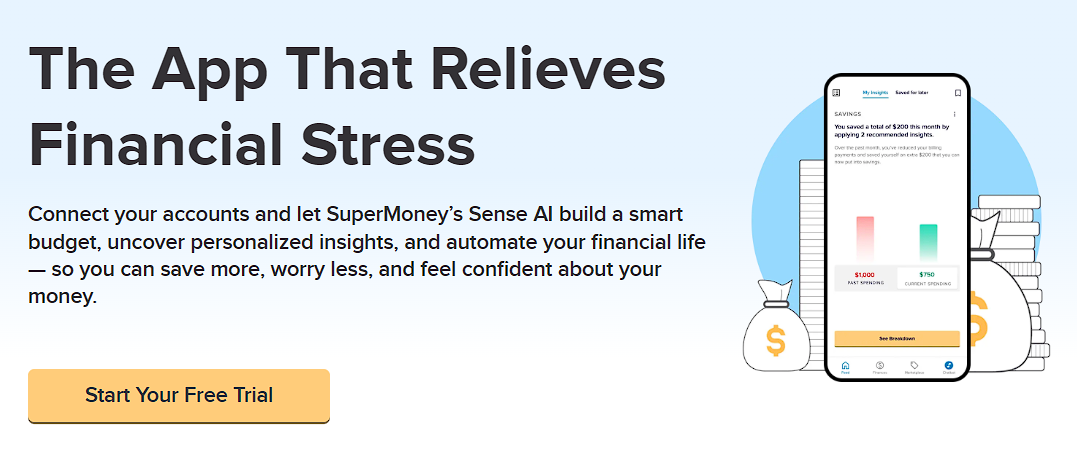 The SuperMoney app connects all your savings and checking accounts in one view — so you can spot unusual activity early, track balances across banks, and stay on top of any account that might be approaching inactivity thresholds.
Paying Bills from Your Checking Account
Checking accounts support three main methods for paying bills, and each has different timing and control characteristics.
- Automatic payments (autopay): You authorize a biller — landlord, utility company, subscription service — to pull a set amount from your account on a recurring schedule. The biller initiates the payment. This eliminates missed payments but requires you to monitor your balance so withdrawals don’t overdraft your account.
- Online bill pay: You instruct your bank to send payment to a biller. The bank initiates the payment, giving you more control over timing. Most banks let you schedule one-time or recurring payments through their app or website.
- ACH transfers:Electronic transfers between your checking account and another bank account. Typically takes one to three business days and is often used for rent payments, loan payments, and transferring money between multiple checking accounts.
The safest approach for essential bills (mortgage, rent, insurance) is autopay — a missed payment carries more risk than an overdraft fee.
For discretionary spending (subscriptions, memberships), manual bill pay gives you the option to cancel or adjust without having to remember to revoke an autopay authorization.
Pro tip: Schedule autopay for one to two days after your typical payday — not on the exact date. Payroll processing delays happen, and a one-day buffer prevents an overdraft if your deposit arrives late.
Mobile Banking Features Worth Using
Most people use their bank’s app to check balances. The features that actually save time and money go further than that.
- Mobile check deposit: Photograph a paper check through your app, and the funds are deposited without visiting a branch or ATM. Most banks make the first $200 available immediately, with the remainder clearing in one to two business days. Mobile-first checking accounts are built around this feature.
- Balance and spending alerts: Set push notifications for low balances, large transactions, or when your balance drops below a custom threshold. These alerts are the simplest defense against unexpected checking account fees.
- Instant transfers (Zelle, peer-to-peer): Send money to anyone with a bank account using their phone number or email. Zelle is integrated into most major bank apps and transfers complete in minutes — no app download required if your bank supports it natively.
- Card lock/freeze: Temporarily disable your debit card if it’s lost or you suspect fraud. Most apps let you lock and unlock your card instantly without calling customer service.
Managing Your Checking Account Balance
Overspending from a checking account is easier than overspending with cash — there’s no physical reminder that your balance is shrinking. Two habits prevent most balance-related problems.
Check your balance before large purchases. Your available balance (what you can actually spend) is different from your current balance (which may include pending transactions that haven’t settled). Always use the available balance as your real number.
Keep a buffer above zero. Maintaining $200 to $500 that you mentally treat as “off limits” prevents overdrafts from timing mismatches between when money leaves and when deposits arrive.
Pro tip: Rename your buffer money in your banking app (if your bank supports account nicknames) to something like “Do Not Touch — $300 Buffer” so you don’t accidentally spend it during a quick balance glance.
How to Set Up Your Checking Account for Daily Use
A step-by-step approach to getting the most from your checking account from day one.
- Enroll in direct deposit. Give your employer your account and routing numbers. If your bank waives fees with direct deposit, confirm the minimum qualifying amount (typically $500/month).
- Activate your debit card and set a PIN. Most banks let you set or change your PIN through the mobile app. Choose something you can remember but that isn’t tied to obvious personal information like your birth year.
- Download your bank’s mobile app. Enable biometric login (fingerprint or face ID) for quick access. Turn on push notifications for transactions and low-balance alerts.
- Set up autopay for fixed bills. Route recurring expenses like rent, insurance, and loan payments through autopay. Schedule them for one to two days after your typical payday to ensure funds are available.
- Link a savings account for overdraft protection. Connect a savings account as your overdraft backup. If your checking runs low, the bank pulls from savings instead of charging an overdraft fee.
- Review transactions weekly. Spend two minutes each week scanning your recent transactions for unauthorized charges, forgotten subscriptions, or billing errors. Catching fraud early limits your liability under Regulation E.
When to Use Your Checking Account vs. a Credit Card
Debit cards and credit cards both work at the same merchants, but the protections and financial implications are different.
| Feature | Debit Card (Checking) | Credit Card |
|---|---|---|
| Funding source | Your checking balance | Borrowed money (credit line) |
| Interest | None — money is already yours | 15%–30% APR if you carry a balance |
| Fraud liability | Up to $500 if reported after 2 days | $0 liability at most issuers |
| Rewards | Rare (1% max at a few banks) | 1%–5% cash back or points |
| Impact on credit score | None | Builds credit history |
Use your debit card for ATM withdrawals, in-store purchases where you want to spend from cash on hand, and situations where you need to avoid taking on debt.
Use a credit card for online purchases (better fraud protection), travel (no foreign transaction fees on many cards), and everyday spending where you want to earn rewards — as long as you pay the balance in full each month.
Common Checking Account Mistakes
Not tracking pending transactions. Your bank app shows your current balance, but pending debit card authorizations, outstanding checks, and scheduled bill payments haven’t settled yet.
The gap between what the app shows and what’s actually available causes most accidental overdrafts.
Ignoring small recurring charges. Subscriptions of $5 to $15/month are easy to forget and add up fast.
A quarterly review of your transaction history catches streaming services, app subscriptions, and memberships you no longer use.
Keeping too much in checking. Money sitting in a checking account earning 0.07% APY loses purchasing power to inflation every day.
Keep enough for monthly expenses plus a $200–$500 buffer, and move the rest to a savings account where it earns meaningful interest.
Key takeaways
- Direct deposit is the foundation of checking account management — it unlocks fee waivers, early paycheck access, and immediate availability of funds.
- Debit card authorization holds from gas stations, hotels, and rental companies can reduce your available balance by more than the actual purchase amount for 24–72 hours.
- Autopay for fixed bills eliminates missed payments, but requires balance monitoring to prevent overdrafts.
- Your available balance (not your current balance) is the number that matters — pending transactions create a gap between the two.
- Keep one to two months of expenses plus a $200–$500 buffer in checking and move everything else to a higher-yield account.
FAQ
How do I set up direct deposit into my checking account?
Provide your employer with your bank’s routing number and your account number. Both are available on paper checks or in your bank’s mobile app. Most employers process the switch within one to two pay cycles.
Can I use my checking account to pay bills automatically?
Yes. You can authorize billers to pull payments directly from your checking account (autopay) or use your bank’s online bill pay to send payments on a schedule you set. Autopay is best for fixed-amount bills; manual bill pay gives more control for variable amounts.
What’s the difference between available balance and current balance?
Your current balance includes all posted transactions. Your available balance subtracts pending transactions (like debit card holds and scheduled payments) that haven’t settled yet. Always use your available balance when deciding whether you can afford a purchase.
How much money should I keep in my checking account?
Enough to cover one month of expenses plus a $200–$500 buffer for timing gaps between bills and deposits. Keeping significantly more than that earns almost nothing — the national average checking APY is 0.07%. Move surplus funds to a savings or money market account where they earn more.
Is it better to use a debit card or credit card for everyday purchases?
Credit cards offer stronger fraud protection (federal law caps liability at $0 for most issuers), higher rewards (1%–5% vs. 1% max for debit), and credit-building benefits. Debit cards are better when you want to spend only money you already have or need to avoid debt. The best approach for most people is using a credit card for daily spending and paying it in full from your checking account each month.
Get more from your checking account
The right checking account makes everyday banking easier and cheaper. Compare checking accounts to find one with no monthly fees, strong mobile banking, and the features that fit your daily routine.
The SuperMoney app connects all your savings and checking accounts in one view — so you can spot unusual activity early, track balances across banks, and stay on top of any account that might be approaching inactivity thresholds.Andrew is the Content Director for SuperMoney, a Certified Financial Planner®, and a Certified Personal Finance Counselor. He loves to geek out on financial data and translate it into actionable insights everyone can understand. His work is often cited by major publications and institutions, such as Forbes, U.S. News, Fox Business, SFGate, Realtor, Deloitte, and Business Insider.
Share this post:
Add as a preferred source on Google
Table of Contents