Can a Bank Freeze or Close a Savings Account?

Last updated 03/17/2026 by
Andrew Latham
Edited by
Andrew Latham
Summary:
A bank freeze is a temporary restriction that prevents a depositor from withdrawing or transferring funds from a savings account — triggered by suspected fraud, legal orders, or regulatory action, without necessarily requiring advance notice to the account holder.
Banks can also permanently close savings accounts under certain conditions, with rules varying by the reason for closure.
- Suspected fraud or suspicious activity: Best-case scenario — the freeze is usually lifted quickly once your identity is verified and the activity is reviewed.
- Legal orders (garnishments, levies): Funds can be frozen and seized by court order; the bank is legally required to comply and cannot warn you in advance.
- Regulatory or compliance issues: Accounts flagged for Bank Secrecy Act violations or unresolved documentation gaps can be frozen or closed, sometimes without explanation.
- Inactivity: Accounts with no customer-initiated activity for a set period — typically three to five years — can be classified as abandoned and transferred to the state.
Most people never experience a frozen or closed savings account — but when it happens, the timing is almost always inconvenient.
Understanding the conditions that trigger these actions, and what your rights are when they do, makes the situation far more manageable.
Compare Savings Accounts
Compare savings accounts. Discover your best option.
Can a bank freeze your savings account?
Yes. Banks have legal authority to freeze savings accounts under specific circumstances, and in most cases they are not required to give you advance notice before doing so.
A freeze restricts your ability to withdraw, transfer, or access funds — but does not permanently remove the money from your account.
The freeze itself is not the same as losing your money. In most cases, funds remain in the account and become accessible again once the underlying issue is resolved.
What triggers the freeze determines how quickly — and how easily — that resolution happens.
Pro tip: If your account is frozen unexpectedly, contact your bank’s fraud or compliance department directly — not general customer service. Fraud and compliance teams have the authority to review and lift holds, while standard customer service representatives typically cannot override account restrictions.
What causes a bank to freeze a savings account?
Banks freeze accounts for a defined set of reasons, each with different resolution timelines and required actions on your part.
Suspected fraud or identity theft
This is the most common trigger. If the bank’s fraud detection system flags unusual activity — a large transfer, login from an unfamiliar location, or a pattern inconsistent with your history — it may freeze the account to prevent further transactions while it investigates.
This type of freeze is typically temporary and resolved within one to five business days once you verify your identity and confirm or dispute the flagged transactions.
Suspicious activity reports (SARs)
Under the Bank Secrecy Act, banks are required to file Suspicious Activity Reports with the Financial Crimes Enforcement Network (FinCEN) when they detect patterns that suggest money laundering, structuring, or other financial crimes.
Banks are legally prohibited from telling you a SAR has been filed. An account freeze may accompany the report while the bank assesses the risk of continuing the relationship.
Court orders — garnishments and levies
A creditor with a judgment against you can obtain a court order requiring your bank to freeze and surrender funds from your savings account. The bank must comply with valid legal process and is legally prohibited from tipping you off in advance.
Federal law does protect certain funds from garnishment — Social Security, disability payments, and other federal benefit deposits have automatic protections — but the burden is on you to assert those exemptions after the freeze.
Government tax levies
The IRS and state tax authorities can issue levies against bank accounts for unpaid taxes without a court order. A bank that receives an IRS levy must freeze the account and hold the funds for 21 days before surrendering them — that window exists specifically to give you time to resolve the debt or claim an exemption.
Regulatory compliance issues
Banks operating under anti-money-laundering (AML) and Know Your Customer (KYC) requirements must verify account holder identities and flag accounts with unresolved documentation.
If you’ve failed to respond to verification requests or if your account activity triggers a compliance review, the bank may restrict access until documentation is provided.
Inactivity
Every state has an unclaimed property law that requires banks to transfer dormant account balances to the state after a set period — typically three to five years of no customer-initiated activity. Before the transfer, the bank may freeze the account and attempt to contact you.
Funds transferred to the state can be reclaimed through an escheatment claim, but the process takes time.
The withdrawal rules that apply to savings accounts don’t affect dormancy — it’s inactivity, not withdrawal frequency, that triggers the clock.
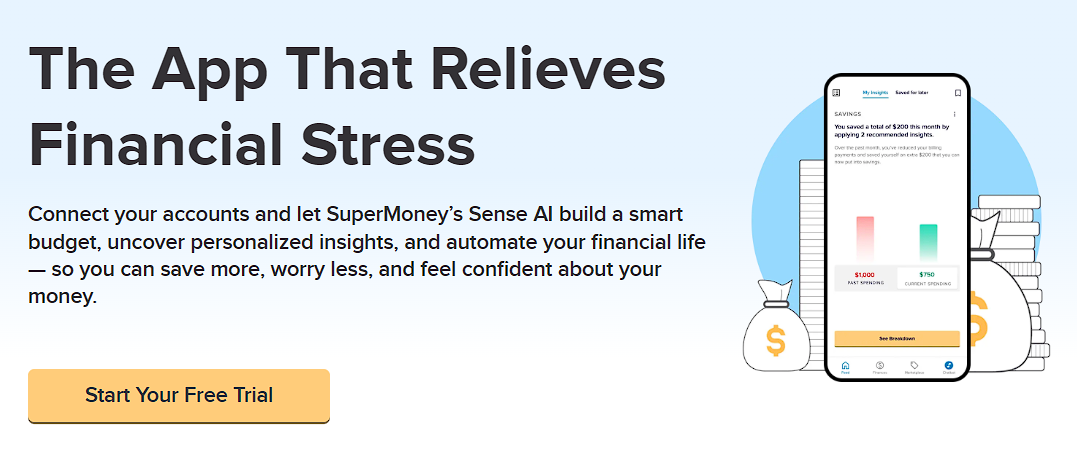 The SuperMoney app connects all your savings and checking accounts in one view — so you can spot unusual activity early, track balances across banks, and stay on top of any account that might be approaching inactivity thresholds.
Can a bank close your savings account without notice?
Yes. Banks can close accounts at their discretion, and in many cases they are not legally required to provide advance notice — though most do.
The terms and conditions you agreed to when opening the account typically include a clause reserving the bank’s right to close the account for any reason, sometimes with as little as 24 hours’ notice.
Common reasons banks close savings accounts:
- Repeated overdrafts or negative balances — more relevant to checking accounts but can apply to linked savings accounts in overdraft arrangements
- Suspected fraud or ongoing compliance concerns — if a fraud investigation doesn’t resolve in your favor
- Violation of account terms — using a savings account like a checking account by exceeding transaction limits repeatedly can trigger closure at some institutions
- Inactivity escalating to abandonment — after dormancy thresholds are met and the bank cannot reach you
- Risk-based decision — banks can exit customer relationships they consider high-risk without providing a specific explanation
When a bank closes your account, it must return your remaining balance — typically by mailing a check to your address on file. If the account closure is connected to fraud or legal action, there may be a hold on the funds during that process.
Pro tip: Keep your contact information current with every bank where you hold a savings account. An outdated address is the single most common reason accounts go dormant — the bank can’t reach you, activity stops, and the dormancy clock starts. A 30-second address update prevents a months-long reclamation process.
What are your rights when a bank freezes or closes your account?
Your rights depend on why the action was taken, but several protections apply across most scenarios:
- Right to your funds: A bank cannot permanently confiscate insured deposits. If the account is closed, the remaining balance must be returned to you — minus any outstanding fees or legal claims against the funds.
- Right to dispute fraudulent transactions: Under the Electronic Fund Transfer Act (EFTA), you have the right to dispute unauthorized transactions and request an investigation. Timelines for reporting matter — the sooner you report, the stronger your protection.
- Exemption protections in garnishments: Federal law automatically protects two months’ worth of Social Security, SSI, VA, and other federal benefit payments from garnishment. You must notify your bank to assert these protections after a freeze — they are not applied automatically in all cases.
- FDIC insurance remains in place: A freeze or closure does not affect FDIC deposit insurance. Your insured funds are protected up to $250,000 regardless of why the account was restricted.
- Right to explanation (with limits): Banks must provide a reason for account closure in most consumer situations, but are not required to reveal SAR filings or disclose specific fraud investigation details. “Risk-based” closures may come with minimal explanation.
How to respond to a frozen savings account
Taking the right steps in the right order resolves most freezes faster and avoids escalating a manageable situation.
- Contact your bank’s fraud or compliance department — ask specifically why the account was frozen and what documentation or steps are required to lift the restriction.
- Gather identity and documentation — be ready to provide government-issued ID, proof of address, and explanations for any flagged transactions.
- Check for legal orders — if a garnishment or levy is involved, contact the creditor or tax authority directly. A payment arrangement or dispute can sometimes halt or reduce the levy.
- Assert benefit payment exemptions — if your account receives Social Security or other federal benefits, notify your bank in writing that those funds are exempt from garnishment.
- File a complaint if unresolved — if your bank is unresponsive or you believe the freeze is unjustified, file a complaint with the Consumer Financial Protection Bureau (CFPB) at consumerfinance.gov or the FDIC.
How to prevent your savings account from being frozen or closed
Most account restrictions are avoidable with consistent account hygiene:
- Keep contact information current — address, phone number, and email on file with every institution where you hold an account
- Make periodic deposits or withdrawals — any customer-initiated activity resets the inactivity clock and prevents dormancy classification
- Respond promptly to bank communications — verification requests, identity confirmation letters, and compliance notices have deadlines; missing them can trigger restrictions
- Understand how transfers between accounts work — large or unusual transfers are more likely to trigger fraud flags; spacing them out or calling ahead on large transactions reduces that risk
- Monitor your account regularly — early detection of suspicious activity lets you report it before the bank escalates to a freeze
Key takeaways
- Banks can freeze savings accounts without advance notice for reasons including suspected fraud, court-ordered garnishments, tax levies, compliance issues, and inactivity.
- A freeze restricts access to funds but does not remove them — in most cases, the money remains in the account and becomes accessible once the underlying issue is resolved.
- Banks can also close accounts at their discretion, but must return any remaining balance. Closures can happen with minimal notice under most standard account terms.
- Federal law protects certain deposits — including Social Security and VA benefits — from garnishment, but you must assert these exemptions with your bank after a freeze.
- FDIC deposit insurance remains fully intact during a freeze or closure — a restriction on access does not affect insurance coverage on insured balances.
- Prevention is straightforward: keep contact information current, maintain periodic account activity, and respond promptly to any bank communications.
Monitor all your accounts and get alerts for unusual activity with the SuperMoney app.Frequently asked questions
Can a bank freeze your account without telling you?
Yes. Banks are legally permitted to freeze accounts without advance notice in many circumstances — particularly when fraud is suspected or when complying with a court order or government levy. In SAR-related freezes, the bank is legally prohibited from disclosing the reason. You will typically be notified after the freeze is in place, not before.
How long can a bank freeze your savings account?
There is no universal legal maximum. Fraud-related freezes typically resolve within one to five business days. IRS levies include a mandatory 21-day hold before funds are surrendered. Court-ordered garnishments can be ongoing if the judgment is large.
Compliance-related freezes last until the required documentation is provided or the bank decides to close the account.
Can a bank close your account and keep your money?
No. If a bank closes your account, it must return the remaining balance — typically by mailing a check to your address on file. The bank can deduct outstanding fees or unpaid balances owed to the institution, but cannot confiscate insured deposits.
If funds are being held due to legal action, the hold is temporary pending resolution of that process.
What happens to direct deposits if my savings account is frozen?
Incoming transfers and direct deposits may be rejected and returned to the sender, or held in the frozen account, depending on the nature of the freeze. If you have direct deposit going to a frozen account, contact your employer or the sending institution immediately to redirect payments to an active account.
Understanding the difference between savings and checking accounts matters here — direct deposit is more commonly set up on checking accounts, which reduces this risk for savings-only freezes.
Can a bank freeze my account because of low balance?
Not typically as a freeze — but banks can close accounts that fall below a required minimum balance or impose fees that bring the balance to zero, effectively closing the account. Review your account terms for minimum balance requirements. Most high-yield savings accounts at online banks have no minimum balance requirements, eliminating this risk entirely.
Does a frozen account affect my credit score?
Generally no. Savings account activity — including freezes and closures — is not reported to the major credit bureaus and does not appear on your credit report. However, if a garnishment or levy is the result of an unpaid debt that went to collections, the underlying debt may already be affecting your credit separately from the account restriction itself.
Andrew is the Content Director for SuperMoney, a Certified Financial Planner®, and a Certified Personal Finance Counselor. He loves to geek out on financial data and translate it into actionable insights everyone can understand. His work is often cited by major publications and institutions, such as Forbes, U.S. News, Fox Business, SFGate, Realtor, Deloitte, and Business Insider.
Share this post:
Add as a preferred source on Google
Table of Contents