
Emergency Fund vs. Savings vs. Sinking Fund: What’s the Difference?

Last updated 03/02/2026 by
Andrew Latham
Edited by
Andrew Latham
Summary:
An emergency fund covers unexpected crises like job loss or medical bills, a savings account holds money for planned goals like vacations or a down payment, and a sinking fund sets aside small amounts over time for predictable irregular expenses like car repairs or annual insurance premiums. Keeping each type of savings in a separate account prevents one financial need from draining another.
Most people lump all their savings together into one account, then feel frustrated when an emergency wipes out months of progress toward a vacation or a new car. That tension between protecting yourself and making progress on goals is real — and it usually comes down to structure, not willpower.
Compare Savings Accounts
Compare savings accounts. Discover your best option.
What’s the Difference Between an Emergency Fund, Savings, and a Sinking Fund?
An emergency fund, a savings account, and a sinking fund each serve a distinct financial purpose — and understanding those differences determines whether one unexpected expense can derail everything else.
The simplest way to think about it:
Emergency funds protect you from the unknown, savings accounts fund what you’re working toward, and sinking funds prepare you for what you know is coming but can’t cover in a single paycheck.
| Feature | Emergency Fund | Savings Account | Sinking Fund |
|---|---|---|---|
| Purpose | Unexpected crises | Planned financial goals | Predictable irregular expenses |
| Examples | Job loss, medical bill, major car breakdown | Vacation, down payment, wedding | Annual insurance premium, holiday gifts, new tires |
| Target amount | 3–6 months of essential expenses | Varies by goal | Total cost ÷ months until needed |
| When to use it | Only for true emergencies | When you reach your goal | When the planned expense arrives |
| How often you withdraw | Rarely (ideally never) | When a goal is met | Periodically, as expenses come due |
| Replenishment | Top priority after any withdrawal | Start a new goal | Ongoing — refills automatically |
| Best account type | High-yield savings account (separate) | Savings or money market account | Separate savings sub-account or budgeting app category |
Once you understand the difference, the next step is funding each one properly — starting with how to build an emergency fund before layering in savings goals and sinking funds.
The overlap between these three creates most of the confusion.
A person who keeps $5,000 in a single savings account for “emergencies and stuff” has no real financial safety net — because a planned expense like holiday travel can quietly drain the balance before an actual emergency ever hits.
What Is an Emergency Fund?
An emergency fund is a dedicated cash reserve that exists solely to cover urgent, unplanned expenses that would otherwise force you into debt.
It’s your financial safety net — the buffer between an unexpected $1,500 car repair and a credit card balance that takes months to pay off at 22% APR.
Expenses that qualify as emergencies:
- Job loss or sudden income reduction — covering rent, groceries, and utilities while you search for work
- Medical or dental emergencies — out-of-pocket costs insurance doesn’t fully cover
- Essential home repairs — a burst pipe or failed furnace in January
- Critical car repairs — transmission failure on the vehicle you need for your commute
Expenses that don’t qualify:
- A sale on something you’ve been eyeing
- Holiday gifts (that’s a sinking fund)
- A friend’s destination wedding (that’s a savings goal)
- Routine car maintenance like oil changes or new tires (also a sinking fund)
The Federal Reserve’s 2024 SHED report found that only 63% of U.S. adults would cover a hypothetical $400 emergency using cash or its equivalent — unchanged from 2022 and 2023. The remaining 37% would borrow, sell something, or simply not be able to pay.
That single statistic explains why emergency funds need to be separate, untouchable, and treated differently from every other type of savings.
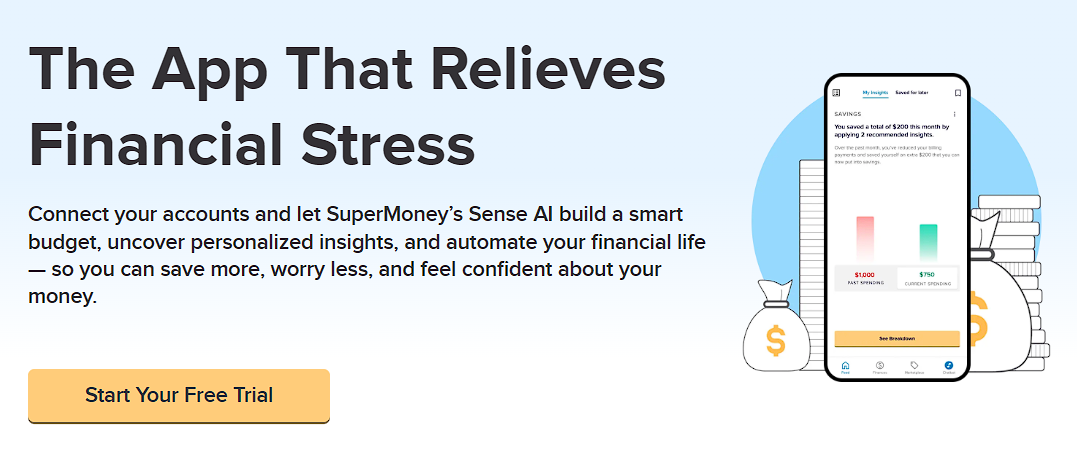
Automate the whole system. The SuperMoney app tracks your spending, identifies how much you can realistically save, and helps you build separate savings goals — so your emergency fund, sinking funds, and savings goals each get funded without manual effort.
What Is a Savings Account (Goal-Based Savings)?
A savings account holds money you’re deliberately setting aside for a specific, planned financial goal — a vacation, a wedding, a home down payment, or any purchase you can see coming.
Unlike an emergency fund, which you hope to never use, a savings account is designed to be spent. The whole point is reaching your target and deploying the funds.
Key characteristics of goal-based savings:
- Timeline — you know roughly when you’ll need the money (6 months, 2 years, etc.)
- Target amount — you can calculate the exact dollar figure
- Planned withdrawal — spending it is the intended outcome, not a failure
The reason this matters for your financial cushion: if your emergency fund and your vacation fund share the same account, every withdrawal chips away at your protection. A $2,000 flight booking doesn’t feel like a problem until your car breaks down the following week and you don’t have enough left to cover it.
Pro Tip: Open a separate high-yield savings account for each major goal. Many online banks let you create multiple sub-accounts with custom labels — one for “emergency,” one for “vacation,” one for “car replacement.” The psychological separation alone makes you less likely to borrow from yourself.
What Is a Sinking Fund?
A sinking fund is a savings strategy where you set aside small, regular amounts toward a specific future expense that you know is coming but can’t cover from a single paycheck.
The expense isn’t a surprise — it’s predictable. You know your car insurance premium renews every six months. You know the holidays arrive every December. You know your dog needs an annual vet visit. A sinking fund turns these large, irregular bills into manageable monthly contributions.
Common sinking fund categories:
- Annual insurance premiums — $1,200/year ÷ 12 months = $100/month
- Holiday gifts — $600 budget ÷ 10 months = $60/month starting in February
- Car maintenance — tires, brakes, oil changes pooled into one fund
- Home maintenance — the 1% rule (set aside 1% of your home’s value annually for upkeep)
- Back-to-school costs — supplies, clothes, fees
- Pet care — annual vet visits, vaccinations, grooming
Without sinking funds, these predictable expenses become “emergencies” that drain your emergency fund — which defeats the entire purpose of having one.
How Much Should Your Emergency Savings Cover?
Your emergency savings should cover three to six months of essential living expenses — not three to six months of income, but three to six months of what you actually need to survive: housing, utilities, groceries, insurance, transportation, and minimum debt payments.
For a household spending $4,000 per month on essentials, that’s $12,000 to $24,000.
Whether you aim for the lower or upper end depends on your situation:
| Lean Toward 3 Months If… | Lean Toward 6+ Months If… |
|---|---|
| You have a stable W-2 job with benefits | You’re self-employed or a freelancer |
| Your household has two incomes | You’re a single-income household |
| You have low fixed expenses | You have a mortgage, kids, or high fixed costs |
| Your industry has low unemployment | Your field has seasonal layoffs or volatility |
| You have family or other safety nets | You don’t have a financial backstop |
According to the Federal Reserve’s 2024 household survey, only 55% of adults reported having emergency savings sufficient to cover three months of expenses. That means nearly half of American adults are one prolonged financial disruption away from serious hardship.
If three months feels overwhelming, start with $1,000. That single milestone breaks the paycheck-to-paycheck cycle for most households and prevents smaller emergencies from spiraling into debt.
Emergency Fund vs. Rainy Day Fund
An emergency fund and a rainy day fund are often used interchangeably, but they serve slightly different roles in practice.
An emergency fund is your long-term financial safety net — the 3–6 months of expenses designed to keep you afloat during a major crisis like job loss, a serious medical event, or a costly home repair.
A rainy day fund is a smaller, more accessible cash buffer — typically $500 to $2,000 — meant to handle minor unplanned expenses without dipping into the larger reserve.
| Feature | Emergency Fund | Rainy Day Fund |
|---|---|---|
| Purpose | Major crises (job loss, hospitalization) | Minor surprises (appliance repair, vet bill) |
| Typical size | 3–6 months of essential expenses | $500–$2,000 |
| How often you use it | Rarely — ideally once every few years | A few times per year |
| Replenishment urgency | High — rebuild immediately | Moderate — refill within 1–2 pay periods |
Think of a rainy day fund as the first line of defense. It absorbs the $300 plumber visit or the $150 urgent care copay so your larger emergency fund stays intact for the situations that truly threaten your financial stability.
How to Organize Your Savings Into Separate Funds
Setting up a structured savings system takes about 30 minutes and prevents one financial need from draining another.
- Calculate your emergency fund target. Add up your monthly essential expenses (housing, utilities, groceries, insurance, transportation, minimum debt payments). Multiply by 3 for a starter goal or 6 for full coverage.
- List your sinking fund categories. Write down every irregular expense you paid over the last 12 months — annual subscriptions, car maintenance, gifts, medical copays. Divide each total by 12 to get your monthly contribution.
- Identify your savings goals. Name each goal, assign a dollar target, and set a deadline. Divide the total by the number of months to find your monthly savings amount.
- Open separate accounts (or sub-accounts). Many online savings accounts let you create labeled sub-accounts at no extra cost. Use one for emergencies, one for sinking funds, and one for each major goal.
- Automate transfers on payday.Set up automatic transfers from your checking account to each savings bucket. Automating removes the decision from your hands entirely — the money moves before you can spend it.
- Prioritize your emergency fund first. If you’re starting from zero, direct most of your savings toward the emergency fund until you reach at least $1,000, then split contributions between your emergency fund and sinking funds.
Common Mistakes When Managing Multiple Savings Goals
The most common mistake is keeping all savings in one account and relying on mental accounting to track what’s earmarked for what.
Mental accounting breaks down the moment a real expense hits.
Without separate accounts (or at least labeled sub-accounts), the $800 you saved for holiday gifts looks indistinguishable from the $800 you need for your emergency fund — and the one with the more immediate emotional pull usually wins.
Other frequent mistakes:
- Treating sinking fund expenses as emergencies. New tires aren’t an emergency — tires wear out predictably. If your car’s tires cost $600 and last three years, that’s $17/month into a sinking fund. Without one, that $600 hits your emergency fund and sets you back months.
- Skipping the emergency fund to save for goals. Building a vacation fund while you have $0 in emergency savings means one bad week erases both. The savings-vs-debt decision is real, but a baseline emergency cushion comes first.
- Setting the emergency fund target too high too soon. Aiming for six months of expenses when you currently have nothing saved is paralyzing. Start with $1,000, then build to one month, then three. Momentum matters more than perfection.
- Never replenishing after a withdrawal. Using your emergency fund is the right call when a genuine crisis hits. The mistake is failing to rebuild it afterward. Treat replenishment as a top-priority line item in your budget until the balance is restored.
Key takeaways
- An emergency fund covers unexpected crises (job loss, medical bills). A savings account funds planned goals (vacation, down payment). A sinking fund handles predictable irregular expenses (annual premiums, car maintenance).
- Your emergency savings should cover three to six months of essential living expenses — housing, food, utilities, insurance, and minimum debt payments.
- Only 55% of U.S. adults have enough emergency savings to cover three months of expenses, according to the Federal Reserve’s 2024 household survey.
- A rainy day fund ($500–$2,000) acts as your first line of defense for minor surprises, protecting the larger emergency fund from frequent small withdrawals.
- Keeping all savings in one account invites mental-accounting failures. Separate accounts — even labeled sub-accounts at the same bank — prevent one need from draining another.
- Automate every transfer on payday. Money that moves before you see it is money that actually gets saved.
FAQ
Is an emergency fund the same as a savings account?
An emergency fund is a specific purpose for money, while a savings account is the type of account where you keep it.
Most people store their emergency fund in a high-yield savings account, but the emergency fund itself refers to the money earmarked exclusively for unexpected crises — not the account it sits in.
How much should I keep in a sinking fund?
The amount depends on the expense you’re saving for. Add up the total cost of each predictable irregular expense over the next 12 months, then divide by 12. If your car insurance costs $1,200/year, your holiday budget is $600, and annual vet bills run $400, you’d contribute $183/month across those three sinking funds ($100 + $50 + $33).
Should I build my emergency fund or start sinking funds first?
Build a starter emergency fund of $1,000 first. That baseline protects you from the most common small emergencies. Once you hit $1,000, split your monthly savings between growing the emergency fund toward 3 months of expenses and funding your highest-priority sinking funds simultaneously.
Where should I keep my emergency fund?
A high-yield savings account at an FDIC-insured bank is the standard recommendation. It keeps your money liquid (accessible within 1–2 business days), earns interest, and stays separate from your checking account so you’re less tempted to spend it. Avoid tying emergency funds up in CDs, investments, or accounts with withdrawal penalties.
What’s the difference between a rainy day fund and a sinking fund?
A rainy day fund covers small, unplanned expenses — a broken appliance, a parking ticket, or an urgent copay. A sinking fund covers planned, predictable expenses that you can calculate in advance — like holiday gifts, annual insurance premiums, or quarterly pest control. The rainy day fund handles the unknown; the sinking fund handles the known-but-irregular.
Take the guesswork out of saving. The SuperMoney app analyzes your spending patterns and helps you allocate money toward emergency savings, sinking funds, and financial goals automatically — so every dollar has a job before you’re tempted to spend it.
Andrew is the Content Director for SuperMoney, a Certified Financial Planner®, and a Certified Personal Finance Counselor. He loves to geek out on financial data and translate it into actionable insights everyone can understand. His work is often cited by major publications and institutions, such as Forbes, U.S. News, Fox Business, SFGate, Realtor, Deloitte, and Business Insider.
Share this post:
Add as a preferred source on Google
Table of Contents