
Balance Transfer: Definition, How It Works, and Key Terms

Last updated 03/23/2026 by
Andrew Latham
Edited by
Andrew Latham
Summary:
A balance transfer is the process of moving existing credit card debt from one card to another — typically to take advantage of a lower or 0% introductory APR on the new card. It doesn’t reduce what you owe, but it can stop or slow interest from growing while you pay it down.
- How it works: The new issuer pays off your old card directly. You now owe the new issuer instead, ideally at 0% APR for 12–21 months.
- What it costs: A one-time balance transfer fee of 3–5% of the amount moved. No annual fee on most balance transfer cards.
- Who it’s for: Cardholders carrying high-interest debt with good enough credit (FICO 670+) to qualify for a 0% promotional offer.
- The risk: Any balance remaining when the promotional period ends starts accruing interest at the card’s standard APR — often 20%+.
Compare Credit Repair Services
Compare multiple vetted providers. Discover your best option.
Balance Transfer Definition
A balance transfer is a transaction that moves an outstanding balance from one credit card account to another. The receiving card’s issuer pays off the original card, and the debt is now owed to the new issuer under the new card’s terms.
The primary purpose is to reduce the interest rate applying to that debt — most commonly by transferring to a card with a 0% introductory APR promotion. For a full explanation of how APR works and what it costs when it applies, see annual percentage rate (APR).
Key Terms
| Term | Definition |
|---|---|
| Promotional APR | The reduced or 0% interest rate offered for a set period after a balance transfer. Typically 12–21 months. |
| Balance transfer fee | A one-time charge of 3–5% of the transferred amount, applied when the transfer is processed. |
| Transfer window | The period after account opening during which transfers qualify for the promotional rate — typically 60–120 days. |
| Go-to APR | The standard interest rate that applies after the promotional period ends, or immediately to any balance not covered by the promotion. |
| Minimum transfer amount | The smallest balance an issuer will accept for a transfer, usually $100–$250. |
| Maximum transfer amount | The most you can transfer, capped at your approved credit limit minus the transfer fee. |
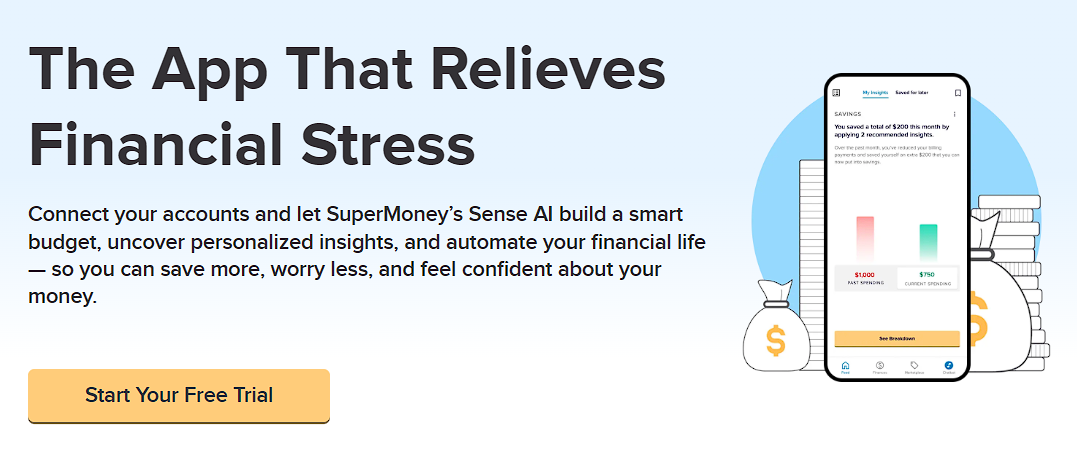 The SuperMoney app compares balance transfer cards by promo length, transfer fee, and ongoing APR — so you can find the offer that matches your payoff timeline before you apply.
How a Balance Transfer Differs from Related Terms
| Term | How It Differs |
|---|---|
| 0% intro APR on purchases | Applies to new purchases on the card, not to transferred balances. A card can offer both, one, or neither. |
| Debt consolidation loan | A personal loan used to pay off card balances — fixed term and fixed rate, but requires strong credit and may carry origination fees. |
| Cash advance | Borrowing cash against your card’s credit line. No promotional rate, no grace period, and a higher APR than purchases. Not a balance transfer. |
| Deferred interest offer | Common on store cards — interest is tracked during the promo window and charged retroactively if the full balance isn’t paid by the deadline. Different from a true 0% APR balance transfer. |
For the full comparison of how balance transfers, deferred interest, and 0% APR promotions differ in risk, see how balance transfers work.
Pro Tip
You cannot transfer a balance between two cards from the same issuer. Chase won’t accept a transfer from another Chase card; the same applies to Citi, Bank of America, and all other major issuers. The new card and the old card must be from different banks for the transfer to be processed.
Credit Score Impact
- Hard inquiry at application: Typically a 2–5 point dip. See hard inquiry vs. soft inquiry.
- New account lowers average account age: Minor short-term effect on the length-of-credit-history factor.
- Utilization on the old card drops to zero: Keeping the old card open after the transfer improves your overall credit utilization ratio.
- Net effect: Usually neutral to positive within 6–12 months if the balance is paid down consistently and the old account stays open.
Key takeaways
- A balance transfer moves existing card debt to a new card — typically to take advantage of a 0% introductory APR. It changes who you owe and at what rate, not how much you owe.
- The standard cost is a 3–5% transfer fee. On a $5,000 balance, that’s $150–$250 — almost always less than a few months of interest at a standard APR of 22%+.
- Transfers must be between cards from different issuers. Same-issuer transfers are not permitted.
- The promotional rate has a hard deadline. Any remaining balance when it expires accrues interest at the card’s standard go-to APR.
- Keep the original card open after transferring. Closing it removes its credit limit from your available credit and raises your utilization ratio immediately.
Compare 0% intro APR balance transfer cards on SuperMoney — filter by promo length, transfer fee, and credit score requirement.
The SuperMoney app shows you balance transfer cards ranked by total cost — promo length, transfer fee, and go-to APR combined — so you can find the right offer for your payoff plan.Andrew is the Content Director for SuperMoney, a Certified Financial Planner®, and a Certified Personal Finance Counselor. He loves to geek out on financial data and translate it into actionable insights everyone can understand. His work is often cited by major publications and institutions, such as Forbes, U.S. News, Fox Business, SFGate, Realtor, Deloitte, and Business Insider.
Table of Contents