
How Balance Transfers Work: Fees, Timeline, and When It’s Worth It

Last updated 03/23/2026 by
Andrew Latham
Edited by
Andrew Latham
Summary:
A balance transfer moves debt from a high-interest card to a new card with a 0% introductory APR — pausing interest for a set period so more of every payment goes toward the principal.
Done right, it’s one of the cheapest ways to pay down credit card debt. Done wrong, it delays the problem and adds fees.
- How it works: You apply for a balance transfer card, get approved, and request the transfer. The new issuer pays off the old card directly. You now owe the new card instead — ideally at 0% APR for 12–21 months.
- The cost: Most cards charge a balance transfer fee of 3–5% of the amount transferred. On a $5,000 balance, that’s $150–$250 upfront — almost always less than a few months of interest at a standard APR.
- The risk: If you don’t pay off the full transferred balance before the promotional period ends, the standard APR applies to whatever remains — often 20%+. The clock doesn’t stop.
- Who qualifies: Balance transfer cards with long 0% periods typically require good to excellent credit (FICO 670+). A lower score may still qualify for a shorter promo period or a higher transfer fee.
Americans paid over $160 billion in credit card interest in 2024, according to the Consumer Financial Protection Bureau — most of it on balances carried at an average APR of 22.30%, per the SuperMoney credit card industry study. A balance transfer doesn’t eliminate that debt, but it can freeze the interest meter for long enough to actually pay it down.
Compare Credit Cards
Compare the rates, fees, and rewards of leading credit cards.
What Is a Balance Transfer?
A balance transfer is the process of moving an existing credit card balance from one card to another — typically to take advantage of a lower or 0% introductory APR on the new card.
The mechanics are straightforward: the new issuer pays off your old card directly, and you owe the new issuer instead. You haven’t reduced your debt — you’ve changed who you owe and, crucially, what interest rate applies to it. For context on how that rate is calculated and what it costs when it kicks back in, see how credit card interest works.
How the Balance Transfer Process Works
How to Complete a Balance Transfer
- Check your credit score. Balance transfer cards with 0% intro periods require good to excellent credit. Pull your score before applying — a hard inquiry with a likely denial is a wasted score hit. See what your credit score means for the range breakdown.
- Compare balance transfer offers. Key variables: length of 0% intro period (12–21 months), transfer fee (typically 3–5%), whether new purchases also get 0% or accrue interest immediately, and the ongoing APR after the promo ends.
- Apply for the card. The application triggers a hard inquiry. Approval is not guaranteed — and you won’t know your credit limit until after approval, which determines how much you can transfer.
- Request the transfer. Once approved, initiate the transfer through the new card’s app or by calling. You’ll need the old card’s account number and the amount to transfer. Most issuers allow up to 60–120 days from account opening to request a transfer at the promotional rate.
- Keep paying the old card until the transfer posts. Transfers take 5–14 days to complete. A missed payment on the old card during that window still damages your credit.
- Pay down the balance before the promo period ends. Divide the transferred balance by the number of months in the promo period. That’s your monthly target. Paying only the minimum will leave a balance when the 0% window closes.
- Don’t ignore the old card. Once the transfer posts, confirm the old card shows a zero balance. Keep the account open — closing it reduces your available credit and raises your utilization ratio.
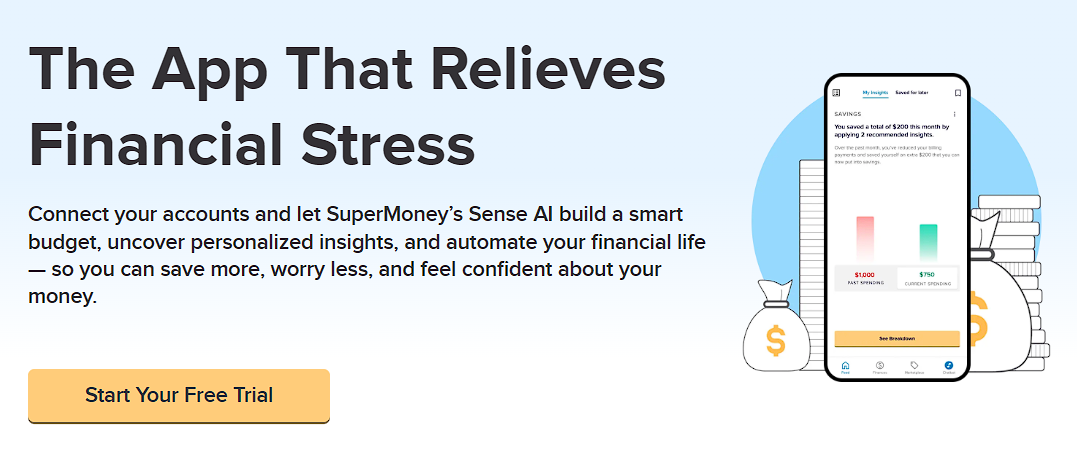 The SuperMoney app compares balance transfer cards side by side — promo length, transfer fee, and ongoing APR — so you can find the offer that gives you the most time at the lowest total cost.
What Does a Balance Transfer Cost?
The main cost is the balance transfer fee — a one-time charge applied to the amount moved to the new card.
| Fee | Typical Range | On a $5,000 Transfer |
|---|---|---|
| Balance transfer fee | 3–5% of amount transferred | $150–$250 |
| Annual fee (some cards) | $0–$95 | Varies |
| Interest after promo ends | 18–29% APR | Depends on remaining balance |
| Late payment fee | Up to $41 | Avoidable with autopay |
Most no-annual-fee balance transfer cards charge 3%. A few premium cards offer 0% transfer fees — but typically with shorter promo periods. The math almost always favors paying the transfer fee over staying on a 22%+ APR card for the same period. For a full breakdown of all credit card fees and how to avoid them, see credit card fees explained.
Pro Tip
Before applying for a balance transfer card, calculate your break-even point. Take the transfer fee and divide it by your current monthly interest charge. If you’re paying $90/month in interest on a card at 22% APR and the transfer fee is $150, you break even in less than two months — and everything after that is savings.
The longer the promo period, the larger the margin. A 21-month 0% offer with a $150 fee on a $5,000 balance saves roughly $1,600 in interest compared to making minimum payments at 22%.
Balance Transfer vs. 0% APR vs. Deferred Interest
These three terms often appear together but work very differently. Confusing them — especially the last two — is one of the most expensive mistakes in consumer credit.
| Feature | Balance Transfer (0% APR) | True 0% Intro APR | Deferred Interest |
|---|---|---|---|
| Interest during promo | Not charged | Not charged | Tracked but not yet charged |
| If you don’t pay in full | Standard APR applies to remaining balance going forward | Standard APR applies to remaining balance going forward | All tracked interest charged retroactively on original amount |
| Where it appears | Credit cards (for transferred balances) | Credit cards (for purchases) | Store cards, medical financing |
| Risk level | Low — only residual balance accrues interest | Low — only residual balance accrues interest | High — one dollar unpaid triggers full backdated interest |
For the full deferred interest vs. grace period breakdown, see how credit card grace periods work.
When a Balance Transfer Makes Sense — and When It Doesn’t
| Makes Sense When | Doesn’t Make Sense When |
|---|---|
| You have a clear payoff plan within the promo period | You’re likely to spend more on the new card and grow the balance |
| Your current APR is 18%+ and you’re carrying $2,000+ | Your balance is small enough that transfer fees outweigh interest savings |
| You have good enough credit to qualify for a long promo period | Your credit score is too low to qualify for meaningful 0% offers |
| You won’t need to apply for other credit (mortgage, auto loan) soon | A hard inquiry from the application would cost you on a major loan application |
| You can pay significantly more than the minimum each month | You can only afford minimum payments — balance won’t clear before promo ends |
Pro Tip
New purchases on a balance transfer card are a trap most people don’t see coming. On many cards, new purchases don’t get the 0% promotional rate — they accrue interest immediately at the standard APR.
Worse, payments are often applied to the 0% balance first, meaning your high-interest new purchases sit untouched while you pay down the transferred balance. Check the card agreement before swiping for anything new on the card you just opened for the transfer.
How a Balance Transfer Affects Your Credit Score
- Hard inquiry at application: Typically a 2–5 point dip. Temporary — fades within 12 months. See hard inquiry vs. soft inquiry for the full impact breakdown.
- New account lowers average account age: Minor short-term suppression on the length-of-credit-history factor.
- Utilization improves on the old card: Once the old card’s balance is transferred to zero, its utilization drops to 0% — which benefits your overall utilization ratio if you keep the account open.
- Net effect over time: Usually positive. Lower utilization + consistent on-time payments on the new card compounds favorably within 6–12 months.
The credit score impact of keeping vs. closing the old card after a transfer is a common mistake. Closing the old card immediately removes its credit limit from your total available credit, which spikes utilization on the new card. Keep it open. For the full picture, see how credit cards affect your credit score.
Key takeaways
- A balance transfer moves existing card debt to a new card — ideally one with a 0% intro APR — pausing interest so more of each payment reduces the principal.
- The upfront cost is a transfer fee of 3–5% of the transferred amount. On a $5,000 balance, that’s $150–$250 — almost always less than two months of interest at a standard APR.
- The promo period has a hard deadline. Any balance remaining when 0% ends starts accruing interest at the card’s standard APR, often 20%+.
- Keep the old card open after the transfer. Closing it removes its credit limit from your total available credit and raises your utilization ratio immediately.
- New purchases on a balance transfer card often don’t get the 0% rate. Check the card terms before using the new card for anything other than the transferred balance.
Frequently Asked Questions
How long does a balance transfer take?
Typically 5–14 days from when you request the transfer. Some issuers complete it in as few as 3 business days; others take up to three weeks. Continue paying the minimum on your old card until the transfer shows as complete — a missed payment during the wait still damages your credit and may trigger a late fee.
Can I transfer a balance from one card to another with the same issuer?
No. Issuers don’t allow balance transfers between two cards they both issue. To do a balance transfer, the new card must be from a different bank than the card you’re moving the balance from. Chase won’t accept a transfer from another Chase card; Citi won’t accept from another Citi card.
What happens if I’m approved for a lower limit than my transfer amount?
You can only transfer up to your approved credit limit on the new card (minus any applicable fees). If your limit is $3,000 and your transfer is $5,000, you can move $2,850–$2,900 (leaving room for the fee) and continue paying down the rest on the original card. A partial transfer still saves meaningful interest on the transferred portion.
Does a balance transfer hurt your credit score?
In the short term, slightly — the hard inquiry typically drops your score 2–5 points, and the new account lowers average account age. In the medium term, the utilization improvement on the old card (which now shows zero balance) often outweighs those effects. The net impact for most cardholders who manage the transfer responsibly is neutral to positive within 6–12 months.
Can I do multiple balance transfers to the same card?
Yes, up to your credit limit and within the transfer window (typically 60–120 days from account opening for the promotional rate to apply). If you have balances on multiple high-APR cards, you can consolidate several onto one balance transfer card in a single application cycle — provided your approved limit covers the total.
What’s the difference between a balance transfer and a debt consolidation loan?
A balance transfer moves card debt to a new card at a promotional rate. A debt consolidation loan replaces card debt with a personal loan — fixed term, fixed payment, fixed interest rate. The right choice depends on your credit profile and discipline. Balance transfers require good credit and carry a re-accumulation risk (the old cards are now empty); consolidation loans work for a wider credit range and have a defined payoff date. For the full comparison of debt payoff strategies, see how to pay off credit card debt.
Compare 0% intro APR balance transfer cards on SuperMoney — filter by promo length, transfer fee, and ongoing APR to find the offer that matches your payoff timeline.
The SuperMoney app lets you compare balance transfer offers and run the numbers on how much you’d save — so you can transfer with a plan, not just a hope.Andrew is the Content Director for SuperMoney, a Certified Financial Planner®, and a Certified Personal Finance Counselor. He loves to geek out on financial data and translate it into actionable insights everyone can understand. His work is often cited by major publications and institutions, such as Forbes, U.S. News, Fox Business, SFGate, Realtor, Deloitte, and Business Insider.
Share this post:
Add as a preferred source on Google
Table of Contents