
Statement Balance vs. Current Balance: Definition, How it Works & Key Differences

Last updated 03/19/2026 by
Andrew Latham
Edited by
Andrew Latham
Summary:
Statement balance is the total amount you owed on your credit card at the end of your most recent billing cycle, while current balance is the total you owe right now, including new charges posted after the cycle closed.
The two figures are often different, and which one you pay determines whether you’re charged interest.
- Statement balance: The amount on your bill — frozen at cycle close. Pay this in full by the due date to avoid interest.
- Current balance: A live number that includes post-cycle purchases. Paying it is fine, but not required to avoid interest charges.
- Credit reporting: Your issuer typically reports your statement balance to the credit bureaus — making it the number that affects your credit utilization ratio.
- Interest trigger: Carrying any unpaid portion of your statement balance past the due date causes interest to accrue on your entire average daily balance — not just the leftover amount.
Most cardholders see two different balance figures when they log in and aren’t sure which one to pay. The difference between them isn’t just cosmetic — it has direct consequences for interest charges and your credit score.
Compare Credit Cards
Compare the rates, fees, and rewards of leading credit cards.
What Is a Statement Balance?
Your statement balance is the total amount owed on your credit card at the moment your billing cycle ends — known as the statement closing date. It’s a fixed snapshot: once your cycle closes, that number doesn’t change regardless of new purchases you make.
This is the amount that appears on your monthly billing statement and the number your issuer uses to calculate your minimum payment due.
It’s also the figure your issuer reports to the three major credit bureaus (Equifax, Experian, and TransUnion) each month, which means it directly affects your credit utilization ratio and, by extension, your credit score.
Your statement balance includes all purchases, cash advances, balance transfers, interest charges, and fees posted during that billing period. It does not include charges made after the closing date — those appear on your next statement.
What Is a Current Balance?
Your current balance is a real-time figure: the total you owe on your credit card at this exact moment. It updates every time a new transaction posts, a payment is credited, or a fee is applied.
Because your current balance includes new purchases made after your billing cycle closed, it will almost always be higher than your statement balance — unless you’ve already made a payment. If you made a payment after your statement closed, your current balance may be lower than your statement balance.
Your current balance is not what you’re billed, not what triggers interest, and not what gets reported to the credit bureaus.
It’s simply the most accurate count of what you’d owe if you closed the account today.
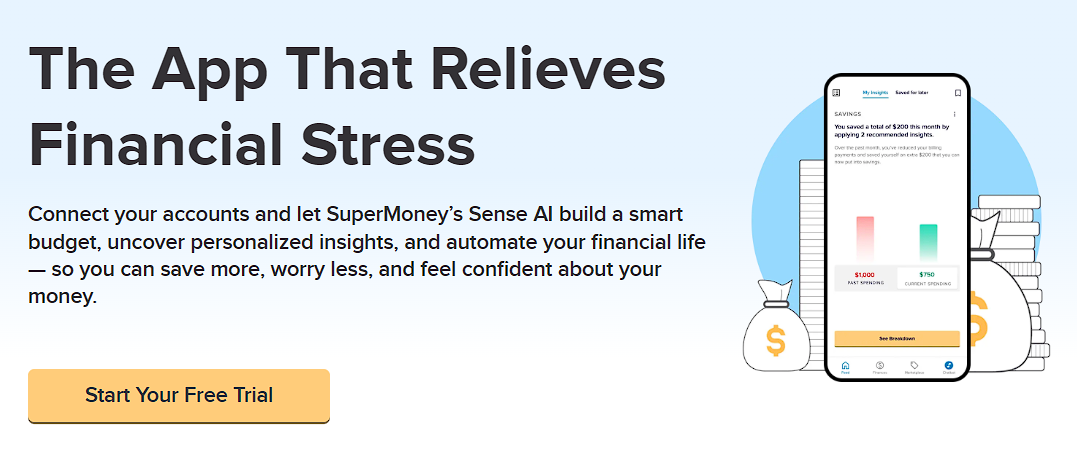 The SuperMoney app shows your statement balance, current balance, and payment due date in one place — so you always know exactly what to pay and when.
Statement Balance vs. Current Balance: Key Differences
| Feature | Statement Balance | Current Balance |
|---|---|---|
| When it’s calculated | At the end of each billing cycle | In real time, continuously updated |
| What it includes | All charges within the closed billing period | Everything owed right now, including post-cycle charges |
| Reported to credit bureaus | Yes — typically at cycle close | No |
| Determines interest charges | Yes — unpaid portion triggers interest | No |
| Appears on your bill | Yes | No (visible only in your account) |
| Changes after cycle closes | No — fixed until next statement | Yes — updates with every transaction |
Which Balance Should You Pay?
Pay your statement balance in full by the due date. This is the only number you’re obligated to pay to avoid interest charges and late fees.
Your credit card’s grace period — typically 21 to 25 days between your statement close date and your due date — gives you a window to pay your statement balance interest-free. As long as you pay the full statement balance before the due date, no interest accrues on those purchases.
Paying your current balance instead is also fine — you’re simply paying off new purchases before they appear on your next statement. This doesn’t provide any interest benefit over paying the statement balance, but it does lower your live balance (and will reduce next month’s statement balance).
Pro tip: Paying only the minimum keeps your account in good standing but leaves a balance that will accrue interest. Even a small unpaid balance triggers interest charges — and once you’re carrying a balance from a previous month, new purchases lose their grace period and start accruing interest immediately.
What Happens If You Pay Less Than Your Statement Balance?
Paying less than your full statement balance — even by a few dollars — results in interest charges on your next statement. But the amount interest is calculated on surprises most cardholders.
Interest isn’t charged only on the unpaid portion. Your issuer charges interest on your average daily balance for the entire billing period — including the purchases you did pay off.
Paying $900 of a $1,000 statement balance doesn’t mean you’re only charged interest on $100. Your grace period is gone, and interest applies to the average of your full daily balances throughout the cycle.
A SuperMoney credit card industry study found that two out of every three credit card accounts carry a revolving balance and pay interest, in most cases because cardholders don’t realize partial payment triggers interest on the full average daily balance, not just what’s left unpaid.
The only way to fully avoid interest on purchases is to pay the complete statement balance by the due date.
How Statement Balance Affects Your Credit Score
Your issuer reports your statement balance to the credit bureaus shortly after your billing cycle closes — before your payment is due. This means your credit report reflects what you owed at cycle close, not what you owe after paying your bill.
This matters for your credit utilization ratio — the percentage of your available credit you’re using, which accounts for 30% of your FICO score. If your statement balance is $3,000 and your credit limit is $10,000, your reported utilization is 30% — even if you pay the full $3,000 the next day.
Cardholders who want to lower the utilization reported to bureaus can pay down their balance before the statement closing date — not just before the due date. Reducing your balance before the cycle closes means a lower figure gets reported, which can meaningfully improve your score.
Pro tip: If your credit score is suffering from high utilization, pay down your balance a few days before your statement closing date — not just before your payment due date. The statement close date is when your balance gets reported to the bureaus. Paying after the close but before the due date is too late to affect that month’s reported utilization.
Cardholders who consistently pay in full get the most from a card that charges no annual fee — SuperMoney’s no-annual-fee card comparison shows the top options by rewards type and credit score requirement.
Practical Examples
Example 1: Paying the full statement balance
Your billing cycle closes on the 15th with a statement balance of $1,200. You spend an additional $300 between the 15th and your due date on the 10th of next month, bringing your current balance to $1,500. You pay $1,200 (your statement balance) by the 10th. Result: no interest charged on any purchase from the closed cycle. The $300 in new charges rolls into your next statement.
Your billing cycle closes on the 15th with a statement balance of $1,200. You spend an additional $300 between the 15th and your due date on the 10th of next month, bringing your current balance to $1,500. You pay $1,200 (your statement balance) by the 10th. Result: no interest charged on any purchase from the closed cycle. The $300 in new charges rolls into your next statement.
Example 2: Paying less than the statement balance
Same scenario — $1,200 statement balance — but you pay only $900. The remaining $300 is carried forward. Result: interest accrues on your average daily balance from the previous cycle. Your grace period disappears, meaning new purchases also begin accruing interest immediately. Your next statement will include interest charges calculated on the full daily balance history — not just $300.
Same scenario — $1,200 statement balance — but you pay only $900. The remaining $300 is carried forward. Result: interest accrues on your average daily balance from the previous cycle. Your grace period disappears, meaning new purchases also begin accruing interest immediately. Your next statement will include interest charges calculated on the full daily balance history — not just $300.
Example 3: Paying the current balance
You pay the full $1,500 current balance by the due date. Result: same as paying the statement balance — no interest. You’ve also paid off the new $300 early, which means next month’s statement balance will be lower (or zero, if you make no new purchases).
You pay the full $1,500 current balance by the due date. Result: same as paying the statement balance — no interest. You’ve also paid off the new $300 early, which means next month’s statement balance will be lower (or zero, if you make no new purchases).
Key takeaways
- Statement balance is fixed at the end of your billing cycle and is the amount your issuer bills you. Current balance is a live figure that includes post-cycle charges.
- Pay your full statement balance by the due date to avoid interest charges. Paying the current balance is also fine but not required.
- Partial payment of the statement balance triggers interest on your average daily balance for the entire cycle — not just the unpaid portion.
- Your issuer reports your statement balance to the credit bureaus, making it the figure that drives your credit utilization ratio.
- To lower reported utilization, pay down your balance before the statement closing date — not just before the due date.
Frequently Asked Questions
Is it better to pay the statement balance or the current balance?
Either eliminates interest charges, as long as you pay by the due date. Paying the statement balance is the minimum required to avoid interest. Paying the current balance pays off new purchases early and results in a lower next-month statement balance — but provides no additional interest benefit versus paying the statement balance.
Does paying the current balance improve my credit score?
Not directly, since your issuer reports the statement balance to credit bureaus — not the current balance. However, if you pay down your balance before the statement closing date (before the cycle ends), you reduce the statement balance that gets reported, which can lower your utilization ratio and improve your score.
What if my current balance is lower than my statement balance?
This happens when you’ve made a payment after your cycle closed but before your due date — your current balance reflects the reduced amount after that payment.
You still need to confirm you’ve paid at least your full statement balance by the due date. Partial payment still triggers interest charges.
Can I have a $0 statement balance but still owe money?
Yes. If you paid your previous statement balance in full and made new purchases after your cycle closed, your statement balance from the most recent cycle is $0 — but your current balance reflects the new charges. Those new charges will appear on your next statement.
Does carrying a balance affect my grace period?
Yes. If you carry any unpaid balance from a previous statement, your grace period is suspended. New purchases begin accruing interest immediately rather than after the due date. Your grace period is restored once you pay your full statement balance two consecutive months in a row — the rules vary by issuer, so check your cardholder agreement.
Which balance should I use to calculate my credit utilization?
Use your statement balance — that’s what gets reported to the credit bureaus each month. Your current balance is not reported, so it doesn’t factor into your utilization ratio for scoring purposes.
Keeping the distinction between these two figures clear makes it easier to use your credit card strategically — avoiding interest, managing your utilization, and staying ahead of your billing cycle.
The SuperMoney app tracks your credit card balances and payment due dates in one place — so you never miss a full statement balance payment and never pay a dollar of unnecessary interest.Andrew is the Content Director for SuperMoney, a Certified Financial Planner®, and a Certified Personal Finance Counselor. He loves to geek out on financial data and translate it into actionable insights everyone can understand. His work is often cited by major publications and institutions, such as Forbes, U.S. News, Fox Business, SFGate, Realtor, Deloitte, and Business Insider.
Table of Contents