
How Do Credit Cards Work? A Complete Guide

Last updated 03/19/2026 by
Andrew Latham
Edited by
Andrew Latham
Summary:
A credit card is a revolving line of credit issued by a bank that lets you borrow money from a card network (like Visa or Mastercard) to pay merchants, with the balance due at the end of your billing cycle.
Credit cards differ fundamentally from debit cards in how they process transactions and charge interest.
- Rewards and cashback: Earn points, miles, or cash on every purchase to offset costs or fund travel.
- Building credit: On-time payments establish a credit history that unlocks lower rates on mortgages, auto loans, and other credit products.
- Interest costs: Unpaid balances accrue interest at rates averaging over 20%, making debt expensive if you don’t pay in full.
- Fraud protection: Federal law caps your liability for unauthorized charges, and card networks monitor suspicious activity on your behalf.
Credit cards are one of the most useful financial tools available—and one of the most misunderstood.
Most people know you swipe or tap to pay, but the mechanics behind that tap ripple through multiple institutions and happen in seconds.
Understanding how credit cards actually work, from the moment you apply through settlement, helps you use them strategically and avoid costly mistakes.
Compare Credit Cards
Compare the rates, fees, and rewards of leading credit cards.
What Is a Credit Card?
A credit card is a revolving line of credit issued by a financial institution, allowing you to borrow money up to a predetermined limit and repay it monthly.
Unlike a loan with a fixed term, a credit card lets you borrow, repay, and borrow again indefinitely—as long as you make your minimum payments and stay within your credit limit.
Credit cards operate within a four-party system: the cardholder (you), the merchant who accepts your card, the card network (Visa, Mastercard, American Express, or Discover), and the issuing bank that provides the credit.
The card network is not the bank. Visa and Mastercard don’t issue cards or lend you money—they operate the payment infrastructure that routes transactions between merchants and banks. Your bank is the issuer; it decides your credit limit, sets your interest rate, and collects your payments.
How a Credit Card Transaction Works
Every swipe or tap triggers a chain of events that completes in two stages: authorization and settlement.
Authorization happens instantly. The merchant’s payment terminal sends your card information to their bank (the acquiring bank), which sends it to the card network.
The network forwards it to your card issuer, who checks if your card is valid, if you’re over your limit, and if the purchase is likely legitimate. Your issuer approves or declines within seconds. A “hold” is placed on your available credit—not yet charged, but reserved for this transaction.
Settlement happens behind the scenes, usually within 1–3 days. The acquiring bank credits the merchant’s account minus a processing fee (typically 1.5% to 2.5%). The card network settles the payment between banks.
Your issuer charges the purchase to your statement and sends you a record of the transaction.
| Party | Role |
|---|---|
| Issuing Bank | Provides credit, approves/declines, charges interest, issues the physical card |
| Card Network | Routes transactions, sets rules, monitors fraud, settles payments between banks |
| Acquiring Bank | Accepts the merchant’s deposits, deducts processing fees, routes transactions to the network |
| Merchant | Accepts your card, sends transaction data, receives payment minus fees |
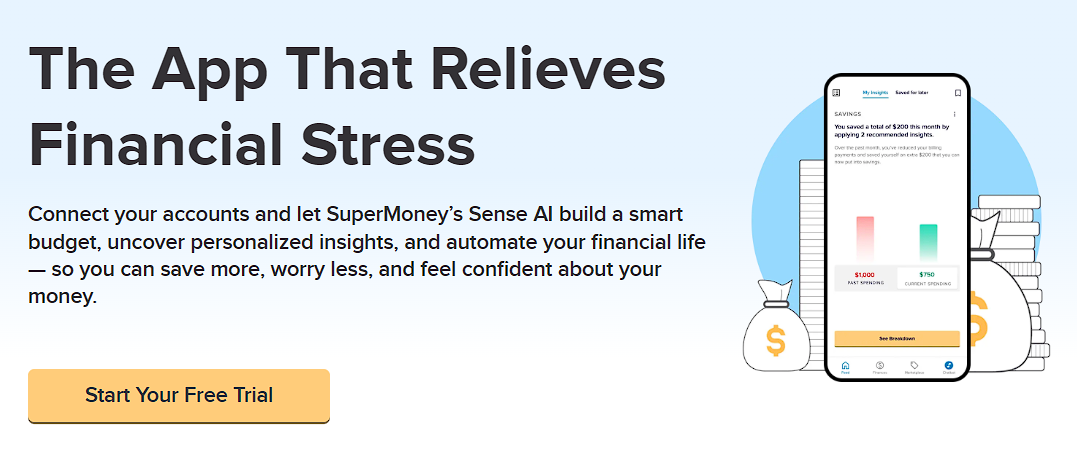 The SuperMoney app lets you compare credit cards side by side — rates, fees, and rewards — so you can find the right card before you apply.
Understanding Your Billing Cycle
Your billing cycle is a 28- to 31-day period, set by your card issuer, during which all transactions post to your account. It always starts and ends on the same day each month (for example, the 1st through the 28th).
Two different balances matter: your statement balance (what you owed when your cycle closed) and your current balance (everything you owe right now, including charges posted after the cycle ended).
Your due date is typically 21–25 days after your statement closes. Pay your full statement balance by that date and you owe nothing more. Anything you charge after the statement closes appears on your next bill.
A grace period—typically 21 to 25 days from statement close—is your window to pay without interest. This applies only to purchases, not cash advances or balance transfers. If your issuer reports that you made a late payment, your grace period may be lost even if you pay the next bill on time.
Pro tip: Paying your full statement balance each month is the most effective way to avoid interest charges. You keep your utilization low and avoid paying for credit you don’t need.
How Credit Card Interest Is Calculated
Interest on credit cards is expressed as an Annual Percentage Rate (APR). If your APR is 21%, that doesn’t mean you pay 21% on your balance each month—it means 21% per year, which translates to roughly 0.058% per day (21% ÷ 365 days).
Your issuer calculates interest using the average daily balance method, the most common approach. Each day your balance remains unpaid, your issuer logs that day’s balance. At the end of the cycle, they average all those daily balances and apply your daily rate to that average. If you had a $1,000 balance for 15 days and $500 for 15 days, your average daily balance is $750. Interest is charged only on days you’re past your grace period.
Interest kicks in the day after your grace period expires—which is 21–25 days after your statement closes if you made no new purchases. If you revolved a balance from a previous month, interest begins immediately; there’s no grace period for existing balances.
According to the Federal Reserve’s Consumer Credit statistical release, the average credit card APR hit 21.76% in Q4 2024 — the highest in the agency’s recorded data. At that rate, a $3,000 balance carried for a full year costs over $650 in interest even without adding new charges.
The stakes are significant: revolving credit card debt reached $1.33 trillion by Q4 2025, and a SuperMoney credit card industry study found that two out of every three credit card accounts carry a revolving balance and pay interest.
The full mechanics of how credit card interest compounds daily are worth knowing before you carry your first balance.
Credit Card Fees to Know
Beyond interest, credit card issuers charge several types of fees depending on how you use the card.
| Fee Type | Typical Range | When It Applies |
|---|---|---|
| Annual fee | $0–$695+ | Once per year, charged to your account |
| Late payment fee | $25–$40 | When you pay after your due date |
| Foreign transaction fee | 1–3% of transaction | When you use the card outside the U.S. |
| Cash advance fee | $5 or 3–5% of amount (whichever is greater) | When you withdraw cash using your card |
| Balance transfer fee | 3–5% of transferred amount | When you move a balance from another card |
| Over-limit fee | $0–$35 (if permitted) | When you exceed your credit limit |
Cash advances are particularly expensive: they charge an immediate fee (typically 3–5%), carry a higher APR than purchases, and accrue interest immediately—no grace period applies.
Travelers should look for credit cards with no foreign transaction fees to avoid the 1–3% markup on international purchases.
Types of Credit Cards
Different cards serve different financial goals. A rewards card optimizes for points and miles; a balance transfer card buys you time on existing debt; a secured card builds credit from scratch. The major types of credit cards each have distinct fee structures, approval requirements, and ideal use cases.
| Card Type | Best For | Key Feature |
|---|---|---|
| Rewards | High spenders who want to earn points on every purchase | Earn 1–5+ points per dollar on categories (travel, dining, gas); redeemable for cash, gift cards, or travel |
| Cashback | Those who want simple rebates on everyday spending | Earn 1–5% cash back on purchases; no points conversion required |
| Airline | Frequent flyers who want to earn and redeem miles | Earn miles per dollar; redeem for flights, seat upgrades, and lounge access |
| Balance transfer | People paying off high-interest debt from another card | 0% intro APR for 6–21 months on transferred balances; balance transfer fee typically 3–5% |
| Secured | Rebuilding or building credit from scratch | Require a cash deposit equal to your credit limit; deposit acts as collateral |
| Student | College students with limited credit history | Lower credit requirements, rewards on student purchases |
| Store | Frequent shoppers at a specific retailer | Discounts or rewards exclusive to that store; often easier to qualify for |
| Business | Business owners separating personal and business expenses | Higher credit limits, employee cards, and rewards on business categories (advertising, office supplies, travel) |
According to a SuperMoney credit card industry study, rewards are the most attractive feature for consumers shopping for a new card, which explains why rewards and cashback cards dominate applications.
For rebuilding credit, secured credit cards are effective tools because they require a deposit, making approval easier. Once you prove responsible use, many issuers upgrade your card to an unsecured version and return your deposit.
How Credit Cards Affect Your Credit Score
Credit cards influence all five factors that make up your FICO score, the most widely used credit scoring model.
Payment history (35% of your score): Every on-time or late payment is reported to the credit bureaus. Even one late payment can drop your score 100+ points. Set up automatic minimum payments to avoid this.
Credit utilization (30% of your score): This is the percentage of your available credit you’re actively using. If you have a $10,000 limit and carry a $3,000 balance, your utilization is 30%. Aim to keep it below 30% per card—not just across all cards, which is a common misconception. A single card maxed out hurts your score even if your overall utilization is low.
Length of credit history (15% of your score): Older accounts help your score. Keep credit cards open even after paying them off, unless there’s an annual fee.
Credit mix (10% of your score): Having different types of credit—cards, installment loans, mortgages—slightly improves your score. Credit cards alone won’t hurt you, but variety helps.
New inquiries (10% of your score): Each time you apply for a card, the issuer performs a hard inquiry, which temporarily lowers your score by a few points. Apply for new cards sparingly—space applications out by at least 3 months.
The credit scoring model weights these five factors across all your open accounts, not just credit cards — but credit cards are typically where you have the most day-to-day influence over the two biggest factors.
Payment history and utilization together make up 65% of your FICO score, and both are almost entirely within your control.
Pro tip: Keeping your utilization below 30% per card is more effective than optimizing your total utilization across all cards. A single high-utilization card can cap your score, even if your overall utilization is healthy.
Secured vs. Unsecured Credit Cards
The core difference is straightforward: a secured credit card requires a cash deposit to open; an unsecured card does not.
With a secured card, your deposit becomes your credit limit. Charge $500, and you’ve reserved $500 of your deposit. Pay your bill on time, and the deposit stays untouched. Secured cards are designed for people building credit from scratch or recovering from past damage.
Once you’ve shown 12–18 months of on-time payments, many issuers upgrade you to an unsecured card and refund your deposit. The best secured credit cards for building credit charge minimal fees and report to all three bureaus, so every payment builds your history faster.
How to Use a Credit Card Responsibly
Credit cards are tools, not free money. These four rules keep them working in your favor.
- Pay your statement balance in full each month. This eliminates interest charges and keeps your utilization under 30%, which protects your credit score.
- Keep your utilization low on every card. Aim for under 30% on each card you hold, not just across all cards combined. A single maxed-out card signals risk to lenders.
- Don’t apply for multiple cards at once. Each application triggers a hard inquiry. Space applications 3+ months apart to minimize temporary score damage.
- Review your statement monthly. Catch unauthorized charges, billing errors, and unfamiliar merchant names early. Fraud is easier to contest within 30 days of appearing on your statement.
- Set up automatic minimum payments as a safety net. Even if you plan to pay in full, automating the minimum ensures you never miss a due date by accident.
Key takeaways
- Credit cards are revolving lines of credit issued by banks and routed through card networks like Visa and Mastercard; transactions clear within 1–3 days.
- Your billing cycle runs 28–31 days, and you have a grace period (typically 21–25 days after statement close) to pay without interest on new purchases.
- Interest on unpaid balances is calculated using the average daily balance method at a daily rate (APR ÷ 365); the average APR is currently 21.76% according to the Federal Reserve.
- Credit cards affect all five factors of your credit score, with payment history and utilization being the most important; keep utilization under 30% per card.
- Secured cards require a deposit and are designed for building credit; unsecured cards don’t require collateral and are for established borrowers.
- Using credit cards responsibly means paying in full, keeping utilization low, spacing applications, and monitoring statements for fraud.
Frequently Asked Questions
What is the difference between a credit card and a debit card?
A credit card borrows money from your issuer that you repay later; a debit card pulls directly from your bank account. Credit cards build your credit history and offer fraud protection and rewards; debit cards don’t. If someone uses your debit card fraudulently, the money is gone immediately and can take weeks to recover.
What credit score do you need to get a credit card?
Credit scores typically range from 300 to 850. Most mainstream cards require a score of 620+, while premium cards often require 740+. If your score is below 620, you may need to start with a secured card, which has minimal credit requirements.
What happens if you only make the minimum payment?
Paying only the minimum keeps your account current and protects your credit score from late-payment damage, but you’ll pay substantial interest on the remaining balance. If you carry a $5,000 balance at 21% APR and pay only the $100 minimum each month, it will take you 82 months to pay off the card, and you’ll pay roughly $3,200 in interest.
Can a credit card help build credit?
Yes. On-time credit card payments are reported to credit bureaus and build your credit history. Secured cards are specifically designed for this purpose, making them accessible to people with no credit history or poor credit. Most issuers upgrade secured cardholders to unsecured cards after 12–18 months of on-time payments.
What is a cash advance on a credit card?
A cash advance lets you withdraw money using your credit card at an ATM or bank, but it’s expensive. Cash advances charge an immediate fee (3–5%), a higher APR than purchases, and no grace period—interest starts accruing the day you withdraw the cash.
How many credit cards should I have?
There’s no single right number, but most financial advisors suggest 2–4 cards. Multiple cards lower your overall utilization, provide backup payment methods, and let you optimize rewards by category. Too many cards makes budgeting harder and increases the risk of missed payments.
Credit cards reward those who pay in full and penalize those who don’t — the mechanics are straightforward once you understand them. When you’re ready to find the right card, compare credit cards side by side across rates, fees, and rewards to find one that fits how you actually spend.
The SuperMoney app helps you compare credit cards, track your spending, and monitor how your balance affects your credit score — all in one place.Andrew is the Content Director for SuperMoney, a Certified Financial Planner®, and a Certified Personal Finance Counselor. He loves to geek out on financial data and translate it into actionable insights everyone can understand. His work is often cited by major publications and institutions, such as Forbes, U.S. News, Fox Business, SFGate, Realtor, Deloitte, and Business Insider.
Share this post:
Add as a preferred source on Google
Table of Contents