
Going Directly To a Car Dealer For a Loan To Keep Things Simple Is a…

Last updated 12/05/2024 by
Benjamin Locke
Edited by
Andrew Latham
Summary:
Financing a car directly through a dealership simplifies the process of buying and financing in one place. While convenient, it can come with higher costs and less transparency. This article breaks down how dealership financing works, its pros and cons, and tips to make an informed decision when buying a car.
Get Competing Auto Loan Offers In Minutes
Compare rates from multiple vetted lenders. Discover your lowest eligible rate.
It's quick, free and won’t hurt your credit score
What is dealership financing?
Dealership financing is a type of auto loan that is arranged through the car dealership. Instead of applying to a bank or credit union yourself, the dealership serves as a middleman, working with one or more lenders to secure financing on your behalf. While this can save time and streamline the car-buying process, it’s important to understand the potential drawbacks.
With dealership financing, the dealership submits your application to lenders they have partnerships with. These lenders then assess your creditworthiness and provide loan terms. The dealer presents these offers to you, often with a markup added to the interest rate to increase their profit. This markup is why dealership loans may be more expensive than loans from banks or credit unions.
How does dealership financing work?
Understanding the process of dealership financing can help you decide if it’s the right option for you. Here’s how it works step-by-step:
- Application: You complete a loan application at the dealership, providing information about your income, employment, and credit history.
- Submission to lenders: The dealer submits your application to one or more lenders they partner with.
- Loan offers: Lenders evaluate your application and send loan offers back to the dealer. These offers include details like the interest rate, loan term, and monthly payment amount.
- Markup: The dealer may add a markup to the interest rate before presenting the loan terms to you.
- Finalizing the loan: Once you accept a loan offer, the lender disburses the funds to the dealer, and you begin making monthly payments to the lender.
Types of dealership financing
Dealership financing isn’t a one-size-fits-all solution. Here are the main types of dealership financing you might encounter:
| Type | Description |
|---|---|
| Dealer-arranged financing | The dealership acts as an intermediary, working with multiple lenders to find a loan for you. This is the most common type of dealership financing. |
| Manufacturer financing | Some car manufacturers offer special financing deals, such as 0% APR or cashback incentives, directly to buyers. These deals often require excellent credit. |
| Buy here, pay here financing | Offered by dealerships that finance the loan themselves. This option is typically for buyers with poor credit but comes with much higher interest rates. |
Necessary documents for dealership financing
Streamlining the financing process at a dealership starts with being well-prepared. Bringing the right documents not only speeds up approval but also positions you as a serious buyer, giving you an advantage during negotiations.
Here’s a checklist of the key items to have on hand:
- Proof of income: Pay stubs, tax returns, or other documentation showing your earnings.
- Proof of residence: Utility bills, lease agreements, or similar documents confirming your address.
- Driver’s license: A valid license is required for identification and legal purposes.
- Proof of insurance: Documentation showing that your vehicle is insured.
- Title and registration: If you’re trading in a vehicle, bring the title and current registration.
Key factors to consider
Before committing to dealership financing, it’s important to evaluate several critical factors that can impact the total cost and terms of your loan. Taking the time to research and compare your options can save you money and help you avoid potential pitfalls. Here are the key aspects to keep in mind:
Interest rates
Dealership financing often includes higher interest rates due to dealer markups. Before agreeing to a loan, compare the rates offered by the dealership with those from banks, credit unions, and online lenders. Even a small difference in the interest rate can significantly impact your monthly payments and the total cost of the loan. For instance, a 1% difference in the rate on a $20,000 loan could cost you hundreds or even thousands of dollars over the life of the loan. Be sure to ask for a breakdown of the rate to understand if there are any hidden markups.
Loan terms
Auto loans can range from 24 to 84 months or more, with longer terms resulting in lower monthly payments but higher overall costs due to accrued interest. While longer terms might seem appealing for budget-friendly monthly payments, they could mean paying significantly more in the long run. On the other hand, shorter loan terms usually have higher monthly payments but save you money on interest over time. Choose a loan term that aligns with your budget while minimizing total costs.
Additional fees
Dealership loans may include fees that can increase your total borrowing costs. Common fees include loan origination fees, prepayment penalties, and documentation fees. For example, loan origination fees are often a percentage of the loan amount and can add hundreds of dollars to the cost. Prepayment penalties are charges for paying off your loan early, which can make refinancing or early repayment less cost-effective. Always review the loan agreement carefully to identify and understand any additional fees included in the terms.
Your credit score
Your credit score plays a significant role in determining the interest rate and terms you’ll qualify for. Higher credit scores typically result in lower rates and access to special manufacturer promotions, such as 0% APR financing. If your credit score is below average, you may still qualify for dealership financing, but the rates and fees will likely be higher. Consider checking your credit score and addressing any issues before applying for a loan. If possible, improve your score by paying down existing debt or correcting inaccuracies in your credit report to secure better loan offers.
Negotiating dealership financing terms
Dealership financing terms, including interest rates, loan duration, and fees, are often negotiable. Preparing beforehand by researching rates from banks or credit unions can provide you with leverage. Focus on negotiating the interest rate, as this has the greatest impact on the total cost of the loan, rather than simply aiming for lower monthly payments. Additionally, request a clear breakdown of fees to avoid unnecessary add-ons that can inflate the overall cost. By being informed and assertive, you can often secure more favorable terms.
Pros and cons of dealership financing
When considering dealership financing, weigh the following pros and cons:
How dealership financing compares to other options
Dealership financing is just one way to secure an auto loan. To make the best choice for your financial situation, it’s important to compare it with other common options like banks, credit unions, and online lenders. Each option has its own set of advantages and disadvantages, so understanding the differences can help you find the most cost-effective and convenient solution for your needs.
| Option | Pros | Cons |
|---|---|---|
| Bank or Credit Union |
|
|
| Online Lenders |
|
|
| Dealership Financing |
|
|
Interest rate comparison
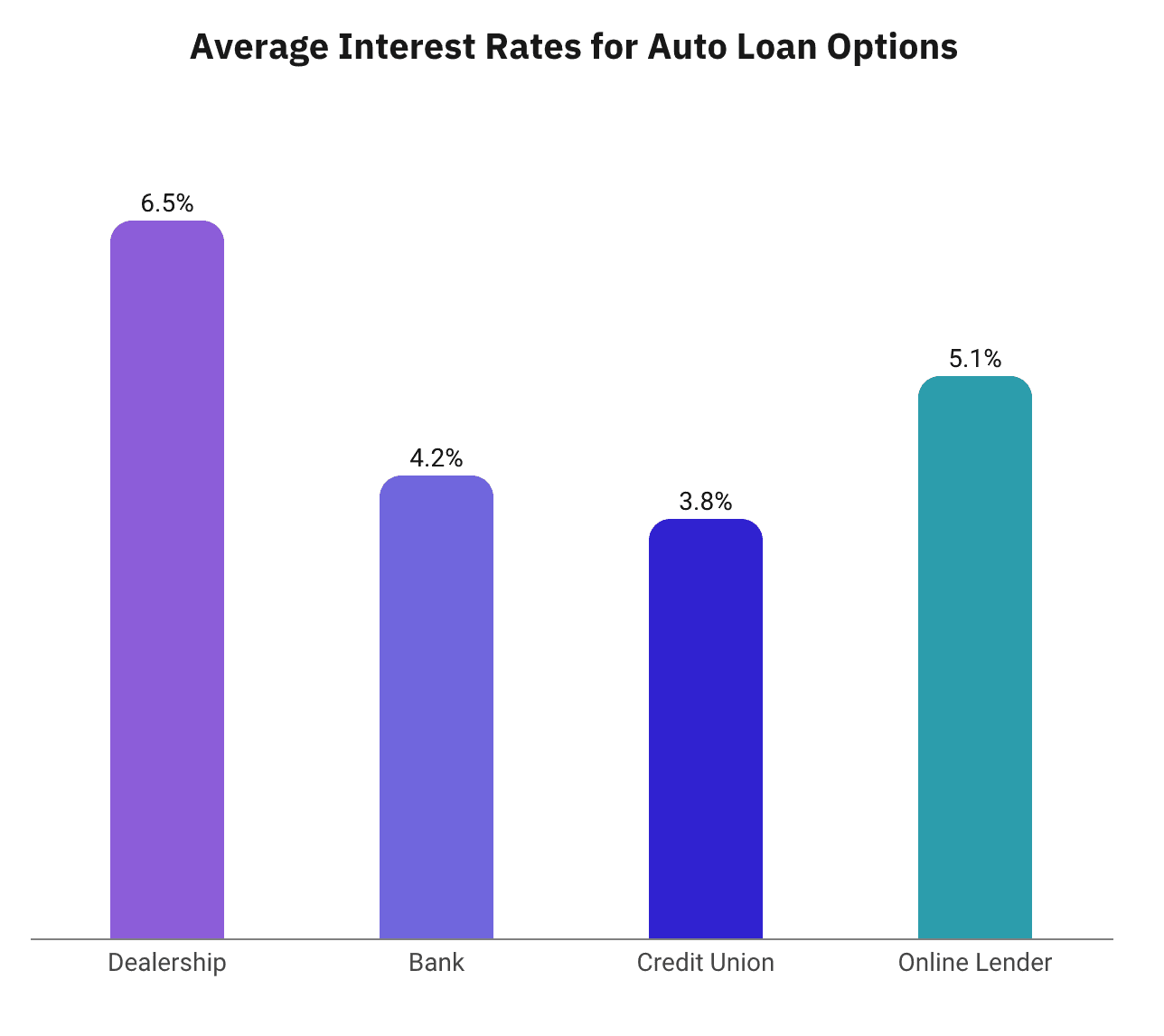
Interest rates for auto loans can vary significantly depending on the type of lender you choose and your individual credit profile. Lenders evaluate factors like your credit score, debt-to-income ratio, and financial history to determine the interest rate they offer. While dealerships often provide a convenient way to secure financing, their rates may include additional markups that make them higher than those from other sources like banks or credit unions.
To help you better understand how interest rates differ across financing options, the chart below highlights average rates for dealerships, banks, credit unions, and online lenders.
FAQ
What are common mistakes to avoid with dealership financing?
Common mistakes include not comparing financing offers, focusing only on monthly payments rather than the overall loan cost, and agreeing to unnecessary add-ons like extended warranties. Always review the loan terms carefully and ensure you understand the total cost of the loan before signing.
Are dealership loans a good option for first-time buyers?
Dealership loans can be a good option for first-time buyers who value convenience and access to promotional offers. However, they may not always provide the best rates. First-time buyers should explore alternatives like pre-approvals from banks or credit unions to compare costs and terms.
What is the impact of prepayment penalties on dealership loans?
Prepayment penalties are fees charged for paying off your loan early. These can reduce the financial benefit of refinancing or paying off your loan ahead of schedule. Always ask if prepayment penalties apply before agreeing to a dealership loan.
How does dealership financing affect your credit score?
Applying for dealership financing may result in a hard inquiry on your credit report, which could lower your score temporarily. However, making on-time payments can improve your credit over time. Borrowers should monitor their credit reports to ensure accuracy and track progress.
What happens if I default on a dealership loan?
If you default on a dealership loan, the lender may repossess your vehicle, which can severely damage your credit score. Additionally, you may still owe money if the car’s resale value doesn’t cover the loan balance. To avoid default, communicate with your lender about potential financial challenges and explore options like refinancing or loan modifications.
Key Takeaways
- Convenience vs. Cost: Dealership financing offers the ease of handling both purchasing and financing in one place but may come with higher interest rates due to dealer markups.
- Negotiation is Possible: Buyers can negotiate interest rates, loan terms, and fees with the dealership to secure more favorable financing conditions.
- Preparation is Key: Bringing necessary documents, such as proof of income and residence, can streamline the financing process and strengthen your negotiating position.
- Compare Financing Options: Exploring alternatives like bank or credit union loans can provide better interest rates and terms compared to dealership financing.
Share this post:
Add as a preferred source on Google
Table of Contents