
How to Choose a Credit Card: A 5-Step Framework

Last updated 03/23/2026 by
Allison Martin
Fact checked by
Andrew Latham
Summary:
The right credit card depends on two things: your credit profile (what you can qualify for) and your spending behavior (what will actually earn you the most).
Most people optimize for rewards before verifying they’ll qualify — start with the profile, then match the product.
- Check your credit score first: Cards are tiered by credit score requirement. Applying for a card you won’t qualify for wastes a hard inquiry and temporarily lowers your score. Know your range before you apply.
- Match the card to your top spending categories: If you spend $800/month on groceries and $200 on dining, a card with 5% on groceries outperforms a card with 3% on dining — regardless of which has the better headline rate.
- Annual fee cards are worth it only if you use the benefits: A $95 annual fee card needs to return at least $95/year in rewards or credits you actually use to justify the cost.
- If you carry a balance, APR matters more than rewards: At 22%+ APR, interest charges erase rewards earnings within weeks. For cardholders who carry balances, a low-APR card beats any rewards card.
- Building credit requires a different approach: Secured cards and credit-builder cards are designed for thin or damaged credit profiles. They report to all three bureaus and establish payment history — the most important factor in your FICO score.
Compare Credit Cards
Compare the rates, fees, and rewards of leading credit cards.
Step 1: Know Your Credit Score Range
Every credit card has an approval profile. Applying without knowing your score risks a hard inquiry on a card you won’t get — and hard inquiries stay on your credit report for two years even when the application is denied.
For the difference between hard and soft pulls, see hard inquiry vs. soft inquiry.
| Credit Score Range | Tier | Cards Available |
|---|---|---|
| 300–579 | Poor / No credit | Secured cards, credit-builder cards |
| 580–669 | Fair | Entry-level unsecured cards, some store cards |
| 670–739 | Good | Mid-tier rewards cards, most cash back cards |
| 740–799 | Very good | Premium rewards cards, travel cards, 0% intro APR offers |
| 800+ | Exceptional | Best available rates and rewards; full product access |
Check your score before applying — most major banks and credit card issuers offer free score access, and many provide pre-qualification tools that use a soft pull to estimate your approval odds without affecting your credit.
Step 2: Identify Why You’re Getting a Card
The right card type depends on your primary goal. Using a travel rewards card to build credit, or a secured card when you’re eligible for a flat-rate cash back card, both cost you value unnecessarily.
| Primary Goal | Card Type | Key Feature |
|---|---|---|
| Build or rebuild credit | Secured card or credit-builder card | Reports to all three bureaus; low or no annual fee; path to unsecured upgrade |
| Earn cash back on everyday spending | Flat-rate or category cash back card | 1.5–2% flat or 3–5% in your top spending categories |
| Earn travel rewards | Travel rewards or co-branded airline/hotel card | Transferable points or strong airline/hotel redemption rate; lounge access if frequent flyer |
| Pay down existing debt | 0% intro APR balance transfer card | Longest available 0% window; lowest transfer fee |
| Finance a large purchase | 0% intro APR purchase card | 0% on new purchases for 12–21 months |
| Minimize interest costs | Low ongoing APR card | APR below 20%; no annual fee |
 The SuperMoney app lets you filter credit cards by goal, credit score, reward type, and annual fee — so you see only the cards you’re likely to qualify for.
Step 3: Match the Card to Your Spending
The highest earn rate on paper is rarely the highest earn rate for your wallet. What matters is the rate applied to where you actually spend money.
How to run the math: Look at your last three months of spending. Identify your top three categories by dollar amount. Then compare cards by what they’d earn on those specific categories — not the headline rate applied to hypothetical spending.
| Spending Profile | Card Type That Wins | Why |
|---|---|---|
| High grocery spend ($500+/month) | Grocery category card (4–6% on supermarkets) | $500 × 5% = $25/month vs. $500 × 2% = $10/month on a flat-rate card |
| Heavy dining and travel | Travel rewards card with dining multiplier | 3–5x on dining + travel adds up fast for frequent restaurant spenders |
| Varied, unpredictable spending | Flat-rate 2% cash back card | Consistent return across all categories; no tracking required |
| Gas-heavy commuting | Gas rewards card (3–5% at gas stations) | $300/month in gas at 5% = $180/year; flat-rate card earns $72 |
| Mostly online purchases | Card with online shopping category or rotating 5% categories | Some cards offer elevated rates specifically for online/Amazon purchases |
Pro Tip
Category bonus caps are the most common way a card underdelivers against its advertised rate. A card earning 6% on groceries up to $6,000/year is genuinely excellent — but only if you spend under $500/month at supermarkets. Spend $700/month and you hit the cap in August, earning 1% for the rest of the year.
Calculate your effective annual rate by applying the cap to your actual spending before comparing cards. For a full explanation of how earn rates and caps work, see how credit card rewards work.
Step 4: Evaluate the Annual Fee
A card’s annual fee is only a cost if the value you extract from it is less than what you pay. The calculation is straightforward — and most cardholders who avoid annual fee cards are leaving money on the table.
| Annual Fee | Break-Even Requirement | When It Makes Sense |
|---|---|---|
| $0 | None — any reward is pure gain | Always worth having as a baseline; ideal for credit builders and low spenders |
| $95–$99 | ~$95 in annual rewards or credits | Any cardholder spending $5,000+ per year in strong bonus categories |
| $250–$300 | ~$250 in rewards + credits actually used | Cardholders who regularly use travel, dining, or shopping credits |
| $550–$695 | $550+ in benefits — requires active use | Frequent flyers using lounge access, airline credits, and hotel perks consistently |
If you’re evaluating a card near its annual renewal, see how to cancel a credit card — specifically the section on product changes, which let you move to a no-fee version without closing the account and losing the credit history.
Step 5: Check the APR — Especially If You Might Carry a Balance
For cardholders who pay in full every month, APR is largely irrelevant — no balance means no interest. For anyone who occasionally carries a balance, APR is the most important number on the card.
At 22.30% APR, carrying a $2,000 balance costs roughly $37/month in interest. That wipes out the rewards earned on most spending within the same month. For cardholders who carry balances, a card with a 15% APR and no rewards beats a 2% cash back card at 26% APR — every time. See how credit card interest works for the exact daily compounding math.
If the goal is to carry a balance for a defined period — financing a purchase or transferring existing debt — a 0% intro APR balance transfer card is a more targeted tool than a low ongoing APR card.
Pro Tip
Most credit card applications show an APR range, not a single rate (e.g., “18.99%–28.99% variable APR”). The rate you receive depends on your credit score — applicants with higher scores get the lower end of the range. If you see a card advertising a wide APR range, assume you’ll land somewhere in the middle unless your credit score is 760+. Pre-qualification tools that use soft pulls can give you a more accurate estimate of the rate you’ll actually receive.
Cards for Building Credit
If your credit score is below 670 or you have limited credit history, the product selection narrows — but the process is straightforward. The goal at this stage isn’t rewards optimization; it’s establishing on-time payment history, which accounts for 35% of your FICO score.
- Secured cards require a refundable deposit (typically $200–$500) that becomes your credit limit. They report to all three bureaus and function like a regular credit card for purchases. Most major issuers offer a path to upgrade to an unsecured card after 6–12 months of responsible use.
- Student cards are unsecured cards designed for thin credit files. They typically have lower credit limits and modest rewards, and some offer rewards for good grades or on-time payments.
- Becoming an authorized user on a family member’s account adds that card’s history to your report — including its age and payment record — which can meaningfully boost a thin credit file. For the full breakdown of rights and responsibilities, see authorized user vs. joint account holder.
For a breakdown of how opening a new card affects your score — positively and negatively — see how credit cards affect your credit score.
How Many Cards Should You Get?
Most consumer wallets are optimized with two to three cards: one strong category card for your top spending area, one flat-rate card for everything else, and optionally one travel card if you fly regularly.
Beyond three, the marginal gain from an additional card rarely exceeds the management overhead and the credit score impact of another hard inquiry. For a full framework, see how many credit cards you should have.
Key takeaways
- Start with your credit score. Applying for a card you won’t qualify for wastes a hard inquiry. Know your score range before comparing products.
- Match the card to your actual spending categories — not the headline earn rate. Calculate what each card would have earned on your last 90 days of real purchases.
- Annual fee cards are worth it when the rewards and credits you actually use exceed the fee. Most cardholders who avoid annual fee cards are underearning.
- If you carry a balance, APR matters more than rewards. Interest at 22%+ erases rewards earnings within weeks. Prioritize the lowest available APR over any rewards structure.
- For building credit, secured cards and authorized user status are the most reliable entry points. Payment history is 35% of your FICO score — the product matters less than using it consistently and paying on time.
Frequently Asked Questions
What credit card should I get first?
If you have no credit history, start with a secured card or a student card. Both report to all three bureaus and establish the payment history that anchors your FICO score. After 6–12 months of on-time payments, most issuers will upgrade you to an unsecured card or approve you for a standard rewards card.
How do I choose between cash back and travel rewards?
Cash back is better if you want predictable, simple value — 2% on everything is $200 back on $10,000 in spending, no optimization required. Travel rewards are better if you fly regularly and are willing to learn transfer partner programs. A 60,000-point welcome bonus transferred to an airline can be worth $900–$1,500 in flights — but only if you know how to use it. If you won’t, cash back will outperform travel points you never optimize.
Is it better to have one credit card or multiple?
Two to three cards is the practical optimum for most people — a category card for your highest spend area, a flat-rate card for everything else, and optionally a travel card. A single card is simpler but usually leaves earn rate on the table. More than three cards typically adds complexity without proportional benefit. See how many credit cards you should have for the full framework.
What credit score do you need for a good credit card?
Most mid-tier rewards cards require a FICO score of 670 or above. Premium travel cards with $500+ annual fees typically target 740+. If you’re below 670, secured cards and credit-builder products are available at any score level and provide the fastest path to rebuilding.
Should I choose a card with no annual fee?
Not automatically. A $95 annual fee card that earns $300 in rewards on your actual spending pattern is better than a $0 fee card that earns $120. The question is whether the incremental rewards and benefits of the fee card exceed the fee — not whether the fee exists. Run the numbers against your real spending before defaulting to no-fee.
Compare credit cards on SuperMoney — filter by credit score range, reward type, annual fee, and APR to find the right card for your profile.
The SuperMoney app lets you filter credit cards by goal, credit score, reward type, and annual fee — so you see only the cards you’re likely to qualify for.Feeling overwhelmed by money worries?
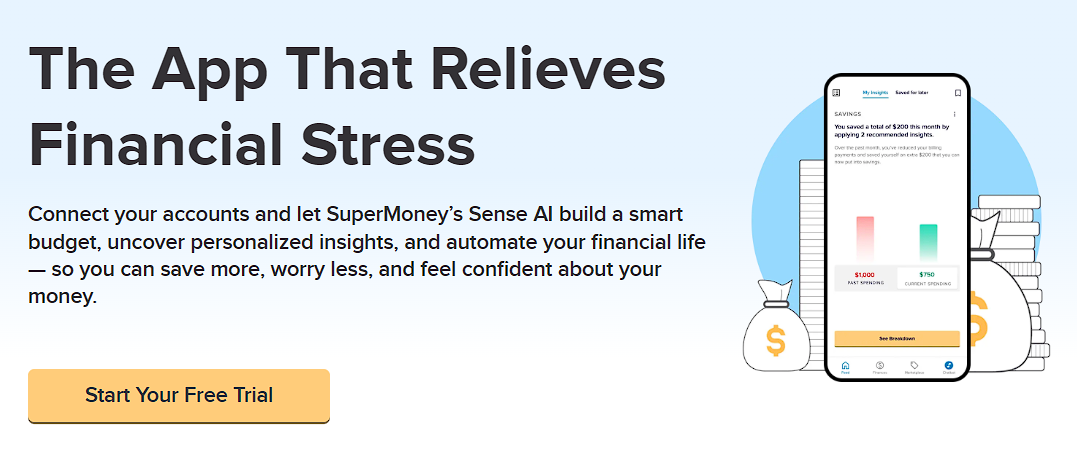
SuperMoney's AI-powered budgeting tools help you track your money goes, set realistic goals, and reduce financial stress.
Allison Martin is an accomplished finance writer who has written for publications including The Wall Street Journal, MoneyTalksNews, The Simple Dollar, and Credit.com. Her work has been featured on Fox Business, Yahoo! Finance, MSN Money, and ABC News. She enjoys writing about personal development, entrepreneurship, personal finance and is a Certified Financial Education Instructor (CFEI).
Share this post:
Add as a preferred source on Google
Table of Contents