
What Affects Savings Account Interest Rates?

Last updated 03/18/2026 by
Andrew Latham
Edited by
Andrew Latham
Summary:
Savings account interest rates are variable yields set by banks based on a combination of Federal Reserve policy, competitive pressure, and each institution’s own funding needs. Several distinct forces push rates up or down, and understanding them helps you anticipate when your APY is likely to change.
- Federal Reserve policy: The single biggest driver — when the Fed raises or cuts its benchmark rate, savings account APYs at competitive banks follow within weeks.
- Bank type: Online banks consistently pay higher rates than traditional banks because they operate without branch overhead and compete aggressively for deposits.
- Balance tiers: Some accounts offer higher rates on larger balances, rewarding depositors who maintain minimums above set thresholds.
- Promotional rates: Introductory APYs may be significantly higher than an account’s standard rate and revert automatically after a set period.
If your savings account rate feels like a black box — a number that just appears and occasionally changes — you’re not alone. But the forces behind it are predictable, and knowing them tells you when to shop around and when to wait.
Compare Savings Accounts
Compare savings accounts. Discover your best option.
The Federal Reserve’s Role
The Federal Reserve’s federal funds rate is the most powerful single force behind savings account interest rates — when the Fed moves, deposit rates follow.
The federal funds rate is the rate at which banks lend money to each other overnight. It doesn’t directly set what banks pay depositors, but it sets the floor.
When the Fed raises its benchmark rate, banks’ cost of borrowing goes up, and they compete harder for consumer deposits to fund their lending.
That competition flows through as higher savings account APYs.
The transmission is fast at competitive institutions, particularly online banks. Rate hikes in 2022–2023 pushed high-yield savings account APYs from near zero to above 5% within roughly 18 months.
Rate cuts work in reverse — and often move faster on the way down than on the way up.
Pro tip: Track the Fed’s rate decisions (announced roughly every six weeks at FOMC meetings) to anticipate when your APY is likely to rise or fall. Knowing a cut is coming gives you time to lock in a rate via a CD before savings account yields drop.
Competition Between Banks
Banks raise savings account rates primarily to attract deposits — which means your rate depends heavily on how much competitive pressure your bank faces.
Traditional banks with large branch networks have lower urgency to compete on rate. They fund their lending through an existing base of loyal depositors, many of whom don’t comparison shop.
The result: the national average savings account APY hovers near 0.41% (FDIC, early 2026) even when top rates are ten times that.
Online banks operate differently. With no branch overhead, they pass more of their margin to depositors and use high APYs as a primary acquisition tool. When one online bank raises its rate, others respond quickly to avoid losing customers.
This is why the same Fed rate environment produces such different outcomes across institutions — competition, not Fed policy alone, determines what you actually earn.
The Bank’s Own Funding Needs
A bank raises its savings account rate when it needs more deposits to fund its lending activity — and lowers it when it has more deposits than it can profitably deploy.
Banks lend out a significant portion of the deposits they hold, earning interest on mortgages, personal loans, auto loans, and business credit. When loan demand rises, banks need more capital to lend — and one way to attract it is to raise deposit rates.
Conversely, when a bank is flush with deposits and loan demand is weak, there’s little incentive to pay more for capital it doesn’t need. This is why savings account rates can diverge meaningfully across institutions even within the same interest rate environment.
Inflation and Real Returns
Inflation affects savings account rates indirectly — the Federal Reserve raises rates to combat inflation, which pushes deposit yields up, but high inflation can also erode the real value of what you earn.
When inflation runs above your APY, your savings lose purchasing power in real terms even as your balance grows nominally. A 4.50% APY in a 5% inflation environment produces a negative real return of roughly -0.50%.
This relationship works in your favor when the Fed tightens aggressively, as it did in 2022–2023 — savings account APYs rose faster than inflation eventually cooled, creating a brief window where deposit returns were genuinely positive in real terms.
According to SuperMoney’s inflation study, headline CPI had fallen to approximately 2.7% by mid-2025, putting many high-yield savings account rates meaningfully above inflation for the first time in years.
Account Type and Institution Type
The type of account and institution you choose has a structural effect on your rate — independent of what the Fed does or what competitors pay.
Different account types carry different rate expectations:
| Account / Institution Type | Typical APY Range | Why |
|---|---|---|
| Traditional savings account (big bank) | 0.01%–0.50% | Low competitive pressure, branch overhead, captive depositor base |
| High-yield savings account (online bank) | 4.00%–5.00% | No branches, rate used as primary acquisition tool |
| Credit union savings account | 0.10%–2.00% | Member-owned, not-for-profit — returns profits to members but vary widely |
| Money market account | 0.50%–5.00% | Varies by institution; top MMAs compete directly with HYSAs |
The figures above reflect early 2026 conditions and will shift with market cycles — but the relative ordering of institution types tends to be stable.
Balance Tiers
Some savings accounts use tiered interest rates, paying a higher APY on balances above certain thresholds — which means your rate can change as your balance grows or shrinks.
A tiered account might pay 3.50% APY on balances up to $10,000, then 4.25% on balances between $10,000 and $50,000, then 4.75% above that. In most cases, only the portion of your balance in each tier earns the corresponding rate — not your entire balance.
Tiered rates benefit depositors with larger balances, but they add complexity. Before assuming a high advertised rate applies to your balance, confirm whether the rate is tiered and where your balance falls.
Promotional and Introductory Rates
Some banks offer promotional APYs — typically higher than their standard rate — for a limited period after account opening, after which the rate automatically reverts.
Promotional rates are a legitimate acquisition tactic, not a scam. But they can mislead depositors who open an account based on the headline rate and then stop paying attention. A common structure: 5.00% APY for the first three months, reverting to 3.75% after the promotional period ends.
If you open an account partly because of a high introductory rate, set a calendar reminder for when it expires. At that point, compare the ongoing rate against current competitors and move your funds if a better option exists.
How to Track Changes to Your Rate
Savings account rates can change at any time — banks are required to notify customers of rate changes, but the notice is often easy to miss.
Most banks send email notifications or post rate updates in your online account dashboard. In practice, many depositors only notice a rate change when they check their monthly interest credit and something looks off.
A few habits that help:
- Check your APY once per quarter — especially in the weeks following a Fed rate decision.
- Compare your current APY against the top rates on savings account comparison pages every six months.
- If your bank cuts your rate significantly, don’t assume switching is complicated — most online savings accounts can be opened in under 10 minutes with no fees to close the old one.
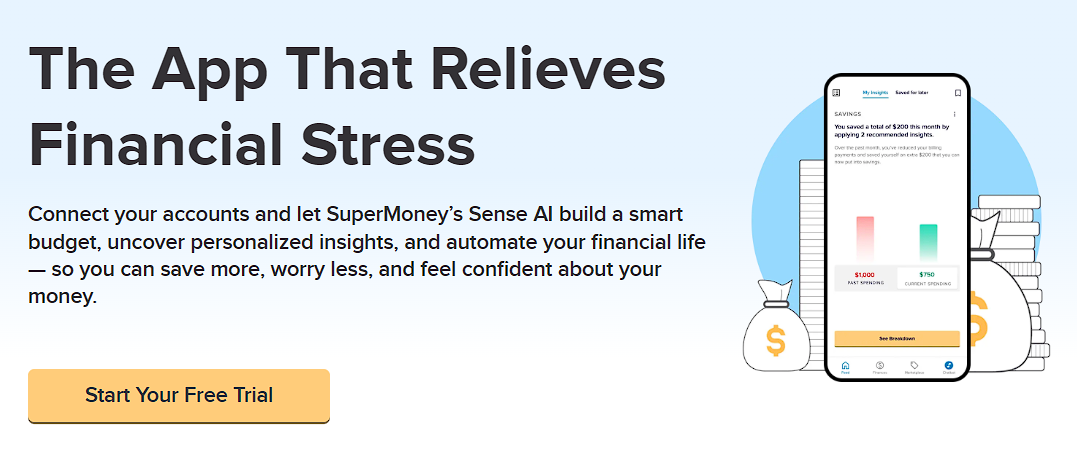
Put your money on autopilot
The SuperMoney app connects to your savings accounts and tracks your interest earned automatically — so you’ll know immediately if your APY drops and it’s time to find a better rate.
Key takeaways
- The Federal Reserve’s benchmark rate is the primary driver of savings account APYs — rate hikes push yields up, rate cuts bring them down, typically within weeks at competitive banks.
- Online banks consistently pay higher rates than traditional banks because they have no branch overhead and use APY as a deposit acquisition tool.
- Banks also set rates based on their own funding needs — a bank flush with deposits has less incentive to pay a competitive rate than one actively growing its loan book.
- Inflation affects real returns — a high APY in a high-inflation environment may still produce a negative real return.
- Tiered rates and promotional APYs can make a rate look more attractive than it is for your specific balance or after the intro period ends — always confirm what rate applies to you.
- Savings account rates are variable and can change at any time. Checking your APY once per quarter and comparing against competitors is the simplest way to protect your earnings.
Frequently asked questions
Why did my savings account interest rate go down?
The most common reason is a Federal Reserve rate cut — when the Fed lowers its benchmark rate, banks reduce deposit yields within weeks. Your bank may also have lowered its rate independently if it no longer needs to compete aggressively for deposits. Check recent Fed announcements and compare your current APY against top competitors to decide whether to switch.
Do savings account rates change automatically?
Yes. Savings account rates are variable, meaning your bank can adjust the APY at any time without your approval. They are required to notify you of rate changes, typically by email or in-app notice, but the notification can be easy to miss. Your rate is not locked in the way a CD rate is.
What is a good savings account interest rate right now?
In early 2026, a competitive savings account APY falls in the 4.00%–5.00% range at top online banks. The national average is approximately 0.41% (FDIC). If your account is paying less than 1.00%, it’s worth comparing high-yield savings accounts — most have no minimum balance and no monthly fees.
Does a higher balance earn a higher interest rate?
At some banks, yes — accounts with tiered rate structures pay a higher APY on balances above certain thresholds. At many online banks, however, the same APY applies to all balances regardless of size. Check whether your account is tiered before assuming the advertised rate applies to your full balance.
Do savings account rates follow the stock market?
Not directly. Savings account rates follow the Federal Reserve’s federal funds rate, not equity market performance. The stock market and interest rates are related — both respond to economic conditions — but a stock market rally or crash does not directly change what your savings account pays.
Why do online banks pay more interest than traditional banks?
Online banks have significantly lower operating costs because they have no physical branch network. That cost savings gets passed to depositors in the form of higher APYs. They also rely on competitive rates to attract customers, since they can’t win on branch convenience. The combination of lower overhead and higher competitive pressure consistently produces better rates than traditional institutions. For a full breakdown of how savings account interest is calculated, including APY and compounding, see our dedicated guide. The same structural factors that push online bank rates higher also explain why understanding HYSA pros and cons matters before moving your savings — rate ceiling and account flexibility are both determined by the bank’s business model.
Put your money on autopilot
The SuperMoney app tracks your savings balance and interest earned in one dashboard — so rate changes show up in your earnings before you’d ever catch them in a bank email.
Andrew is the Content Director for SuperMoney, a Certified Financial Planner®, and a Certified Personal Finance Counselor. He loves to geek out on financial data and translate it into actionable insights everyone can understand. His work is often cited by major publications and institutions, such as Forbes, U.S. News, Fox Business, SFGate, Realtor, Deloitte, and Business Insider.
Share this post:
Add as a preferred source on Google
Table of Contents