
Minimum Credit Card Payment: How It’s Calculated and What It Really Costs

Last updated 03/19/2026 by
Andrew Latham
Edited by
Andrew Latham
Summary:
A minimum credit card payment is the smallest amount you must pay each billing cycle to keep your account in good standing — typically the greater of a set percentage of your outstanding balance or a flat dollar floor established by your issuer.
Making only the minimum payment protects your credit history in the short term but extends your debt for years and dramatically increases the total interest you pay.
- How it’s calculated: Most issuers use a percentage of your balance or a flat minimum — whichever is higher. Some formulas also add that month’s accrued interest and fees on top of the percentage.
- The real cost: Minimum payments are structured to keep balances active and interest accruing. Paying only the minimum on a large balance can take decades to eliminate and cost more in interest than the original principal.
- Credit impact: On-time minimum payments protect your payment history, but carrying a high balance from minimum-only payments damages your credit utilization ratio — one of the biggest scoring factors.
- The smarter move: Paying even a modest amount above the minimum each month cuts years off your payoff timeline and saves significantly in total interest.
Your issuer makes the minimum payment easy to find — it’s on your statement, usually a small, manageable-looking number. What’s harder to see is how much staying near that floor actually costs you over time.
Compare Credit Cards
Compare the rates, fees, and rewards of leading credit cards.
What Is a Minimum Payment?
Your minimum payment is the smallest amount you can pay on your credit card bill each month without triggering a late fee, a penalty APR, or a delinquency on your credit report.
It’s not a recommendation — it’s a floor. Paying it keeps your account in good standing for that billing cycle, but it doesn’t stop interest from accruing on your remaining balance.
Paying on time, even just the minimum, protects your payment history, which accounts for 35% of your FICO score. But the interest calculation running against your average daily balance continues uninterrupted on whatever you don’t pay off.
How Minimum Payments Are Calculated
Credit card issuers use one of three methods to set your minimum payment. Your cardholder agreement specifies which formula applies.
Flat percentage of the balance. Your minimum is a fixed percentage of your outstanding balance — typically 1% to 3%. On a $3,000 balance at 2%, your minimum is $60.
Percentage plus interest and fees. Some issuers calculate 1% of the principal, then add that month’s interest charges and any fees on top. On a $3,000 balance at 22% APR, that’s roughly $30 + $55 = $85. This formula produces a higher minimum, but still barely reduces principal.
Flat dollar floor. Every issuer sets a minimum floor — typically $25 to $35 — that kicks in when the percentage calculation falls below it. If 2% of your $600 balance is $12, your minimum is still likely $25 or $35.
| Calculation Method | Formula | Result on $3,000 balance / 22% APR |
|---|---|---|
| Flat percentage | 2% of outstanding balance | $60.00 |
| Percentage + interest | 1% of balance + monthly interest | ~$85.00 |
| Flat floor applied | Greater of percentage or $25–$35 | $60 (percentage exceeds floor) |
| Flat floor applied (small balance) | Greater of 2% or $25 floor | $25 (on a $600 balance, 2% = $12) |
The Consumer Financial Protection Bureau requires issuers to disclose how they calculate your minimum payment in your cardholder agreement. If you’re unsure which method your issuer uses, check the fine print of your agreement or call the number on the back of your card.
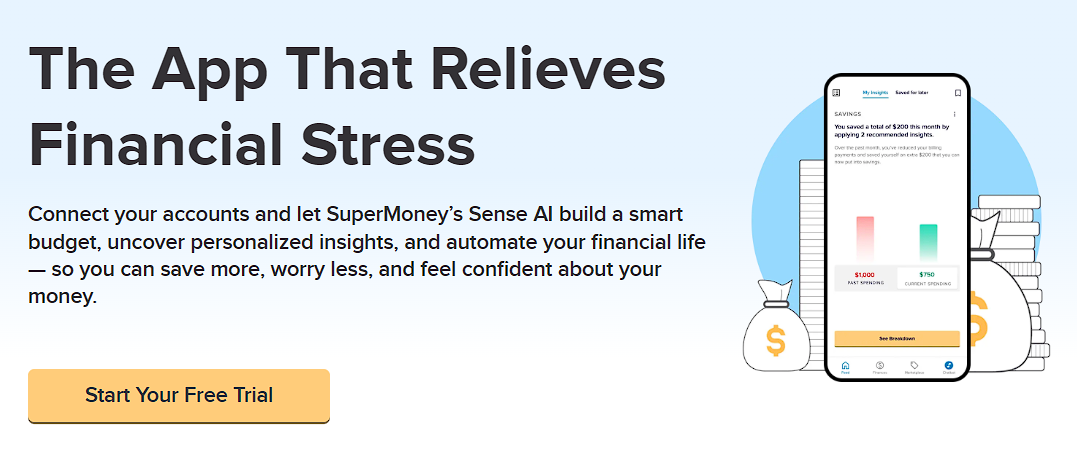 The SuperMoney app shows your minimum payment due, statement balance, and payment due date all in one place — so you always know exactly what to pay and when.
The True Cost of Paying Only the Minimum
Minimum payments are designed to be sustainable — not efficient. Issuers set them low enough to keep accounts active and interest accruing month after month.
According to a SuperMoney credit card industry study, 42.4% of cardholders are revolvers — meaning they carry a balance and pay interest month after month. Two-thirds of all active credit card accounts fall into this category.
The CFPB’s 2025 Consumer Credit Card Market Report found that U.S. consumers were assessed $160 billion in interest charges in 2024 alone, up from $105 billion in 2022.
Much of that interest is driven by minimum-payment behavior. Here’s what minimum-only payments look like across common balance amounts at 22.30% APR (the national average for accounts assessed interest as of Q4 2025, per the Federal Reserve) using a 2% minimum floor:
| Starting Balance | First Min. Payment | Years to Pay Off | Total Interest Paid | Total Amount Paid |
|---|---|---|---|---|
| $1,000 | $25 | ~6 years | ~$755 | ~$1,755 |
| $3,000 | $60 | ~14 years | ~$4,050 | ~$7,050 |
| $5,000 | $100 | ~19 years | ~$7,450 | ~$12,450 |
| $6,735 (avg. balance) | $135 | ~21 years | ~$10,800 | ~$17,535 |
| $10,000 | $200 | ~24 years | ~$17,400 | ~$27,400 |
The reason the math is so unfavorable is the average daily balance method — issuers don’t charge interest only on what’s left unpaid. They charge interest on your average balance across the entire billing cycle. The longer a large balance stays on your card, the larger that average gets, and the more interest compounds each month.
Paying even a small fixed amount above your minimum — say, $50 or $100 per month — dramatically changes the outcome. On a $5,000 balance at 22.30% APR, paying $150 flat (versus the shrinking 2% minimum) cuts payoff time from 19 years to under 4 and saves over $5,000 in interest.
What Happens If You Miss a Minimum Payment?
Missing a minimum payment triggers a cascade of consequences that extend well beyond the current billing cycle.
Late fee. Your issuer can charge a late fee — up to $41 under current CFPB guidelines — the first time you miss a payment. Some issuers waive the first occurrence; most do not.
Penalty APR. Many issuers apply a penalty APR — often 29.99% — to your account after one or two missed payments. Once triggered, the penalty APR can apply indefinitely to your existing balance until you demonstrate consistent on-time payment.
Credit score damage. A payment that is 30 or more days late gets reported to the three major credit bureaus (Equifax, Experian, and TransUnion). A single 30-day late payment can drop a good credit score by 60–100 points, according to FICO’s published impact ranges. The negative mark stays on your report for seven years.
Loss of grace period. Once you carry a late or unpaid balance, your grace period is suspended. New purchases begin accruing interest immediately — not after your next due date.
Pro tip: If you know you’re going to miss a payment, call your issuer before the due date. Many issuers will grant a one-time hardship extension or fee waiver if you ask proactively. Once the payment is officially late, your options narrow significantly.
Grace Period and Minimum Payments: How They Interact
Your grace period is the window — typically 21 to 25 days — between your statement closing date and your payment due date, during which new purchases don’t accrue interest if you pay in full.
Paying only the minimum keeps your account in good standing, but it does not preserve the grace period if you’re carrying a balance from a previous cycle.
Once you carry any unpaid balance forward, new purchases start accruing interest from the day they post — not after the due date. The grace period is only restored after you pay your full statement balance two months in a row. Check your cardholder agreement for your issuer’s specific reinstatement rules.
How to Pay More Than the Minimum
The most effective approach is to set a fixed monthly payment rather than letting the percentage calculation set it for you.
When you pay a fixed amount, your payment doesn’t shrink as your balance falls — which is exactly what happens with percentage-based minimums. A 2% minimum on a $5,000 balance starts at $100, but by the time your balance falls to $1,000, you’re only paying $25. The declining payment structure is one reason minimum-only payoff takes so long.
How to Pay Off Credit Card Debt Faster
These steps help you systematically pay more than the minimum and reduce total interest paid.
- Set a fixed monthly payment. Decide on a flat amount — enough to pay off your balance in 12–24 months — and lock it in as an autopay amount so it doesn’t shrink with your balance the way a percentage-based minimum would.
- Stop adding new charges to the card you’re paying down. Every new purchase resets the payoff math. Use a debit card or a different card for new spending while you eliminate the existing balance.
- Apply any windfalls directly to the balance. Tax refunds, bonuses, and irregular income applied as lump-sum payments have an outsized effect on payoff time because they reduce the principal that interest is calculated against immediately.
- Consider a balance transfer card. A 0% APR promotional balance transfer card lets you pay down principal with no interest accruing — typically for 12–21 months. SuperMoney compares balance transfer card offers side by side so you can find the best transfer fee and intro period for your balance.
- Call your issuer and ask for a lower APR. Cardholders with a consistent payment history often qualify for a rate reduction simply by asking. A lower APR means more of every payment reduces your principal.
Frequently Asked Questions
What is the minimum payment on a credit card?
It’s the smallest amount your issuer will accept each billing cycle without marking your account as past due. Most issuers calculate it as the greater of a set percentage of your balance (typically 1–3%) or a flat floor, often $25–$35. Some add that month’s accrued interest and fees on top of the percentage.
Does paying the minimum hurt your credit score?
Paying the minimum on time does not hurt your score — on-time payment history is the single largest factor in your FICO score. What does hurt your score is the high balance that tends to build up when you consistently pay only the minimum, since credit utilization accounts for roughly 30% of your score. High utilization drives down your score regardless of payment history.
How much of your minimum payment actually goes toward principal?
Very little, especially in the early months. On a $3,000 balance at 22% APR, roughly $55 of your first $60 minimum payment covers interest. Only $5 reduces your actual principal. The proportion that goes toward principal increases slowly as the balance falls — which is why payoff timelines stretch into years or decades.
What happens if you pay more than the minimum?
The extra amount reduces your principal directly, which shrinks the balance that interest is calculated against next month. Even an additional $50 or $100 per month compounds over time: more principal paid means less interest accrues, which means more of every subsequent payment goes toward principal. The effect accelerates as the balance drops.
Can a credit card company increase your minimum payment?
Yes. Issuers can change their minimum payment calculation with advance notice — typically 45 days under the Credit CARD Act. Minimum payments also rise automatically when your balance rises (under percentage-based formulas), when a penalty APR is applied, or when fees are added to your balance.
Is the minimum payment the same as the minimum balance?
No. Your minimum payment is the amount due by your due date. Your minimum balance (or remaining balance) is what’s left on the card after any payments. The two can differ significantly — for example, if you’ve already made a partial payment this cycle, your current balance is lower than your original statement balance, but your minimum payment obligation doesn’t change.
Does paying the minimum affect your credit utilization?
Indirectly, yes. Your issuer reports your statement balance to the credit bureaus at cycle close — before your payment is due. If you consistently pay only the minimum, your balance stays high, your reported utilization stays high, and your score suffers. To improve your utilization ratio, you need to pay down enough principal that your balance is lower before your statement closing date.
Key takeaways
- Your minimum payment is the floor — the least your issuer will accept to keep your account current. It is not a suggested payment amount.
- Issuers calculate minimums as a percentage of your balance (typically 1–3%), a flat floor (usually $25–$35), or a percentage plus that month’s interest — whichever is greater.
- Paying only the minimum on a significant balance can take decades to eliminate and cost more in total interest than the original balance.
- Missing a minimum payment triggers a late fee, potentially a penalty APR, credit score damage, and loss of your grace period — all from a single missed due date.
- Setting a fixed monthly payment above the minimum — rather than paying a shrinking percentage — is the most reliable way to accelerate payoff and reduce total interest paid.
The SuperMoney app tracks your credit card balances and due dates in one place — so you can set a fixed payoff amount and stay on track without manually recalculating each month.Andrew is the Content Director for SuperMoney, a Certified Financial Planner®, and a Certified Personal Finance Counselor. He loves to geek out on financial data and translate it into actionable insights everyone can understand. His work is often cited by major publications and institutions, such as Forbes, U.S. News, Fox Business, SFGate, Realtor, Deloitte, and Business Insider.
Share this post:
Add as a preferred source on Google
Table of Contents