
Needs vs. Wants: How to Tell the Difference and Build a Smarter

Last updated 03/06/2026 by
Andrew Latham
Edited by
Andrew Latham
Summary:
Needs are expenses required for basic health, safety, and function — housing, food, utilities, and health care. Wants are everything beyond that: the upgrades, comforts, and extras that improve quality of life but aren’t strictly necessary, like dining out, streaming subscriptions, or a new phone when your current one still works.
Most people already understand the basic distinction. The hard part is applying it in real life — especially when wants are marketed as essentials, when the line shifts depending on your income, and when it feels impossible to cut anything without feeling deprived. Consistently spending more on wants than planned is one of the main consequences — which is why learning how to stop overspending is worth understanding alongside this framework.
Take control of your financial future
SuperMoney's AI-powered budgeting and personalized financial insights help you reduce financial stress and achieve your goals faster.
What are needs and wants?
A need is an expense you must cover to maintain basic health, safety, and the ability to earn income. Without it, your survival, housing, or livelihood would be genuinely threatened.
A want is an expense that improves your comfort or quality of life but isn’t required for day-to-day function. Removing it would be inconvenient — not catastrophic.
The framework comes from economics, where needs describe goods with no viable substitute and wants describe goods chosen by preference. In personal finance, the distinction gives you a way to categorize every dollar you spend so you can allocate income with intention rather than default.
The clearest illustration: food is a need. A $90 restaurant dinner is a want.
Needs vs. wants examples
Most everyday expenses fall cleanly into one category. The table below covers 20 common items with an explanation for each:
| Item | Need or Want? | Why |
|---|---|---|
| Rent or mortgage | Need | Shelter is a basic survival requirement |
| Groceries (basic food) | Need | Nutrition is essential for health and function |
| Electricity and water | Need | Required for safe, habitable living conditions |
| Health insurance | Need | Covers medical emergencies and ongoing care |
| Prescription medications | Need | Required to manage diagnosed conditions |
| Basic clothing | Need | Necessary for physical protection and employment |
| Transportation to work | Need | Required to earn income — bus pass, gas, or car payment |
| Car insurance | Need | Legally required in most states; protects against financial liability |
| Basic cell phone plan | Need | Required for employment, safety, and daily coordination |
| Internet (for work or school) | Need* | Required if remote work or distance learning is your income source |
| Dining out and takeout | Want | Food is a need; restaurant food is a preference over home cooking |
| Streaming subscriptions | Want | Entertainment, not a survival requirement |
| Coffee shop drinks | Want | Caffeine is available at home for a fraction of the cost |
| Gym membership | Want* | Exercise is beneficial, but free alternatives exist for most people |
| Smartphone upgrade | Want | A working phone is a need; the latest model is a preference |
| Fashion clothing (upgrades) | Want | Your current wardrobe functions — new additions are preference |
| Vacation and travel | Want | Rest is necessary; paid travel is discretionary |
| Subscription boxes | Want | Convenience and entertainment, not necessity |
| Home décor upgrades | Want | Your home is functional without them |
| Premium car (vs. reliable used) | Want | Transportation is a need; a luxury model is a preference |
*Items marked with an asterisk can shift categories depending on circumstances — see the gray zone section below.
The gray zone: when needs and wants overlap
Some expenses don’t fit neatly into either category. They’re needs for some people and wants for others, depending on job, location, and health.
- Internet: A need for remote workers, online students, and anyone managing finances or employment digitally. A want for households that use it primarily for entertainment.
- Gym membership: A need for someone whose doctor has prescribed structured exercise requiring specialized equipment. A want for most people who have access to free alternatives — walking, bodyweight training, or public parks.
- Car: A need in areas without reliable public transit. A want — or at minimum, a significant upgrade choice — for someone living in a walkable city with transit access.
- Dining out: Mostly a want, but shifts for someone working 12-hour shifts without time to cook, living in temporary housing without kitchen access, or managing a medical condition requiring specific prepared foods.
- Premium phone plan: A need for field workers who depend on data reliability and coverage. A want for anyone who could function adequately on a $25/month plan.
The test for gray-zone items: Could a free or significantly cheaper alternative meet the same core function? If yes, the upgraded version is a want layered on top of a need — and that distinction matters for your budget.
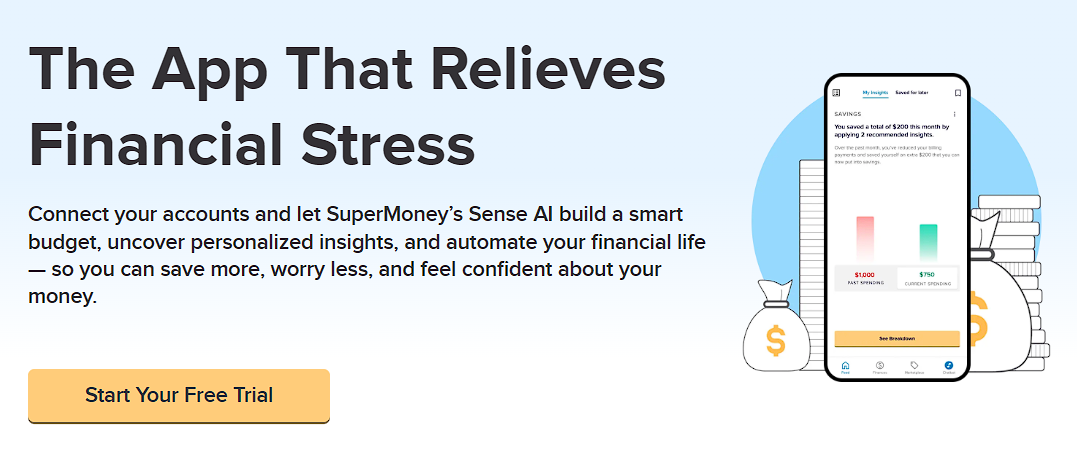
Let AI categorize your spending automatically
Instead of sorting transactions manually, the SuperMoney app classifies your spending as needs versus wants in real time — so you see your split without a spreadsheet.
Why the distinction matters for your budget
The needs vs. wants framework is the foundation of percentage-based budgeting. Without this categorization, budgeting stays vague — you can’t decide what to cut if you don’t know which expenses are fixed requirements and which are discretionary choices.
The 50/30/20 rule operationalizes the distinction directly, allocating after-tax income into three buckets:
- 50% → Needs: Housing, utilities, groceries, transportation, insurance, and minimum debt payments
- 30% → Wants: Dining out, subscriptions, entertainment, clothing upgrades, and hobbies
- 20% → Savings and debt repayment: Emergency fund contributions, retirement, and extra debt payments
The rule isn’t rigid. If your needs exceed 50% due to high housing costs — common in expensive metro areas — adjust the wants percentage down before touching savings. The point isn’t to match a target; it’s to make the split deliberate.
For households on a tight income, budgeting on a low income often means temporarily compressing wants to 10–15% until financial breathing room is established. That’s not deprivation — it’s prioritization with a plan to expand later.
How to categorize your spending as needs and wants
Apply this four-step process once a month using your last 30 days of bank and credit card statements.
- List every expense from the past month. Pull all bank and credit card statements. Don’t filter anything yet — include every charge, regardless of size.
- Assign each item: Need, Want, or Gray Zone. Use the examples table above as your reference. For gray-zone items, apply the core test: Could a cheaper alternative meet the same function? If yes, the expense is a want.
- Total each category and compare to your take-home income. Calculate the percentage of your after-tax pay going to needs versus wants. Compare it to your target split — 50/30/20 is a useful starting benchmark, but your actual circumstances may require different ratios.
- Identify one want to reduce or eliminate this month. You don’t need to cut everything at once. Find one recurring want costing $50 or more per month and either replace it with a cheaper alternative or cancel it. Revisit the list again next month.
Pro tip: Sorting expenses manually takes time — and most people underestimate how much they spend on wants until they see the total in writing. Running this exercise even once, before building any formal budget, is often the clearest signal of where your money is actually going. Knowing the number removes the guesswork.
Bad spending habits that blur the line
Several common patterns make wants feel like needs over time — and understanding them is more useful than any list of items to cut.
Lifestyle creep. As income rises, spending tends to rise with it. Each individual upgrade feels reasonable — better apartment, new subscription, nicer car. Collectively, they reclassify a growing portion of wants as your new baseline, leaving less and less room to save despite earning more. Understanding how to break the paycheck-to-paycheck cycle often starts with spotting this pattern early.
Emotional spending. Buying comfort items — food, clothing, entertainment — in response to stress, boredom, or anxiety produces spending that feels urgent but isn’t necessary. It’s a want disguised as a coping mechanism, and it rarely addresses the underlying feeling.
Marketing language. Retailers routinely frame wants as essentials. “Must-have,” “you need this,” “essential kit” — the language is engineered to override your categorization instinct. If a brand is telling you something is a need, that’s a cue to pause, not proceed.
Social comparison. Matching what friends, coworkers, or people in your feed spend makes their discretionary choices feel like your requirements. What someone else considers necessary may not align with your finances, values, or goals — and their financial picture is almost always invisible to you.
Each of these habits shares the same mechanism: they convert optional spending into perceived obligation. Recognizing the pattern is usually enough to interrupt it. For practical tactics to reset spending behavior, these approaches work without requiring you to feel deprived.
If impulse purchases are a recurring issue — especially online — the 30-day rule creates a structured delay between the urge and the purchase, which eliminates a significant portion of want-based spending without requiring willpower alone.
Let AI categorize your spending automatically
Instead of sorting transactions manually, the SuperMoney app classifies your spending as needs versus wants in real time — so you see your split without a spreadsheet.
Key takeaways
- Needs are expenses required for basic health, safety, and function. Wants are everything beyond that.
- Common needs include housing, groceries, utilities, health care, and transportation to work. Common wants include dining out, streaming services, fashion upgrades, and vacations.
- Some expenses — internet, gym memberships, and cars — fall in a gray zone: needs for some people, wants for others, depending on circumstances.
- The 50/30/20 rule uses this distinction to structure a budget: 50% to needs, 30% to wants, 20% to savings and debt repayment.
- Lifestyle creep, emotional spending, and marketing language are the most common patterns that blur the line over time.
- The goal isn’t to eliminate wants — it’s to spend on them deliberately, after needs and savings are already covered.
What is the difference between needs and wants?
Needs are expenses required to maintain basic health, safety, and the ability to earn income — housing, food, utilities, health care, and transportation. Wants are everything else: expenses that improve comfort or quality of life but aren’t required for survival, such as dining out, entertainment, or fashion upgrades.
What are examples of needs and wants?
Examples of needs include rent, groceries, electricity, health insurance, prescription medications, and car insurance. Examples of wants include streaming subscriptions, dining out, gym memberships, vacation travel, subscription boxes, and clothing upgrades beyond what’s functional. Some items — internet and cars — fall in a gray zone depending on where you live and how you work.
Is internet a need or a want?
Internet access is a need for remote workers, online students, and anyone managing employment or finances digitally. It’s a want for households that use it primarily for entertainment and could otherwise access public Wi-Fi or library broadband for essential tasks.
How do I use needs vs. wants in a budget?
List every expense from the past month and assign each as a need or want. Total both categories and compare them to your take-home income. The 50/30/20 rule provides a useful starting framework — 50% for needs, 30% for wants, 20% for savings — though the right ratios depend on your income, housing costs, and goals.
Is it okay to spend money on wants?
Yes — wants aren’t a problem to eliminate, they’re a category to manage. Once your needs are covered and you’re saving consistently, spending on wants you genuinely value is a normal and healthy part of financial life. The issue arises when wants expand to consume available income before needs and savings are addressed.
What are bad spending habits related to needs vs. wants?
The most common patterns are lifestyle creep (upgrading wants until they feel like baseline needs), emotional spending (buying wants to manage stress), responding to marketing language that frames wants as essentials, and spending to match the visible consumption of people around you. Each one makes discretionary spending feel obligatory — recognizing the pattern is the first step to reversing it.
Feeling overwhelmed by money worries?
SuperMoney's AI-powered budgeting tools help you track your money goes, set realistic goals, and reduce financial stress.
Andrew is the Content Director for SuperMoney, a Certified Financial Planner®, and a Certified Personal Finance Counselor. He loves to geek out on financial data and translate it into actionable insights everyone can understand. His work is often cited by major publications and institutions, such as Forbes, U.S. News, Fox Business, SFGate, Realtor, Deloitte, and Business Insider.
Share this post:
Add as a preferred source on Google
Table of Contents