
When to Use Your Emergency Fund (3 Questions to Ask First)

Last updated 03/02/2026 by
Andrew Latham
Edited by
Andrew Latham
Summary:
Use your emergency fund only when an expense passes three tests: it is unexpected, necessary, and urgent — if any answer is no, the expense doesn’t qualify and should be covered another way. For example, a sudden car breakdown you need fixed to get to work passes all three, while your annual car insurance premium fails the first test because it’s predictable and should come from a sinking fund instead.
Staring at an unexpected bill and wondering whether it “counts” as an emergency is one of the most stressful moments in personal finance. The fear of draining your safety net for the wrong reason can be just as paralyzing as the expense itself.
Three simple questions cut through that uncertainty every time.
Compare Savings Accounts
Compare savings accounts. Discover your best option.
What Are the Three Questions to Ask Before You Spend Your Emergency Fund?
The three questions to ask before spending your emergency fund are: Is it unexpected? Is it necessary? Is it urgent? If the answer to all three is yes, the expense qualifies as a true emergency and justifies a withdrawal.
This framework, popularized by personal finance educator Dave Ramsey, creates a clear decision filter that prevents emotional spending from draining your financial safety net. Each question eliminates a different category of non-emergency spending:
- “Is it unexpected?” filters out expenses you could have planned for, like holiday gifts, car insurance premiums, or annual subscriptions.
- “Is it necessary?” filters out wants disguised as needs, like upgrading a working appliance or taking a “self-care” vacation.
- “Is it urgent?” filters out expenses that can wait until you budget for them next month, like cosmetic home repairs or a non-critical car upgrade.
If even one answer is no, the expense does not justify touching your emergency fund. Budget for it, save for it separately, or delay it — but keep your emergency fund intact.
Question 1: Is It Unexpected?
An expense qualifies as unexpected when you had no reasonable way to predict it or plan for it in your regular budget. Job loss, a medical emergency, a major car breakdown without warning, or storm damage to your home all pass this test.
Expenses that happen on a predictable schedule — even if they feel inconvenient — are not unexpected. Christmas falls on December 25 every year. Your car insurance premium renews on the same date. Property taxes, back-to-school costs, and annual subscriptions all arrive on a schedule you can anticipate.
The fix for these predictable costs is a sinking fund — a separate savings bucket where you set aside small amounts each month for expenses you know are coming. Dividing a $1,200 annual car insurance premium into $100 monthly contributions turns a “surprise” bill into a line item in your budget.
How to spot a disguised “emergency”: Pull up 12 months of bank statements and flag every expense that caught you off guard. If the same type of expense shows up more than once — car maintenance, pet vet bills, home repairs — it’s not unexpected. It’s unplanned. Build a sinking fund for each recurring category, and your emergency fund stays untouched for genuine surprises.
Question 2: Is It Necessary?
An expense is necessary when skipping it would directly harm your health, safety, income, or long-term financial stability. A burst pipe flooding your kitchen is necessary. Upgrading to a newer dishwasher because the current one is noisy is not.
The line between wants and needs blurs quickly under stress. A weekend getaway feels essential when you’re burned out. A new laptop feels urgent when your current one is slow. But neither passes the necessity test if your health and income are unaffected by waiting.
A simple way to test necessity: ask what happens if you do nothing for 30 days. If the answer involves worsening health, lost income, or unsafe living conditions, the expense is necessary. If life continues normally — just less conveniently — it can wait.
| Necessary (Use Emergency Fund) | Not Necessary (Budget for It Instead) |
|---|---|
| Emergency room visit or urgent medical procedure | Elective procedure you can schedule for later |
| Car repair needed to get to work | Cosmetic car repair or upgrade |
| Broken furnace in winter | Upgrading a working HVAC system for efficiency |
| Emergency flight for a family crisis | Last-minute vacation deal |
| Replacing a broken appliance you use daily | Upgrading to a premium model |
Question 3: Is It Urgent?
An expense is urgent when delaying it would cause the problem to escalate in cost, risk, or severity. A leaking roof gets worse every day it rains. A toothache that signals an infection won’t resolve on its own. A broken car that you need for your commute costs you income every day it sits in the driveway.
Urgency is the question that catches impulsive spending. A flash sale feels urgent because of a deadline, but missing it costs you nothing. A friend’s destination wedding feels urgent because of the RSVP date, but skipping it doesn’t threaten your health or income.
The test: will the financial or physical damage grow worse with each day you wait? If yes, it’s urgent. If the cost and consequences stay the same whether you act today or next month, it can wait — and you can budget for it in an upcoming paycheck.
What’s the Purpose of the Three Questions You Should Ask Before Using Your Emergency Fund?
The purpose of the three questions is to create a decision-making filter that separates genuine emergencies from impulse spending, poor planning, and lifestyle upgrades. Without a clear framework, nearly any expense can feel like an emergency in the moment.
The Federal Reserve’s 2024 SHED survey found that 55% of Americans had set aside money for three months of expenses, but 30% of adults couldn’t cover three months of expenses by any means.
When your emergency fund represents months of disciplined saving, spending it on a non-emergency means starting over from scratch — often at the worst possible time.
The three questions protect two things simultaneously:
- Your fund balance — every unnecessary withdrawal reduces the cushion available for a true crisis.
- Your saving momentum — rebuilding an emergency fund after draining it for non-emergencies is demoralizing and slows progress toward other financial goals.
In What Way Is Your Emergency Fund a Form of Insurance?
Your emergency fund functions as self-funded insurance because it covers financial losses from unpredictable events — just like a traditional insurance policy, but without premiums, deductibles, or claim denials. You pay into it regularly, and it pays out when something goes wrong.
Traditional insurance covers specific categories of risk: health insurance covers medical costs, auto insurance covers vehicle damage, homeowner’s insurance covers property loss.
Your emergency fund covers everything that falls outside or between those policies — the deductible you owe before insurance kicks in, the income gap after a job loss, the emergency travel expense no policy reimburses.
This is why financial planners recommend keeping 3–6 months of essential expenses in your emergency fund. That range mirrors the average time it takes to recover from a major financial disruption like a job loss. The money isn’t sitting idle — it’s actively protecting you from the kind of setback that forces people into high-interest debt or early retirement account withdrawals.
Think of it this way: You’d never cancel your car insurance because you haven’t had an accident in two years. Your emergency fund works the same way — it earns its value by existing, not by being spent. The best outcome is never needing it. The worst outcome is needing it and finding it empty because you spent it on something that wasn’t truly an emergency.
Why Is It Important to Have an Emergency Fund?
An emergency fund prevents a single unexpected expense from triggering a chain reaction of debt, missed bills, and financial stress. Without one, a $500 car repair can cascade into a payday loan, a late rent payment, and months of recovery.
The financial consequences of having no emergency buffer are measurable. The Federal Reserve found that 37% of American adults would need to borrow money, sell something, or go without to cover a $400 emergency expense. For those households, every unexpected bill becomes a debt event — and debt events compound.
An emergency fund breaks that cycle by absorbing the shock before it reaches the rest of your finances. The benefits extend beyond dollars:
- Reduced financial stress — knowing you can handle a surprise expense without borrowing eliminates one of the most common sources of financial anxiety.
- Better decision-making — financial pressure leads to short-term thinking. A funded safety net gives you the breathing room to make rational choices instead of panicked ones.
- Protection against debt spirals — a $1,000 emergency on a credit card at 24.99% APR costs $1,250+ if it takes a year to pay off. Cash costs $1,000, period.
- Job loss resilience — three to six months of expenses gives you time to find the right next job, not just the first one that comes along.
If you follow the 50/30/20 budget rule, your rainy day fund contributions come from the 20% savings slice — alongside your emergency fund and any sinking funds.
Emergency Fund vs. Non-Emergency: A Quick-Reference Table
The most common mistakes people make with emergency funds involve spending on expenses that feel urgent but don’t pass all three questions. This table covers the scenarios that trip people up most often.
| Scenario | Unexpected? | Necessary? | Urgent? | Use Emergency Fund? |
|---|---|---|---|---|
| Job loss | ✅ Yes | ✅ Yes | ✅ Yes | ✅ Yes |
| Emergency surgery | ✅ Yes | ✅ Yes | ✅ Yes | ✅ Yes |
| Car breaks down (needed for work) | ✅ Yes | ✅ Yes | ✅ Yes | ✅ Yes |
| Burst pipe or roof leak | ✅ Yes | ✅ Yes | ✅ Yes | ✅ Yes |
| Christmas gifts | ❌ No | — | — | ❌ No (budget ahead) |
| Annual car insurance premium | ❌ No | — | — | ❌ No (sinking fund) |
| Flash sale on electronics | ✅ Yes | ❌ No | — | ❌ No (want, not need) |
| Cosmetic home improvement | ✅ Yes | ❌ No | — | ❌ No (save separately) |
| Vacation deal expiring soon | ✅ Yes | ❌ No | — | ❌ No (want, not need) |
| Non-urgent dental work | ✅ Yes | ✅ Yes | ❌ No | ❌ No (schedule + budget) |
If the expense fails any single question, stop. The answer is no — find another way to pay for it.
How to Rebuild Your Emergency Fund After Using It
Rebuilding your emergency fund after a legitimate withdrawal should start immediately — ideally within your next paycheck cycle. The longer you wait, the more exposed you are to the next unexpected expense.
How to Rebuild Your Emergency Fund After a Withdrawal
Follow these steps to restore your safety net as quickly as possible.
- Calculate the gap. Subtract your current emergency fund balance from your target (3–6 months of essential expenses). This is the number you’re working toward.
- Set a rebuilding timeline. Divide the gap by the number of months you want to take. Aggressive timelines (3–6 months) work best because they maintain urgency.
- Automate the transfers. Set up an automatic transfer from checking to savings on each payday. Automation removes the temptation to skip a contribution.
- Temporarily cut discretionary spending. Pause subscriptions, reduce dining out, and redirect that cash to your emergency fund. This is a short-term sprint, not a permanent lifestyle change.
- Redirect windfalls. Tax refunds, bonuses, cash gifts, and side income go straight into the fund until it’s restored.
The psychological trick that makes rebuilding easier: treat the emergency fund contribution as a non-negotiable bill, not a savings goal. Bills get paid. Goals get postponed.
If your income is irregular, percentage-based automation works better than fixed-dollar transfers. Saving 10–15% of every deposit ensures your fund grows proportionally to your income, even in lean months.
Automate your emergency fund rebuilding.
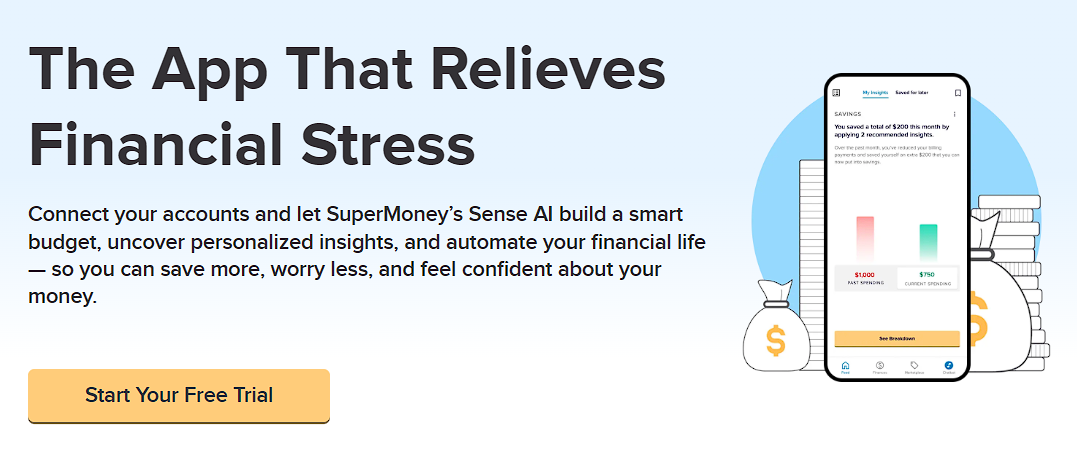
The SuperMoney app tracks your spending automatically and helps you set aside money for savings goals — including rebuilding your emergency fund after a withdrawal.
Common Mistakes That Drain Emergency Funds
The most common reason emergency funds get depleted isn’t a genuine emergency — it’s a pattern of small, borderline withdrawals that individually feel justified but collectively destroy the fund.
- Treating irregular expenses as emergencies. Car maintenance, vet bills, and home repairs happen to everyone. They’re not emergencies — they’re expenses without a budget line. A sinking fund for irregular costs eliminates the most common reason people dip into emergency savings.
- Using it as a “general savings” catch-all. Your emergency fund is not a vacation fund, a down payment fund, or a gift fund. Each goal needs its own account. Combining them guarantees that non-emergencies will eat into your safety net.
- Failing to rebuild after a withdrawal. A legitimate emergency fund withdrawal is not a failure — but leaving the fund depleted afterward is. Start rebuilding with your next paycheck, even if the contribution is small. A clear plan to build an emergency fund back to its full target keeps your safety net intact.
- Keeping the fund too accessible. If your emergency fund is in the same checking account you use for daily spending, you’ll spend it. Move it to a separate high-yield savings account with no debit card attached.
- Not having one at all. The biggest mistake is skipping the emergency fund entirely. Even $500 covers most minor emergencies and prevents the credit card debt spiral that turns a small problem into a big one.
Key takeaways
- Before spending your emergency fund, ask three questions: Is it unexpected? Is it necessary? Is it urgent? All three must be yes.
- Predictable expenses like holidays, insurance premiums, and car maintenance are not emergencies — budget for them with sinking funds.
- Your emergency fund works like self-funded insurance: it earns its value by existing, not by being spent.
- The Federal Reserve found that 37% of Americans can’t cover a $400 emergency with cash — an emergency fund prevents one bad event from spiraling into debt.
- Keep your emergency fund in a separate high-yield savings account, and automate contributions to rebuild it quickly after any withdrawal.
- If an expense fails even one of the three questions, find another way to pay for it. The answer is no.
FAQ
How much should I have in my emergency fund?
Most financial planners recommend 3–6 months of essential living expenses. Single-income households or people with irregular income should target the higher end (six months), while dual-income households with stable jobs can start at three months.
Where should I keep my emergency fund?
A high-yield savings account at an FDIC-insured bank is the standard recommendation. The money needs to be liquid enough to access within 1–2 business days, but separate enough from your checking account that you won’t spend it casually.
Should I pay off debt or build my emergency fund first?
Start with a small emergency fund of $500–$1,000 before aggressively tackling debt. Without any cash buffer, a single surprise expense forces you back into debt and undoes your progress. Once the starter fund is in place, shift focus to high-interest debt, then build the full 3–6 month fund after debt is cleared.
Can I invest my emergency fund to earn higher returns?
No. Emergency funds should be in cash or cash-equivalent accounts, not investments. Stocks, bonds, and mutual funds can lose value at exactly the moment you need the money. The purpose of an emergency fund is immediate access and capital preservation — not growth.
What if I used my emergency fund for something that wasn’t really an emergency?
Rebuild it immediately and learn from it. Identify what category the expense actually falls into (irregular expense, lifestyle upgrade, impulse purchase) and create a separate savings bucket for that category going forward. No guilt — just a better system next time.
Is $1,000 enough for an emergency fund?
A $1,000 starter fund is a strong first milestone, especially if you’re still living paycheck to paycheck or actively paying off debt. It covers most minor emergencies (car repairs, urgent medical copays, appliance failures) and prevents credit card debt from piling up while you work toward the full 3–6 month target.
Take control of your finances on autopilot.
The SuperMoney app helps you automate savings, track spending, and build your emergency fund without thinking about it. Set your savings goals, automate transfers, and let the app handle the rest.
Andrew is the Content Director for SuperMoney, a Certified Financial Planner®, and a Certified Personal Finance Counselor. He loves to geek out on financial data and translate it into actionable insights everyone can understand. His work is often cited by major publications and institutions, such as Forbes, U.S. News, Fox Business, SFGate, Realtor, Deloitte, and Business Insider.
Share this post:
Add as a preferred source on Google
Table of Contents