
Can a Bank Close Your Checking Account? Here’s What to Know

Last updated 03/18/2026 by
Andrew Latham
Edited by
Andrew Latham
Summary:
A bank can close your checking account at any time, for any reason outlined in the account agreement — including inactivity, repeated overdrafts, suspected fraud, or a business decision to exit a product line. The bank must return any remaining funds, but the closure can still disrupt direct deposits, automatic payments, and your ChexSystems record.
- Inactivity: Accounts with no customer-initiated activity for 12–24 months may be flagged as dormant and eventually closed.
- Overdrafts: Persistent negative balances or unpaid overdraft fees are among the most common closure triggers.
- Suspicious activity: Banks are required to monitor transactions under the Bank Secrecy Act and may close accounts that trigger compliance concerns.
- Escheatment: Abandoned account funds are turned over to the state after 3–5 years of inactivity, depending on state law.
An unexpected account closure feels personal, but banks close accounts far more often than most people realize — and the reasons aren’t always about something you did wrong.
Knowing the triggers helps you avoid them. And if your account has already been closed, there are clear steps to recover your money and reopen banking access.
Why Banks Close Checking Accounts
Banks can close accounts for any reason permitted under the deposit agreement you signed when you opened the account. Most agreements give the bank broad discretion, and the CFPB has confirmed that banks have the legal right to close accounts even when the customer objects.
The most common reasons fall into six categories.
- Prolonged inactivity. No customer-initiated transactions for 12–24 months. Automatic deposits alone don’t count as activity at most banks.
- Persistent overdrafts. Repeatedly overdrawing your account — especially if overdraft fees go unpaid — signals high risk to the bank.
- Zero balance. Many banks close accounts that maintain a $0 balance for 30–60 consecutive days.
- Suspicious or unusual activity. Large cash deposits without clear sourcing, rapid fund transfers, or patterns that trigger Bank Secrecy Act monitoring can prompt closure.
- Violation of the account agreement. Using a personal account for business transactions, exceeding transaction limits, or depositing fraudulent checks.
- Bank’s business decision. Banks occasionally discontinue product lines or exit geographic markets, closing affected accounts in the process.
Pro tip: Make at least one customer-initiated transaction every six months — even a small ATM withdrawal or debit purchase — to prevent your account from being flagged as inactive.
What Happens to Your Money When a Bank Closes Your Account
The bank must return your remaining balance. This is non-negotiable — the funds belong to you, and the bank cannot keep them regardless of the closure reason.
Most banks issue a cashier’s check mailed to your last known address within 10 to 15 business days. Some banks offer electronic transfer to another account if you provide routing and account details before the closure is finalized.
If you don’t claim the funds, the money doesn’t disappear. The bank holds it for a period determined by state law — typically one to five years.
After that holding period, unclaimed balances transfer to the state through a process called escheatment.
How Escheatment Works
Escheatment is the legal process by which unclaimed financial assets are transferred to the state. Every state has an unclaimed property law, and banks are required to comply.
The timeline varies by state but generally follows a pattern: 12–24 months of inactivity triggers a dormancy classification, and the bank sends a notice to your last known address.
If no response is received within 60–90 days, the funds are transferred to the state treasurer.
The good news: states hold unclaimed property indefinitely, and there’s no statute of limitations on claiming it. You can search for unclaimed funds in your name at MissingMoney.com or your state’s unclaimed property website.
Roughly $80 billion in unclaimed property is currently held by state treasuries across the country, according to the National Association of Unclaimed Property Administrators. Much of it comes from closed bank accounts that owners forgot about or lost track of.
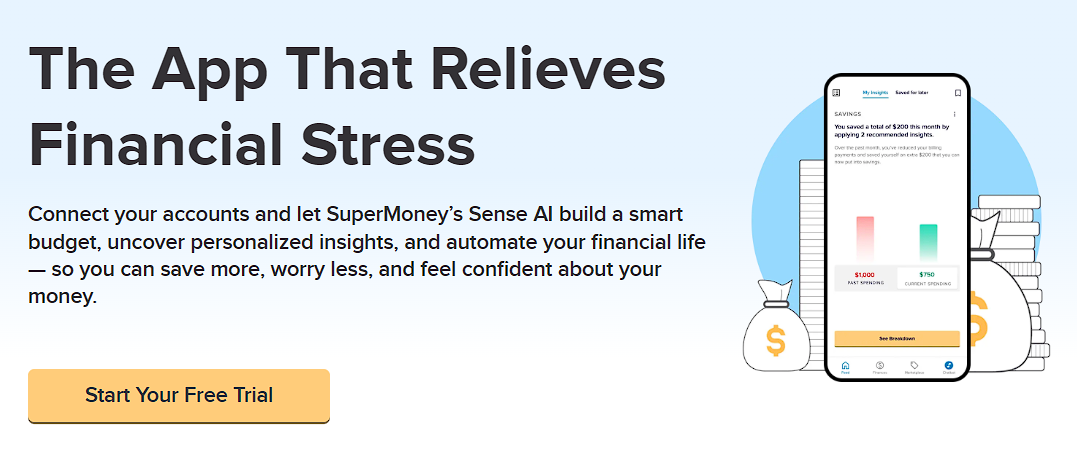 The SuperMoney app connects all your savings and checking accounts in one view — so you can spot unusual activity early, track balances across banks, and stay on top of any account that might be approaching inactivity thresholds.
Does a Bank Have to Warn You Before Closing Your Account?
Not always. Most bank account agreements allow closure without prior notice — and the law doesn’t require it in every situation.
For inactivity-related closures, banks are generally required to send a dormancy notice before turning funds over to the state. The notice goes to your last known address, which is another reason to keep your contact information current with every bank where you hold an account.
For closures related to suspicious activity, banks are legally prohibited from disclosing the reason. Under the Bank Secrecy Act, if a bank files a Suspicious Activity Report (SAR) related to your account, it cannot tell you the report exists — even if the SAR triggered the closure.
How a Bank Closure Affects Your ChexSystems Record
Involuntary account closures are reported to ChexSystems, the consumer reporting agency used by over 80% of U.S. banks to screen new account applicants. A negative ChexSystems entry from a bank closure stays on your report for five years.
This matters because a ChexSystems flag can prevent you from opening a standard checking account at most banks. If your account was closed due to unpaid fees or overdrafts, resolving the debt doesn’t remove the entry — though ChexSystems must update it to show the balance was paid.
If you believe the closure was unjustified, you have the right to dispute the ChexSystems entry directly. The dispute process follows the same rules as credit report disputes under the Fair Credit Reporting Act — ChexSystems has 30 days to investigate and respond.
Pro tip: If your account was closed involuntarily, call the bank’s resolution department before applying elsewhere — some banks will remove the ChexSystems entry if you pay the outstanding balance and the closure wasn’t fraud-related.
What to Do If Your Bank Closes Your Account
6 Steps to Take After a Bank Account Closure
Whether the closure was expected or a surprise, these steps protect your finances and banking access.
- Confirm the reason for closure. Call the bank and ask for a written explanation. If the closure is BSA-related, the bank won’t be able to share details — but other closure types should come with a clear reason.
- Secure your remaining funds. Request a cashier’s check or electronic transfer of your balance. Don’t wait for the bank to mail a check — be proactive to avoid delays or escheatment risk.
- Redirect direct deposits immediately. Contact your employer’s payroll department and provide new banking details. A direct deposit sent to a closed account will be returned — which can delay your paycheck by days.
- Update automatic payments. Review every recurring bill — utilities, insurance, subscriptions, loan payments — and update the payment method before the next billing cycle hits.
- Check your ChexSystems report. Request your free annual report at chexsystems.com to see what the closing bank reported. Dispute any inaccurate entries within 30 days.
- Open a new account. If your ChexSystems report is clean, apply for a standard checking account at another bank. If it’s not, a second-chance checking account provides full banking access while you rebuild.
How to Prevent Your Bank From Closing Your Account
Most involuntary closures are preventable. The triggers are predictable, and the fixes are straightforward.
Keep your account active with at least one customer-initiated transaction per quarter — a debit purchase, ATM withdrawal, or online transfer all count. Automatic deposits from payroll alone may not be enough to prevent a dormancy flag at some banks.
Maintain a positive balance. Even $1 above zero prevents the zero-balance closure trigger that many banks enforce after 30–60 days. Setting up a low-balance alert through your bank’s mobile app catches potential problems before they escalate.
Keep your contact information current. Banks send dormancy notices and closure warnings to your last known address. If you’ve moved and haven’t updated your mailing address, you may miss the only warning you get.
If you have multiple checking accounts, monitor each one individually. A secondary account you rarely use is the most likely candidate for an inactivity closure.
Pro tip: Set a recurring calendar reminder every three months to make a small transaction in any checking or savings account you don’t use regularly — a $1 transfer between accounts is enough to reset the inactivity clock.
Key takeaways
- Banks can close checking accounts for inactivity, persistent overdrafts, zero balances, suspicious activity, agreement violations, or business decisions — often without prior notice.
- The bank must return your remaining balance, typically via cashier’s check within 10–15 business days. Unclaimed funds eventually transfer to the state through escheatment.
- Involuntary closures are reported to ChexSystems and can prevent you from opening a new standard checking account for up to five years.
- States hold unclaimed bank funds indefinitely with no statute of limitations — search for yours at MissingMoney.com or your state’s unclaimed property site.
- Prevent closures by making at least one customer-initiated transaction per quarter, maintaining a positive balance, and keeping your contact information current.
Can a bank close my account without telling me?
Yes. Most account agreements allow closure without prior notice. For inactivity closures, banks typically send a dormancy letter to your last address before turning funds over to the state, but this isn’t required for all closure types.
Will a bank closure affect my credit score?
No — bank account closures are not reported to the three major credit bureaus (Equifax, Experian, TransUnion). However, they are reported to ChexSystems, which banks use to screen checking account applications.
An unpaid balance sent to collections could separately affect your credit score.
How do I get my money back after a bank closure?
Contact the bank directly to request a cashier’s check or electronic transfer. If the funds have already been escheated to the state, search MissingMoney.com or your state’s unclaimed property website to file a claim.
Can I reopen a closed bank account?
It depends on why the account was closed. Accounts closed due to inactivity can sometimes be reopened by contacting the bank. Accounts closed for overdrafts, fraud, or compliance reasons generally cannot be reopened at the same institution.
What is ChexSystems and why does it matter?
ChexSystems is a consumer reporting agency that tracks banking history — including involuntary closures, unpaid overdrafts, and returned checks. Over 80% of U.S. banks check your ChexSystems report before approving a new checking account application.
How long does a bank closure stay on ChexSystems?
Five years from the date of the incident. The entry expires automatically after five years regardless of whether any outstanding balance was paid. Paying the debt updates the record but doesn’t remove it early.
The SuperMoney app connects all your savings and checking accounts in one view — so you can spot unusual activity early, track balances across banks, and stay on top of any account that might be approaching inactivity thresholds.Andrew is the Content Director for SuperMoney, a Certified Financial Planner®, and a Certified Personal Finance Counselor. He loves to geek out on financial data and translate it into actionable insights everyone can understand. His work is often cited by major publications and institutions, such as Forbes, U.S. News, Fox Business, SFGate, Realtor, Deloitte, and Business Insider.
Share this post:
Add as a preferred source on Google
Table of Contents