
What Is a Second-Chance Checking Account?

Last updated 05/07/2026 by
Andrew Latham
Edited by
Andrew Latham
Summary:
A second-chance checking account is a bank account designed for people who have been denied a standard checking account due to negative history in ChexSystems or Early Warning Services.
These accounts provide basic banking access with a path to rebuild your banking record.
- Eligibility: Available to consumers with past overdrafts, unpaid fees, or involuntary account closures on their banking record.
- ChexSystems timeline: Negative records stay on your report for five years from the incident date.
- Monthly fees: Range from $0 at Chime and Capital One to $4.95–$14.95 at traditional banks.
- Upgrade path: Many accounts convert to standard checking after 12 months of responsible use.
Getting denied for a checking account feels like being locked out of the basic financial system — because, in many ways, you are.
Without a checking account, direct deposit, debit card access, and bill pay all become harder or more expensive.
Roughly 6% of U.S. households are unbanked, according to the FDIC’s 2023 survey. Second-chance accounts exist specifically to bring those consumers back into the banking system.
What Is a Second-Chance Checking Account?
A second-chance checking account is a restricted checking account offered by banks and credit unions to consumers who can’t qualify for a standard account. The restrictions — lower transaction limits, fewer features, sometimes higher fees — reflect the bank’s higher perceived risk.
Most banks screen applicants through ChexSystems, a consumer reporting agency used by over 80% of U.S. banks and credit unions. If your ChexSystems report shows unpaid overdrafts, bounced checks, or involuntary account closures, a standard checking application will likely be denied.
Second-chance accounts either skip the ChexSystems review entirely or approve applicants regardless of what the report shows. The tradeoff is reduced functionality — but you get a real bank account with a debit card, direct deposit, and online bill pay.
Why Banks Deny Checking Account Applications
Banks use ChexSystems reports the way lenders use credit reports: to assess risk. A negative ChexSystems record tells the bank you’ve previously cost another institution money through unpaid fees or account misuse.
The most common reasons for denial include unpaid overdraft balances at a previous bank, accounts closed involuntarily due to excessive negative balances, and a history of returned checks or suspected fraud.
Unlike credit reports — which are maintained by Equifax, Experian, and TransUnion — ChexSystems records stay on file for five years from the incident date. Paying off the debt doesn’t remove the record, though ChexSystems must update the entry to show the balance was resolved.
Pro tip: Request your free ChexSystems report at chexsystems.com before applying for any checking account — you’re entitled to one free report per year under the Fair Credit Reporting Act.
Second-Chance Checking Accounts Compared
Fees and features vary significantly across second-chance accounts. Some charge nothing; others charge monthly fees that standard checking accounts would waive.
| Bank / Provider | Monthly Fee | ChexSystems Check | Key Feature |
|---|---|---|---|
| Chime | $0 | No | No minimum balance, fee-free overdraft up to $200 |
| Capital One 360 | $0 | No (since 2014) | Full-featured account, no minimums |
| Chase Secure Banking | $4.95 | Yes (flexible criteria) | Waivable with $250+ direct deposit |
| Wells Fargo Clear Access | $5 | Yes (flexible criteria) | Waivable for ages 13–24 |
| Bank of America SafePass | $4.95 | Yes (flexible criteria) | No overdraft fees |
| GO2bank | $5 | No | Waivable with direct deposit, early paycheck access |
| Varo Bank | $0 | No | No minimums, up to 5% APY on linked savings |
Online banks and neobanks tend to offer the most competitive second-chance accounts because they skip ChexSystems entirely. Online checking accounts from Chime, Capital One, and Varo — the latter a challenger bank with a national charter — charge no monthly fees and impose fewer restrictions than their traditional bank counterparts.
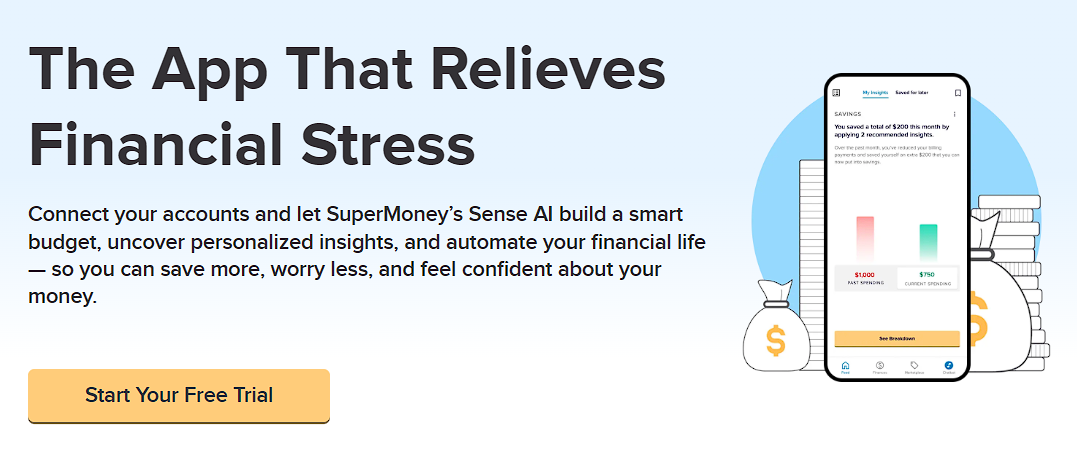 The SuperMoney app connects all your savings and checking accounts in one view — so you can spot unusual activity early, track balances across banks, and stay on top of any account that might be approaching inactivity thresholds.
Second-Chance vs. Standard Checking Accounts
Second-chance accounts fill a specific gap, but they come with tradeoffs worth understanding before you apply.
| Feature | Second-Chance Account | Standard Checking |
|---|---|---|
| ChexSystems screening | Skipped or flexible | Required at most banks |
| Monthly fees | $0–$14.95 (often non-waivable) | $0–$25 (usually waivable) |
| Overdraft protection | Typically unavailable — transactions declined instead | Available (with opt-in) |
| Check writing | Often restricted or unavailable | Included |
| Debit card | Yes | Yes |
| Direct deposit | Yes | Yes |
| Online bill pay | Yes (some restrictions) | Yes |
| ATM access | In-network only at some banks | Full network access |
| Upgrade path | Available at most banks after 12 months | N/A |
The biggest functional difference is overdraft handling. Standard accounts allow transactions to go through and charge an overdraft fee (if you’ve opted in). Most second-chance accounts simply decline the transaction — which avoids fees but can cause problems if you’re counting on a payment going through.
How to Open a Second-Chance Checking Account
The process is similar to opening any checking account, with one extra step upfront.
- Check your ChexSystems report. Request your free annual report at chexsystems.com. Dispute any inaccurate entries — errors are more common than most people realize.
- Pay off outstanding bank debts. If your report shows unpaid balances, contact the original bank to settle them. A resolved balance won’t remove the entry, but it improves your chances with banks that use flexible screening.
- Compare second-chance accounts. Focus on monthly fees, fee waiver options, ATM access, and whether the account converts to standard checking after a responsible period.
- Apply online or in-branch. You’ll need a valid government-issued ID, your Social Security number, and a U.S. address. Most online banks process applications in minutes.
- Set up direct deposit immediately. Direct deposit demonstrates consistent income, waives monthly fees at many banks, and establishes the responsible usage history needed for an eventual upgrade.
How to Upgrade to a Standard Checking Account
Most banks offer a clear path from a second-chance account to a standard one. The typical timeline is 12 months of responsible use — no overdrafts, no returned transactions, and consistent deposits.
Chase Secure Banking, Wells Fargo Clear Access, and several credit union programs automatically review accounts for upgrade eligibility after the initial period. Some require you to request the upgrade; others do it proactively.
If your current bank doesn’t offer an upgrade path, you can apply for a standard checking account at a different institution after your ChexSystems record clears — which happens automatically five years from the incident date.
Pro tip: Capital One 360 Checking doesn’t use ChexSystems at all and functions as a full-featured account with no monthly fees — making it functionally identical to a standard checking account even if you have a negative banking history.
Common Mistakes to Avoid
Opening a second-chance account with a monthly fee you can’t sustain defeats the purpose. If $5 to $15 per month strains your budget, prioritize no-fee options like Chime or Varo first.
Ignoring your ChexSystems report is equally costly. Inaccurate entries — wrong amounts, accounts that aren’t yours, debts already paid — can be disputed and removed. The process works the same way as disputing errors on a credit report through the Fair Credit Reporting Act.
Treating the account as temporary is another misstep. Consistent direct deposits, low balances maintained above zero, and on-time payments build the history banks evaluate when considering you for a standard account type.
Pro tip: Set up low-balance alerts through your bank’s mobile app to catch your account before it dips below zero — a single declined transaction on a second-chance account can reset your upgrade timeline.
Key takeaways
- Second-chance checking accounts are designed for consumers denied standard accounts due to negative ChexSystems records from unpaid overdrafts, bounced checks, or involuntary closures.
- ChexSystems records stay on file for five years from the incident date — paying off the debt updates but doesn’t remove the entry.
- No-fee second-chance accounts from Chime, Capital One, and Varo offer the same core features (debit card, direct deposit, bill pay) as standard checking with no monthly cost.
- Most second-chance accounts decline transactions instead of allowing overdrafts, which avoids fees but requires careful balance management.
- Many banks offer automatic upgrades to standard checking after 12 months of responsible account use.
Can I open a checking account with bad ChexSystems history?
Yes. Second-chance checking accounts are specifically designed for consumers with negative ChexSystems records. Banks like Chime, Capital One, and Varo skip ChexSystems entirely, while Chase and Wells Fargo offer accounts with flexible screening criteria.
How long does a ChexSystems record last?
Negative entries remain on your ChexSystems report for five years from the incident date. The record expires automatically after five years regardless of whether the underlying debt was paid.
Do second-chance accounts have debit cards?
Yes. Virtually all second-chance checking accounts include a debit card for purchases and ATM withdrawals. Some accounts restrict check-writing privileges, but debit card access is standard.
Can I get direct deposit with a second-chance account?
Yes. Second-chance accounts support direct deposit the same way standard checking accounts do. Setting up direct deposit also waives monthly fees at several banks, including Chase Secure Banking and GO2bank.
What’s the best free second-chance checking account?
Chime and Capital One 360 are the strongest no-fee options. Both skip ChexSystems screening, charge no monthly maintenance fee, require no minimum balance, and include a debit card with mobile banking access.
Will a second-chance account help rebuild my banking history?
Yes — but only if the account reports positive activity back to ChexSystems. Not all banks report to ChexSystems, so confirm with your bank before assuming responsible use will improve your record.
The SuperMoney app connects all your savings and checking accounts in one view — so you can spot unusual activity early, track balances across banks, and stay on top of any account that might be approaching inactivity thresholds.Andrew is the Content Director for SuperMoney, a Certified Financial Planner®, and a Certified Personal Finance Counselor. He loves to geek out on financial data and translate it into actionable insights everyone can understand. His work is often cited by major publications and institutions, such as Forbes, U.S. News, Fox Business, SFGate, Realtor, Deloitte, and Business Insider.
Share this post:
Add as a preferred source on Google
Table of Contents