
Credit Card Fees Explained: Every Fee You Might Pay and How to Avoid Them

Last updated 05/14/2026 by
Andrew Latham
Edited by
Andrew Latham
Summary:
Credit card fees are charges your issuer adds to your account for specific actions or account features — separate from interest — including annual fees, late fees, foreign transaction fees, balance transfer fees, cash advance fees, and returned payment fees.
Most are avoidable with the right card choice and payment habits.
- Annual fee: A yearly charge for holding the card — $0 on basic cards, up to $695 on premium travel cards. Worth paying only if the card’s benefits exceed the cost.
- Late fee: Charged when your minimum payment isn’t received by the due date — up to $41 under current CFPB rules. One of the most common and most avoidable fees.
- Foreign transaction fee: Typically 1–3% on purchases made in a foreign currency or processed through a foreign bank. Dozens of cards waive this entirely.
- Balance transfer and cash advance fees: One-time charges of 3–5% of the amount transferred or withdrawn. Cash advances also carry a higher APR with no grace period.
Interest is what most people think of when they consider the cost of a credit card — but fees are a separate, parallel expense that shows up whether or not you carry a balance. Understanding each fee type tells you which cards to pick and which actions to avoid.
Compare Credit Cards
Compare the rates, fees, and rewards of leading credit cards.
Annual Fee
An annual fee is a flat charge for holding the card, billed once per year — usually on your account anniversary or your first statement. It appears on your statement like any other charge and counts toward your balance.
Basic cards from major issuers charge no annual fee. Mid-tier rewards cards typically charge $95–$99. Premium travel cards charge $250–$695, justified (in theory) by travel credits, lounge access, and other benefits that offset the fee.
Whether an annual fee is worth paying depends entirely on how much of the card’s benefits you use. A $95 annual fee on a card that earns 3x points on dining makes sense for someone who spends heavily on restaurants.
For someone who rarely uses those bonus categories, the same card is just an $95 charge per year for a line of credit they could access for free elsewhere.
Pro Tip
Before canceling an annual-fee card, call your issuer and ask for a retention offer. Issuers regularly offer statement credits, bonus points, or fee waivers to cardholders who are considering canceling — especially those with a long history of on-time payments. If no offer is made, ask whether the card can be downgraded to a no-fee version in the same product family, which preserves your credit history and available limit without the annual cost.
Interest Charges
Interest is technically not a fee, it’s the cost of borrowing, but it’s the largest credit card expense for cardholders who carry a balance, and it belongs in any complete accounting of what a card costs.
The average APR for accounts assessed interest reached 22.30% as of Q4 2025 (Federal Reserve). U.S. consumers paid $160 billion in interest charges in 2024 alone, according to the CFPB’s 2025 Consumer Credit Card Market Report. For a full explanation of how daily interest accrues and how to avoid it, see how credit card interest works.
The one-line version: pay your full statement balance by the due date every month and interest is $0, regardless of your card’s APR.
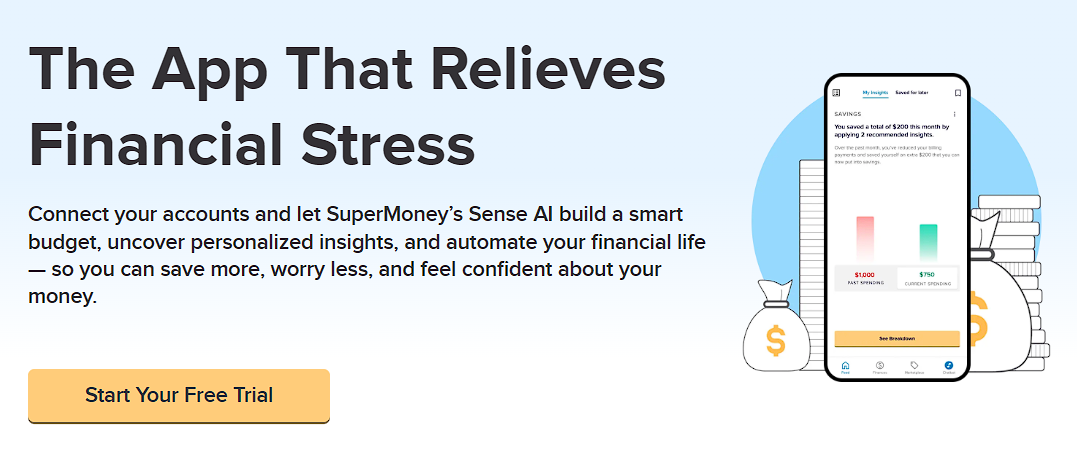 The SuperMoney app tracks your statement balance, minimum payment, and due date across all your cards — so you can pay in full on time and avoid interest and late fees entirely.
Late Payment Fee
A late fee is charged when your minimum payment isn’t received by 5 p.m. on the due date.
Under current CFPB rules, the maximum late fee is $41 for a repeated offense — though the CFPB has moved to reduce first-time late fees to $8 for large issuers (subject to ongoing legal challenges as of 2025).
Late fees compound the damage: a missed payment also triggers potential penalty APR (up to 29.99%), suspends your grace period, and — if 30 or more days late — gets reported to the credit bureaus as a delinquency.
The fee itself is the least of the consequences. The credit score damage from a 30-day late payment typically far exceeds any late fee in financial impact.
The complete fix is autopay set to the full statement balance. If cash flow makes that impractical, autopay the minimum as a floor — which eliminates the fee and bureau reporting risk — and pay the rest manually when funds allow.
Foreign Transaction Fee
A foreign transaction fee is charged on purchases made in a foreign currency or routed through a non-U.S. bank — even if you’re physically in the U.S. at the time. The fee is typically 1–3% of each transaction amount, added automatically to your statement.
On a $3,000 international trip, a 3% foreign transaction fee adds $90 in invisible charges — not to the merchant, just to your issuer for processing the currency conversion.
This fee is entirely avoidable. Dozens of cards waive it completely — virtually all travel rewards cards and many basic cards from major issuers charge no foreign transaction fee. If you travel internationally even once a year, using a card without this fee costs nothing extra and saves the 1–3% on every foreign purchase.
Balance Transfer Fee
A balance transfer fee is a one-time charge for moving debt from another card onto yours — typically 3–5% of the transferred amount. On a $5,000 transfer, that’s $150–$250 upfront.
The fee is worth paying when the interest savings during a 0% intro period exceed the transfer cost. At 22.30% APR, a $5,000 balance generates roughly $1,100 in interest over 12 months. A 3% transfer fee costs $150.
The math favors the transfer by a wide margin — but only if you actually pay off the balance before the promotional period ends and the standard APR kicks in.
Some cards advertise 0% balance transfer fees during promotional windows. These exist but are rare, and the intro APR period is often shorter than cards with a standard 3% fee.
Cash Advance Fee
A cash advance fee applies when you use your credit card to withdraw cash at an ATM, get a cash equivalent at a bank, or in some cases purchase gift cards or money orders. The fee is typically the greater of $10 or 3–5% of the advance amount.
Cash advances are the most expensive credit card transaction type for two reasons. First, the fee applies immediately. Second, cash advances carry a higher APR than purchases — often 25–30% — with no grace period. Interest begins accruing the day the advance is taken, regardless of whether you pay your full balance at the end of the month.
A $500 cash advance with a 5% fee and 29.99% APR costs $25 upfront plus roughly $12.50 per month in interest if you carry it for a month — a 37.5% annualized cost before you’ve even used the money.
Pro Tip
If you need emergency cash, a personal loan almost always costs less than a credit card cash advance. Personal loan APRs for borrowers with good credit typically run 10–16% — well below the 25–30% cash advance APR — with no upfront fee. Even a paycheck advance from an employer or a small loan from a credit union is a better option than a cash advance in most circumstances.
Returned Payment Fee
A returned payment fee is charged when your payment is rejected by your bank — typically because of insufficient funds in the checking account linked to your payment. The fee is usually $25–$40 and may be charged by both your credit card issuer and your bank.
A returned payment also resets your payment as unpaid, which means if the correction isn’t made before the due date, a late fee follows. If the returned payment is the second missed payment within six months, some issuers apply a penalty APR.
Over-Limit Fee
An over-limit fee applies when a transaction pushes your balance above your credit limit — but only if you’ve opted in to over-limit coverage. Under the Credit CARD Act of 2009, issuers cannot charge this fee unless you explicitly consent to allow transactions above your limit.
Most cardholders are not opted in — their issuer simply declines transactions that exceed the limit. The fee (when it applies) is capped at $25–$35 for a first offense under federal rules. The smarter approach is to stay well below your limit at all times, both to avoid the fee and to keep your credit utilization ratio low.
Which Fees Are Avoidable — and Which Aren’t
| Fee Type | Typical Cost | Avoidable? | How to Avoid It |
|---|---|---|---|
| Annual fee | $0–$695/year | Yes | Choose a no-annual-fee card, or ensure benefits exceed the cost |
| Interest (APR) | ~22.30% avg. | Yes | Pay full statement balance every month |
| Late fee | Up to $41 | Yes | Autopay set to at least the minimum |
| Foreign transaction fee | 1–3% per purchase | Yes | Use a card that waives foreign transaction fees |
| Balance transfer fee | 3–5% of transfer amount | Partially | Find a card with 0% transfer fee promo, or calculate whether savings justify the cost |
| Cash advance fee | $10 or 3–5% | Yes | Don’t use credit cards for cash — use a debit card or personal loan |
| Returned payment fee | $25–$40 | Yes | Verify bank account balance before scheduling payments |
| Over-limit fee | $25–$35 | Yes | Don’t opt in to over-limit coverage; stay below your limit |
Key takeaways
- Credit card fees are separate from interest and apply to specific actions or account features. Most are entirely avoidable with the right card and habits.
- Annual fees are worth paying only when the card’s benefits — rewards, credits, lounge access — demonstrably exceed the fee. For most cardholders, a no-annual-fee card is the right default.
- Late fees are the most damaging fee not because of their dollar amount but because of what accompanies them: potential penalty APR, grace period suspension, and credit bureau reporting after 30 days.
- Cash advances are the most expensive credit card transaction type — they carry a higher APR than purchases, no grace period, and an upfront fee. Avoid them unless no cheaper alternative exists.
- Foreign transaction fees are avoidable entirely by choosing a card that waives them. If you travel internationally or shop from foreign merchants online, this matters.
Frequently Asked Questions
What is the most common credit card fee?
Late fees are the most frequently charged fee, affecting a significant share of cardholders each year. The CFPB’s 2025 Consumer Credit Card Market Report noted late fees as one of the leading non-interest revenue sources for card issuers. They are also the most preventable — autopay set to the minimum payment eliminates the risk entirely.
Can credit card fees be waived?
Many can. Late fees are often waived on a first offense if you call your issuer promptly and have a clean payment history. Annual fees can sometimes be waived or offset with retention offers for long-standing customers. Foreign transaction fees are waived on cards specifically designed for travel. The key is to ask — issuers have discretion on fee waivers and exercise it regularly for good customers.
Does a higher annual fee mean a better credit card?
Not inherently. A higher fee means more features — but only some cardholders extract enough value from those features to justify the cost. A $695 premium travel card makes sense for someone who uses the lounge access, travel credits, and hotel status benefits. For someone who takes one trip a year, a $95 mid-tier card or a no-fee card is almost certainly a better financial choice.
Are credit card fees tax deductible?
For personal credit cards, no — credit card fees and interest are not deductible on personal returns. For business credit cards used exclusively for business expenses, the annual fee and interest charges may be deductible as ordinary business expenses. Consult a tax advisor for guidance specific to your situation.
What happens if I don’t pay my annual fee?
The annual fee is charged to your balance like any other purchase. If you don’t pay it, it accrues interest, and if the total unpaid balance results in a missed minimum payment, late fees follow. Some issuers close the account if the annual fee goes unpaid for an extended period. If you want to avoid the fee, cancel or downgrade the card before the fee posts — most issuers will prorate or refund a recently charged annual fee if you close the account within 30–60 days.
Compare no-annual-fee credit cards on SuperMoney— filter by rewards type, APR, and credit score requirement to find a card that costs nothing to hold.
The SuperMoney app compares credit cards by annual fee, APR, and rewards — so you can see exactly what each card costs and earns before you apply.Andrew is the Content Director for SuperMoney, a Certified Financial Planner®, and a Certified Personal Finance Counselor. He loves to geek out on financial data and translate it into actionable insights everyone can understand. His work is often cited by major publications and institutions, such as Forbes, U.S. News, Fox Business, SFGate, Realtor, Deloitte, and Business Insider.
Share this post:
Add as a preferred source on Google
Table of Contents