
What Is a Credit Card? Definition, Types, and How It Works

Last updated 03/19/2026 by
Andrew Latham
Edited by
Andrew Latham
Summary:
A credit card is a payment card issued by a bank or financial institution that gives you access to a revolving line of credit — a set borrowing limit you can draw from, repay, and draw from again for purchases, balance transfers, or cash advances.
Unlike a loan, you don’t borrow a fixed amount upfront; you borrow only what you spend, up to your limit.
- How it works: Each purchase draws on your available credit. You receive a monthly statement, pay at least the minimum due, and your available credit replenishes as you pay the balance down.
- The cost: Purchases carried past the due date accrue interest. Pay your full statement balance every month and the card costs nothing to use — unless it charges an annual fee.
- Credit impact: Credit cards report to the three major bureaus every month. On-time payments and low balances build your credit history; missed payments and high balances damage it.
- Who has one: 68% of Americans have at least one active credit card, making it the most common credit product in the U.S., according to PYMNTS (2024).
A credit card is not the same as a debit card, a charge card, or a prepaid card — though all four look identical in your wallet. The differences in how they work, what they cost, and how they affect your finances are significant enough to matter for every purchase you make.
Compare Credit Cards
Compare the rates, fees, and rewards of leading credit cards.
What Is a Credit Card?
A credit card is a revolving line of credit tied to a physical or digital card. Your issuer sets a credit limit — the maximum you can charge — and you can borrow up to that limit, repay it, and borrow again in any combination across billing cycles.
“Revolving” is the key word. Unlike a personal loan, which gives you a fixed lump sum and a fixed repayment schedule, a credit card balance fluctuates with how much you spend and how much you pay each month. You control both variables.
According to a SuperMoney credit card industry study, total U.S. credit card balances hit a record $1.277 trillion in Q4 2025 — up 38% from the pre-pandemic record of $927 billion in Q4 2019. Credit cards account for two-thirds of all consumer loan products in the U.S.
How a Credit Card Works
When you make a purchase with a credit card, your issuer pays the merchant on your behalf. That amount is added to your balance and deducted from your available credit. At the end of each billing cycle — typically 28 to 31 days — your issuer generates a statement summarizing all activity and showing the amount you owe.
You then have a grace period — usually 21 to 25 days — to pay the balance before interest accrues. Pay the full statement balance and you owe nothing beyond the purchases themselves. Carry any balance forward and interest accrues at your card’s APR, calculated daily against your average balance.
For the full mechanics — transaction flow, billing cycle, interest calculation — see SuperMoney’s guide on how credit cards work.
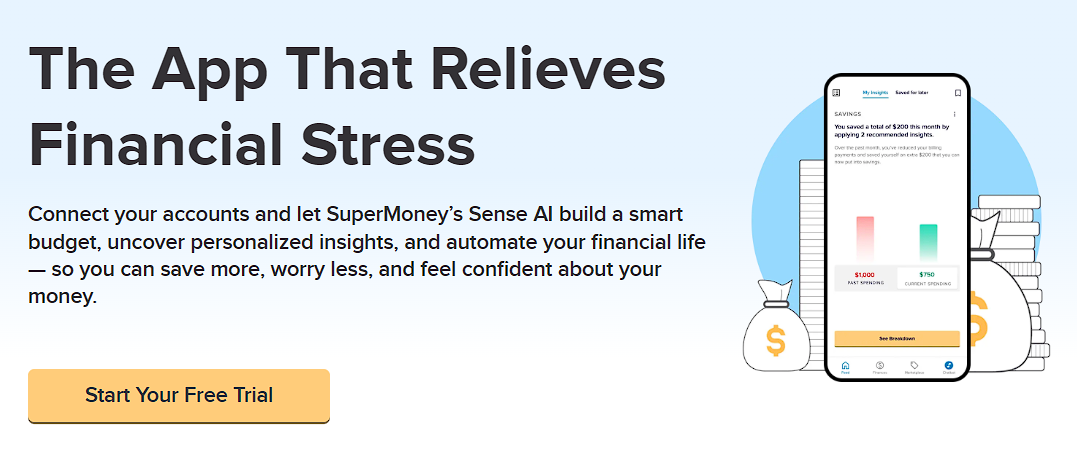 The SuperMoney app shows all your credit card balances, limits, APRs, and due dates in one place — so you always know what you owe and when it’s due across every card you carry.
Credit Card vs. Debit Card vs. Charge Card
All three products process payments through the same card networks, but they work differently and carry different financial consequences.
| Feature | Credit Card | Debit Card | Charge Card |
|---|---|---|---|
| Source of funds | Borrowed (revolving line) | Your bank account | Borrowed (no preset limit) |
| Balance carried forward | Yes — with interest | No — balance always $0 | No — must pay in full monthly |
| Credit limit | Fixed by issuer | No credit limit | No preset limit (varies by spend) |
| Interest charges | Yes, if balance carried | None | None (or steep penalty) |
| Reports to credit bureaus | Yes | No | Yes |
| Fraud protection | Strong (federal law) | Limited — funds already spent | Strong |
| Common issuers | Visa, Mastercard, Amex, Discover | Visa, Mastercard (debit) | American Express (historically) |
The fraud protection difference matters more than most people realize. Under federal law, your liability for unauthorized credit card charges is capped at $50 — and most issuers offer $0 liability. With a debit card, unauthorized charges come directly out of your bank account, and while federal law does protect you, the money is gone while the dispute is resolved.
Types of Credit Cards
Credit cards are issued across a wide range of categories, each designed for a different spending pattern or financial situation.
Rewards cards earn points, miles, or cash back on purchases — typically 1–5% back depending on the category. They’re best for cardholders who pay in full each month, since carrying a balance at 20%+ APR quickly erases any rewards earned.
Cash back cards are a simpler version of rewards — instead of points, you earn a percentage of each purchase back as cash. Many offer flat rates (1.5%–2% on everything) or bonus categories (3%–5% on groceries, gas, or dining).
Balance transfer cards offer a 0% introductory APR on transferred balances — typically for 12–21 months — giving existing credit card debt a window to be paid down without interest accruing.
Travel and airline cards earn miles or points redeemable for flights, hotels, and travel credits. The most valuable ones carry annual fees ($95–$695) offset by travel benefits like lounge access, free checked bags, and statement credits.
Secured cards require a refundable cash deposit that becomes the credit limit. They’re designed for borrowers building credit from scratch or rebuilding after credit damage. See SuperMoney’s full guide on secured credit cards for how they work and when to graduate to an unsecured card.
Student cards are entry-level unsecured cards with lower credit requirements for college students with limited credit history.
Business cards are designed for business spending — higher limits, employee card management, and rewards on business categories like advertising, office supplies, and travel.
How Credit Cards Affect Your Credit Score
Credit cards are the most influential tradeline type in a standard credit file. How you manage them determines the two largest factors in your FICO score.
Payment history (35% of FICO). Every on-time payment strengthens your history. A single payment 30 or more days late is reported to all three bureaus and can drop a good score by 60–100 points. That mark stays on your report for seven years.
Credit utilization (30% of FICO). Your credit utilization ratio — the percentage of your available credit you’re using — is calculated monthly from your reported balances. Keeping it below 10% produces the best scores; above 30%, it starts to meaningfully suppress your score.
Credit cards also contribute to credit mix (10% of FICO) and length of credit history (15% of FICO) — two factors that benefit from having cards open for long periods without closing them unnecessarily.
Pro Tip
Don’t close old credit cards to “clean up” your profile. A closed card removes its credit limit from your total available credit, which spikes your utilization ratio — and it reduces your average account age. Both hurt your score. Keep old cards open and make a small purchase on each every few months to prevent the issuer from closing them due to inactivity.
What Credit Cards Cost
A credit card can cost nothing or a significant amount annually, depending entirely on how you use it.
Interest. The average APR for accounts assessed interest reached 22.30% as of Q4 2025 (Federal Reserve). Cardholders who pay in full each month pay $0 in interest. Those who carry balances paid a collective $160 billion in interest charges in 2024 alone, per the CFPB’s 2025 Consumer Credit Card Market Report. For the full cost breakdown, see how credit card interest works.
Annual fee. Basic cards charge no annual fee. Premium travel and rewards cards charge $95–$695 per year, offset — in theory — by benefits and rewards. Whether the fee is worth paying depends on how much of those benefits you actually use.
Other fees. Balance transfer fees (3–5%), cash advance fees (3–5%), foreign transaction fees (1–3%), and late fees (up to $41) each apply to specific actions. Most are avoidable with planning.
Minimum payment trap. The minimum payment keeps your account current but barely reduces principal. On the average U.S. balance of $6,735 at 22.30% APR, paying only the minimum takes over 20 years to eliminate and costs more in total interest than the original balance.
Pro Tip
Set up autopay for your full statement balance — not just the minimum. This single habit eliminates interest charges entirely, preserves your grace period every cycle, and prevents a missed payment from ever damaging your credit history. If cash flow makes full payoff impossible some months, autopay the minimum as a floor and pay the rest manually.
Compare credit cards on SuperMoney— filter by APR, rewards type, annual fee, and credit score requirement to find the right card for how you spend.
Frequently Asked Questions
What is the difference between a credit card and a debit card?
A credit card lets you borrow money from an issuer up to a preset limit and repay it later. A debit card draws directly from your bank account — there’s no borrowing involved. Credit cards report to the credit bureaus and build your credit history; debit cards do not. Credit cards also offer stronger federal fraud protections than debit cards.
How do I get a credit card for the first time?
First-time applicants with no credit history typically qualify for a student card (if enrolled in college), a secured card (which requires a refundable deposit), or a credit-builder card. Secured credit cards are the most reliable path for those starting from zero — the deposit eliminates the issuer’s risk, making approval accessible regardless of credit history.
Does getting a credit card hurt your credit score?
Applying for a card triggers a hard inquiry, which typically lowers your score by 5–10 points temporarily. The effect fades within 12 months. Opening the account also initially lowers your average account age. Over the medium term, a well-managed new card adds available credit (lowering utilization) and builds payment history — both of which outweigh the short-term inquiry effect.
What happens if I don’t pay my credit card?
Missing a payment triggers a late fee and eventually a penalty APR. A payment 30 or more days late is reported to the credit bureaus as delinquent, which can drop your score significantly and stays on your report for seven years. Accounts unpaid for 180 days are typically charged off — written off as a loss — and may be sold to collections. At that point, the damage to your credit is substantial and long-lasting.
What is a credit card limit?
Your credit limit is the maximum balance your issuer allows on the account at any given time. It’s set when you open the account based on your credit score, income, and existing debt obligations. The average U.S. credit card limit is $22,589, according to Experian. Limits can increase over time with on-time payment history or upon request.
Is it better to have one credit card or multiple?
Multiple cards increase your total available credit (which lowers overall utilization), add to your credit mix, and let you optimize rewards across different spending categories. The downside is the management complexity and the risk of overspending. For most people starting out, one well-chosen card used consistently is more useful than several cards used poorly.
Key takeaways
- A credit card is a revolving line of credit — you borrow what you spend, up to a set limit, and repay it on a monthly cycle. Available credit replenishes as you pay down the balance.
- 68% of Americans have at least one active credit card. Total U.S. credit card balances reached a record $1.277 trillion in Q4 2025.
- Paying your full statement balance by the due date every month eliminates all interest charges — the grace period makes the card free to use if you don’t carry a balance.
- Credit cards report to the three major bureaus monthly. Payment history and utilization — the two largest FICO factors — are both directly shaped by how you manage your cards.
- The right card depends on your credit profile, spending habits, and whether you plan to carry a balance. For most people starting out, a no-fee card that reports to all three bureaus is the right first card.
The SuperMoney app helps you compare credit cards, track your balances and due dates, and monitor your credit utilization — all in one place.Andrew is the Content Director for SuperMoney, a Certified Financial Planner®, and a Certified Personal Finance Counselor. He loves to geek out on financial data and translate it into actionable insights everyone can understand. His work is often cited by major publications and institutions, such as Forbes, U.S. News, Fox Business, SFGate, Realtor, Deloitte, and Business Insider.
Table of Contents