
How to Apply for a Credit Card for the First Time

Last updated 05/14/2026 by
Andrew Latham
Edited by
Andrew Latham
Summary:
Applying for your first credit card takes about 10 minutes online. The harder part is knowing which card to apply for, what information you’ll need, and what to do if you’re denied.
Here’s the full process from start to first statement.
- You don’t need a credit score to get a credit card: Secured cards and student cards are designed for people with no credit history. You provide a refundable deposit (usually $200–$500), and the card reports your payments to all three credit bureaus.
- Use pre-qualification before you apply: Most major issuers offer a soft-pull pre-qualification tool that estimates your approval odds without affecting your credit score. Only a formal application triggers a hard inquiry.
- What you’ll need to apply: Social Security number (or ITIN), date of birth, address, annual income (including part-time work and allowances for students), and a bank account for payment.
- Approval can be instant — or take up to 30 days: Most online applications return a decision within seconds. If you’re sent to manual review, expect 7–10 business days. Denials come with an adverse action notice explaining why.
- The first 6–12 months matter most: Pay the full balance on time every month. Keep your utilization below 30%. After 6–12 months of responsible use, you’ll have the credit history to qualify for better cards.
Compare Credit Cards
Compare the rates, fees, and rewards of leading credit cards.
What You Need Before You Apply
Credit card applications ask for the same core information across almost every issuer. Having it ready before you start prevents an incomplete application from triggering a hard inquiry with nothing to show for it.
| Required Information | Notes |
|---|---|
| Social Security number or ITIN | Required for identity verification and credit bureau pull. Non-citizens can use an Individual Taxpayer Identification Number (ITIN) in place of an SSN on most applications. |
| Date of birth | You must be at least 18 to apply. Applicants under 21 must demonstrate independent income or have a co-signer under the Credit CARD Act of 2009. |
| Current address | Must match the address on file with the credit bureau. Recent movers may need to include a previous address. |
| Annual income | Issuers use this to assess ability to repay. Students can include part-time income, scholarships, and regular financial support from family members they have reasonable access to. |
| Monthly housing payment | Rent, mortgage, or $0 if living with family — issuers use this to calculate disposable income. |
| Bank account information | Not required at application, but needed to set up autopay once approved. Secured cards require the deposit upfront. |
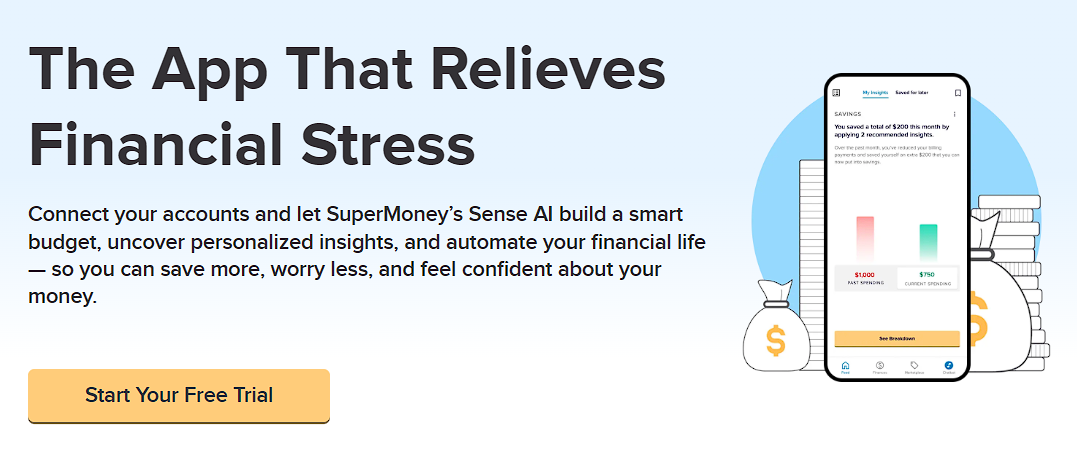 The SuperMoney app lets you compare cards for first-time applicants side by side — filtered by credit score requirement, annual fee, and whether they report to all three bureaus.
Which Type of Card Should a First-Time Applicant Get?
The right first card depends on whether you have any credit history at all and whether you’re a student.
| Card Type | Who It’s For | How It Works | Key Requirement |
|---|---|---|---|
| Secured card | No credit history or poor credit (below 580) | Deposit becomes your credit limit; reports to all 3 bureaus; upgrade path to unsecured after 6–12 months | Refundable deposit of $200–$500+ |
| Student card | College students with limited or no credit history | Unsecured; designed for thin files; often includes rewards and on-time payment bonuses | Proof of enrollment at an accredited school (some issuers) |
| Entry-level unsecured card | Fair credit (580–669) with some credit history | No deposit required; lower credit limits initially; may include basic rewards | Score of 580+ and at least one trade line on your credit report |
| Store / retail card | Anyone; easy approval; useful for building history at a specific retailer | Closed-loop (usable only at the issuer’s stores) or open-loop (Visa/Mastercard network); usually higher APR | Generally easier approval; often soft-pull pre-qualification |
| Authorized user on existing account | Anyone with a family member or partner willing to add them | No application required; the primary cardholder’s history reports to your bureau | Primary cardholder’s agreement; some issuers require minimum age |
Being added as an authorized user is one of the fastest ways to establish credit history without applying for anything — if the primary cardholder has a long account history and low utilization, that history shows up on your report.
For the full breakdown of how this works and what rights you have, see authorized user vs. joint account holder.
How to Apply for a Credit Card for the First Time
- Check whether you have a credit score. If you’ve never had a loan or credit card, you may have no score at all — which is called being “credit invisible.” Free credit score services (Experian, Credit Karma, your bank’s app) will tell you your current score or confirm you don’t have one yet. This determines which card types you should target.
- Choose the right card type for your credit profile. No score → secured card or student card. Score below 670 → entry-level unsecured card or secured. Score 670+ → standard rewards card. Don’t apply for a card above your credit tier — a denial is a wasted hard inquiry. For a full framework, see how to choose a credit card.
- Use the issuer’s pre-qualification tool before applying. Most major issuers (Chase, Amex, Citi, Capital One, Discover) offer pre-qualification using a soft pull — it estimates your approval odds without touching your credit score. Only the formal application triggers a hard inquiry. If pre-qualification comes back negative, don’t apply — find a different card.
- Complete the application online. Most applications take under 10 minutes. You’ll enter your SSN, date of birth, address, income, and housing payment. For a secured card, you’ll also provide your bank account details to pay the deposit. Double-check your income figure — understating it can lead to a lower credit limit or denial; overstating it is misrepresentation.
- Wait for a decision. Online applications usually return a decision within seconds. “Pending” means your application was sent to manual review — this typically takes 7–10 business days. Call the reconsideration line if you want to discuss your application directly with an underwriter.
- If approved, set up autopay immediately. Before you make a single purchase, set autopay to pay the full statement balance each month. A single missed payment is reported to the bureaus and can take seven years to fall off your credit report. Autopay prevents this from happening accidentally. You can always pay more, but the minimum autopay is your safety net.
- Make a small purchase and pay it off in full. Use the card for one regular purchase — gas, groceries, a subscription — and pay the full balance before the due date. This establishes your payment history immediately and costs nothing in interest if paid within the grace period.
Pro Tip
Issuers report your balance to the credit bureaus once per month — usually on your statement closing date, not your payment due date. If you pay in full but your statement closes with a high balance, the bureaus see high utilization even though you paid on time.
To keep reported utilization low, pay down your balance a few days before your statement closes rather than waiting for the due date. This is particularly important in the first year when a low utilization rate helps your score build faster.
What Happens After You Apply
Instant approval: Your card is approved, a credit limit is assigned, and your physical card ships within 7–10 business days. Most issuers give you the card number immediately in the app or online portal so you can use it for digital purchases right away.
Pending / manual review: Your application needs additional verification. This can happen if there’s a freeze on your credit report, your information doesn’t match bureau records, or your application fell in a borderline approval range. Call the issuer’s reconsideration line — you can often provide additional context that resolves the review in your favor.
Denial: By law, the issuer must send you an adverse action notice within 30 days explaining the specific reasons for the denial. Common first-time denial reasons include: insufficient credit history, income too low relative to requested credit, or a credit freeze. Read the adverse action letter carefully — it tells you exactly what to address before reapplying.
Pro Tip
If you’re denied, wait at least 6 months before applying again — not because of any rule, but because multiple hard inquiries in a short window signal credit-seeking behavior to bureaus and future issuers. Use the time to address the specific reason in your adverse action letter.
If the denial was due to no credit history, become an authorized user on a family member’s account in the interim. That history can be enough to qualify you for a secured or entry-level card on your next application.
How to Build Credit Once You Have the Card
The card itself doesn’t build credit — how you use it does. The two factors that matter most in the first year are payment history (35% of your FICO score) and credit utilization (30%).
| Action | Why It Matters | Target |
|---|---|---|
| Pay the full balance on time every month | Payment history is the single largest FICO factor at 35% | Never miss a payment — autopay the full statement balance |
| Keep utilization low | Utilization is 30% of FICO; high balances hurt even if paid on time | Keep reported balance below 30% of your credit limit; below 10% is ideal |
| Don’t close the account | Account age and available credit both contribute to your score | Keep the card open — even if you stop using it actively |
| Don’t apply for multiple cards at once | Multiple hard inquiries in a short window temporarily lower your score | Space applications at least 6 months apart |
| Request a credit limit increase after 6–12 months | Higher limit lowers your utilization ratio even with the same spending | Ask once you have 6+ months of on-time payments |
For a complete breakdown of how each action affects your FICO score, see how credit cards affect your credit score. For what credit utilization is and how to calculate it, see credit utilization ratio.
Hard Inquiry vs. Soft Inquiry: What the Application Does to Your Score
Every formal credit card application triggers a hard inquiry — a credit bureau pull that shows up on your report and temporarily lowers your score by a few points. The impact is minor (typically 5 points or less) and fades within 12 months. Hard inquiries stay on your report for two years but stop affecting your score after 12 months.
Pre-qualification tools use soft inquiries, which don’t affect your score at all. Checking your own credit score is also a soft inquiry. For the full difference between the two, see hard inquiry vs. soft inquiry.
Key takeaways
- You don’t need an existing credit score to get a credit card. Secured cards and student cards are designed for first-time applicants and report to all three bureaus.
- Always pre-qualify with a soft pull before formally applying. A hard inquiry from a denial is a wasted mark on your credit report.
- To apply you’ll need: SSN or ITIN, date of birth, current address, annual income, and monthly housing payment. Students can include part-time income and family financial support.
- Set autopay to the full statement balance the moment your card is approved. One missed payment can take seven years to leave your credit report.
- Pay on time and keep utilization below 30% for 6–12 months. That’s enough history to qualify for better cards with higher limits and real rewards.
Frequently Asked Questions
Can I get a credit card with no credit history?
Yes. Secured cards and student cards are specifically designed for applicants with no credit history. A secured card requires a refundable deposit (usually $200–$500) that becomes your credit limit. After 6–12 months of on-time payments, most issuers upgrade you to an unsecured card and return your deposit.
What credit score do you need to get a credit card?
Secured cards have no minimum score requirement — they’re available to applicants with no score at all. Entry-level unsecured cards typically require a score of 580 or above. Standard rewards cards require 670+, and premium travel cards typically target 740+.
How long does it take to get approved for a credit card?
Online applications usually return a decision within seconds. If your application goes to manual review, expect 7–10 business days. You can call the issuer’s reconsideration line to check status or provide additional information.
What income do I need to apply for a credit card?
There’s no published minimum income for most consumer credit cards. Issuers use income to assess repayment ability and set initial credit limits. Students can include part-time wages, scholarships, and money they regularly receive from family members. Under the Credit CARD Act, applicants under 21 must show independent income or have a co-signer.
How many credit cards should a first-time applicant get?
Start with one. A single card used responsibly for 6–12 months builds enough history to qualify for better products. Applying for multiple cards at once generates multiple hard inquiries, signals credit-seeking behavior, and doesn’t accelerate your credit building meaningfully. See how many credit cards you should have for when it makes sense to add more.
What happens if I’m denied a credit card?
You’ll receive an adverse action notice within 30 days explaining the specific reasons for the denial. Read it — it tells you exactly what to address. Common first-time denial reasons are insufficient credit history, income too low relative to the requested limit, or a credit freeze. Wait at least 6 months before reapplying, and use the time to address the reason in the letter.
Compare first-time credit cards on SuperMoney — filter by credit score requirement, annual fee, and secured vs. unsecured to find the right starting card for your profile.
The SuperMoney app lets you compare cards for first-time applicants side by side — filtered by credit score requirement, annual fee, and whether they report to all three bureaus.Andrew is the Content Director for SuperMoney, a Certified Financial Planner®, and a Certified Personal Finance Counselor. He loves to geek out on financial data and translate it into actionable insights everyone can understand. His work is often cited by major publications and institutions, such as Forbes, U.S. News, Fox Business, SFGate, Realtor, Deloitte, and Business Insider.
Share this post:
Add as a preferred source on Google
Table of Contents