
How to Save $10,000 in a Year (A Realistic Week-by-Week Breakdown)

Last updated 03/04/2026 by
Andrew Latham
Edited by
Andrew Latham
Summary:
Saving $10,000 in a year requires setting aside roughly $192 per week, $385 biweekly, or $833 per month — and the most reliable way to hit that target is automating deposits into a separate savings account. Challenge-based methods like a modified 52-week plan or accelerated envelope challenge can build the habit gradually instead of requiring a flat $833 from day one.
Ten thousand dollars isn’t a random number. It’s roughly 3–4 months of expenses for the average American household — enough to cover a job loss, absorb a medical bill, or make a down payment on a car without touching a credit card.
The gap between wanting $10K and actually saving it comes down to structure. A vague plan to “save more” doesn’t survive contact with a monthly budget. A specific weekly target does.
Compare Savings Accounts
Compare savings accounts. Discover your best option.
How Much Do You Need to Save Each Week?
Breaking $10,000 into smaller intervals makes the goal concrete instead of abstract. The math changes depending on your pay cycle and timeline.
| Timeline | Savings Frequency | Amount Per Period |
|---|---|---|
| 12 months | Weekly | $192.31 |
| 12 months | Biweekly (26 paychecks) | $384.62 |
| 12 months | Monthly | $833.33 |
| 6 months | Weekly | $384.62 |
| 6 months | Biweekly (13 paychecks) | $769.23 |
| 6 months | Monthly | $1,666.67 |
If $192 per week feels overwhelming, that’s normal — especially on a tighter income. The section below on challenge-based methods offers paths that start much lower and ramp up gradually.
If you deposit into a high-yield savings account earning 4.5% APY, you’ll earn roughly $200–$250 in interest over the year on top of your $10,000 in deposits. That’s an extra week of savings earned passively.
What $10,000 in Savings Actually Gets You
A five-figure savings balance isn’t just a milestone — it changes your financial options in measurable ways.
- 3–4 months of emergency coverage. The average U.S. household spends roughly $6,440 per month, according to the Bureau of Labor Statistics. A $10,000 emergency fund covers 45–60 days of full expenses without income.
- Freedom from high-interest debt cycles. A $10,000 lump payment on credit card debt at 24% APR eliminates roughly $2,400 in annual interest charges. If you’re weighing whether to pay down debt or save first, the interest savings at high APRs often make the decision for you.
- A real down payment. On a $200,000 home, $10,000 represents a 5% down payment — enough to qualify for conventional financing with many lenders.
- Negotiating power. Having cash on hand lets you negotiate better deals on cars, appliances, and medical bills. Providers routinely offer 10–30% discounts for upfront payment.
Bankrate’s 2025 Emergency Savings Report found that only 27% of Americans have enough savings to cover six months of expenses. Getting to $10,000 puts you ahead of roughly three-quarters of the country.
3 Paths to $10,000 in a Year
There’s no single right way to save $10K. The best method depends on your income stability, your experience with saving, and whether you need structure to stay consistent.
Path 1: Flat-Rate Automated Transfers
Set up a recurring $192.31 weekly transfer (or $384.62 biweekly) from checking to a dedicated savings account. This is the simplest approach — one setup, zero decisions for 52 weeks.
This works best for people with stable income who already have the savings habit. If you’re already automating savings, scaling up the amount is the easiest change to make.
The downside: $192 per week from day one is a big jump for someone who isn’t currently saving at all. There’s no ramp-up period to adjust your spending.
Path 2: Modified 52-Week Challenge
The standard 52-week savings challenge saves $1,378 over a year. To reach $10,000, multiply each week’s deposit by 7.25: save $7.25 in week one, $14.50 in week two, $21.75 in week three, and so on.
By week 52, you’d deposit $377. That final-month cost is high, but the first 13 weeks require less than $50 per week — giving you three months to adjust spending habits before the larger deposits hit.
Alternatively, run a double-up 52-week challenge ($2 in week one, $4 in week two, up to $104 in week 52) for $2,756, then supplement with flat-rate transfers to close the gap to $10,000. This hybrid approach uses the challenge for habit-building and automation for the heavy lifting.
Path 3: 100 Envelope Challenge + Automation
The 100 envelope challenge saves $5,050 in roughly 100 days. Run it twice in a year and you’d save $10,100 — exceeding the goal.
The catch: daily deposits of up to $100 require consistent cash flow and daily attention. A more realistic version runs one full envelope challenge ($5,050) plus flat-rate automated transfers of $95.19 per week for the remaining 38 weeks ($3,617), plus the $1,378 from interest and leftover weeks. The math flexes — the point is combining challenge engagement with automated consistency.
| Path | Starting Weekly Cost | Peak Weekly Cost | Total Saved | Best For |
|---|---|---|---|---|
| Flat-rate automated | $192 | $192 | $10,000 | Stable income, existing savings habit |
| Modified 52-week (×7.25) | $7.25 | $377 | $10,000 | Beginners who need a gradual ramp-up |
| Envelope + automation hybrid | Varies | $100/day during challenge | $10,000+ | Motivated savers who want engagement + structure |
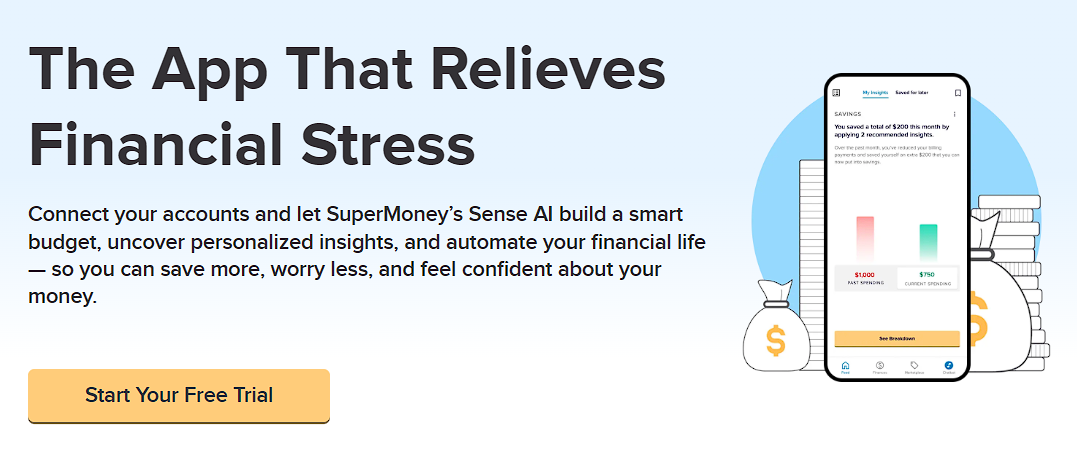
Track your $10K goal with automatic progress updates
Set your savings target, connect your bank account, and the SuperMoney app tracks every deposit against your $10,000 goal. See exactly where you stand — weekly, monthly, or any time you need motivation.
How to Save $10,000 on a Low Income
Saving $10K in 12 months on a $35,000 salary means setting aside roughly 29% of take-home pay — aggressive, but not impossible with the right budget framework.
The 50/30/20 budget rule allocates 20% to savings and debt. On a $35,000 salary (roughly $2,700/month take-home), that’s $540/month — which gets you to $6,480 in a year. To close the gap to $10,000, you’d need to either increase income or shift to a more aggressive framework like the 80/20 rule and cut deeper into discretionary spending.
Realistic strategies for stretching a low income toward $10K:
- Start with a smaller challenge first. Run the standard 52-week challenge ($1,378) to prove to yourself that saving consistently is possible. Scale up in year two.
- Redirect windfalls. Tax refunds (the average was $3,167 in 2023), birthday money, bonuses, and cash gifts go straight into the savings account. A single tax refund closes nearly a third of the $10K gap.
- Cut one recurring expense. Canceling a $60/month subscription or switching to a cheaper phone plan frees up $720/year — that’s 7.2% of the goal from one decision.
- Add a temporary income source. Even $200/month from a side gig adds $2,400/year to your savings capacity. Combined with the 50/30/20 allocation, that brings the total to $8,880 — close enough that a tax refund covers the rest.
The goal doesn’t have to be 12 months. Saving $10,000 in 18 months requires $128 per week — a much more comfortable pace for lower-income budgets. Extending the timeline isn’t failure; it’s planning.
How to Save $10,000 in 6 Months
Compressing the timeline to six months doubles the weekly requirement to $384.62 — or $769.23 biweekly. That’s aggressive, and it typically requires both expense reduction and income increases working simultaneously.
A six-month $10K sprint works best for people with a specific deadline: a home closing date, a planned career break, or a seasonal income peak (tax season, holiday bonuses) that provides an upfront lump sum.
The most effective approach combines a large initial deposit with automated weekly transfers for the remainder. If your tax refund provides $3,000, you only need to save $269.23 per week for 26 weeks to reach $10,000. That reframes the problem from “save $10K” to “save $7K after your refund does the heavy lifting.”
Month-by-Month Milestones
The hardest part of a year-long savings goal is the middle months — when the novelty has faded but the finish line is still far away. Milestones keep you anchored.
| Month | Cumulative Savings | Milestone |
|---|---|---|
| Month 1 | $833 | First month complete — you’ve proven it’s possible |
| Month 3 | $2,500 | Enough for most car repairs and deductibles |
| Month 4 | $3,333 | One-third of the way — roughly 1 month of expenses saved |
| Month 6 | $5,000 | Halfway — enough for a security deposit or small emergency fund |
| Month 8 | $6,667 | Two-thirds complete — stronger cash position than most Americans |
| Month 10 | $8,333 | Home stretch — momentum kicks in |
| Month 12 | $10,000 | Goal achieved |
Each milestone represents a real financial capability — not just a number. At $2,500, you can handle most unexpected car repairs. At $5,000, you have a sinking fund that absorbs planned irregular expenses. At $10,000, you have genuine financial breathing room.
4 Mistakes That Keep People From Reaching $10K
1. Setting the goal without adjusting the budget
Deciding to save $10,000 without identifying where the money comes from is just wishful thinking. Before week one, build a budget that shows exactly which spending categories shrink to fund $192/week. If you don’t have a budget yet, the zero-based budgeting method forces every dollar to have a job — including your savings deposit.
2. Using a checking account as a savings account
Money sitting in checking gets spent. The structural difference between checking and savings accounts — limited withdrawals, separate balance, no debit card access — is what protects your progress. Open a dedicated account before you start.
3. Saving whatever is “left over” at month-end
Expenses expand to fill available income. If you wait until the end of the month to save what remains, the answer is almost always “nothing.” Automate the transfer on payday so savings happen before spending — not after.
4. Quitting after one bad month
Missing a month doesn’t erase the previous months of progress. If you saved $833 per month for five months and then missed month six, you still have $4,165 — which is more than most Americans have in emergency savings. Adjust the remaining timeline and keep going.
What to Do After You Reach $10,000
Hitting $10K is a milestone, not a finish line. The savings habit you built is now more valuable than the money itself.
- Keep the automation running. Don’t cancel your recurring transfers — redirect them toward the next goal. Building a full automated money system turns one-time discipline into permanent financial infrastructure.
- Evaluate where the money lives. If $10K is your emergency fund, a high-yield savings account keeps it liquid and earning interest. If it’s earmarked for a longer-term goal, a money market account or Roth IRA may offer better returns.
- Pay down high-interest debt. If you saved $10K while carrying credit card balances, running the numbers on interest costs will almost always favor using some of the savings for a lump-sum debt payoff.
Key takeaways
- Saving $10,000 in a year requires $192 per week, $385 biweekly, or $833 per month — automate the transfer on payday so it happens before spending.
- Three paths work: flat-rate automation for stable earners, a modified 52-week challenge (×7.25 multiplier) for gradual ramp-up, or a hybrid combining the 100 envelope challenge with automated transfers.
- On a low income, extend the timeline to 18 months ($128/week), redirect windfalls like tax refunds, and start with a smaller challenge to build the habit first.
- Open a dedicated high-yield savings account to keep challenge money separate from spending money — the friction of transferring back protects your progress.
- $10,000 covers 3–4 months of average household expenses, eliminates roughly $2,400 in annual credit card interest, or serves as a 5% down payment on a $200,000 home.
FAQ
Is it realistic to save $10,000 in a year?
Yes, if your income supports $192 per week in savings after covering essential expenses. For a household earning $60,000 after taxes, that’s roughly 17% of take-home pay — below the 20% savings rate that most budget frameworks recommend.
How much do I need to save per day to reach $10,000 in a year?
About $27.40 per day for 365 days. That’s roughly what the average American spends on dining out daily, according to Bureau of Labor Statistics data — which illustrates how one spending habit redirected can fund the entire goal.
What’s the fastest way to save $10,000?
Combine expense reduction with a lump-sum jump start. Deposit your tax refund (average: $3,167), cancel unnecessary subscriptions, and automate weekly transfers for the remainder. A $3,000 head start means you only need to save $134.62 per week for the remaining 52 weeks.
Can I save $10,000 on minimum wage?
On a full-time minimum wage income ($7.25/hour federal), take-home pay is roughly $1,100/month — and saving $833/month leaves only $267 for all expenses, which isn’t viable. Extending the timeline to 24 months ($96/week), adding a side income source, and starting with a smaller savings challenge first is a more realistic approach for low-income earners.
Should I save $10,000 or pay off debt first?
It depends on interest rates. If your debt charges more than your savings earns (which is almost always true for credit cards at 20%+ APR), paying down debt first creates a higher return than saving. Most financial planners recommend building a $1,000 starter emergency fund first, then attacking high-interest debt, then scaling savings to $10,000.
What’s the best account for a $10,000 savings goal?
A high-yield savings account earning 4%+ APY is the best option for money you’ll need within 1–2 years. Your deposits earn interest while remaining fully accessible, and the separate account structure prevents casual spending. For longer-term goals, a money market account or Roth IRA may offer better growth.
How do savings challenges help reach $10,000?
Challenges like the 52-week method or 100 envelope challenge build the savings habit through escalating commitment — starting with tiny deposits that gradually increase. The standard 52-week challenge saves $1,378; a modified version with a 7.25× multiplier reaches $10,000. The structure and gamification keep people engaged where flat transfers often get canceled.
Automate your $10K savings goal
Set your target, schedule automatic transfers, and track your monthly milestones in one place. The SuperMoney app turns a year-long savings goal into a system that runs itself.
Andrew is the Content Director for SuperMoney, a Certified Financial Planner®, and a Certified Personal Finance Counselor. He loves to geek out on financial data and translate it into actionable insights everyone can understand. His work is often cited by major publications and institutions, such as Forbes, U.S. News, Fox Business, SFGate, Realtor, Deloitte, and Business Insider.
Share this post:
Add as a preferred source on Google
Table of Contents