
The 100 Envelope Challenge: How It Works, What You’ll Save, and How to Actually Finish

Last updated 03/04/2026 by
Andrew Latham
Edited by
Andrew Latham
Summary:
The 100 envelope challenge is a savings method where you label 100 envelopes from 1 to 100, pick one each day, and stuff it with the matching dollar amount — saving $5,050 in just over three months. Even a scaled-down version, like filling one envelope per week or halving every amount, builds a savings habit that compounds over time.
The challenge went viral on TikTok, but the concept is older than social media — it’s rooted in the same behavioral psychology that makes any structured savings system work. Turning a vague goal (“save more money”) into a daily, tangible action removes the decision fatigue that derails most people.
The math is simple. The follow-through is harder. Here’s exactly how the 100 envelope challenge works, what you’ll actually save at each stage, and how to finish even if your budget is tight.
Compare Savings Accounts
Compare savings accounts. Discover your best option.
What Is the 100 Envelope Challenge?
The 100 envelope challenge is a cash-based savings method where you number 100 envelopes from 1 to 100, then fill one envelope per day with cash matching the number on the front. After 100 days, you’ll have saved exactly $5,050.
The concept is a form of gamified saving — turning a financial goal into a daily game with visible progress. Instead of watching a savings account number inch upward on a screen, you physically handle the money, seal it into an envelope, and watch the stack grow.
That tangibility is the point. Behavioral research consistently shows that people save more when the process involves concrete, physical actions rather than abstract transfers. The envelopes make saving feel real in a way that spreadsheets and apps sometimes don’t.
How to Do the 100 Envelope Challenge (Step by Step)
The setup takes about 15 minutes. The challenge takes 100 days — or longer if you stretch it out to fit your budget.
- Get 100 envelopes. Plain white envelopes work fine. Label each one with a number from 1 to 100.
- Shuffle and store them. Mix the envelopes so you can’t see the numbers. Drop them in a box, basket, or drawer.
- Pick one envelope per day. Pull an envelope at random. The number on the front is the amount of cash you put inside.
- Seal it and set it aside. Don’t reopen envelopes once they’re filled. The sealed envelope is a commitment — the money is off-limits until you finish.
- Repeat for 100 days. At the end, open all 100 envelopes. You’ll have exactly $5,050.
You can go in numerical order (1, 2, 3…100) or pick envelopes randomly. Random selection keeps the challenge unpredictable — some days you’ll tuck away $3, other days $87. That variability is part of what makes it engaging.
If you prefer starting with the hardest amounts first, reverse the order. Begin with envelope 100 and work down to 1. The last few weeks become progressively easier rather than increasingly painful.
How Much Do You Save With the 100 Envelope Challenge?
The total is always the same: $5,050. That’s the sum of every integer from 1 to 100 ($1 + $2 + $3 + … + $100).
Here’s what the savings look like at each milestone:
| Days Completed | Envelopes Filled | Cumulative Savings (Sequential) | Daily Average |
|---|---|---|---|
| 10 | 10 | $55 | $5.50 |
| 25 | 25 | $325 | $13.00 |
| 50 | 50 | $1,275 | $25.50 |
| 75 | 75 | $2,850 | $38.00 |
| 100 | 100 | $5,050 | $50.50 |
The daily average across all 100 days is $50.50. But the actual amounts vary dramatically — Day 1 costs $1, while Day 100 costs $100. If you’re filling envelopes randomly, expect some weeks to feel effortless and others to feel like a stretch.
That $5,050 is enough to cover roughly one to two months of essential expenses for most households — a meaningful start toward a full emergency fund.
Why Most Americans Need a Savings Challenge Right Now
The 100 envelope challenge wouldn’t be trending if people didn’t need it. The numbers say they do.
Nearly 1 in 4 Americans (24%) have zero emergency savings, according to Bankrate’s 2025 Emergency Savings Report. Only 41% could cover a $1,000 unexpected expense from savings — the lowest share since 2021.
And the trend is moving the wrong direction. Just 19% of Americans ended 2025 with more emergency savings than they started the year with, according to a separate Bankrate survey from December 2025. Among those whose savings shrank, 39% reported higher credit card balances at the same time.
The gap between what people know they should save and what they actually save is a behavioral problem, not an information problem. Most people understand that an emergency fund matters. The issue is starting.
That’s why structured challenges work. A National Bureau of Economic Research study on automatic enrollment in 401(k) plans found that when saving requires an active decision, most people default to doing nothing. But when saving becomes the default — or in this case, a daily game — participation rates jump dramatically.
The envelope challenge exploits this same principle. It replaces an open-ended goal (“save more”) with a closed-loop system that has a clear start, a fixed daily action, and a measurable finish line.
For the 60% of Americans who are uncomfortable with their current savings levels, the envelope challenge is a low-risk way to prove that saving is possible — even before you’re ready to automate it.
How to Actually Finish the 100 Envelope Challenge
Starting a savings challenge is easy. Finishing one is where most people stall — especially in the final weeks when individual envelopes require $70, $80, or $90 in cash.
These strategies dramatically improve your odds of completing all 100 days:
- Start with the highest amounts. Fill envelopes 100, 99, 98 first. The challenge gets easier every day instead of harder, and you build momentum instead of dread. By week 10, you’re filling envelopes in the $30s — manageable even on a tight week.
- Withdraw cash weekly, not daily. Going to the ATM every day isn’t realistic. Pull enough cash each week to cover the next 5–7 envelopes, keeping a mix of denominations on hand. A $200 weekly withdrawal covers most scenarios.
- Track your progress visually. Print a grid numbered 1 to 100 and cross off each envelope as you fill it. The visual momentum matters more than you’d expect — watching the grid fill up creates a psychological investment in finishing.
- Pair the challenge with a spending cut. Temporarily pause impulse purchases, cook at home more, or skip one subscription. Redirect whatever you save directly into envelope money. Even $50/week in spending cuts covers most envelope amounts.
- Tell someone. An accountability partner — a friend, partner, or online community — makes quitting feel more costly than continuing. Some couples even compete: each person does a separate set of 100 envelopes, and the first to finish picks the dinner restaurant.
- Batch envelopes when you can. Had a good week at work? Fill two or three envelopes in one day. Getting ahead creates a buffer for the weeks when money is tight — and reduces the total number of days the challenge takes.
Pro Tip: If you pull a high-number envelope on a tight week, swap it for one you can afford and circle back later. Flexibility is not cheating — it’s the difference between finishing and abandoning the challenge entirely.
100 Envelope Challenge Variations (When $5,050 in 100 Days Isn’t Realistic)
The original challenge assumes roughly $50 per day in spare cash. For many people — especially those living paycheck to paycheck — that’s not feasible. Adjusting the challenge doesn’t weaken it. It makes it completable.
Half-Amount Version ($2,525 in 100 Days)
Label envelopes 1 to 100 but put in half the number on each envelope. Envelope 50 gets $25. Envelope 100 gets $50. Your total at the end: $2,525 — still a significant savings win.
Weekly Version ($5,050 in About 2 Years)
Fill one envelope per week instead of one per day. You still reach $5,050, but the timeline stretches to roughly 23 months. The daily average drops from $50.50 to about $7.21 per day — far more manageable for tight budgets.
Biweekly Version ($5,050 in About 4 Years)
Fill one envelope every two weeks, timed with your paycheck. This is the slowest option but requires the least daily discipline. Set aside the envelope amount when you get paid and don’t think about it again until the next payday.
50-Envelope Challenge ($1,275 in 50 Days)
Use 50 envelopes numbered 1 to 50. Total savings: $1,275 in less than two months. A strong option if you want a shorter commitment or a quick win before tackling the full 100-envelope version.
| Variation | Total Saved | Timeline | Avg. Per Day | Best For |
|---|---|---|---|---|
| Original (daily) | $5,050 | 100 days | $50.50 | Moderate to high earners |
| Half-amount | $2,525 | 100 days | $25.25 | Tighter budgets |
| Weekly | $5,050 | ~23 months | $7.21 | Steady habit-building |
| Biweekly | $5,050 | ~46 months | $3.61 | Low-income or paycheck-aligned |
| 50-envelope | $1,275 | 50 days | $25.50 | Beginners, quick wins |
The $10,000 Envelope Challenge
The original challenge saves $5,050. To reach $10,000, you have two options.
Option 1: Double the amounts. Label envelopes 1 to 100, but put in twice the face value. Envelope 50 gets $100. Envelope 100 gets $200. Total: $10,100 in 100 days — but the daily average jumps to $101.
Option 2: Use 200 envelopes. Number them 1 to 200 and fill one per day. Total: $20,100 over about 6.5 months. To hit exactly $10,000, use envelopes 1 to 140 (total: $9,870) or do the original 100-envelope challenge twice.
For most people, doing the standard challenge once, depositing the $5,050 into a high-yield savings account, and immediately starting round two is the most realistic path to $10,000. At a 4.5% APY, your first $5,050 earns roughly $230 in interest during the time it takes to complete round two — bringing your total closer to $10,330 without any extra effort.
The Digital Envelope Challenge (No Cash Needed)
Carrying cash isn’t for everyone. A digital version works just as well — and earns interest while you save.
- Print or download a 1–100 number grid. Free printable trackers are available across the web.
- Use a random number generator (or close your eyes and point) to pick a number each day.
- Transfer that amount from your checking account into a dedicated savings account.
- Cross off the number on your grid.
The digital version has a significant advantage: your savings earn interest from day one. In a high-yield savings account paying 4%+ APY, the $5,050 you accumulate over 100 days would earn roughly $15–$20 in interest during the challenge itself — and keep earning afterward.
A digital approach also eliminates the biggest practical complaint about the original challenge: carrying large amounts of cash. Envelopes 80 through 100 require $80–$100 per day in bills, which means frequent ATM trips and the risk of losing money. Digital transfers solve both problems.
You can also automate the transfers entirely. Some banking apps let you schedule variable-amount transfers, which means you can pre-load your challenge and let the system handle the daily deposits.
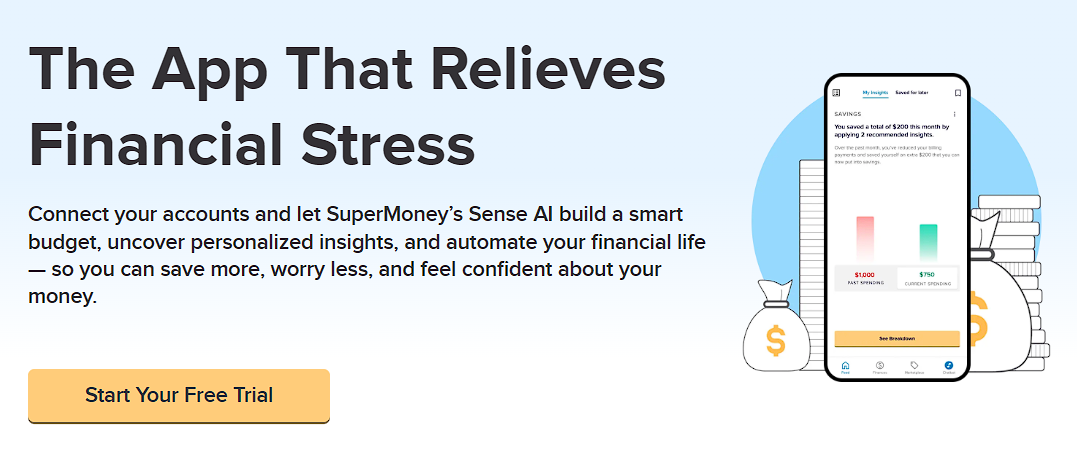
Automate your envelope savings
The SuperMoney app tracks your spending, sets savings goals, and helps you build automatic savings habits — so the money moves before you have a chance to spend it.
What to Do With $5,050 After the Challenge
Finishing the challenge is a win. Letting the $5,050 sit in a shoebox is not. Where you put it depends on your financial situation — and the order matters.
- Start or rebuild an emergency fund. If you don’t have at least $1,000 in emergency savings, this is the first priority. Bankrate data shows 59% of Americans can’t cover a $1,000 emergency from savings — completing this challenge puts you ahead of the majority. Deposit the cash into a dedicated savings account immediately.
- Pay down high-interest debt. If you’re carrying credit card balances at 20%+ APR, applying $5,050 against the highest-rate card saves more in interest than any savings account pays. On a $5,050 balance at 22% APR, you’d save roughly $1,100 in annual interest charges alone.
- Fund a sinking fund. A sinking fund is money earmarked for a specific planned expense — a vacation, car repair fund, holiday gifts, or insurance premium. The envelope challenge total is the perfect seed for one.
- Start round two. Once you’ve completed the challenge, your savings habit is built. Do it again — or graduate to a fully automated money system that runs without envelopes. Many people find that after 100 days of active saving, switching to automated transfers feels natural rather than scary.
The real value of the challenge isn’t just $5,050. It’s proof — to yourself — that you can save consistently. That psychological shift is what makes the next savings goal easier, whether it’s building a three-month emergency fund or automating your finances permanently. From there, many challenge graduates go on to save $10,000 in a year by building on the same habit.
3 Mistakes That Derail the 100 Envelope Challenge
Most people who quit the challenge don’t fail because they can’t afford it. They fail because they set it up in a way that makes quitting easy.
Mistake 1: Keeping the envelopes accessible. If you store filled envelopes in a kitchen drawer, you’ll “borrow” from them when cash is tight. Seal them, put them in a box, and store the box somewhere inconvenient — a closet shelf, a locked drawer, or with a friend. The harder it is to access the money, the more likely it stays saved.
Mistake 2: Going in numerical order from 1 to 100. Starting with $1, $2, $3 feels painless — but by week 10, you’re saving $70+ per day, and the jump feels brutal. Starting in reverse (100 down to 1) or picking randomly avoids the psychological trap of escalating commitment.
Mistake 3: Quitting after missing a few days. Missing a day doesn’t mean the challenge is over. It means you have more than 100 days’ worth of envelopes to fill. The best savings strategies account for imperfection. Skip a day, double up when you can, and keep going.
Key takeaways
- The 100 envelope challenge saves exactly $5,050 over 100 days by filling numbered envelopes with matching cash amounts ($1 through $100).
- The daily average is $50.50, but you can scale down by halving amounts ($2,525 total), going weekly (~23 months), or using just 50 envelopes ($1,275 in 50 days).
- A digital version — transferring amounts to a high-yield savings account instead of using cash — earns interest from day one and removes the hassle of handling physical money.
- Starting with the highest-numbered envelopes first, withdrawing cash weekly, and tracking progress visually are the most effective strategies for actually finishing.
- After completing the challenge, put the $5,050 toward an emergency fund, high-interest debt, or a sinking fund — then start round two or automate your savings permanently.
Pro Tip: If you enjoy the tactile feel of this challenge, you might want to explore the cash stuffing budgeting method. It’s the foundational system that uses labeled envelopes to prevent overspending and make saving money more intentional.
FAQ
How does the 100 envelope challenge work?
You label 100 envelopes with numbers 1 through 100, pick one envelope per day, and put in the matching dollar amount. Envelope 1 gets $1, envelope 50 gets $50, envelope 100 gets $100. After 100 days, you’ll have saved $5,050.
How much money do you save with the 100 envelope challenge?
Exactly $5,050. The sum of all integers from 1 to 100 equals 5,050. If you halve each amount, you’ll save $2,525. If you double each amount, you’ll reach $10,100.
Can you do the 100 envelope challenge digitally?
Yes. Use a printed 1–100 grid, pick a number each day with a random number generator, and transfer that amount into a dedicated savings account. The digital method earns interest and eliminates the risk of losing cash.
What if I can’t afford $50 per day?
Scale it down. The half-amount version saves $2,525 in 100 days. The weekly version saves $5,050 over about 23 months. You can also start with a 50-envelope challenge ($1,275 in 50 days) and work up from there. The 52-week savings challenge is another low-barrier option, starting at just $1 in week one and scaling by $1 each week for a $1,378 total over the year.
Is the 100 envelope challenge better than automatic savings?
The envelope challenge is a great starting point for building a savings habit, but automatic savings transfers are more sustainable long-term. Many people use the envelope challenge to jumpstart the habit, then switch to automated deposits once the behavior is established.
How do you do the $10,000 envelope challenge?
Either double every envelope amount (envelope 50 = $100, for a $10,100 total) or complete the standard challenge twice. Doing it twice with a high-yield savings account in between lets you earn interest on the first $5,050 while building toward $10,000.
How long does the 100 envelope challenge take?
At one envelope per day, 100 days — just over three months. At one per week, about 23 months. At one every two weeks (biweekly), roughly 46 months. The timeline is flexible; the total savings stay the same regardless of pace.
Ready to automate your savings?
The SuperMoney app connects your accounts, tracks your progress toward savings goals, and automates transfers so you save consistently — even after the envelopes are done.
Master Your Money: Essential Budgeting Rules
The 30-Day Rule
Wait one full month before making non-essential purchases to curb impulse spending and prioritize long-term goals.
Wait one full month before making non-essential purchases to curb impulse spending and prioritize long-term goals.
The 50/30/20 Budget Rule
A popular framework that divides your income into 50% for needs, 30% for wants, and 20% for savings or debt repayment.
A popular framework that divides your income into 50% for needs, 30% for wants, and 20% for savings or debt repayment.
The 60/20/20 Budget Rule
A variation that allocates 60% of income to committed expenses, 20% to savings, and 20% to discretionary spending.
A variation that allocates 60% of income to committed expenses, 20% to savings, and 20% to discretionary spending.
The 70/10/20 Budget Rule
A wealth-building strategy that uses 70% for living expenses, 10% for debt or donations, and 20% for future investments.
A wealth-building strategy that uses 70% for living expenses, 10% for debt or donations, and 20% for future investments.
The 80/20 Budget Rule
The simplest method available: automatically save 20% of your income and spend the remaining 80% freely.
The simplest method available: automatically save 20% of your income and spend the remaining 80% freely.
Zero-Based Budgeting
A high-control method where you give every single dollar a specific job so your income minus expenses equals exactly zero.
A high-control method where you give every single dollar a specific job so your income minus expenses equals exactly zero.
The 3% Home Improvement Rule
A specific guide for homeowners to budget 3% of their home’s total value annually for maintenance and upgrades.
A specific guide for homeowners to budget 3% of their home’s total value annually for maintenance and upgrades.
The 30% Rent Rule
A standard housing benchmark suggesting you should spend no more than 30% of your gross income on rent or mortgage.
A standard housing benchmark suggesting you should spend no more than 30% of your gross income on rent or mortgage.
Andrew is the Content Director for SuperMoney, a Certified Financial Planner®, and a Certified Personal Finance Counselor. He loves to geek out on financial data and translate it into actionable insights everyone can understand. His work is often cited by major publications and institutions, such as Forbes, U.S. News, Fox Business, SFGate, Realtor, Deloitte, and Business Insider.
Share this post:
Add as a preferred source on Google
Table of Contents