
What´s The Difference Between A Credit Union vs Bank Mortgage

Last updated 09/28/2026 by
Benjamin Locke
Summary:
When choosing a mortgage provider, you might weigh the benefits of a credit union versus a traditional bank. This article offers a comprehensive comparison of mortgage options, approval processes, interest rates, fees, and customer service at banks vs. credit unions, enabling you to make an informed choice for your home financing.
Credit unions and banks might compete on many fronts, but what about when it comes to mortgages? Both offer unique benefits, from credit unions’ often lower rates and personalized service to banks’ broad accessibility and range of products. Understanding the differences can help you decide which lender is the best fit for your home-buying journey.
Compare Home Loans
Compare rates from multiple vetted lenders. Discover your lowest eligible rate.
What is a credit union?
Credit unions are member-owned, not-for-profit institutions offering various financial services, including savings accounts, loans, and mortgages. Unlike banks, which operate as for-profit entities, credit unions focus on serving their members and generally offer lower rates and fees. As credit unions grow in popularity, many first-time and repeat homebuyers are exploring them as a potentially cost-saving alternative to traditional banks.
How do credit unions and banks differ?
The differences between banks and credit unions span multiple aspects, from interest rates and fees to customer service and digital banking tools.
Interest rates and fees
One of the primary attractions of credit unions is their lower interest rates on mortgages. Due to their not-for-profit model, credit unions typically pass savings onto their members through lower rates and reduced fees. Banks, however, operate for profit and often have to cover operating costs and generate returns for shareholders, which can lead to higher interest rates. Here’s a closer comparison:
| Institution Type | Average Mortgage Interest Rate | Common Fees |
|---|---|---|
| Credit Union | 3.2% – 4.0% | Lower origination and closing fees |
| Bank | 3.5% – 4.5% | Higher origination fees and closing costs |
Approval processes and requirements
Both banks and credit unions assess factors like credit score, income, and debt-to-income ratio for mortgage approval. However, credit unions may offer more flexibility with credit requirements, especially if you have an existing relationship as a member. For example, members with limited credit histories or non-traditional income may find credit unions more accommodating. Banks, especially larger ones, tend to rely on standardized processes and algorithms, which can make them less flexible in cases that don’t meet the standard criteria.
Comparing the primary differences: Credit union vs bank mortgage
Here’s a comprehensive side-by-side look at the primary differences between credit unions and banks for mortgages:
| Criteria | Credit Union | Bank |
|---|---|---|
| Ownership | Member-owned, nonprofit | Shareholder-owned, for-profit |
| Average Interest Rates | Lower rates, generally 3.2% – 4.0% | Higher rates, typically 3.5% – 4.5% |
| Common Fees | Lower origination and closing fees | Higher origination and closing fees |
| Approval Flexibility | More flexible, especially for existing members | Standardized, stricter requirements |
| Product Variety | Limited options, generally less variety | Extensive, including jumbo loans and FHA options |
| Customer Service | Personalized, member-focused | Standardized, automated services common |
Real-life mortgage comparison: Credit union vs. bank
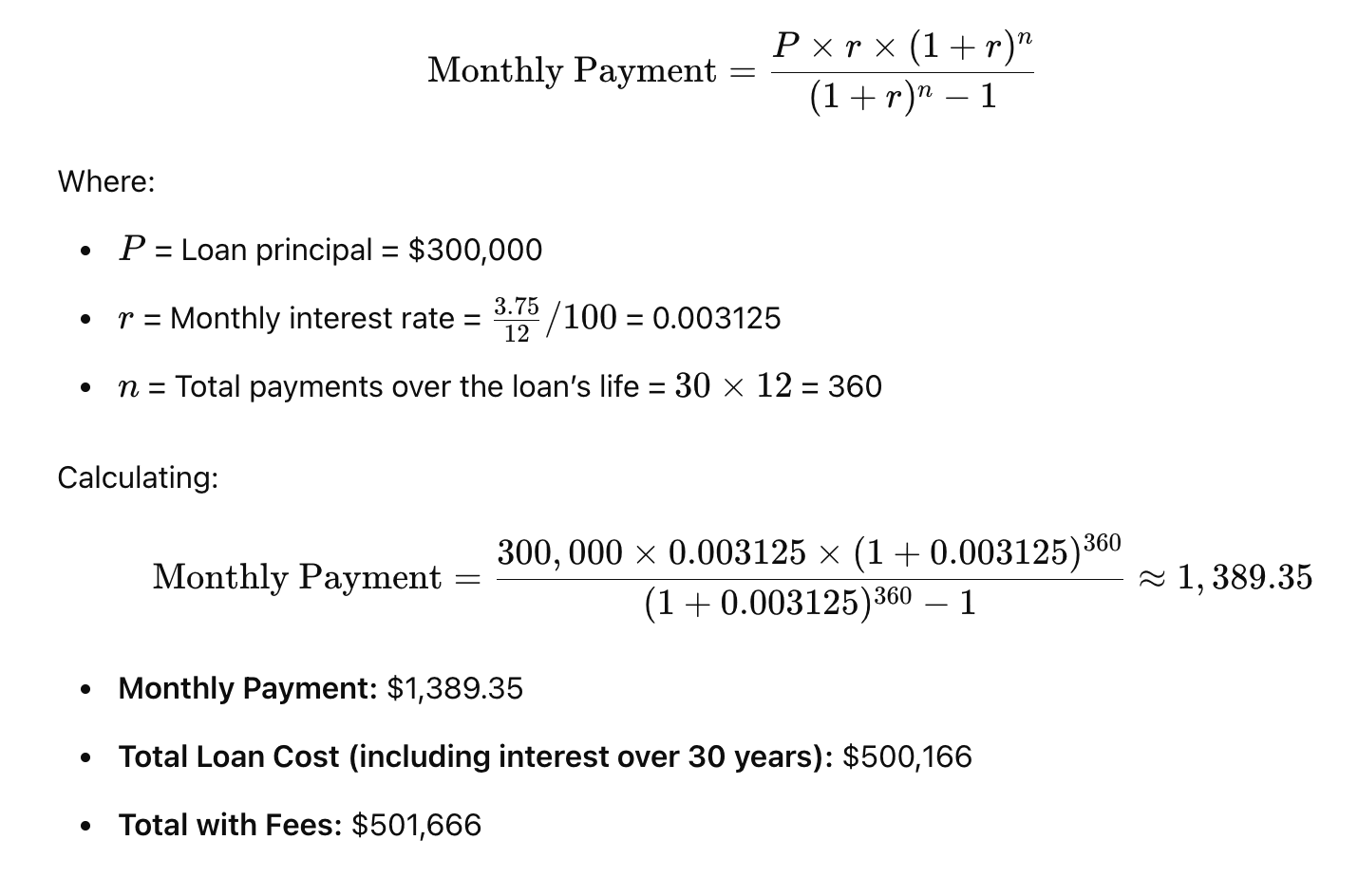
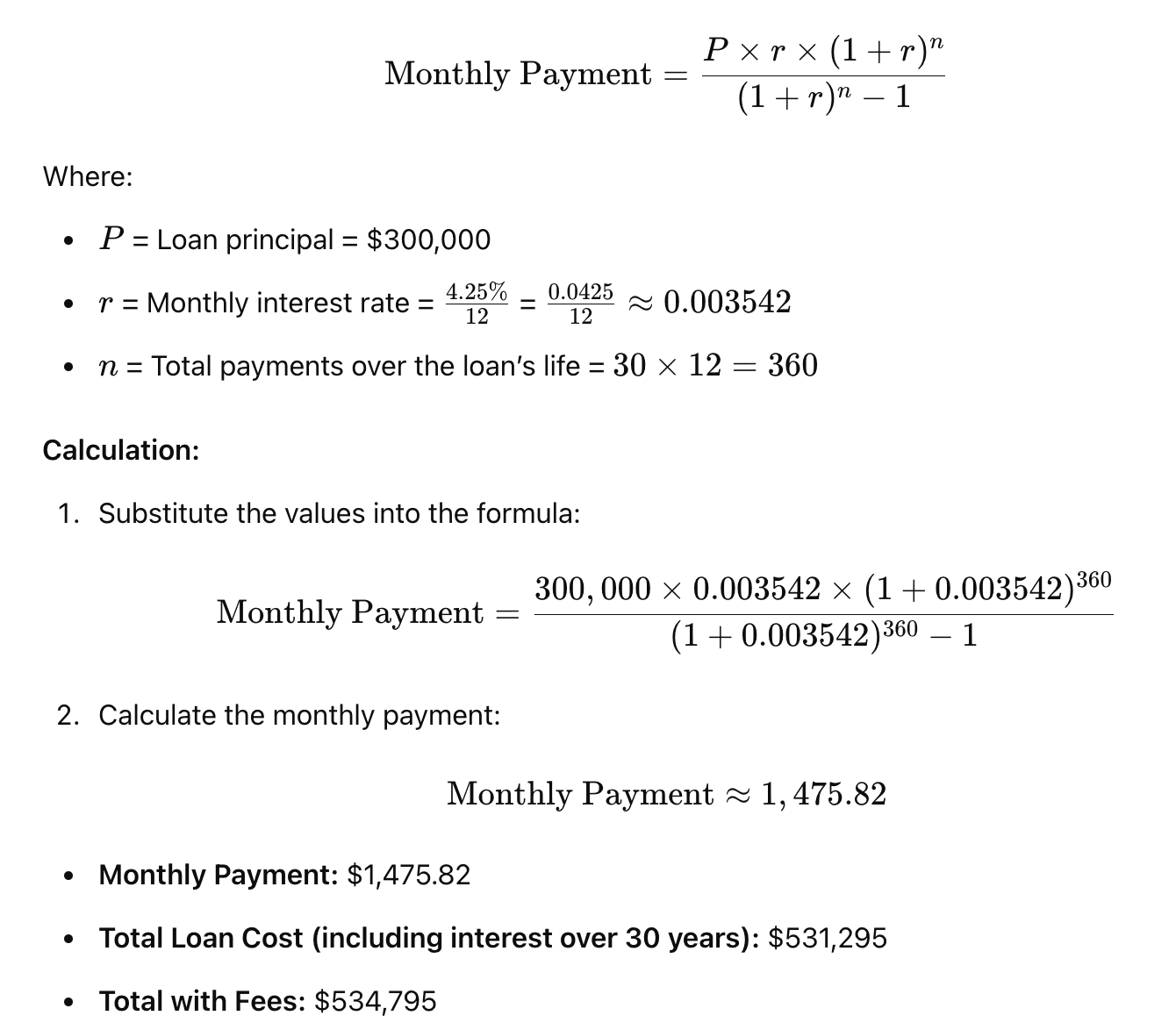
Let’s compare two real-life examples to illustrate the differences between a credit union and a bank mortgage. Imagine Tom, a first-time homebuyer, is looking for a $300,000 mortgage. He decides to explore both options: a credit union, where he finds an attractive rate of 3.75%, and a bank, offering a rate of 4.25%.
With the credit union, Tom benefits from a lower rate and reduced fees, which results in a manageable monthly payment and significant savings over time. On the other hand, if Tom chooses the bank, he faces a slightly higher rate and higher fees, leading to a bigger monthly payment and a larger total loan cost over 30 years.
In the following calculations, we’ll break down Tom’s monthly payments, total interest costs, and the impact of fees for both options, helping to highlight how choosing the right mortgage provider can affect long-term finances. This side-by-side comparison shows how credit unions and banks differ when it comes to mortgage affordability and overall cost.
Example 1: Credit union mortgage
Scenario:
- Borrower: First-time homebuyer with a moderate credit score (670)
- Mortgage Amount: $300,000
- Interest Rate: 3.75% (credit union range of 3.2% – 4.0%)
- Loan Term: 30 years
- Fees: $1,500 (lower origination and closing fees typical of credit unions)
Monthly Payment Calculation (Principal + Interest):
Example 2: Bank mortgage
Scenario:
- Borrower: Buyer with a strong credit score (740)
- Mortgage Amount: $300,000
- Interest Rate: 4.25% (bank range of 3.5% – 4.5%)
- Loan Term: 30 years
- Fees: $3,500 (higher origination and closing fees typical of banks)
Credit unions vs. banks pros and cons
| Credit Union | Bank |
|---|---|
Pros:
| Pros:
|
Cons:
| Cons:
|
Who might benefit from a credit union mortgage?
A credit union mortgage may be ideal for borrowers seeking lower fees, competitive rates, and a member-focused, community-oriented experience. Credit unions are not-for-profit and owned by their members, meaning they often prioritize their members’ financial well-being over profit. If you value personalized service, the opportunity to work closely with loan officers who consider individual circumstances, and potentially lower costs, a credit union could be the right fit. This approach is especially beneficial for first-time homebuyers or borrowers with specific financial needs who appreciate guidance from an institution that prioritizes customer welfare over shareholder returns.
Who might benefit from a bank mortgage?
For those needing access to a wide array of mortgage products, including specialized options like jumbo loans or FHA loans, a bank might be a better choice. Banks, especially large national ones, tend to offer diverse loan products that cater to borrowers with unique or high-value financing needs. Borrowers who prioritize digital conveniences or require the accessibility of a national branch network may also find a bank more suitable. Additionally, banks often have more robust resources to support larger loan amounts, making them well-equipped to handle the complexities of high-balance mortgages efficiently.
Customer service comparison
Credit unions typically emphasize a personal approach to customer service, offering members a supportive experience with an emphasis on financial guidance and flexibility during times of need. This member-focused model often means credit unions can accommodate unique financial situations and provide a more empathetic, hands-on approach to service. In contrast, banks—particularly larger ones—tend to have standardized procedures, automated systems, and centralized call centers, prioritizing efficiency. While banks may be less personal, they often provide faster digital services and offer 24/7 customer support, catering to borrowers who value accessibility and convenience.
Should you choose a credit union vs. bank mortgage?
When deciding between a credit union and a bank mortgage, consider the type of service and flexibility you need. Credit unions often focus on member-centered benefits and lower fees, while banks provide a broader range of loan options and digital conveniences. The table below breaks down who might benefit most from each option.
| Credit Union Mortgage | Bank Mortgage |
|---|---|
| Ideal for borrowers seeking lower fees, competitive interest rates, and a member-focused, community-oriented approach. | Best for borrowers needing a variety of mortgage options, including specialized loans like jumbo or FHA loans. |
| Appeals to those who value personalized service and may benefit from more flexible credit or income requirements. | Suited for borrowers who prefer the convenience of extensive branch networks and advanced digital tools for easy access and management. |
| Great choice for individuals with unique financial needs or moderate credit scores who would benefit from individualized support and guidance. | More accommodating for borrowers with higher loan amounts, as banks often have more resources to handle larger loans efficiently. |
FAQ
What is the main difference between a credit union and a bank?
Credit unions are not-for-profit institutions that serve their members and often offer lower fees and rates, while banks are for-profit organizations focused on shareholder returns, usually offering a broader range of products.
Can I get a mortgage from a credit union if I’m not a member?
Generally, no. Credit unions require membership, which may be based on factors like employment, residence, or associations. However, joining is often easy and worth it if you want their lower rates and member benefits.
Are credit unions safer than banks?
Both credit unions and banks are federally insured. The National Credit Union Administration (NCUA) insures credit unions, while the Federal Deposit Insurance Corporation (FDIC) insures banks, each providing protection up to $250,000 per account.
Do credit unions offer more flexible mortgage terms than banks?
Credit unions often provide greater flexibility for members, especially in unique financial situations. Banks, however, may follow stricter, standardized criteria, but larger banks may offer broader loan options.
Is it easier to qualify for a mortgage at a credit union or a bank?
It depends on the applicant’s financial profile. Credit unions may offer more flexibility with credit requirements for members, while banks might have stricter qualifications but can cater to high-credit borrowers with a wider variety of loan types.
Key takeaways
- Credit unions often provide lower interest rates and fees, making them a budget-friendly option for homebuyers.
- Banks typically offer a wider range of mortgage products, including options like FHA and jumbo loans.
- Credit unions are known for personalized, member-focused service, whereas banks may rely on standardized customer support.
- Choosing between a credit union and a bank for a mortgage depends on factors like product variety, customer service, and fee structures.
Share this post:
Add as a preferred source on Google
Table of Contents