Are Savings Accounts Safe During a Bank Failure?

Last updated 03/17/2026 by
Andrew Latham
Edited by
Andrew Latham
Summary:
A bank failure is an event where a financial institution becomes insolvent and is closed by regulators — but savings accounts at FDIC-insured banks remain fully protected up to $250,000 per depositor per bank.
The way deposits are protected depends on account type, ownership structure, and whether the bank carries federal insurance.
- Insured deposits: Automatically protected up to $250,000 — no action required from the depositor, and no insured funds have ever been lost in a U.S. bank failure.
- FDIC resolution: The agency typically restores depositor access within one business day, often by transferring accounts to an acquiring bank over a weekend.
- Uninsured balances: Funds above the coverage limit become unsecured creditor claims — recovery is partial and can take months or years.
- Online savings accounts: Carry identical FDIC protection to accounts at traditional banks, as long as the institution is an FDIC member.
When news breaks about a bank collapse, the instinct to worry about your savings is understandable.
But for the vast majority of depositors, the outcome of a bank failure is far less dramatic than the headlines suggest.
The mechanics of how that protection actually works — and where it has limits — are worth understanding before you need them.
Compare Savings Accounts
Compare savings accounts. Discover your best option.
Are savings accounts safe if a bank fails?
Yes. Savings accounts at FDIC-insured banks are protected up to $250,000 per depositor, per bank, per ownership category — automatically, with no enrollment required.
The Federal Deposit Insurance Corporation was created specifically to prevent the kind of depositor losses that wiped out ordinary Americans during the Great Depression.
The FDIC’s track record reinforces the guarantee: since 1933, the agency has resolved hundreds of bank failures without a single insured depositor losing money.
The protection is not a promise that banks won’t fail — they do — but a guarantee that when they do, your insured deposits come back to you intact.
Pro tip: FDIC protection applies to all standard savings account types — including high-yield savings accounts, money market deposit accounts, and CDs — as long as the account is held at an FDIC-insured institution. The account’s interest rate has no bearing on coverage.
What actually happens to your savings when a bank fails?
The FDIC typically resolves bank failures over a single weekend, with depositors regaining access to their funds by Monday morning.
The agency’s priority is speed: every hour depositors can’t reach their money creates panic that can destabilize other institutions.
The most common resolution is a purchase-and-assumption transaction — a healthy bank acquires the failed bank’s deposits and assets.
When this happens, you wake up Monday as a customer of the acquiring bank with the same balance and the same account number. Most depositors experience no disruption at all.
If no acquiring bank is found, the FDIC pays depositors directly from the Deposit Insurance Fund, typically issuing checks or electronic transfers within a few business days.
Either way, insured deposits move quickly.
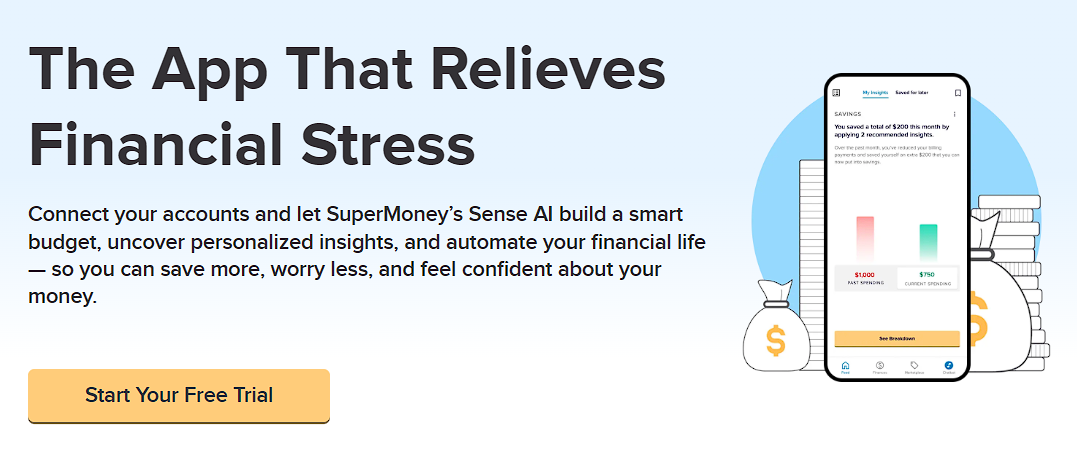 The SuperMoney app connects all your accounts in one place — so you can monitor balances across multiple banks and confirm you’re staying within FDIC limits at each institution.
How quickly can you access money after a bank failure?
For insured deposits, access is typically restored within one to two business days. When the FDIC arranges a purchase-and-assumption deal — the most common outcome — access is often seamless, with no gap at all.
The practical concern most depositors have is whether they’ll be able to make rent, pay bills, or transfer funds between accounts during the resolution period. In modern resolutions, this window is measured in hours, not weeks — the FDIC has the process down to a science after decades of practice.
Where delays can occur is with uninsured deposits above the $250,000 limit. Those funds enter a receivership process where recovery depends on how much the FDIC can recover from the failed bank’s assets — and that timeline is measured in months or years, not days.
Are online savings accounts as safe as traditional bank accounts?
Yes, provided the online bank is FDIC-insured. Savings and checking accounts at online banks carry identical FDIC protection to accounts at brick-and-mortar institutions — the coverage limit, ownership categories, and resolution process are the same regardless of whether a bank has physical branches.
The anxiety around online banks typically stems from unfamiliarity, not actual risk.
A high-yield savings account at an FDIC-insured online bank is, from a deposit safety standpoint, no different from an account at a regional bank down the street.
Before opening an account anywhere, confirm FDIC membership using the agency’s BankFind tool at banks.data.fdic.gov or look for the “Member FDIC” footer on the bank’s website. If the designation isn’t there, the protection isn’t either.
What if your savings balance exceeds $250,000?
Deposits above $250,000 at a single bank in a single ownership category are uninsured. In a failure, those funds become an unsecured creditor claim in receivership — you may recover a portion through asset liquidation, but it’s neither immediate nor guaranteed.
The practical solution is straightforward: spread large balances across multiple FDIC-insured banks, or use ownership categories to increase coverage at a single institution. A joint account doubles per-bank coverage to $500,000. Adding payable-on-death (POD) beneficiaries to a revocable trust account provides $250,000 per beneficiary, enabling up to $1.25 million in coverage at one bank. The full breakdown of how FDIC coverage limits work by ownership category explains each option in detail.
For most households, this isn’t a concern — the amount of liquid savings most people keep falls well below the threshold. But it matters for anyone holding proceeds from a home sale, a business sale, or an inheritance while deciding where to allocate the funds.
What about savings account interest during a bank failure?
Interest accrued up to the date of failure is included in insured deposits — it doesn’t disappear just because the bank closed. How interest is calculated and credited in savings accounts means any earned-but-not-yet-posted interest is typically still protected, as long as the total (principal + accrued interest) stays within the coverage limit.
Interest does stop accruing as of the failure date. If the FDIC arranges a quick acquisition, the acquiring bank may continue paying interest — but there’s no guarantee the acquiring bank matches the original rate.
Pro tip: If your bank is acquired after a failure, review the new institution’s savings rate before assuming it matches what you were earning. Acquired accounts sometimes revert to much lower rates, and you’re free to move your money once access is restored.
Warning signs a bank may be under stress
Most bank failures happen with little public warning, and by the time news reports appear, regulators have often already intervened. That said, a few signals are worth watching:
- Significantly above-market deposit rates: A bank offering rates far higher than competitors may be paying up for deposits to shore up liquidity — not always a red flag, but worth noting alongside other signals.
- News about regulatory action or capital shortfalls: Public enforcement actions from the FDIC, OCC, or Federal Reserve are disclosed and searchable.
- Delayed access to funds or system outages: Persistent technical problems can, in rare cases, indicate deeper operational stress.
For the vast majority of depositors, the practical response to any concern is simple: keep insured balances within the $250,000 limit and, if worried, diversify across a second FDIC-insured bank. There’s no cost to splitting deposits, and the withdrawal rules on savings accounts make moving funds straightforward in most circumstances.
Should you move your savings if you’re worried about your bank?
If your balance is below $250,000 at an FDIC-insured bank, moving your money in response to bank-failure news is unlikely to improve your safety — your funds are already protected. The more pressing risk is a hasty move to a lower-rate account, losing the interest your savings would have earned.
If your balance exceeds $250,000, distributing the excess to a second FDIC-insured bank or restructuring into additional ownership categories is a reasonable step regardless of any specific bank concerns — it’s standard practice, not an emergency measure. Savings accounts can’t always be used as freely as checking accounts, so plan the timing of any large transfer before initiating it.
For most people building or maintaining an emergency fund, keeping that money in an FDIC-insured savings account remains one of the safest places it can be — regardless of what’s in the financial news.
Key takeaways
- Savings accounts at FDIC-insured banks are safe during a bank failure — deposits up to $250,000 per depositor per bank are fully protected by a federal guarantee.
- The FDIC typically resolves failures over a weekend, with depositors regaining access by Monday morning through a purchase-and-assumption deal or direct payout.
- Online savings accounts carry identical FDIC protection to accounts at traditional banks — coverage depends on FDIC membership, not whether the bank has physical branches.
- Balances above $250,000 are uninsured and become unsecured creditor claims in receivership. Distributing funds across banks or using additional ownership categories extends protection.
- Interest accrued up to the failure date is included in insured deposits. Interest stops accruing after the closure date, and the acquiring bank’s rate may differ from the original.
Track balances across all your accounts and set savings goals with the SuperMoney app — so you always know exactly how much you have at each institution.Frequently asked questions
Are savings accounts FDIC insured?
Yes, savings accounts at FDIC-member banks are insured up to $250,000 per depositor per bank.
The coverage is automatic — no enrollment required. You can verify your bank’s FDIC status at banks.data.fdic.gov or by looking for the “Member FDIC” designation on your bank’s website.
What happens to my savings if my bank closes?
If your bank is FDIC-insured and your balance is within the coverage limit, your insured deposits are protected.
The FDIC typically arranges a transfer to an acquiring bank over a weekend, restoring access within one to two business days. If no acquiring bank is found, the FDIC pays depositors directly. In either case, no insured depositor has ever lost money in an FDIC bank failure.
Is your money safe in a savings account during a recession?
Yes. FDIC insurance protects savings accounts regardless of broader economic conditions — a recession doesn’t affect the guarantee.
The risk is bank insolvency, not economic downturn generally, and FDIC coverage applies in either scenario. Interest rates on savings accounts may fall during a recession, but the principal is protected.
Can a bank refuse to give you your money during a bank failure?
No. Once the FDIC takes over, it acts as receiver and is legally required to pay insured deposits. The FDIC has legal authority to immediately pay out insured funds — access is typically restored within one business day. The only scenario where funds might not be returned in full is if your balance exceeds the $250,000 insured limit.
Are high-yield savings accounts safe if a bank fails?
Yes, as long as the bank is FDIC-insured. High-yield savings accounts at online banks carry the same deposit protection as any other savings account — up to $250,000 per depositor per bank. The higher interest rate doesn’t affect the coverage in any way.
How do I know if my bank is in financial trouble?
Signs of bank stress include above-market deposit rates used to attract liquidity, public regulatory enforcement actions from the FDIC or OCC, and news about capital shortfalls. The FDIC publishes enforcement actions publicly at fdic.gov.
For most depositors with insured balances, the safeguard is already in place — monitoring is reasonable but moving money isn’t necessary if you’re within the coverage limit.
Andrew is the Content Director for SuperMoney, a Certified Financial Planner®, and a Certified Personal Finance Counselor. He loves to geek out on financial data and translate it into actionable insights everyone can understand. His work is often cited by major publications and institutions, such as Forbes, U.S. News, Fox Business, SFGate, Realtor, Deloitte, and Business Insider.
Share this post:
Add as a preferred source on Google
Table of Contents