Private Lenders for Personal Loans: What You Need to Know

Last updated 10/01/2024 by
Benjamin Locke
Summary:
Private lenders for personal loans can provide flexible loan options for those who may not qualify for traditional bank loans. This article explores what private lenders are, the pros and cons of borrowing from them, the eligibility requirements, and alternatives. Understanding these options will help you make an informed decision when seeking a personal loan.
Private lenders can be a great alternative for personal loans, especially if you’re looking for quicker approvals or more flexible terms than traditional banks. These lenders often focus more on your current financial situation than your credit history, making them appealing to those with less-than-perfect credit. A friend of ours once needed a loan fast for an emergency car repair, and a private lender was able to help him out within a day—something a bank couldn’t do. While they can offer convenience and speed, it’s still important to compare rates and terms to ensure you’re getting the best deal.
Get Competing Personal Loan Offers In Minutes
Compare rates from multiple vetted lenders. Discover your lowest eligible rate.
It's quick, free and won’t hurt your credit score
What are private lenders for personal loans?
Private lenders are non-bank entities that offer personal loans. These lenders can include peer-to-peer platforms, online lending companies, or private investors. Unlike traditional banks, private lenders may have more flexible approval criteria, making them an option for individuals with lower credit scores or unique financial situations.
How do private lenders work?
Private lenders typically offer unsecured personal loans, meaning they do not require collateral. Borrowers apply online, and if approved, the lender provides a lump sum of money, which is repaid over time with interest. Loan terms, including interest rates and repayment periods, depend on the borrower’s financial profile and the lender’s specific guidelines.
| Loan Feature | Description |
|---|---|
| Loan amounts | $1,000 to $100,000 |
| Interest rates | 5% to 36% |
| Repayment terms | 1 to 7 years |
| Approval time | As fast as 24 hours |
Who can benefit from private lenders?
Private lenders may be a good option for several types of individuals who face difficulties obtaining loans from traditional banks or want more flexibility. Below are key groups that could benefit from private lending options:
- Individuals with lower credit scores Many traditional banks have strict credit score requirements, often requiring a minimum score of 650 or higher for loan approval. If your credit score falls below this threshold, you may struggle to qualify for a bank loan. Private lenders tend to have more flexible credit criteria, making them a viable option for people with poor or fair credit scores (generally 580 or above). While the interest rates may be higher due to the increased risk, private lenders still offer access to funding when traditional options aren’t available.
- People who need quick access to funds One of the key advantages of private lenders is their fast approval process. If you’re in a situation where you need funds immediately—whether to cover emergency expenses, medical bills, or unexpected repairs—private lenders can be a lifeline. Many offer approval and funding within 24 to 48 hours, which is considerably faster than the often lengthy approval process of traditional banks. This speed can make a crucial difference when time is of the essence.
- Borrowers looking for flexible loan terms Private lenders offer more flexibility in loan terms compared to banks. Traditional loans often come with rigid repayment structures and predetermined loan amounts. Private lenders, on the other hand, frequently offer a wide range of loan amounts and repayment terms. This flexibility allows you to tailor the loan to your specific financial needs, whether you require a small, short-term loan or a larger loan with extended repayment periods.
- Individuals who want to avoid providing collateral Many traditional lenders require collateral (such as a home or car) to secure a loan, especially if the borrower has a lower credit score. This can be a significant barrier for those who do not have substantial assets. Private lenders typically offer unsecured personal loans, meaning no collateral is required. This makes private loans more accessible to individuals who may not have valuable assets to pledge but still need to borrow money.
Expert Insight
Here is some advice from Elizabeth Alligood, Founder & CEO of Elizabeth Alligood and Associates ”When exploring alternative financing methods (non-traditional loan products), there are several options to consider.
Interest-only loan products and asset-only loans may be suitable for business owners with frequent deposits. Another less traditional option is seller-financing, in which the seller acts as the lender, and allows the borrower to make monthly payments, potentially offering more flexible terms.
Additionally, various lease-to-own down payment assistance programs and hard money loans which may be more appropriate for those looking to explore getting into the investment side of real estate. Since each situation is going to be different, it is crucial to explore all available options. It is recommended to create a plan and strategize with a tax professional to select the best loan product for you and your family.”
Interest-only loan products and asset-only loans may be suitable for business owners with frequent deposits. Another less traditional option is seller-financing, in which the seller acts as the lender, and allows the borrower to make monthly payments, potentially offering more flexible terms.
Additionally, various lease-to-own down payment assistance programs and hard money loans which may be more appropriate for those looking to explore getting into the investment side of real estate. Since each situation is going to be different, it is crucial to explore all available options. It is recommended to create a plan and strategize with a tax professional to select the best loan product for you and your family.”
Private Lenders vs. Traditional Lenders: Which Option Is Right for You?
When it comes to securing a personal loan, borrowers have more options today than ever before. The choice often comes down to deciding between private lenders and traditional financial institutions, like banks or credit unions. Each lender type offers distinct advantages and disadvantages based on factors such as approval speed, credit requirements, loan terms, and overall costs. Whether you’re looking for quick access to cash or favorable loan terms, understanding the key differences between private and traditional lenders is crucial to making an informed decision.
Real-Life Scenario: Comparing Two Borrowers
Let’s examine two real-life scenarios to see how the experiences of a borrower working with a private lender differ from a borrower working with a traditional lender.
Scenario 1: Sarah’s Need for Quick Funds
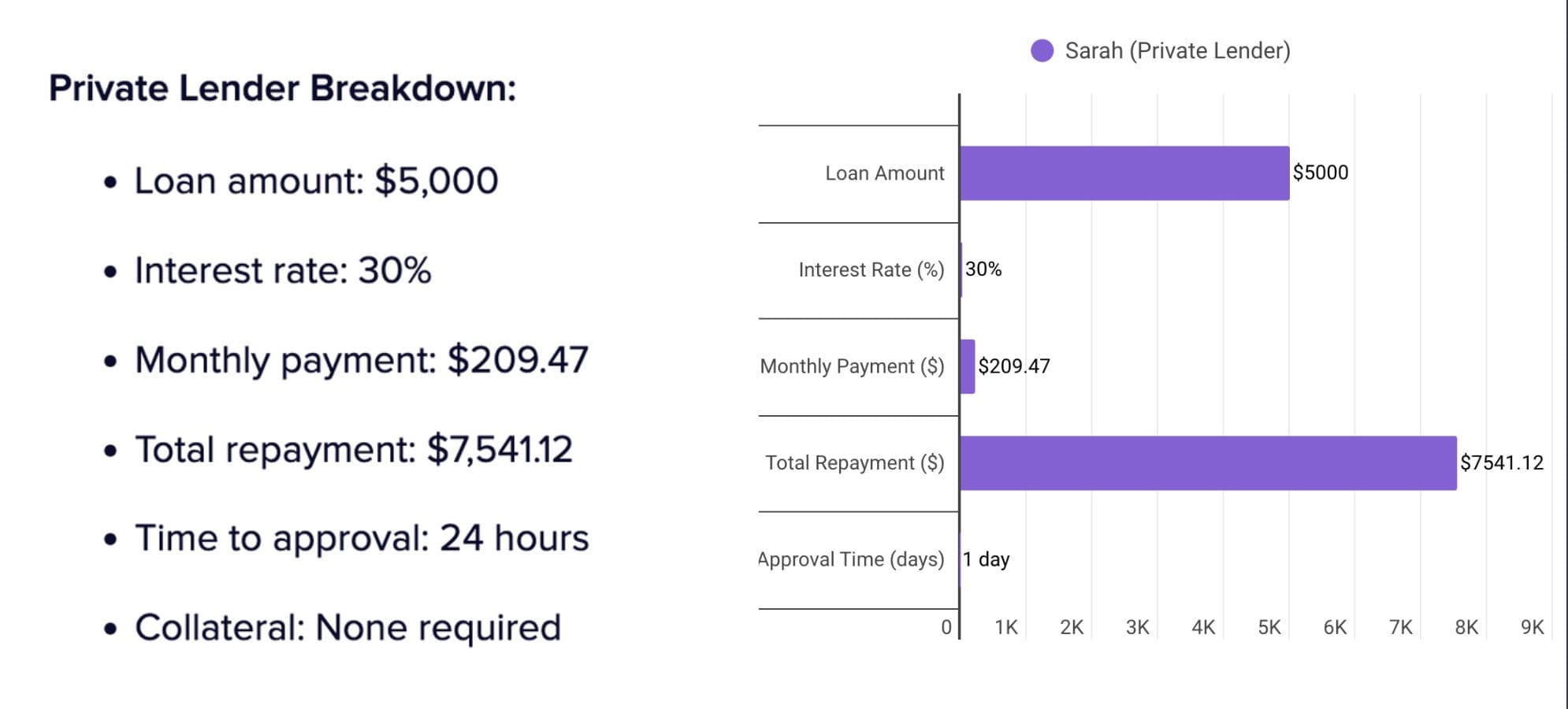
Sarah, a freelance graphic designer, faced an unexpected medical bill and needed $5,000 to cover her expenses immediately. Her credit score was 610, making it difficult to secure a loan through her local bank. Pressed for time, Sarah decided to apply with a private lender. Within 24 hours of submitting her online application, she was approved for a loan with a 30% interest rate over a 3-year term. The funds were deposited into her account the next day.
While the interest rate was high, Sarah was grateful for the speed of the process. Her urgent need for funds outweighed the cost of borrowing, and she managed to pay her medical bill on time.
Scenario 2: John’s Patience Pays Off
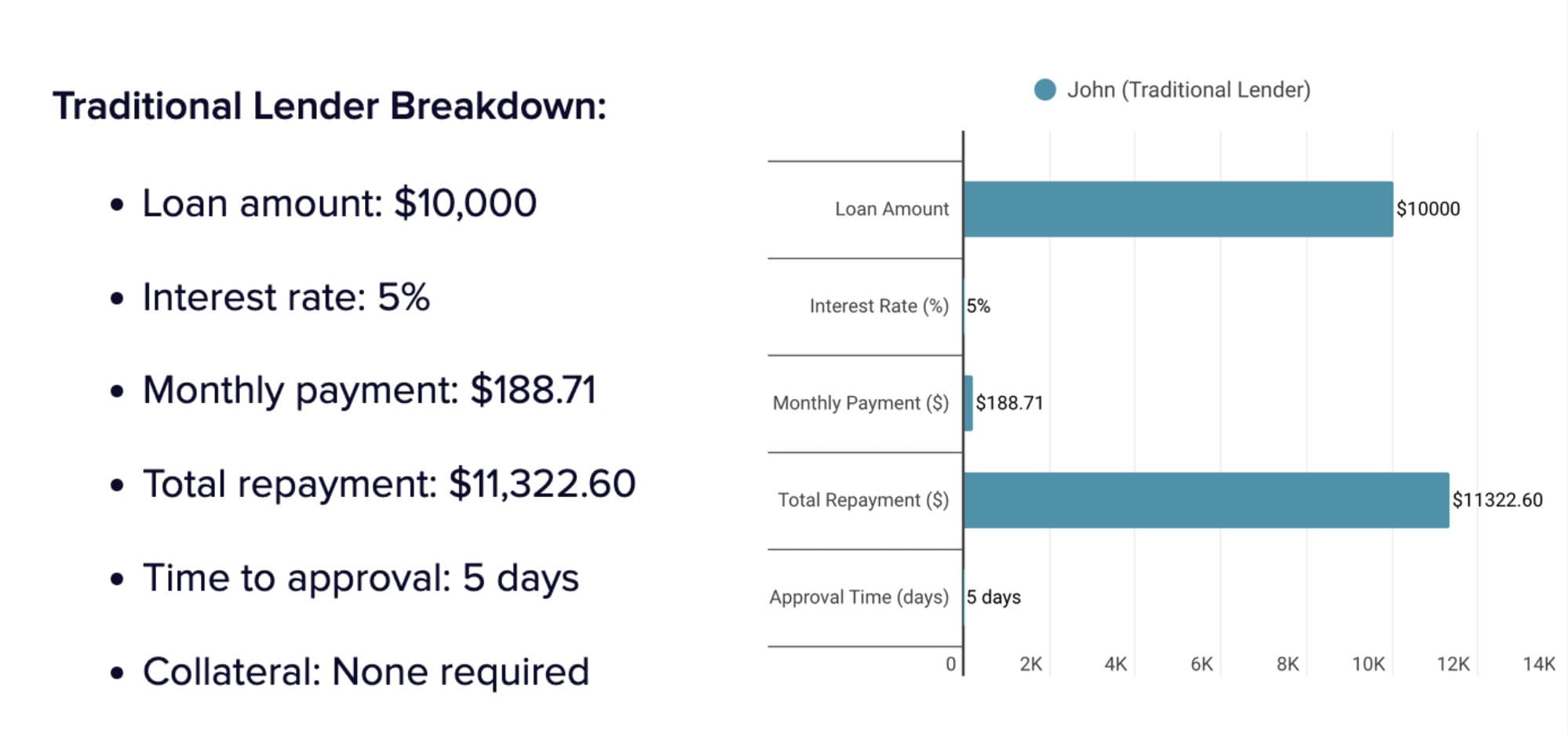
John, a marketing manager with a credit score of 750, wanted to take out a $10,000 personal loan to renovate his home. Instead of turning to a private lender, he applied for a loan with his local bank. John wasn’t in a rush and could wait for the approval process. After submitting the required paperwork and waiting five business days, John was approved for a loan with a 5% interest rate over a 5-year term. The bank required no collateral, and the loan had a favorable monthly payment.
Comparing the Two Experiences:
In Sarah’s case, speed was the most critical factor. Her lower credit score meant she couldn’t get a loan quickly from a traditional bank, but a private lender was able to provide fast cash despite the high interest rate. In contrast, John’s excellent credit score and lack of urgency allowed him to take advantage of lower interest rates from a traditional lender, saving him a substantial amount of money over time.
Pros and cons of borrowing from private lenders
What to look out for when borrowing from private lenders
When borrowing from private lenders, it’s crucial to take precautions to ensure a fair and transparent agreement. Unlike traditional banks, private lenders may have fewer regulations, so it’s important to thoroughly vet the lender. Start by researching their reputation, looking for any disputes or complaints from previous borrowers. Choose a lender with a solid track record of honesty and good practices.
Ensure the lender provides clear terms, outlining interest rates, repayment schedules, fees, and penalties. Watch for hidden charges or vague language, and always ask questions if something is unclear. Interest rates are key; private lenders can offer flexible rates, but they can also be higher for borrowers with lower credit scores. Compare rates with other lenders to avoid being overcharged.
Lastly, check online reviews and testimonials. Consistent feedback about customer service and loan terms can help guide your decision. If you find multiple negative reviews, it may be a sign to reconsider that lender.
Alternatives to private lenders
When considering alternatives to private lenders, it’s essential to explore various options that may provide better loan terms, lower interest rates, or more stability. Private lenders can be a great choice for borrowers with unique financial circumstances, but they aren’t the only option. Depending on your needs and financial profile, traditional financial institutions or other lending platforms may offer more favorable terms. Below are several alternatives to private lending, each with its own benefits and drawbacks.
1. Traditional bank loans:
Banks offer secure loans with lower interest rates for borrowers with good credit. The approval process can be slower and more difficult, but rates and terms are often better than private lenders.
Banks offer secure loans with lower interest rates for borrowers with good credit. The approval process can be slower and more difficult, but rates and terms are often better than private lenders.
2. Credit unions:
Member-owned, nonprofit institutions that often provide lower interest rates and fees compared to banks. They may have more flexible terms and personalized service but require membership.
Member-owned, nonprofit institutions that often provide lower interest rates and fees compared to banks. They may have more flexible terms and personalized service but require membership.
3. Peer-to-peer lending platforms:
Online platforms that connect borrowers directly with individual investors. These offer flexible terms and quick approval but rates vary widely based on credit profiles.
Online platforms that connect borrowers directly with individual investors. These offer flexible terms and quick approval but rates vary widely based on credit profiles.
4. Secured loans:
Collateral-backed loans from banks or credit unions. They offer lower interest rates, but the risk of losing the collateral (like a car or home) exists if you default.
Collateral-backed loans from banks or credit unions. They offer lower interest rates, but the risk of losing the collateral (like a car or home) exists if you default.
5. Personal lines of credit:
A revolving credit line available from banks or credit unions. Borrowers only pay interest on the amount used. Good for flexible borrowing but requires strong credit.
A revolving credit line available from banks or credit unions. Borrowers only pay interest on the amount used. Good for flexible borrowing but requires strong credit.
6. Home equity loans or HELOC:
Borrowers use their home’s equity as collateral for a loan or line of credit. These come with low-interest rates, but your home is at risk if you default.
Borrowers use their home’s equity as collateral for a loan or line of credit. These come with low-interest rates, but your home is at risk if you default.
7. Government programs and nonprofits:
Federal, state, and nonprofit organizations provide low-interest loans or financial aid for those in need, often with fewer credit requirements than private lenders.
Federal, state, and nonprofit organizations provide low-interest loans or financial aid for those in need, often with fewer credit requirements than private lenders.
8. Employer-based loans:
Some employers offer low-interest or interest-free loans that are repaid through payroll deductions. Loan amounts may be limited but terms are favorable.
Some employers offer low-interest or interest-free loans that are repaid through payroll deductions. Loan amounts may be limited but terms are favorable.
FAQ
Can I negotiate the terms of a personal loan with a private lender?
Yes, many private lenders are more flexible than traditional banks and may allow borrowers to negotiate terms such as interest rates, repayment schedules, or fees. It’s important to ask questions and ensure all terms are clearly stated in the loan agreement.
Will applying for a personal loan from a private lender affect my credit score?
Yes, most private lenders will perform a hard credit inquiry when you apply for a loan, which can temporarily lower your credit score. However, some lenders offer pre-qualification with a soft inquiry that doesn’t affect your credit score.
What happens if I miss a payment with a private lender?
Missing a payment can result in late fees, higher interest rates, and a negative impact on your credit score. It’s crucial to contact your lender immediately to explore options such as extending the due date or adjusting your payment plan.
Can I repay my private loan early without penalties?
Some private lenders may charge prepayment penalties for early repayment. It’s essential to check the loan agreement for any such terms and confirm with the lender before paying off the loan early.
Are private loans better for short-term or long-term borrowing?
Private loans are generally better suited for short-term borrowing due to their higher interest rates. If you need a long-term loan, exploring options with traditional banks or credit unions might provide better rates and terms.
Key takeaways
- Private lenders offer flexible loans with faster approval times but may come with higher interest rates, especially for borrowers with lower credit scores.
- Individuals seeking fast cash or those with lower credit scores can benefit from private lending, while traditional lenders offer better rates for well-qualified borrowers.
- Borrowers should carefully review the lender’s terms and reputation, ensuring transparency to avoid hidden fees or predatory practices.
- Exploring alternatives such as credit unions, secured loans, or peer-to-peer platforms can offer more favorable loan terms for those who qualify.
Share this post:
Add as a preferred source on Google
Table of Contents