
How to Pay Off Credit Card Debt: 4 Strategies That Work

Last updated 03/23/2026 by
Andrew LathamEdited by
Ante MazalinSummary:
Paying off credit card debt requires picking the right strategy for your situation — and understanding why the minimum payment is designed to keep you in debt. The math at 22%+ APR is unforgiving.
A clear method and a realistic timeline are what separate people who pay it off from people who don’t.
- The avalanche method: Pay minimums on all cards, then put every extra dollar toward the highest-APR card first. Minimizes total interest paid. Best for people motivated by math over momentum.
- The snowball method: Pay minimums on all cards, then attack the smallest balance first regardless of rate. Builds psychological wins. Costs more in interest than the avalanche, but works better for people who need early motivation to stay on track.
- Balance transfers: Move high-rate debt to a 0% intro APR card. Freezes interest for 12–21 months. Requires a clear payoff plan — when the promo ends, standard APR applies to whatever remains.
- Debt consolidation loans: Replace card debt with a personal loan at a fixed rate and fixed term. More predictable than a balance transfer; better for larger balances or lower credit scores.
- The minimum payment trap: On a $5,000 balance at 22.30% APR, making only the minimum payment costs over $4,800 in interest and takes 15+ years to clear.
Americans paid over $160 billion in credit card interest in 2024, according to the SuperMoney credit card industry study — most of it on balances carried at an average APR of 22.30%.
At that rate, carrying a balance isn’t a minor inconvenience. It’s a structural drag that compounds against you every month.
End Your Credit Card Debt Problems
Get a free consultation from a leading credit card debt expert.
It's quick, easy and won’t cost you anything.
Why the Minimum Payment Keeps You in Debt
Minimum payments are typically calculated as 1–2% of your balance plus interest — a number small enough to feel manageable and large enough to ensure you carry a balance for years.
| Balance | APR | Min. Payment Only — Time to Pay Off | Min. Payment Only — Total Interest | Fixed $200/Mo — Time to Pay Off | Fixed $200/Mo — Total Interest |
|---|---|---|---|---|---|
| $2,000 | 22.30% | ~10 years | ~$1,600 | 11 months | ~$195 |
| $5,000 | 22.30% | ~15 years | ~$4,800 | 2 years 4 months | ~$530 |
| $10,000 | 22.30% | ~18+ years | ~$10,000+ | 5 years 3 months | ~$1,250 |
The difference between minimum payments and a fixed payment isn’t marginal — it’s years of your life and thousands of dollars. For a full breakdown of how interest compounds daily against your balance, see how credit card interest works.
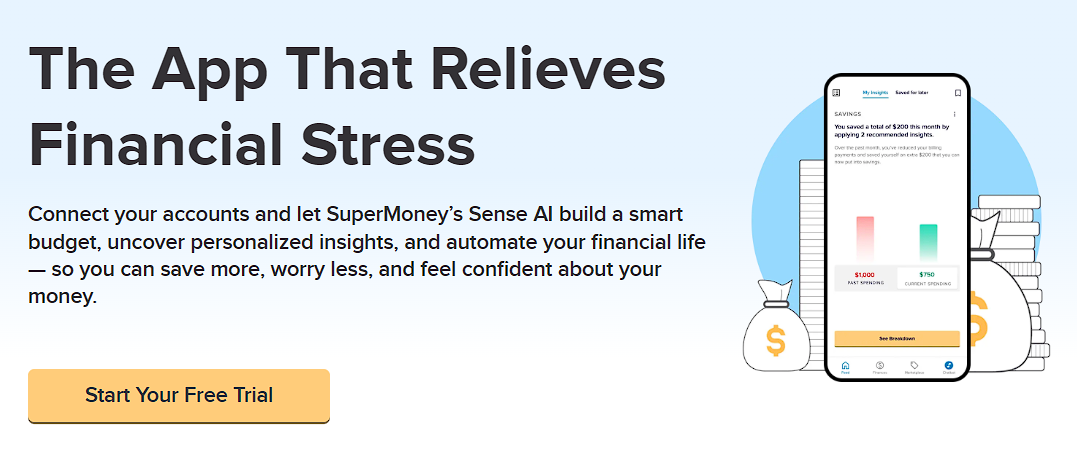 The SuperMoney app compares balance transfer cards and personal loan rates side by side — so you can find the lowest-cost path to paying off your debt before committing to a strategy.
The Four Main Payoff Strategies
| Method | How It Works | Best For | Main Tradeoff |
|---|---|---|---|
| Avalanche | Pay minimums everywhere; extra dollars go to highest-APR card first | Minimizing total interest paid | Slowest emotional payoff — the high-rate card may also be a large balance |
| Snowball | Pay minimums everywhere; extra dollars go to smallest balance first | Building early momentum | Costs more in total interest if high-rate cards carry large balances |
| Balance transfer | Move debt to a 0% intro APR card; pay it down during the promo window | Large balances with a realistic payoff plan within 12–21 months | Requires good credit (FICO 670+); 3–5% transfer fee upfront; standard APR applies after promo |
| Consolidation loan | Replace card debt with a fixed-rate personal loan; one payment, one rate | Larger balances, longer timelines, or lower credit scores that don’t qualify for 0% offers | Fixed payment; can’t re-consolidate easily; doesn’t remove the empty cards from your wallet |
Avalanche Method: Pay Less Interest Overall
The avalanche method is mathematically optimal — you always attack the highest-rate debt first, which reduces the rate at which interest compounds against you.
How to execute it: List every card with its balance and APR. Pay the minimum on every card every month. Take any extra amount — even $50 — and apply it entirely to the card with the highest APR. When that card hits zero, roll its full payment (minimum + extra) to the next-highest APR card.
Pro Tip
The avalanche method works best when you automate it. Set autopay to the minimum on every card so you never miss a payment. Then set a separate manual payment — or an additional autopay — to the target card for whatever extra amount you’ve committed. This removes the monthly decision of where the extra money goes and prevents “I’ll just pay a little less this month” from derailing the plan.
Snowball Method: Build Momentum First
The snowball method sacrifices some interest savings for psychological wins — and research from Northwestern University’s Kellogg School of Management suggests that for many people, the motivation from early wins produces better long-term results than the mathematically superior strategy they abandon.
How to execute it: List every card by balance, smallest to largest (ignore APR). Pay the minimum on every card. Throw everything extra at the smallest balance. When it’s gone, redirect its full payment — what you were paying on it — to the next smallest balance. Repeat.
Where it costs you: If your smallest balance is also your lowest-rate card, you’re leaving a higher-rate balance compounding in the background longer than necessary. On a $3,000 card at 26% APR sitting behind a $500 card at 14%, the extra interest adds up over months.
Read our guide on Snowball vs. Avalanche Method
Balance Transfer Strategy
A balance transfer moves high-rate debt to a card offering a 0% introductory APR — pausing interest entirely for the promo period so every payment goes directly to principal. For the full mechanics, transfer fees, and credit score implications, see how balance transfers work.
The math: A 3% transfer fee on a $5,000 balance costs $150. At 22.30% APR, that same $5,000 accrues roughly $93/month in interest. The transfer fee pays for itself in less than two months — and if you pay off the balance in 18 months, you save over $1,500 compared to carrying the balance at standard APR.
The hard requirement: Divide the transferred balance by the number of months in the promo period. That’s your monthly payment target. Paying the minimum during a 0% period will leave a large residual balance when the rate resets — often to 22%+. Set the target payment as a fixed autopay before you use the card for anything else.
Pro Tip
New purchases on a balance transfer card are one of the most expensive mistakes in consumer credit. Many cards don’t extend the 0% rate to new purchases — new charges accrue interest at the standard APR immediately.
Worse, on cards that apply payments to the 0% balance first, your new high-rate purchases sit growing while you pay down the transferred amount. Once you’ve transferred a balance, don’t use the card for anything new until the transferred balance is zero. Check the card agreement — it specifies exactly how payments are allocated.
Debt Consolidation Loan
A personal loan used to pay off multiple card balances gives you one fixed monthly payment at a fixed interest rate — typically 10–20% for borrowers with good credit, compared to card APRs of 22%+.
Advantages over a balance transfer: No promo deadline. Fixed payoff date. Works for larger balances where no single balance transfer card would cover the full amount. Available to borrowers with FICO scores as low as 580 (though at higher rates). For a full comparison of loan-based vs. card-based payoff, see how balance transfers work.
The risk: Consolidation zeroes out the cards — and the cards are still open. Without a plan to stop using them, many people accumulate new balances on top of the loan payment. A consolidation loan solves the debt; it doesn’t solve the spending pattern that created it.
How to Pay Off Credit Card Debt
Step by Step
- List every card with its balance, APR, and minimum payment. You can’t run the math until you know the full picture. Log into each account and write down: current balance, interest rate (APR), minimum payment, and whether a promotional rate is in effect and when it ends.
- Calculate your actual monthly interest charges. Multiply each card’s balance by its daily periodic rate (APR ÷ 365 × 30) to see what you’re paying in interest each month with zero new spending. This number is what you’re working against. For the exact formula, see annual percentage rate (APR).
- Cover every minimum payment automatically. Set autopay on every card to at least the minimum before you allocate any extra funds. A single missed payment does more damage than months of interest savings — and triggers penalty APR on many cards. See minimum credit card payments for how minimums are calculated.
- Choose your method: avalanche, snowball, balance transfer, or consolidation loan. If you have good credit and can pay off the balance within 12–21 months, a balance transfer is almost always the highest-leverage move. If not, avalanche saves the most money; snowball builds the most momentum. Run the numbers on each option before committing.
- Find your extra payment amount and protect it. Whatever you commit to paying above minimums, automate it or treat it like a fixed expense. The biggest threat to any payoff plan isn’t math — it’s the month you “borrow” from the extra payment for something else and never fully restore it.
- Stop adding new balances to cards you’re paying off. Paying down a card while continuing to charge it is running uphill. If you need to use credit while paying off debt, use a debit card or the card with the lowest APR for essential purchases only — and pay those off immediately each cycle. Understanding your credit card grace period is key here — purchases paid in full each cycle accrue no interest.
- Celebrate eliminations — then roll the payment forward. When a card hits zero, don’t absorb its payment back into your budget. Add the full amount you were paying on it to the next target card. This compounding payment effect — what the snowball method calls the “snowball roll” — is what accelerates the endgame.
After You Pay Off the Balance: Protecting the Progress
Paying off credit card debt solves the immediate financial problem. It doesn’t automatically change the behaviors that created it — and it opens a new risk: empty cards with zero balances are psychologically easier to charge.
- Keep the cards open. Closing them removes their credit limits from your available credit and raises your utilization ratio. An account with a zero balance is an asset on your credit report.
- Set a single small recurring charge on each paid-off card. One streaming subscription paid automatically each month keeps the card active without accumulation risk. Issuers typically close accounts after 12–24 months of inactivity.
- Build a cash buffer equal to 1–2 months of expenses. Most credit card debt starts as emergency spending with no alternative. A liquid buffer means the next emergency doesn’t become the next balance.
- Know what triggered the debt. Whether it was income disruption, a specific category of overspending, or absence of a budget — the payoff strategy doesn’t matter unless the underlying cause is addressed.
Key takeaways
- At 22.30% APR, a $5,000 balance paid with minimum payments costs over $4,800 in interest and takes 15+ years to clear. Switching to a fixed $200/month payment reduces the cost to under $550 and pays it off in under 2.5 years.
- The avalanche method (highest APR first) minimizes total interest. The snowball method (smallest balance first) builds momentum. Both work — the best one is the one you’ll stick with.
- A balance transfer to a 0% intro APR card is the highest-leverage tool for most cardholders who can clear the balance within the promo window. The 3–5% transfer fee pays for itself in under two months at standard APRs.
- Always cover every minimum payment automatically before allocating extra funds. One missed payment damages your credit more than months of interest savings recovers.
- After payoff, keep accounts open with a small recurring charge. Closing paid-off cards raises your utilization ratio and removes the history they’ve built.
Frequently Asked Questions
What is the fastest way to pay off credit card debt?
The fastest way is to redirect every available dollar to the highest-APR balance (avalanche method) or use a 0% balance transfer card and pay the full transferred amount before the promotional period ends.
Speed is a function of how much extra you can put toward the debt each month — method matters less than payment size.
Should I pay off credit card debt or save money?
If your card APR is 22%+, paying down that balance is the equivalent of a guaranteed 22% return on every dollar — a rate no savings account or investment can match at comparable risk. The exception: if you have no emergency fund, accumulate 1–2 months of expenses in cash first. Without a buffer, the next unexpected expense goes back on the card, undoing the payoff.
Does paying off credit card debt improve your credit score?
Yes — and quickly. Credit utilization accounts for 30% of your FICO score and updates every billing cycle. Paying down a $5,000 balance on a $6,000-limit card from 83% utilization to 10% can produce a score improvement visible within 30–60 days of the balance posting to the bureaus.
Is a balance transfer or a personal loan better for paying off credit card debt?
A balance transfer is better if you can pay off the balance within the promo window (12–21 months) and qualify for a 0% offer — the total cost is lower. A personal loan is better for larger balances, longer timelines, or if your credit score doesn’t qualify for competitive 0% offers. For the full comparison, see how balance transfers work.
Can I negotiate a lower interest rate on my credit card?
Yes — and it’s underused. Call the number on the back of your card and ask directly for a rate reduction. Issuers are more likely to agree if you’ve been a customer for over a year, have a history of on-time payments, and can cite a competing offer. A reduction from 24% to 20% on a $5,000 balance saves roughly $200 in annual interest with no application and no hard inquiry.
Compare 0% intro APR balance transfer cards on SuperMoney — filter by promo length, transfer fee, and credit score requirement to find the offer that fits your payoff timeline.
The SuperMoney app compares balance transfer cards and debt consolidation loans side by side — so you can see total interest cost under each option before deciding which path to take.Andrew is the Content Director for SuperMoney, a Certified Financial Planner®, and a Certified Personal Finance Counselor. He loves to geek out on financial data and translate it into actionable insights everyone can understand. His work is often cited by major publications and institutions, such as Forbes, U.S. News, Fox Business, SFGate, Realtor, Deloitte, and Business Insider.
Share this post:
Table of Contents