
The Best Money Saving Challenges to Try in 2026 (Ranked by What You’ll Actually Save)

Last updated 04/15/2026 by
Andrew Latham
Edited by
Andrew Latham
Summary:
A savings challenge turns building wealth into a structured game with clear rules, a fixed timeline, and a specific dollar target. The 100 envelope challenge saves $5,050 in about three months, the 52-week challenge builds $1,378 over a year, and a 30-day no-spend challenge can free up $300 to $750 without earning a dime more.
Most people don’t fail at saving because they lack discipline. They fail because “save more money” isn’t a plan — it’s a wish.
A savings challenge gives that wish a structure: a start date, a daily or weekly action, and a number to hit. The format matters less than the commitment, but some challenges genuinely save more — and fit certain income levels better than others.
Take control of your financial future
SuperMoney's AI-powered budgeting and personalized financial insights help you reduce financial stress and achieve your goals faster.
Every Major Savings Challenge, Compared
The table below ranks the most popular savings challenges by how much you’ll actually save, how long each one takes, and who it works best for.
| Challenge | Duration | Total Saved | Weekly Cost (Avg) | Difficulty | Best For |
|---|---|---|---|---|---|
| 100 Envelope Challenge | 100 days | $5,050 | ~$353 | Hard | Fast savers with steady income |
| 52-Week Savings Challenge | 12 months | $1,378 | $1–$52 (escalating) | Easy → Medium | Beginners building a habit |
| No-Spend Challenge | 30 days | $300–$750 | $0 (cuts spending) | Medium | Overspenders needing a reset |
| 26-Week Biweekly Challenge | 6 months | $1,053 | ~$40 (escalating) | Easy → Medium | Biweekly paycheck earners |
| Round-Up Challenge | Ongoing | $300–$600/year | ~$6–$12 | Easy | Anyone (passive, zero effort) |
| $1,000 in 30 Days | 30 days | $1,000 | ~$250 | Hard | Emergency fund jump-start |
Each challenge works differently — some require depositing more money each week, while others focus on cutting spending entirely. The right one depends on your income, your timeline, and whether you need to break the paycheck-to-paycheck cycle or accelerate savings you’ve already started.
The 100 Envelope Challenge
The 100 envelope challenge saves $5,050 in 100 days by assigning a dollar amount ($1 through $100) to each of 100 envelopes, then filling one envelope per day.
On day one, you might pull envelope #47 and set aside $47. On day two, envelope #12 means $12. The random order keeps the amounts unpredictable, which makes it easier psychologically — you’re not staring down $95, $96, $97, $98, $99, $100 in the final week.
The math is simple: 1 + 2 + 3 + … + 100 = $5,050.
This challenge moves fast and hits hard. The average daily deposit is about $50, which means it works best for people with a steady income who can absorb irregular daily amounts. If $5,050 in 100 days stretches your budget, a modified version targeting $5,000 in 3 months lets you adjust the pace.
- Total saved: $5,050
- Average daily deposit: ~$50
- Best for: Fast savers who want a large lump sum quickly
- Skip if: Your income is irregular or you can’t handle $80+ days
The 52-Week Savings Challenge
The 52-week savings challenge builds $1,378 over a year by depositing an amount that matches the week number — $1 in week one, $2 in week two, up to $52 in week 52.
The slow start is the point. Depositing $1 in January feels effortless, which builds the habit before the amounts get meaningful. By October, you’re putting away $40+ per week — but by then, you’ve been doing this for nine months and momentum carries you.
Variations make this challenge more flexible:
- Reverse 52-week: Start at $52 and decrease by $1 weekly — front-loads the hard part when motivation is highest
- Flat-rate version: Deposit $26.50 every week for the same $1,378 total — easier to automate as a recurring transfer
- Biweekly version: Deposit every other week to match a biweekly paycheck — same total, fewer transactions
- $5,000 target: Multiply each week’s amount by ~3.6 ($3.60 in week one, $7.20 in week two) to reach $5,000
- $10,000 target:Saving $10,000 in a year requires ~$192 per week using a flat-rate approach, or a modified escalating schedule
Pro tip: The reverse 52-week challenge works better for most people. Starting with $52 in January — when New Year’s motivation is strongest — means you’re depositing just $1 per week by December, when holiday spending peaks.
The No-Spend Challenge
The no-spend challenge works in the opposite direction from deposit-based challenges. Instead of adding money to savings, you eliminate nonessential spending for a set period — typically 30 days — and redirect what you would have spent.
The average American household spends roughly $1,000 per month on nonessential categories including dining out, entertainment, apparel, and personal care, according to the Bureau of Labor Statistics Consumer Expenditure Survey. Even cutting half of that frees up $500 in a single month.
Most participants save $300 to $750 during a 30-day no-spend challenge. The savings come from identifying spending you didn’t realize was habitual — the daily coffee run, midweek takeout, or impulse Amazon orders that feel small individually but compound fast.
- Total saved: $300–$750 (30-day period)
- Cost to start: $0 — this challenge costs nothing
- Best for: Overspenders who need a behavioral reset
- Skip if: You already have a tight budget with little discretionary spending
Short-Term Challenges: 30-Day and 100-Day Variants
Not every savings challenge needs to run for a full year. Short-term challenges build momentum fast and work well as a first step before committing to a longer challenge.
The 30-day savings challenge comes in multiple formats:
- $1-a-day escalator: Save $1 on day one, $2 on day two, up to $30 on day 30. Total: $465.
- Flat $10/day: Same amount every day for 30 days. Total: $300. Easy to automate.
- No-spend month: Cut all nonessential spending for 30 days. Total: $300–$750 depending on your baseline.
The 100-day savings challenge spans roughly three months and offers more room to build:
- $1-a-day escalator: Save $1 on day one through $100 on day 100. Total: $5,050. (This is the 100 envelope challenge.)
- Flat $10/day: Total: $1,000. A good emergency fund starter that builds your cash cushion in just over three months.
- Flat $33/day: Total: ~$3,300. Halfway to a $5,000 goal in 3 months with a paired no-spend challenge covering the rest.
Short-term challenges are especially useful if you’ve tried and abandoned a year-long challenge before. Completing a 30-day challenge builds confidence — and the savings habit often sticks after the challenge ends.
Goal-Based Challenges: $1,000, $5,000, and $10,000
Instead of following a specific format, goal-based challenges work backward from a savings target and let you choose the method.
| Savings Goal | Weekly Amount (12 months) | Weekly Amount (6 months) | Weekly Amount (3 months) | Best Challenge Method |
|---|---|---|---|---|
| $1,000 | $19 | $38 | $77 | 30-day flat rate or no-spend month |
| $5,000 | $96 | $192 | $385 | 100 envelope challenge ($5,050 in ~14 weeks) |
| $10,000 | $192 | $385 | $769 | Flat-rate automation or 52-week ×7.25 |
A $1,000 goal is the most common starting point — it’s enough to cover a minor emergency without going into debt. The Bankrate 2025 Emergency Savings Report found that fewer than half of Americans could cover an unexpected $1,000 expense from savings.
If $192 per week for a $10,000 annual target feels out of reach, pairing a deposit-based challenge with a no-spend month every quarter bridges the gap — the no-spend months contribute $1,200 to $3,000 annually without increasing your deposit schedule.
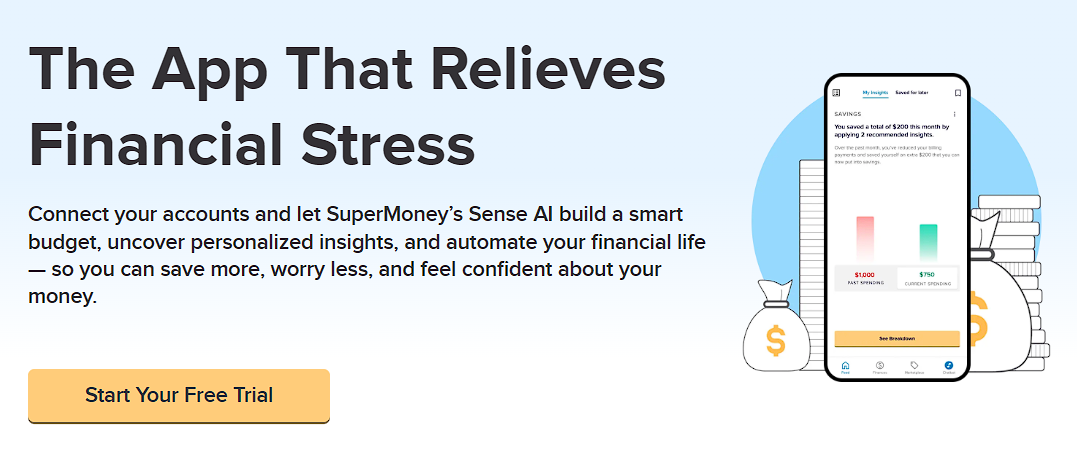
Put your savings challenge on autopilot
Pick your challenge, set your weekly target, and let the SuperMoney app automate the transfers. Track progress toward your goal without manually moving money every week.
Which Savings Challenge Fits Your Budget?
The best challenge is the one you’ll finish. That depends more on your income and expenses than on which challenge is trending on social media.
| Monthly Take-Home Pay | Recommended Challenge | Why It Fits |
|---|---|---|
| Under $2,500 | No-spend month + round-ups | No deposit required — saves by cutting, not adding |
| $2,500–$4,000 | 52-week challenge (standard or reverse) | Starts at $1/week, scales gradually as habits form |
| $4,000–$6,000 | 26-week biweekly or $5,000 goal | Higher starting amounts are manageable; builds a real emergency fund |
| $6,000+ | 100 envelope or $10,000 goal | Income supports the ~$50/day average; produces meaningful results fast |
If your income fluctuates, the 52-week challenge with the flat-rate $26.50/week variation is the safest choice — the consistent amount is easier to automate around an irregular income than an escalating schedule.
For low-income households, starting with a no-spend weekend (not a full month) builds the habit without the pressure. Graduate to a no-spend week, then a full 30-day challenge once you’ve identified your biggest spending leaks.
How to Automate Any Savings Challenge
The biggest reason people abandon savings challenges isn’t willpower — it’s friction. Manually transferring money every day or week adds a decision point, and decision fatigue kills consistency.
Automation removes that friction entirely:
- Set up a dedicated savings account. A high-yield online savings account keeps challenge money separate from spending money and earns interest while you save.
- Schedule recurring transfers. For the 52-week challenge, set a weekly auto-transfer of $26.50 (flat-rate version). For goal-based challenges, divide your target by the number of weeks and automate that amount.
- Use round-up features. Many banks and apps round up every purchase to the nearest dollar and sweep the difference into savings. This runs passively alongside any other challenge you’re doing.
- Redirect windfalls. Tax refunds, bonuses, or cash gifts can jump-start a challenge or cover weeks where the deposit feels tight. The average IRS tax refund in 2023 was $3,167 — enough to fund an entire 52-week challenge plus a $1,000 emergency buffer.
A fully automated money system means your savings challenge runs in the background while you focus on everything else. The challenge format provides the structure; automation provides the consistency.
What to Do With Your Challenge Savings
Finishing a savings challenge without a plan for the money is like training for a marathon and skipping the race. Where the money goes matters as much as saving it.
- Emergency fund: If you don’t have 3 to 6 months of expenses saved, that’s the first priority. A $5,050 envelope challenge result covers 2 to 3 months for the average household’s essential expenses.
- High-interest debt: A $5,000 lump payment on a credit card charging 24% APR eliminates roughly $1,200 in annual interest. If you’re weighing whether to pay down debt or keep saving, anything above 10% APR usually wins.
- Sinking fund: Challenge savings can seed a sinking fund for planned expenses like car maintenance, holiday gifts, or annual insurance premiums — preventing the next “unexpected” expense from draining your emergency fund.
- Next challenge: Stack challenges sequentially. Finish a 52-week challenge, then roll the habit into a $10,000 goal. Each completed challenge proves the habit works and raises your savings ceiling.
5 Mistakes That Kill Savings Challenges
1. Starting with the hardest challenge. The 100 envelope challenge sounds exciting, but averaging $50/day is brutal for someone who’s never saved consistently. Start with the 52-week challenge or a no-spend weekend and build up.
2. Keeping challenge money in your checking account. If savings sits next to spending money, it gets spent. A separate high-yield savings account creates friction between saving and sSavings accounts with competitive rates also let your accumulated challenge balance earn meaningful interest rather than sitting idle.
3. Quitting after one missed day. Missing a deposit doesn’t end the challenge. Double up the next day, combine two envelopes, or extend the timeline by a week. Progress beats perfection.
4. Not automating what you can. The escalating 52-week schedule requires manual adjustments, but the flat-rate version ($26.50/week) automates perfectly. Choose the variation that removes the most decisions.
5. Saving without a goal. “I want to save more” produces weaker results than “$5,000 by September for an emergency fund.” Attach every challenge to a specific dollar amount and a specific purpose.
The Monthly Savings Challenge: A Simpler Alternative
Not everyone wants to track daily envelopes or weekly escalating deposits. A monthly savings challenge simplifies the format to one action per month — save a set amount on payday, or increase your savings by a fixed increment each month.
A basic monthly escalator works like this: save $50 in January, $100 in February, $150 in March, and so on, adding $50 each month. After 12 months, you’ve saved $3,900.
| Month | Deposit | Cumulative Total |
|---|---|---|
| January | $50 | $50 |
| February | $100 | $150 |
| March | $150 | $300 |
| April | $200 | $500 |
| May | $250 | $750 |
| June | $300 | $1,050 |
| July | $350 | $1,400 |
| August | $400 | $1,800 |
| September | $450 | $2,250 |
| October | $500 | $2,750 |
| November | $550 | $3,300 |
| December | $600 | $3,900 |
The monthly format pairs well with budget frameworks like the 50/30/20 rule. If you allocate 20% of income to savings, a monthly challenge makes that allocation concrete instead of abstract.
Key takeaways
- The 100 envelope challenge saves $5,050 in about 100 days but requires an average of $50 per day — best for steady incomes above $6,000/month.
- The 52-week savings challenge builds $1,378 over a year starting at just $1/week, making it the most accessible challenge for beginners.
- The no-spend challenge saves $300 to $750 in 30 days by cutting nonessential spending — the only challenge that costs nothing to start.
- Short-term challenges (30-day or 100-day) build momentum quickly and work well as a first step before committing to a full-year challenge.
- Automating your challenge — using recurring transfers and a separate high-yield savings account — eliminates the daily decision-making that causes most people to quit.
- The best challenge is the one that fits your income: no-spend for tight budgets, 52-week for moderate earners, 100 envelope for higher incomes.
FAQ
What is the most popular savings challenge?
The 100 envelope challenge and the 52-week savings challenge are the two most popular formats. The envelope challenge went viral on TikTok and saves $5,050 in about 100 days. The 52-week challenge has been around longer and saves $1,378 over a full year with a gentler escalating schedule.
How much does the 52-week savings challenge save?
The standard 52-week challenge saves $1,378 by depositing $1 in week one and increasing by $1 each week through $52 in week 52. A flat-rate version depositing $26.50 every week reaches the same total and is easier to automate.
What is the best savings challenge for beginners?
The 52-week savings challenge is the best starting point because the first month costs just $10 total ($1 + $2 + $3 + $4). This low barrier builds the habit before the amounts become meaningful. A 30-day no-spend challenge is also beginner-friendly because it requires no deposits at all.
Can I do a savings challenge with a low income?
Yes. The no-spend challenge works entirely by cutting spending rather than adding deposits, making it accessible at any income level. For deposit-based challenges, the 52-week challenge starts at $1/week and stays under $20/week for the first four months.
What is a 100-day savings challenge?
A 100-day savings challenge involves saving money every day for 100 consecutive days. The most common format is the 100 envelope challenge, where you assign amounts of $1 through $100 to 100 envelopes and fill one randomly each day, saving $5,050 total.
Should I use cash or a bank account for a savings challenge?
A high-yield savings account outperforms cash envelopes in every measurable way — your money earns interest, it’s FDIC-insured, and you can automate deposits. Cash envelopes make the savings feel more tangible, which helps some people stay motivated, but the money earns nothing while sitting in paper.
What do I do with the money after finishing a savings challenge?
The best use depends on your financial situation. If you lack an emergency fund, that comes first — three to six months of essential expenses. If you carry high-interest debt, a lump-sum payment eliminates the most expensive interest. If both are covered, seed a sinking fund for planned future expenses or start the next challenge with a higher target.
Put your savings challenge on autopilot
Pick your challenge, set your target, and let the SuperMoney app track your progress automatically. No envelopes, no spreadsheets, no guesswork.
Master Your Money: Essential Budgeting Rules
The 30-Day Rule
Wait one full month before making non-essential purchases to curb impulse spending and prioritize long-term goals.
Wait one full month before making non-essential purchases to curb impulse spending and prioritize long-term goals.
The 50/30/20 Budget Rule
A popular framework that divides your income into 50% for needs, 30% for wants, and 20% for savings or debt repayment.
A popular framework that divides your income into 50% for needs, 30% for wants, and 20% for savings or debt repayment.
The 60/20/20 Budget Rule
A variation that allocates 60% of income to committed expenses, 20% to savings, and 20% to discretionary spending.
A variation that allocates 60% of income to committed expenses, 20% to savings, and 20% to discretionary spending.
The 70/10/20 Budget Rule
A wealth-building strategy that uses 70% for living expenses, 10% for debt or donations, and 20% for future investments.
A wealth-building strategy that uses 70% for living expenses, 10% for debt or donations, and 20% for future investments.
The 80/20 Budget Rule
The simplest method available: automatically save 20% of your income and spend the remaining 80% freely.
The simplest method available: automatically save 20% of your income and spend the remaining 80% freely.
Zero-Based Budgeting
A high-control method where you give every single dollar a specific job so your income minus expenses equals exactly zero.
A high-control method where you give every single dollar a specific job so your income minus expenses equals exactly zero.
The 3% Home Improvement Rule
A specific guide for homeowners to budget 3% of their home’s total value annually for maintenance and upgrades.
A specific guide for homeowners to budget 3% of their home’s total value annually for maintenance and upgrades.
The 30% Rent Rule
A standard housing benchmark suggesting you should spend no more than 30% of your gross income on rent or mortgage.
A standard housing benchmark suggesting you should spend no more than 30% of your gross income on rent or mortgage.
Feeling overwhelmed by money worries?
SuperMoney's AI-powered budgeting tools help you track your money goes, set realistic goals, and reduce financial stress.
Andrew is the Content Director for SuperMoney, a Certified Financial Planner®, and a Certified Personal Finance Counselor. He loves to geek out on financial data and translate it into actionable insights everyone can understand. His work is often cited by major publications and institutions, such as Forbes, U.S. News, Fox Business, SFGate, Realtor, Deloitte, and Business Insider.
Share this post:
Add as a preferred source on Google
Table of Contents