
What Is CIT Bank’s Routing Number?

Last updated 10/30/2024 by
Benjamin Locke
Edited by
Andrew Latham
Summary:
Explore the importance of CIT Bank’s routing number in streamlining banking transactions and how it enhances financial operations for customers within its service areas. Learn how to effortlessly locate your CIT Bank routing number, a crucial element for diverse banking activities, guaranteeing a seamless and effective banking experience.
CIT Bank, a subsidiary of First Citizens BancShares, is a prominent financial institution in the United States with a rich history dating back to its founding in 1908. Originally established to serve small and medium-sized businesses, CIT Bank has evolved over the decades into a full-service online bank. This transformation reflects its commitment to innovation and adapting to the changing needs of its customers. CIT Bank is renowned for its online-only banking model, which focuses on offering high-yield savings accounts, certificates of deposit (CDs), and a variety of loan products. This digital approach allows CIT Bank to provide competitive rates and convenient banking solutions to a broad national customer base, without the overhead costs associated with traditional brick-and-mortar branches.
Looking for a banking experience that goes further? Check out our fee-free checking account that rewards you every time you use your debit card.
What is CIT Bank’s routing number for wire transfers?
CIT Bank has one routing number for domestic transactions: 124084834 .
What is CIT Bank’s routing number
The routing number for CIT Bank is 124084834 .
Note: CIT Bank only has 1 routing number for all financial transactions, but this isn’t always the case. Many times, a bank will have multiple routing numbers, one for wire transfers and others for various other purposes, such as local branch checks.
International wire transfers
CIT Bank has a SWIFT code, which is used for international wire transfers. The SWIFT code is a standard format of Bank Identifier Codes (BIC) and is used to uniquely identify banks and financial institutions globally. This code is essential for sending or receiving money from abroad. For CIT Bank, the SWIFT code is OWBKUS6L
What is CIT Bank’s SWIFT code?
The SWIFT code for CIT Bank is OWBKUS6L
What is a routing number?
A routing number is a nine-digit numerical code crucial for identifying banks in financial transactions. This unique code ensures that funds are sent to the right bank. The routing number’s first four digits signify the Federal Reserve routing symbol, indicating the Federal Reserve district where the bank is located. The subsequent four digits, known as the ABA institution identifier, are assigned by the American Bankers Association and are vital for differentiating between banks. The final digit, the check digit, is used to confirm the routing number’s validity.
The importance of routing numbers is twofold
| Identification of Financial Institutions | Routing numbers act as unique identifiers for financial institutions. This role became increasingly important with the rise of paper check processing. The use of routing numbers made it simpler to identify which banks were issuing payments on checks, streamlining the transaction process. |
| Facilitating Payment and Clearing Processes | The routing number system played a crucial role in ensuring accurate and efficient financial transactions. It enabled banks to correctly pay patrons on behalf of check-writers. If a check was unfulfillable, the routing number guided the involved parties to the appropriate bank for payment resolution. This improved the efficiency and accuracy of financial transactions, especially when paper checks were the primary non-cash payment method. |
Routing numbers and what they mean
Bank routing numbers consist of a nine-digit sequence and are commonly located at the base of personal checks. Each digit within this code carries a specific significance in identifying financial institutions and their locations. This numerical string facilitates the accurate processing and clearance of financial transactions.
| First two digits | Identify the bank or credit union responsible for clearing financial transactions |
| Next two digits | Represent the bank’s processing center and its location |
| Next four digits | Serve to identify your bank |
| Last digit | Acts as the check digit, verifying the routing number’s validity |
How to find your CIT Bank routing number
- Check Your Checkbook: The simplest way to find your CIT Bank routing number is by checking your checkbook. The routing number for CIT Bank is typically the nine-digit code located on the bottom left corner of your checks.
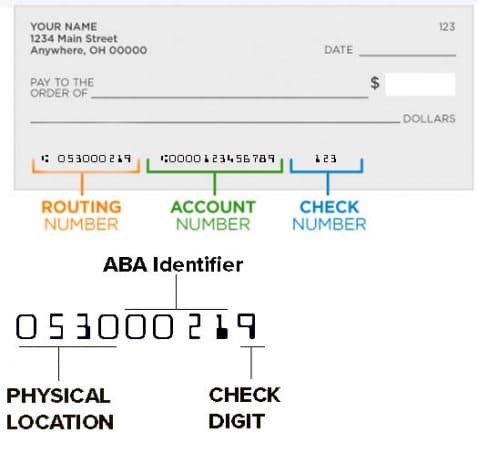
- Online Banking: If you use CIT Bank’s online banking, log into your account. The routing number is usually found on your account summary page or within the details of a specific account.
- CIT Bank Mobile App: If you have the CIT Bank mobile app, you can find your routing number there. It’s generally located in the account information or settings section of the app.
- Bank Statements: Your monthly bank statements from CIT Bank may also include the routing number. It is often printed on the first page of the statement.
- CIT Bank Website: Visit the CIT Bank website. They often provide information about routing numbers, either through a lookup tool or in a specific section of the site.
- Contact Customer Service: If you’re having trouble finding your routing number, you can always contact CIT Bank’s customer service. They will provide you with the routing number, but you may need to verify your identity for security purposes.
- Importance of Correct Routing Number: It’s crucial to use the correct routing number for various banking transactions like direct deposits, automatic bill payments, and wire transfers to ensure they are processed efficiently and correctly.
Pro Tip
“As financial institutions undergo consolidation, the harmonization of disparate systems becomes imperative, extending to the reevaluation and potential reassignment of routing numbers. This meticulous realignment is fundamental to sustaining the fluidity and accuracy of electronic fund transfers within the integrated entity. Routing numbers, as distinctive identifiers for financial institutions, play an instrumental role in the initiation of direct deposits and automatic bill payments. Following a restructuring event, banks meticulously recalibrate these numerical codes to reflect the unified organization accurately. Clients leveraging direct deposit services or automating bill payments rely on the fidelity of routing numbers to orchestrate seamless financial transactions. The recalibration of routing numbers is undertaken with a commitment to precision, ensuring that customers experience uninterrupted and secure electronic fund movements amid the structural evolution of the financial institution.” – Arnaud Kuhlein, Marketing Head at LA Police Gear
FAQ
What does CIT Bank invest in?
CIT Bank, as a division of First Citizens Bank, focuses on investments across various sectors. It invests in syndicated bank debt across all industries, which is used by borrowers for purposes like leveraged buyouts, acquisition financing, and general corporate purposes. Additionally, CIT Bank is involved in providing financing and advisory services, particularly to small and middle-market businesses. This approach underscores its commitment to supporting economic growth and entrepreneurship, reflecting a diverse investment strategy that caters to a wide range of financial needs.
What is CIT Bank Savings Connect?
CIT Bank’s Savings Connect is a high-yield savings account offering competitive interest rates. This tiered interest rate account is designed to provide a higher Annual Percentage Yield (APY) compared to traditional savings accounts. To benefit from Savings Connect, customers typically need to make a qualifying deposit into a linked eChecking account. This product reflects CIT Bank’s commitment to offering innovative, high-value savings solutions, leveraging its online banking platform to provide advantageous rates and convenient account management through its mobile app and online services.
In what states is CIT Bank established?
CIT Bank, as an online bank, primarily operates digitally across the United States, offering its services nationwide. However, following its merger with First Citizens Bank, CIT Bank customers can now enjoy services at First Citizens Bank branches, which are located in over 20 states. This merger has expanded CIT Bank’s physical presence, allowing it to serve customers in various states with a network of branches, particularly in states where First Citizens Bank has a strong presence.
Does CIT Bank have physical locations?
CIT Bank itself is primarily an online bank, meaning it does not have a widespread network of physical branches. However, with its merger with First Citizens Bank, CIT Bank customers can access services at First Citizens Bank branches. First Citizens Bank operates a network of over 600 branches in 22 states, providing CIT Bank customers with additional physical locations for banking services. This arrangement combines the convenience of online banking with the accessibility of in-person services at First Citizens Bank locations.
Key takeaways
- CIT Bank, established in 1908 and now a subsidiary of First Citizens BancShares, has transitioned from focusing on small businesses to becoming a full-service online bank, offering high-yield savings and loan products.
- A routing number is a nine-digit numerical code used to identify banks in financial transactions, crucial for directing funds to the correct bank and facilitating efficient processing of payments and transfers.
- CIT Bank’s Savings Connect is a high-yield savings account offering competitive rates, designed to provide higher APYs, especially when linked with a qualifying eChecking account deposit.
- Banks may have multiple routing numbers to manage transactions more efficiently, often due to mergers, regional operations, or different types of transactions like wire transfers versus local branch checks.
Share this post:
Add as a preferred source on Google
Table of Contents